Curb Your Enthusiasm: Why the Midterms Might Not Change Much in US Middle East Policy
With less than a week before the midterm elections in the United States, the spotlight is on the economy and cultural divides. US foreign policy remains mostly on the sidelines, but this year’s inconclusive Iran war and its effect on America’s economy have shaped the broader political environment in this electoral cycle.
The Multiple Costs of the US–Iran War – From Hormuz to Europe and South Asia: The Widening Economic and Political Geography of the Conflict
Wars are decided by those who hold military power, but their costs are increasingly borne by those who have little or no voice in the decisions that start them. The US–Iran war shows this imbalance very clearly. Its economic consequences have gone far beyond the battlefield and have disrupted energy markets, trade routes, food supplies, public finances and investment in the Gulf, Europe, Africa and Asia. The most striking feature of the conflict, however, is not only the size of the damage but its very unequal distribution.
In recent weeks, the Iran-backed Houthis have fired missiles and drones deep into Saudi Arabia, striking high-profile targets, including Riyadh’s airport and Aramco’s headquarters. The attacks follow a rapid Houthi offensive in September to seize key parts of Yemen’s Red Sea coast, which Saudi-backed government forces are now trying to roll back. Fatima Abo Alasrar, an affiliated scholar at MEI and non-resident scholar at the Arab Gulf States Institute, joins hosts Alistair Taylor and Matthew Czekaj to unpack the latest phase of the conflict. They discuss what the Houthis want, Riyadh’s calculus and search for allies, and how this campaign ties into Iran’s confrontation with the United States.
Since 1967, Israeli settlements in the West Bank have been a contested feature of the Israeli-Palestinian conflict. The ultimate disposition of the settlements and ongoing activity related to their growth have repeatedly defied agreement in negotiations over a resolution to the conflict.
The Houthis are a political-military faction and Zaydi religious movement founded in northwestern Yemen in the 1980s. A key member of Iran’s Axis of Resistance with links to other militant organizations in the Arabian Peninsula and the Horn of Africa, the group has continued to pose a threat to Western interests on a global scale.
The India-Middle East-Europe Economic Corridor (IMEC) is a proposed multinational infrastructure initiative aimed at upgrading connectivity between the three regions through integrated trade, energy, and digital networks. Announced at the G20 summit in New Delhi in September 2023, IMEC is envisioned partially as a counterweight to China’s international infrastructure project, the Belt and Road Initiative.
After a decade of post-Arab Spring isolation, Turkey’s leaders have recognized that their ambition to position the country as an agenda-setter on the world stage requires active engagement in all directions. President Recep Tayyip Erdoğan’s consolidation of executive authority has centralized foreign policy decision-making and tied it to his domestic political priorities, transforming the country’s revisionist approach to one shaped primarily by personal and pragmatic interests.
MEI Senior Fellow Brian Katulis engages friends, colleagues, and policy experts in casual conversations on the most important happenings in the Middle East.
China’s Role in Iran’s Anti-Access / Area Denial Weapons Capability Development
It is the military aspect of the Sino-Iranian relationship that troubles many observers in the West. China, and to a lesser extent, North Korea, have played a critical role in the development of Iran’s anti-access / area denial (A2/AD) capabilities.
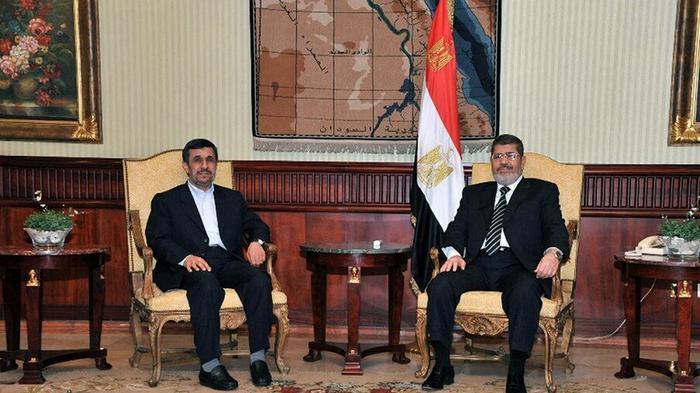
For over 30 years Egypt’s foreign policy has stood on three key pillars: building strategic relations with the United States, maintaining the peace treaty with Israel, and promoting the security of Arab states in the Gulf. The presidency and the security apparatus, moreover, have often overshadowed and minimized the influence of the Ministry of Foreign Affairs in the policymaking process. These pillars solidified under the rule of Hosni Mubarak, and as a result President Mohamed Morsi will not be able to uproot them anytime soon.
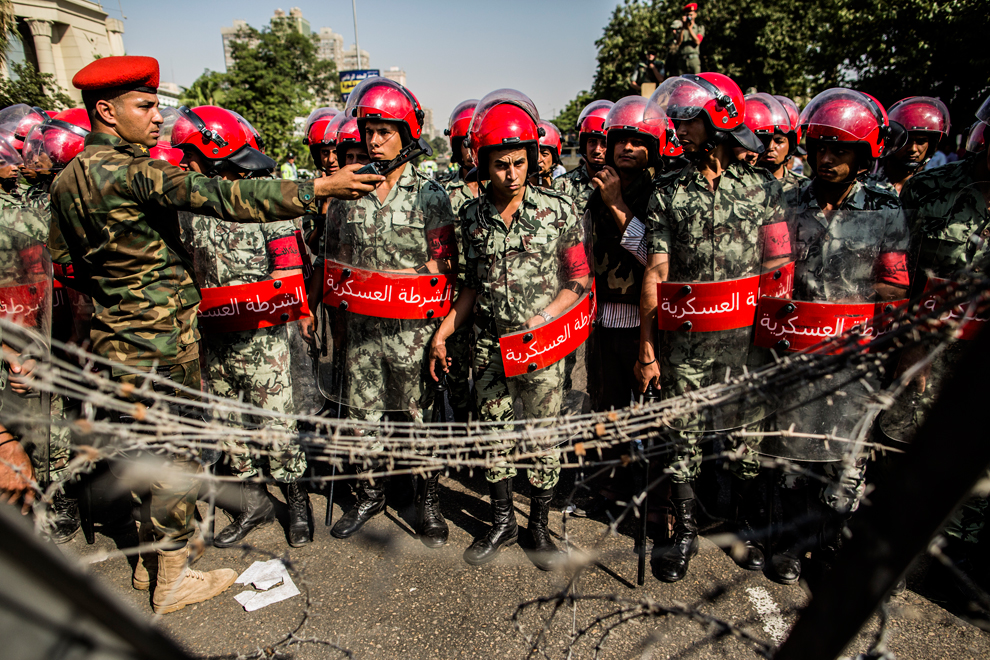
Since the most recent but now routine eruptions of violence between street protesters and Egypt’s state, speculation has swirled about the durability of the pact between the Muslim Brotherhood and Egypt’s armed forces.
When President Mohamed Morsi granted himself sweeping new powers last November, he unwittingly accomplished something no one had yet achieved. He managed to bring Egypt’s fractious and disparate political factions together around a single cause: bitterly opposing him and his Muslim Brotherhood.
When I moved to Cairo in 1981 I discovered a courtly and safe city. The streets were alive with playful banter, expressions of the renowned Egyptian joie de vivre. Men who wished to attract the attention of lady passers-by sang bits of love songs or called them things like “minaret” and “gazelle.”
A Conversation with al-Gama`a al-Islamiya’s Hani Nour Eldin
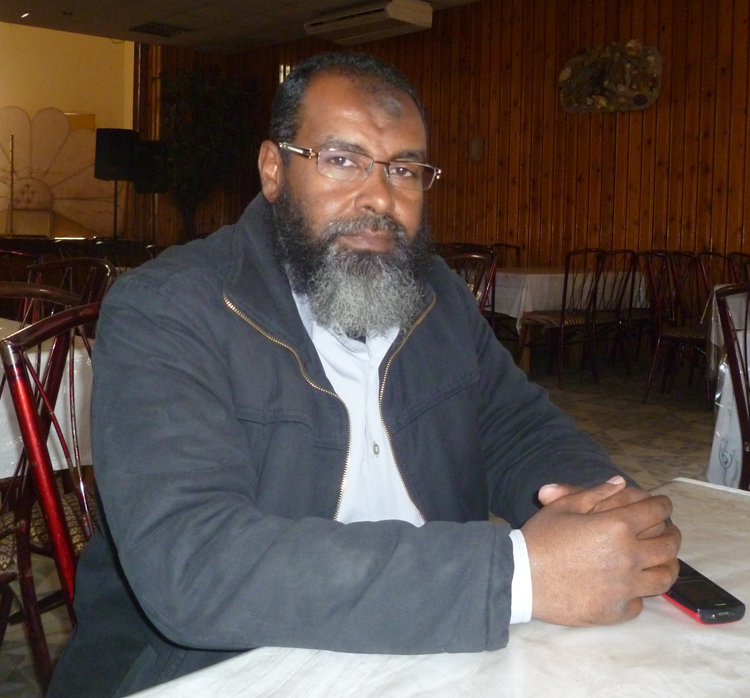
Hani Nour Eldin is a member of the Egyptian Islamist group al-Gama`a al-Islamiya and an administrative employee of the Suez Canal Authority. In 2011 he was elected to parliament as part of the group’s political arm, the Building and Development Party. In June 2012 he caused considerable controversy when he traveled to Washington, D.C. as part of a parliamentary delegation.
Ten months have passed since the election of the Muslim Brotherhood’s Mohamed Morsi as Egypt’s first post-uprising president. During his election campaign, Morsi repeatedly promised “change.” So far, however, it appears that Egypt’s bureaucracy has been more successful at changing Morsi’s plans and discourse than he has been at changing the state’s structures.
Along with countries such as Syria and Iraq, Pakistan has become a theater of doctrinal differences between Shia and Sunni Muslims, signifying that rifts between local groups have become linked to the wider violent sectarianism in the Middle East.
The Asia-Pacific in the "Golden Age of Gas": Implications for Middle East LNG Exporters
Qatar, as the world’s largest single LNG exporter, will be at the forefront of competition with key players in both the European and Asian markets. As an infra-marginal producer with all major capital investments already in place and in the process of being amortized, Qatar occupies a privileged though by no means entrenched competitive position.
Japan’s Unfinished Democracy: Lessons for Democratic Transformation in the Middle East
Stability in the Middle East is essential for Japanese prosperity. Japanese investment and aid has already made significant contributions to the region’s socio-economic stability. The next step is for Japan to contribute its lessons learned as a successful case of democratic transformation.
Interview with Dr. Yiyi Chen on Hebrew/Jewish Studies in China and Sino-Israel Relations
Some might find it surprising to learn that China was never hostile or belligerent towards Israel. China never rejected or even questioned the State of Israel’s right to exist. Premier Zhou En Lai criticized Palestinian terrorism and categorically rejected the idea of ‘throwing the Israelis into the sea.’
The oldest peer-reviewed publication dedicated to the study of the modern Middle East, MEI’s flagship journal covers politics, society, and culture in the region.