Skip to Content

Research & Commentary

Read in-depth research, analysis, and commentary from MEI’s fellows and experts on the Middle East. 

Trump’s Family Business Deals Risk Further Undermining the Credibility of US Middle East Policy
  • Analysis
  • Trump’s Family Business Deals Risk Further Undermining the Credibility of US Middle East Policy

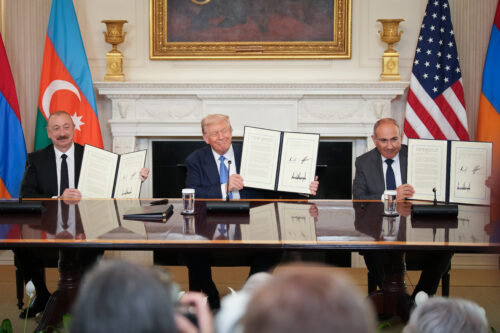
    President Trump’s family businesses are once again in the spotlight as a new financial disclosure showed they earned $2 billion in income in 2025 — a dramatic increase on the year before, with much of it coming from Gulf entities, raising emoluments concerns. Mounting perceptions of corruption, combined with unresolved crises in Iran and Israel-Palestine, are eroding trust among key partners in the Middle East. With the 2026 midterms approaching, these entanglements could represent a major political vulnerability and further undermine America’s already-strained standing in the region.

    Do the Gulf States Need a New Playbook?
  • Podcast
  • Do the Gulf States Need a New Playbook?

    After the US-Israel-Iran war — and the strikes that followed the cease-fire — the Gulf states find themselves dangerously exposed. Host Alistair Taylor is joined by MEI Associate Fellow Gregory Gause to discuss the war’s impact on the Gulf, their partnership with the United States, and whether the turmoil of recent months will push Gulf leaders to reassess their alliances and international engagement.

    July 2, 2026

    Additional Research & Commentary

    Backgrounders

    The Houthis
  • Backgrounder
  • The Houthis

    The Houthis are a political-military faction and Zaydi religious movement founded in northwestern Yemen in the 1980s. A key member of Iran’s Axis of Resistance with links to other militant organizations in the Arabian Peninsula and the Horn of Africa, the group has continued to pose a threat to Western interests on a global scale.

    May 15, 2026

    The Abraham Accords
    Photo by Alex Wong/Getty Images
  • Backgrounder
  • The Abraham Accords

    This backgrounder provides an overview of how the Abraham Accords came about, the US interests involved, their economic and strategic consequences, and the prospects for further enlargement going forward.

    November 17, 2025

    Turkish Foreign Policy
  • Backgrounder
  • Turkish Foreign Policy

    After a decade of post-Arab Spring isolation, Turkey’s leaders have recognized that their ambition to position the country as an agenda-setter on the world stage requires active engagement in all directions. President Recep Tayyip Erdoğan’s consolidation of executive authority has centralized foreign policy decision-making and tied it to his domestic political priorities, transforming the country’s revisionist approach to one shaped primarily by personal and pragmatic interests.

    April 23, 2026

    Western Sahara: Why the conflict still matters
  • Video
  • Western Sahara: Why the conflict still matters

    As the Western Sahara conflict reaches its fifth decade, the territorial dispute remains unresolved and largely unknown. MEI’s Intissar Fakir unpacks the Western Sahara’s complex history and the rival claims by Morocco and the Sahrawi Arab Democratic Republic. She examines recent developments, such as President Trump’s recognition of Moroccan sovereignty over the territory and the collapse of a 30-year cease-fire, as well as the core questions that remain unanswered after half a century.

    August 7, 2025

    Podcasts

    Middle East Focus

    MEI’s flagship weekly podcast on US foreign policy and contemporary political and social issues in the Middle East.

    Taking the Edge Off the Middle East

    MEI Senior Fellow Brian Katulis engages friends, colleagues, and policy experts in casual conversations on the most important happenings in the Middle East. 

    Rethinking Democracy

    MEI Senior Fellow Gonul Tol hosts leading scholars and thought leaders on global democracy trends and the state of the liberal international order. 

    Filter by
    8748 Results
    Iran Spins Morsi Visit
    Middle East Institute
  • Analysis
  • Iran Spins Morsi Visit

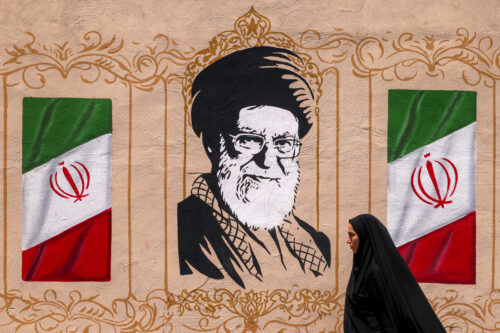
    Iran’s President Mahmoud Ahmadinejad had high hopes for the visit to Tehran by new Egyptian President Mohamed Morsi. His trip on Thursday for the Non-Aligned Movement (NAM) summit might have been brief — his spokesman emphasized ahead of time that he would spend only four hours on Iranian soil, including getting stuck in traffic — but Iran’s leaders relished the opportunity to demonstrate progress in overcoming its isolation in the Arab world and to gain some democratic and revolutionary legitimacy by proxy.

    August 31, 2012

    Afghanistan: Where Chaos Is King and Plunder Is Privilege
  • Analysis
  • Afghanistan: Where Chaos Is King and Plunder Is Privilege

    The “new and improved” tactics of “divide and conquer” are operational both at the vertical and horizontal layers of the government and society in Afghanistan.

    August 27, 2012

    Informal Governance and Role of State in Cities in Developing Countries: Comparing Karachi and Cairo
  • Analysis
  • Informal Governance and Role of State in Cities in Developing Countries: Comparing Karachi and Cairo

    The 21st century has been called the “Century of the City,” as half of the world’s population lives in urban areas.[1] Virtually all of the projected global population growth will be in cities of the developing world, and most of it will be concentrated in informal settlements.

    August 21, 2012

    Orientalism's Wake: The Ongoing Politics of a Polemic
    Middle East Institute
  • Analysis
  • Orientalism's Wake: The Ongoing Politics of a Polemic

    Originally posted September 2009

    Edward W. Said, who passed away at the age of 67 on September 25, 2003, was a towering “public intellectual” — a man of extraordinary erudition, a path-breaking scholar, and a passionate activist.

    Said was a man of many interests, talents, and accomplishments — pianist, opera critic, newspaper columnist, popular essayist, television celebrity, and public lecturer. From 1963 until his death, he was Professor of English and Comparative Literature at Columbia University.

    August 16, 2012

    Afghanistan 2002-2012: A Decade of Progress and Hope.
  • Analysis
  • Afghanistan 2002-2012: A Decade of Progress and Hope.

    Recent media coverage of the Afghan war questions whether we’ve made meaningful progress towards security and an effective Government in that country. Or were the past ten years a lost decade for the Afghans and Coalition partners? This ten-year milestone is a good point in time to pause, check Afghanistan’s progress, and assess where it appears to be headed. With the assistance of over 40 nations, Afghanistan developed its infrastructure and has taken major steps towards self sufficiency.

    August 15, 2012

    Policy and War: On the Brink with Iran
    Middle East Institute
  • Analysis
  • Policy and War: On the Brink with Iran

    “War is merely the continuation of policy by other means.” – Clause von Clausewitz

    Considering Diplomacy and War

    August 10, 2012

    Rethinking Afghanistan
    Middle East Institute
  • Analysis
  • Rethinking Afghanistan

    Originally posted December 2009

    We are regularly bombarded by news reports and political analysis that reflect certain underlying assumptions about Afghanistan. These assumptions range from claims that Afghanistan was always a backward state ruled by warlords, to assertions that the country was never really a nation at all, and proclamations that Afghanistan is unfit for Western-style democracy and that it is dangerously naïve to think otherwise.

    August 9, 2012

    Cultural Imperatives Of Afghanistan
  • Analysis
  • Cultural Imperatives Of Afghanistan

    Since the overthrow of King Mohammad Zahir Shah in 1973, Afghanistan has been plagued by war — either war waged among ideologues (Marxists v. nationalists) or war marked by foreign invasion and occupation. The Soviet occupation of Afghanistan, which began in 1979, lasted a full decade.

    August 7, 2012

    Read the Middle East Journal

    The oldest peer-reviewed publication dedicated to the study of the modern Middle East, MEI’s flagship journal covers politics, society, and culture in the region.