Skip to Content

Research & Commentary

Read in-depth research, analysis, and commentary from MEI’s fellows and experts on the Middle East. 

Trump’s Family Business Deals Risk Further Undermining the Credibility of US Middle East Policy
  • Analysis
  • Trump’s Family Business Deals Risk Further Undermining the Credibility of US Middle East Policy

    President Trump’s family businesses are once again in the spotlight as a new financial disclosure showed they earned $2 billion in income in 2025 — a dramatic increase on the year before, with much of it coming from Gulf entities, raising emoluments concerns. Mounting perceptions of corruption, combined with unresolved crises in Iran and Israel-Palestine, are eroding trust among key partners in the Middle East. With the 2026 midterms approaching, these entanglements could represent a major political vulnerability and further undermine America’s already-strained standing in the region.

    Do the Gulf States Need a New Playbook?
  • Podcast
  • Do the Gulf States Need a New Playbook?

    After the US-Israel-Iran war — and the strikes that followed the cease-fire — the Gulf states find themselves dangerously exposed. Host Alistair Taylor is joined by MEI Associate Fellow Gregory Gause to discuss the war’s impact on the Gulf, their partnership with the United States, and whether the turmoil of recent months will push Gulf leaders to reassess their alliances and international engagement.

    July 2, 2026

    Additional Research & Commentary

    Backgrounders

    The Houthis
  • Backgrounder
  • The Houthis

    The Houthis are a political-military faction and Zaydi religious movement founded in northwestern Yemen in the 1980s. A key member of Iran’s Axis of Resistance with links to other militant organizations in the Arabian Peninsula and the Horn of Africa, the group has continued to pose a threat to Western interests on a global scale.

    May 15, 2026

    The Abraham Accords
    Photo by Alex Wong/Getty Images
  • Backgrounder
  • The Abraham Accords

    This backgrounder provides an overview of how the Abraham Accords came about, the US interests involved, their economic and strategic consequences, and the prospects for further enlargement going forward.

    November 17, 2025

    Turkish Foreign Policy
  • Backgrounder
  • Turkish Foreign Policy

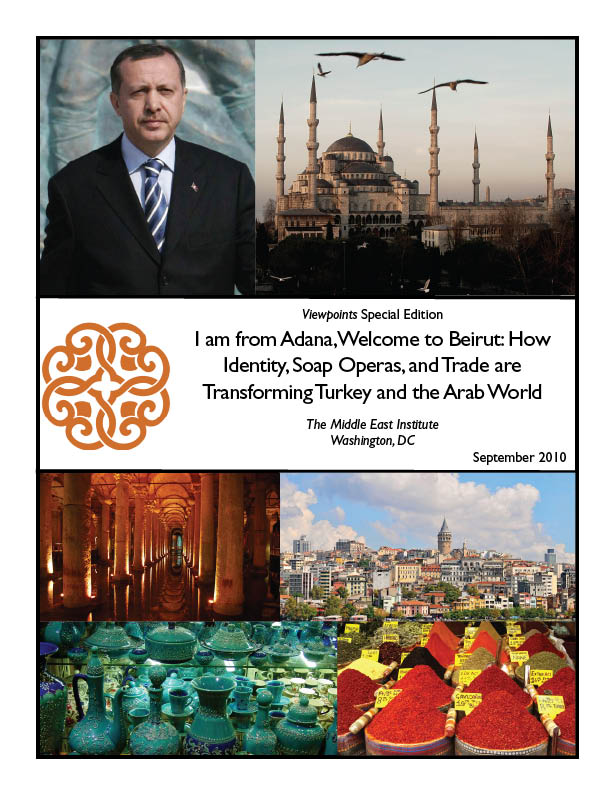
    After a decade of post-Arab Spring isolation, Turkey’s leaders have recognized that their ambition to position the country as an agenda-setter on the world stage requires active engagement in all directions. President Recep Tayyip Erdoğan’s consolidation of executive authority has centralized foreign policy decision-making and tied it to his domestic political priorities, transforming the country’s revisionist approach to one shaped primarily by personal and pragmatic interests.

    April 23, 2026

    Western Sahara: Why the conflict still matters
  • Video
  • Western Sahara: Why the conflict still matters

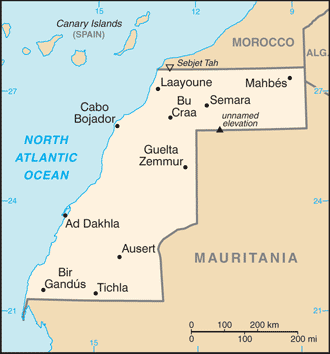
    As the Western Sahara conflict reaches its fifth decade, the territorial dispute remains unresolved and largely unknown. MEI’s Intissar Fakir unpacks the Western Sahara’s complex history and the rival claims by Morocco and the Sahrawi Arab Democratic Republic. She examines recent developments, such as President Trump’s recognition of Moroccan sovereignty over the territory and the collapse of a 30-year cease-fire, as well as the core questions that remain unanswered after half a century.

    August 7, 2025

    Podcasts

    Middle East Focus

    MEI’s flagship weekly podcast on US foreign policy and contemporary political and social issues in the Middle East.

    Taking the Edge Off the Middle East

    MEI Senior Fellow Brian Katulis engages friends, colleagues, and policy experts in casual conversations on the most important happenings in the Middle East. 

    Rethinking Democracy

    MEI Senior Fellow Gonul Tol hosts leading scholars and thought leaders on global democracy trends and the state of the liberal international order. 

    Filter by
    8748 Results
    Autonomy: The Optimal Political Solution
  • Analysis
  • Autonomy: The Optimal Political Solution

    1) Origins and genesis of the conflict

    Since the origin of the crisis, it has been evident that Morocco would never accept any outcome that might contest its sovereignty or result in the independence of the Western Sahara. The United Nations General Assembly (UNGA) proposed in its first resolution adopted on December 16, 1965 that Spain “takes all necessary measures” to decolonize the territory, while entering into negotiations on “problems relative to governing.”

    May 22, 2012

    'Reality Check' for Iran Nuclear Talks
    Middle East Institute
  • Analysis
  • 'Reality Check' for Iran Nuclear Talks

    This Opinion first appeared on CNN.com on May 21, 2012

    Iran is set for nuclear talks Wednesday with members of the U.N. Security Council, and the Obama administration, as well as some Iranian and European Union officials, expressed optimism that a compromise will be reached. But it is useful to examine Israel’s long-term objectives for a bit of a reality check.

    May 22, 2012

    Salafis Coming to America
    Middle East Institute
  • Analysis
  • Salafis Coming to America

    This Opnion first appeared in the Huffington Post on May 11, 2012.

    May 15, 2012

    Delivering on the Commitments of Afghanistan Conferences
  • Analysis
  • Delivering on the Commitments of Afghanistan Conferences

    Last December in Bonn, Germany hosted and Afghanistan chaired an international conference on “Afghanistan and the International Community: From Transition to the Transformation Decade.” Eighty-five countries and 15 international organizations participated in the Conference to celebrate their shared 10-year achievements, and to recommit to consolidating and sustaining these achievements beyond 2014 into a decade of transformation until 2024.

    May 14, 2012

    Considering the Information Infrastructure for American-style Universities in the Middle East
  • Analysis
  • Considering the Information Infrastructure for American-style Universities in the Middle East

    Originally posted December 2010

    In the past 15 years, American educators – faculty, librarians, and administrators – have been invited to transfer their expertise to the Middle East and to assist in developing American-style universities. Attempting to transplant a culturally-based educational system into new nations with different values poses unique opportunities to reflect on what constitutes American education and what components must be included in the transfer.

    May 10, 2012

    Western Sahara: Deferred Referendum or Lasting Settlement?
  • Analysis
  • Western Sahara: Deferred Referendum or Lasting Settlement?

    Over the last decade, the dispute over the future status of the Western Sahara territory, which has set Morocco and the Algeria-backed pro-independence Polisario front in opposition, has entered a qualitatively new phase. This is due to attempts at finding a negotiated outcome instead of the long-delayed self-determination referendum. The idea of a political solution to break a twice deadlocked (1997 and 2000) UN self-determination referendum for the Western Sahara territory has steadily revived the prospect of autonomous status for the territory within Moroccan jurisdiction.

    May 9, 2012

    Read the Middle East Journal

    The oldest peer-reviewed publication dedicated to the study of the modern Middle East, MEI’s flagship journal covers politics, society, and culture in the region.