Skip to Content

Research & Commentary

Read in-depth research, analysis, and commentary from MEI’s fellows and experts on the Middle East. 

Trump’s Family Business Deals Risk Further Undermining the Credibility of US Middle East Policy
  • Analysis
  • Trump’s Family Business Deals Risk Further Undermining the Credibility of US Middle East Policy

    President Trump’s family businesses are once again in the spotlight as a new financial disclosure showed they earned $2 billion in income in 2025 — a dramatic increase on the year before, with much of it coming from Gulf entities, raising emoluments concerns. Mounting perceptions of corruption, combined with unresolved crises in Iran and Israel-Palestine, are eroding trust among key partners in the Middle East. With the 2026 midterms approaching, these entanglements could represent a major political vulnerability and further undermine America’s already-strained standing in the region.

    Do the Gulf States Need a New Playbook?
  • Podcast
  • Do the Gulf States Need a New Playbook?

    After the US-Israel-Iran war — and the strikes that followed the cease-fire — the Gulf states find themselves dangerously exposed. Host Alistair Taylor is joined by MEI Associate Fellow Gregory Gause to discuss the war’s impact on the Gulf, their partnership with the United States, and whether the turmoil of recent months will push Gulf leaders to reassess their alliances and international engagement.

    July 2, 2026

    Additional Research & Commentary

    Backgrounders

    The Houthis
  • Backgrounder
  • The Houthis

    The Houthis are a political-military faction and Zaydi religious movement founded in northwestern Yemen in the 1980s. A key member of Iran’s Axis of Resistance with links to other militant organizations in the Arabian Peninsula and the Horn of Africa, the group has continued to pose a threat to Western interests on a global scale.

    May 15, 2026

    The Abraham Accords
    Photo by Alex Wong/Getty Images
  • Backgrounder
  • The Abraham Accords

    This backgrounder provides an overview of how the Abraham Accords came about, the US interests involved, their economic and strategic consequences, and the prospects for further enlargement going forward.

    November 17, 2025

    Turkish Foreign Policy
  • Backgrounder
  • Turkish Foreign Policy

    After a decade of post-Arab Spring isolation, Turkey’s leaders have recognized that their ambition to position the country as an agenda-setter on the world stage requires active engagement in all directions. President Recep Tayyip Erdoğan’s consolidation of executive authority has centralized foreign policy decision-making and tied it to his domestic political priorities, transforming the country’s revisionist approach to one shaped primarily by personal and pragmatic interests.

    April 23, 2026

    Western Sahara: Why the conflict still matters
  • Video
  • Western Sahara: Why the conflict still matters

    As the Western Sahara conflict reaches its fifth decade, the territorial dispute remains unresolved and largely unknown. MEI’s Intissar Fakir unpacks the Western Sahara’s complex history and the rival claims by Morocco and the Sahrawi Arab Democratic Republic. She examines recent developments, such as President Trump’s recognition of Moroccan sovereignty over the territory and the collapse of a 30-year cease-fire, as well as the core questions that remain unanswered after half a century.

    August 7, 2025

    Podcasts

    Middle East Focus

    MEI’s flagship weekly podcast on US foreign policy and contemporary political and social issues in the Middle East.

    Taking the Edge Off the Middle East

    MEI Senior Fellow Brian Katulis engages friends, colleagues, and policy experts in casual conversations on the most important happenings in the Middle East. 

    Rethinking Democracy

    MEI Senior Fellow Gonul Tol hosts leading scholars and thought leaders on global democracy trends and the state of the liberal international order. 

    Filter by
    8748 Results
    Understanding Iranian Foreign Policy
  • Analysis
  • Understanding Iranian Foreign Policy

    Originally posted January 2009

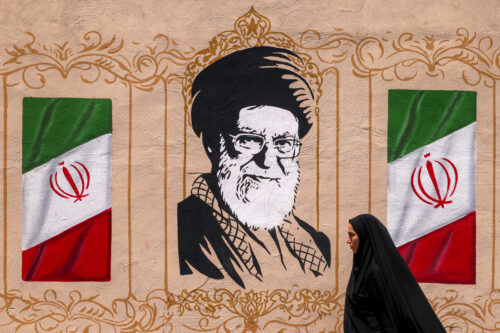
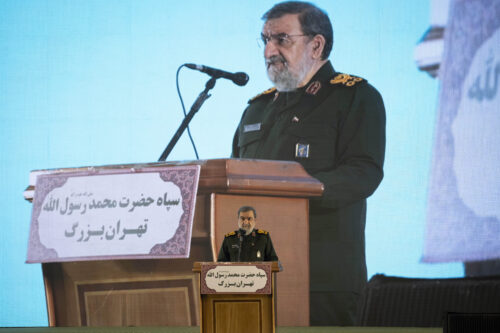
    Understanding Iran’s foreign policy is the key to crafting sensible and effective policies toward Iran and requires, above all, a close analysis of the profound cultural and psychological contexts of Iranian foreign policy behavior.

    April 20, 2012

    Crisis in South Asia
    Middle East Institute
  • Analysis
  • Crisis in South Asia

    Originally posted December 2009

    South Asia is a region in crisis — plagued by a set of interlocking problems that have deep and tangled roots. And Pakistan, not Afghanistan, is at the center.

    The International Coalition — Support Eroding?

    April 19, 2012

    Ending the 30-Year War in Afghanistan
    Middle East Institute
  • Analysis
  • Ending the 30-Year War in Afghanistan

    Originally posted December 2009

    Afghanistan has been plagued by war for 30 years. The conflicts that have occurred during this time have involved major world powers, Afghanistan’s neighbors, and various Afghan factions. The cumulative toll of these conflicts on the country and its people is enormous. Yet, despite three calamitous decades of death and destruction, peace and stability is achievable.

    Afghanistan’s Calamitous 30-Year War

    April 19, 2012

    Electing to Fight in Afghanistan
    Middle East Institute
  • Analysis
  • Electing to Fight in Afghanistan

    Originally posted December 2009 

    The move to hold a second round of elections in Afghanistan on November 7, 2009 has at least had one positive result: it has brought out the fundamental limitations of introducing Western democratic election processes in a deeply divided society that, moreover, is at war with itself and with external forces.

    A Flawed Election or a Flawed Electoral System?

    April 19, 2012

    Land Grab in Sherpur: Monuments to Powerlessness, Impunity, and Inaction
    Middle East Institute
  • Analysis
  • Land Grab in Sherpur: Monuments to Powerlessness, Impunity, and Inaction


    Originally posted December 2009

    In September 2003, armed police and bulldozers violently ejected around 250 people from land in central Kabul and demolished their homes to make way for the lavish mansions of the freshly empowered elite.[1] Sherpur, as the area is known, lies in the shadow of the diplomatic enclave and as such is some of the most valuable land in the capital.

    April 19, 2012

    Read the Middle East Journal

    The oldest peer-reviewed publication dedicated to the study of the modern Middle East, MEI’s flagship journal covers politics, society, and culture in the region.