Skip to Content

Research & Commentary

Read in-depth research, analysis, and commentary from MEI’s fellows and experts on the Middle East. 

Trump, Syria, and the Hizballah Question
  • Podcast
  • Trump, Syria, and the Hizballah Question

    US President Donald Trump recently proposed that Syria intervene militarily against Hizballah in Lebanon. Is that a good idea? This episode of Middle East Focus features a recent MEI Virtual Briefing. Director of Communications Zeina Al-Shaib is joined by Ambassador David Hale, MEI Distinguished Diplomatic Fellow and Charles Lister, MEI Senior Fellow. Together they examine the prospects and implications of renewed Syrian involvement in Lebanon, the potential impact on US relations with both countries, and how evolving dynamics in Lebanon and Syria could reshape the regional balance of power and affect countries such as Turkey and Israel.

    July 9, 2026

    Trump’s Family Business Deals Risk Further Undermining the Credibility of US Middle East Policy
  • Analysis
  • Trump’s Family Business Deals Risk Further Undermining the Credibility of US Middle East Policy

    President Trump’s family businesses are once again in the spotlight as a new financial disclosure showed they earned $2 billion in income in 2025 — a dramatic increase on the year before, with much of it coming from Gulf entities, raising emoluments concerns. Mounting perceptions of corruption, combined with unresolved crises in Iran and Israel-Palestine, are eroding trust among key partners in the Middle East. With the 2026 midterms approaching, these entanglements could represent a major political vulnerability and further undermine America’s already-strained standing in the region.

    Do the Gulf States Need a New Playbook?
  • Podcast
  • Do the Gulf States Need a New Playbook?

    After the US-Israel-Iran war — and the strikes that followed the cease-fire — the Gulf states find themselves dangerously exposed. Host Alistair Taylor is joined by MEI Associate Fellow Gregory Gause to discuss the war’s impact on the Gulf, their partnership with the United States, and whether the turmoil of recent months will push Gulf leaders to reassess their alliances and international engagement.

    July 2, 2026

    Additional Research & Commentary

    Backgrounders

    The Houthis
  • Backgrounder
  • The Houthis

    The Houthis are a political-military faction and Zaydi religious movement founded in northwestern Yemen in the 1980s. A key member of Iran’s Axis of Resistance with links to other militant organizations in the Arabian Peninsula and the Horn of Africa, the group has continued to pose a threat to Western interests on a global scale.

    May 15, 2026

    The Abraham Accords
    Photo by Alex Wong/Getty Images
  • Backgrounder
  • The Abraham Accords

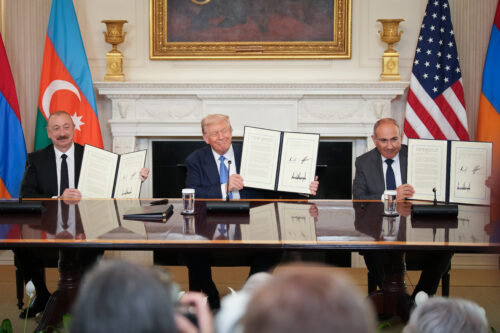
    This backgrounder provides an overview of how the Abraham Accords came about, the US interests involved, their economic and strategic consequences, and the prospects for further enlargement going forward.

    November 17, 2025

    Turkish Foreign Policy
  • Backgrounder
  • Turkish Foreign Policy

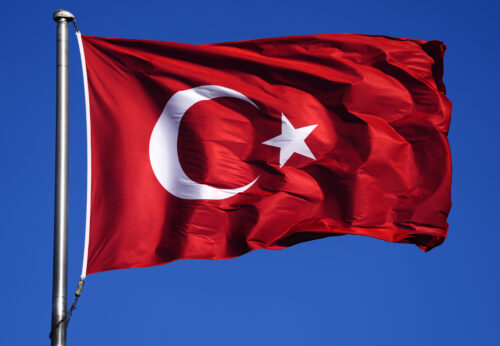
    After a decade of post-Arab Spring isolation, Turkey’s leaders have recognized that their ambition to position the country as an agenda-setter on the world stage requires active engagement in all directions. President Recep Tayyip Erdoğan’s consolidation of executive authority has centralized foreign policy decision-making and tied it to his domestic political priorities, transforming the country’s revisionist approach to one shaped primarily by personal and pragmatic interests.

    April 23, 2026

    Western Sahara: Why the conflict still matters
  • Video
  • Western Sahara: Why the conflict still matters

    As the Western Sahara conflict reaches its fifth decade, the territorial dispute remains unresolved and largely unknown. MEI’s Intissar Fakir unpacks the Western Sahara’s complex history and the rival claims by Morocco and the Sahrawi Arab Democratic Republic. She examines recent developments, such as President Trump’s recognition of Moroccan sovereignty over the territory and the collapse of a 30-year cease-fire, as well as the core questions that remain unanswered after half a century.

    August 7, 2025

    Podcasts

    Middle East Focus

    MEI’s flagship weekly podcast on US foreign policy and contemporary political and social issues in the Middle East.

    Taking the Edge Off the Middle East

    MEI Senior Fellow Brian Katulis engages friends, colleagues, and policy experts in casual conversations on the most important happenings in the Middle East. 

    Rethinking Democracy

    MEI Senior Fellow Gonul Tol hosts leading scholars and thought leaders on global democracy trends and the state of the liberal international order. 

    Filter by
    8749 Results
    After Mubarak:What do the Egyptian People Really Want?
    Middle East Institute
  • Podcast
  • After Mubarak:What do the Egyptian People Really Want?

    The Middle East Institute is proud to host Steven Kull and Shibley Telhami for an examination of Egyptian views and attitudes towards governance and their future. As Egyptian demonstrators celebrate the resignation of President Hosni Mubarak, many wonder what kind of system the Egyptian people really want. How do they view the Muslim Brotherhood? If Egypt were to become more democratic what are we likely to see in terms of its relation with the US, Israel and other countries in the region?

    February 16, 2011

    After Mubarak
    Middle East Institute
  • Analysis
  • After Mubarak

    The shock waves of Hosni Mubarak’s resignation have just started to roll across the Middle East, but in Egypt the upheaval has barely begun. The country now embarks on what the protesters in Tahrir square hope will be a transition to a true, civilian-led democracy. In the meantime, Egypt is headed for a period of military rule in some form, with the ultimate intentions of the armed forces leadership still in doubt. Will the military act to effect the “genuine transition” now demanded by the Obama Administration and the protesters themselves?

    February 14, 2011

    Turkey as an Alternative Democratization Model for the Middle East
    Middle East Institute
  • Analysis
  • Turkey as an Alternative Democratization Model for the Middle East

    The popular uprisings against authoritarian regimes in Tunisia, Yemen, Jordan and Egypt herald the beginning of a new political era in the Middle East. At the center of this new political order is a generation of young Arabs, educated, highly marginalized, and numerous. The members of the so-called Arab “youth bulge” are demanding neither the unification of the Arab world as espoused by the pan-Arabists of the 1960s, nor an Islamic state of the 1980s, but rather a dignified life, social justice, and freedom.

    US-Libya Relations: Surviving the Wikileaks Controversy?
    Middle East Institute
  • Video
  • US-Libya Relations: Surviving the Wikileaks Controversy?

    US-Libya Business Association Honorary Chairman Amb. David Mack and Executive Director Charles Dittrich traveled to Libya for five days in mid-December. They met with Libyan government officials, Libyan private business leaders and representatives of American companies working in the country. They will share impressions regarding the political and economic climate in Libya and the implications for both overall US-Libyan relations and the prospects for American business interests.

    February 10, 2011

    US-Libya Relations: Surviving the Wikileaks Controversy?
    Middle East Institute
  • Podcast
  • US-Libya Relations: Surviving the Wikileaks Controversy?

    US-Libya Business Association Honorary Chairman Amb. David Mack and Executive Director Charles Dittrich traveled to Libya for five days in mid-December. They met with Libyan government officials, Libyan private business leaders and representatives of American companies working in the country. They will share impressions regarding the political and economic climate in Libya and the implications for both overall US-Libyan relations and the prospects for American business interests.

    February 10, 2011

    Solar Power Scale-Up in the MENA: Resolving the Associated Water Use Challenges
    Middle East Institute
  • Analysis
  • Solar Power Scale-Up in the MENA: Resolving the Associated Water Use Challenges

    The Middle East and North Africa (MENA) region provides excellent conditions for the development of Concentrated Solar Power (CSP),[1] notably much irradiation and unused flat land[2] in close proximity to road networks and some transmission lines. Hence, a number of initiatives are underway to scale-up several donors are jointly launching a program to scale-up CSP in the MENA to several gigawatt (GW) over the next decade.[3]

    February 10, 2011

    Impacts of Water Scarcity on the Social Welfare of Citizens in the Middle East
    Middle East Institute
  • Analysis
  • Impacts of Water Scarcity on the Social Welfare of Citizens in the Middle East

    Over the past century, the Middle East and North Africa (MENA) has undergone huge changes. According to 2007 estimates, its population has risen from less than 50 million a century ago to over 331 million, and is expected to reach some 385 million people by 2015. During this same period, the environment has deteriorated and natural resources have dwindled due to development patterns which were largely unsustainable. In most cases, policies were overwhelmingly sets of provisional short-term measures, meant to tackle momentary challenges rather than engage in long-term planning.

    February 10, 2011

    Living with Soil Salinity: Is It Possible?
    Middle East Institute
  • Analysis
  • Living with Soil Salinity: Is It Possible?

    Soil and groundwater salinity has emerged as the most significant agricultural problem facing the Sultanate of Oman. Scant rainfall, coupled with high temperature, is always conducive to the accumulation of salts in soils. These conditions are predominant in Oman. Secondary soil salinity has increased at a very rapid rate due to the persistent use of saline groundwater, which, over time, has become more concentrated due to increased pumping by farmers in the Batinah region – the country’s most important agricultural area.

    February 10, 2011

    Low-Cost Methods to Treat Greywater: A Case Study from Oman
    Middle East Institute
  • Analysis
  • Low-Cost Methods to Treat Greywater: A Case Study from Oman

    Oman is an arid country where the pressure on freshwater reserves is as severe as that of any other arid or semi-arid country in the world. Increasing water availability by treating and reusing wastewater, particularly for irrigation, is a government policy in Oman. Identification of alternative sources of water and development of appropriate technology to harness them in order to reduce pressure on freshwater reserves and production capacity in Oman is a priority.

    February 10, 2011

    Innovating Ways to Face the Effects of Environmental Degradation
    Middle East Institute
  • Analysis
  • Innovating Ways to Face the Effects of Environmental Degradation

    The environmental degradation process in the Maghreb is mainly of natural origin, but has been accelerated by human activities. The most dangerous threats caused by environmental degradation are soil degradation and desertification, pollution, droughts, floods, and water scarcity.

    Action is urgently needed to return lands to their original vocation, to implement large-scale reforestation, to rehabilitate the steppe and oasis, and to ensure the stability of rural communities. But what kind of action, and action by whom?

    February 10, 2011

    Improvement of Air Quality in Egypt: The Role of Natural Gas
    Middle East Institute
  • Analysis
  • Improvement of Air Quality in Egypt: The Role of Natural Gas

    Egypt has had more than four decades of intensive natural gas exploration and development activities, which have become the main focus of the country’s hydrocarbon industry.

    February 10, 2011

    The Politics of Water Scarcity in Egypt
    Middle East Institute
  • Analysis
  • The Politics of Water Scarcity in Egypt

    We are entering the era of water scarcity throughout the world. Water scarcity is different from mined resources that become scarce when the lode runs out. Water is almost always renewable. The scarcity applies to expansion. For thousands of years, supply has been expanded through engineering. Nowhere is that more obvious than in Egypt, where water demand has been met by increasing supply. Expansion accelerated during the 19th and 20th centuries, but has now ground to a halt as there is no more water to collect, store, and distribute.

    February 10, 2011

    Inside the Egyptian Military
    Middle East Institute
  • Analysis
  • Inside the Egyptian Military

    If the current crisis in Egypt is to be resolved peacefully, the Egyptian military will play a central role. Few, if any outside the Egyptian armed forces, however, truly understand the Egyptian military. The following is an attempt to begin the process of better understanding this crucial institution.

    February 9, 2011

    The Muslim Brotherhood and Transition in Egypt
    Middle East Institute
  • Analysis
  • The Muslim Brotherhood and Transition in Egypt

    *A longer version of this article first appeared as a Special Commentary on the Jamestown Foundation's website, February 2, 2011.

    February 8, 2011

    Read the Middle East Journal

    The oldest peer-reviewed publication dedicated to the study of the modern Middle East, MEI’s flagship journal covers politics, society, and culture in the region.