Skip to Content

Research & Commentary

Read in-depth research, analysis, and commentary from MEI’s fellows and experts on the Middle East. 

Trump’s South Caucasus Peacemaking Is His Most Successful, but It Remains Unfinished
  • Commentary
  • Trump’s South Caucasus Peacemaking Is His Most Successful, but It Remains Unfinished

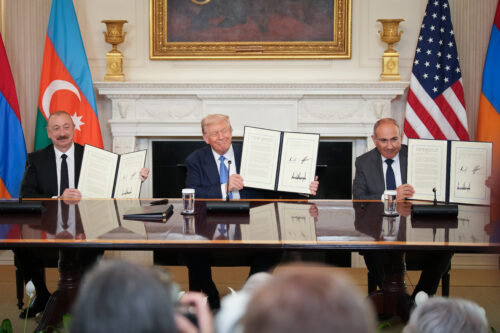
    Of all the fronts in President Trump’s peacemaking agenda, the South Caucasus has delivered the most concrete results. The August 2025 Washington Declaration, signed between Armenia and Azerbaijan and witnessed by Trump, marked an important step toward peace in the region. The two sides initialed a peace agreement and advanced plans to unblock regional connectivity, including through the establishment of the Trump Route for International Peace and Prosperity (TRIPP), which would connect Azerbaijan to its Nakhijevan exclave through southern Armenia. Implementation of TRIPP has since made notable progress, but construction has yet to start. A breakthrough on those two tracks would, in turn, unlock Armenia–Türkiye normalization, transforming a long-fractured region into an area of trade and interdependence.
    The Iran War Was Always About Regime Change
  • Commentary
  • The Iran War Was Always About Regime Change

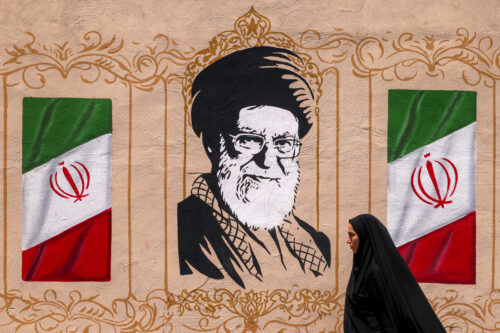
    Wars don’t just end. They get interpreted, reinterpreted, and turned into strategic doctrine. That is what happened after the Iran-Iraq War of the 1980s, a conflict that saw the United States back Tehran’s Iraqi adversaries. The war taught Tehran three lessons it never unlearned: that Washington wants the Islamic Republic gone, that Iran stands essentially alone in the world, and that it cannot survive a direct, overt fight with the U.S. and Israel.

    Iran’s New War Cabinet Is Really an Old One
  • Analysis
  • Iran’s New War Cabinet Is Really an Old One

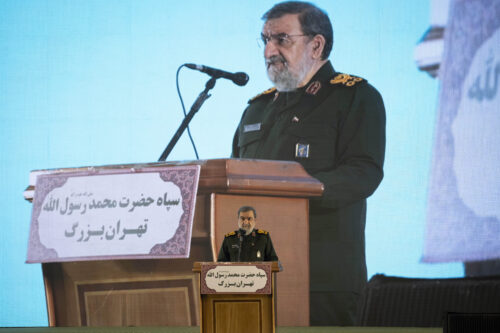
    Within 48 hours this week, Iran filled six of the most important posts in its battered military and security establishment. Read together with the biographies and mandates behind them, the appointments show how Tehran is drawing lessons from successive wars and preparing for a prolonged period of insecurity, without proving it has abandoned negotiation.

    Additional Research & Commentary

    Backgrounders

    Israeli Settlements in the West Bank
  • Backgrounder
  • Israeli Settlements in the West Bank

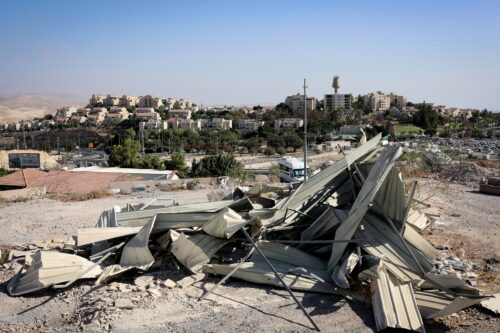
    Since 1967, Israeli settlements in the West Bank have been a contested feature of the Israeli-Palestinian conflict. The ultimate disposition of the settlements and ongoing activity related to their growth have repeatedly defied agreement in negotiations over a resolution to the conflict.

    June 9, 2026

    The Houthis
  • Backgrounder
  • The Houthis

    The Houthis are a political-military faction and Zaydi religious movement founded in northwestern Yemen in the 1980s. A key member of Iran’s Axis of Resistance with links to other militant organizations in the Arabian Peninsula and the Horn of Africa, the group has continued to pose a threat to Western interests on a global scale.

    May 15, 2026

    The India-Middle East-Europe Economic Corridor
  • Backgrounder
  • The India-Middle East-Europe Economic Corridor

    The India-Middle East-Europe Economic Corridor (IMEC) is a proposed multinational infrastructure initiative aimed at upgrading connectivity between the three regions through integrated trade, energy, and digital networks. Announced at the G20 summit in New Delhi in September 2023, IMEC is envisioned partially as a counterweight to China’s international infrastructure project, the Belt and Road Initiative.

    June 3, 2026

    Turkish Foreign Policy
  • Backgrounder
  • Turkish Foreign Policy

    After a decade of post-Arab Spring isolation, Turkey’s leaders have recognized that their ambition to position the country as an agenda-setter on the world stage requires active engagement in all directions. President Recep Tayyip Erdoğan’s consolidation of executive authority has centralized foreign policy decision-making and tied it to his domestic political priorities, transforming the country’s revisionist approach to one shaped primarily by personal and pragmatic interests.

    April 23, 2026

    Podcasts

    Middle East Focus

    MEI’s flagship weekly podcast on US foreign policy and contemporary political and social issues in the Middle East.

    Taking the Edge Off the Middle East

    MEI Senior Fellow Brian Katulis engages friends, colleagues, and policy experts in casual conversations on the most important happenings in the Middle East. 

    Rethinking Democracy

    MEI Senior Fellow Gonul Tol hosts leading scholars and thought leaders on global democracy trends and the state of the liberal international order. 

    Filter by
    8783 Results
    Getting Down to Business in Iraq
    Middle East Institute
  • Video
  • Getting Down to Business in Iraq

    The Middle East Institute is proud to host Thomas W. Donovan, an expert in Iraqi business law, specializing in international investment. Drawing upon his background as a corporate attorney and managing partner of the Iraq Law Alliance, PLLC, Mr. Donovan will discuss the particular nuances of doing business in post-war Iraq and how the 2009 Status of Forces Agreement may change the way in which international investors interact with their Iraqi partners. Mr.

    June 27, 2010

    Journey into America: The Challenge of Islam
    Middle East Institute
  • Video
  • Journey into America: The Challenge of Islam

    The Middle East Institute is proud to host distinguished academic and author Dr. Akbar Ahmed for a discussion of his latest book, Journey into America: the Challenge of Islam, a comprehensive study of the American-Muslim community. Dr. Ahmed will discuss the results of the research conducted by his team as they traveled to over 75 cities and 100 mosques across the United States to discover what Muslims are thinking, what they are reading, and how they are living every day in America. Among the questions his team asked include, "Can we expect an increase in homegrown terrorism?

    June 23, 2010

    Gulf Carbon Trading
    Middle East Institute
  • Video
  • Gulf Carbon Trading

    The Middle East Institute is proud to host Justin Dargin, research fellow at the Dubai Initiative, for a discussion of greenhouse gas (GHG) emissions in the Gulf and the pursuit of an effective carbon trading plan. Dargin will also examine the effect which this hot-button issue has upon the region's geopolitical relations, energy efficiency, natural gas utilization, renewable energy, and conservation of natural resources.

    June 17, 2010

    Gaza, the Land of the Recurring Crisis
    Middle East Institute
  • Analysis
  • Gaza, the Land of the Recurring Crisis

    The last five years of the Israeli-Palestinian conflict could be summed up in one word: Gaza.

    Israel’s lethal raid on the flotilla attempting to deliver aid to Gaza is part of a recurring theme that goes like this: Gaza wallows in dysfunction. Tensions steadily build. A confrontation erupts. Every major crisis between the Israelis and the Palestinians in recent years has revolved around Gaza—the overcrowded, impoverished strip of sand squeezed between Israel and the Mediterranean.

    June 10, 2010

    Human Rights and Zionism in Israel
    Middle East Institute
  • Video
  • Human Rights and Zionism in Israel

    The Middle East Institute, the Foundation for Middle East Peace, Churches for Middle East Peace, and Americans for Peace Now invite you to a presentation and discussion featuring Rabbi Arik Ascherman, Executive Director, Rabbis for Human Rights-Israel. RHR-Israel works to prevent human rights violations in Israel and the Occupied Territories, and to bring human rights grievances to the attention of the Israeli public through education and advocacy.

    June 10, 2010

    Lebanon's Politics in a Shifting Environment
    Middle East Institute
  • Video
  • Lebanon's Politics in a Shifting Environment

    The Middle East Institute is proud to host Paul Salem, Director of Carnegie's Middle East Center in Beirut, for a talk about the domestic and regional challenges facing Lebanon. He will examine the conditions for stability and the risks of war, and will assess prospects for political reform.

    June 9, 2010

    United States Will Pay a Heavy Price for the Gaza Flotilla Incident
    Middle East Institute
  • Analysis
  • United States Will Pay a Heavy Price for the Gaza Flotilla Incident

    Asserting its need to be secure from future terrorism launched from Gaza, Israel used force last week to maintain a blockade that has been creating a humanitarian cataclysm for the people of Gaza. In the early days following the attack on the aid flotilla, the Israeli military interpretation of events dominated much of the popular media coverage in the United States. Gradually, though, attention shifted to the incident’s negative impact on Israel’s international standing and the security implications of continued international and regional uproar.

    June 7, 2010

    As the US Plans Its Exit, the Iraqis Find Reason to Worry
    Middle East Institute
  • Analysis
  • As the US Plans Its Exit, the Iraqis Find Reason to Worry

    This Commentary was originally published as an op-ed in The National May 31, 2010.

    ‘What does the US want from Iraq?” This was the question of a university educator during a large gathering of Iraqi politicians, students, journalists and activists we met during a 10-day trip to Baghdad and Kurdistan sponsored by Washington’s Stimson Center earlier this month.

    June 1, 2010

    Hezbollah and the Next War with Israel
  • Video
  • Hezbollah and the Next War with Israel

    The Middle East Institute is proud to host journalist and author Nicholas Blanford. With fears running high of a fresh war between Hezbollah and Israel, Blanford will discuss the prospects of a second encounter between these two enemies. He will examine the military developments undertaken by Hezbollah and Israel since the July 2006 conflict and analyze how the next war might be fought on the ground. Blanford will also explore the political implications of such a conflict on the region.

    May 21, 2010

    Brazil’s Embrace of the Iranian Government Will Only Embolden the Regime Internationally
    Middle East Institute
  • Analysis
  • Brazil’s Embrace of the Iranian Government Will Only Embolden the Regime Internationally

    This Commentary first appeared as an op-ed in the America's Quarterly Policy Journal, Spring 2010

    Can Brazil play a significant role in containing Iran's nuclear ambitions? No.

    Brazil’s self-perceptions and aspirations as an emerging global power are a key to understanding why the government of President Luiz Inácio Lula da Silva has chosen this particular moment in time to deepen ties with an Iranian regime that is facing crisis, both at home and abroad.

    Pakistan 2010: Accomplishments and Opportunities
  • Video
  • Pakistan 2010: Accomplishments and Opportunities

    The Middle East Institute is proud to host Salman Taseer, the Governor of Pakistan's Punjab province. He will examine Pakistan's accomplishments over the past year and its looming challenges.

    May 18, 2010

    A Palestinian Perspective on Current Issues
    Middle East Institute
  • Video
  • A Palestinian Perspective on Current Issues

    The Middle East Institute is proud to host Dr. Hanan Mikhail Ashrawi, Member of the PLO Executive Committee and the Palestinian Legislative Council, or a discussion about Palestinian-Israeli proximity talks and other issues related to the peace process and the situation in the West Bank and Gaza.

    May 13, 2010

    Read the Middle East Journal

    The oldest peer-reviewed publication dedicated to the study of the modern Middle East, MEI’s flagship journal covers politics, society, and culture in the region.