Skip to Content

Economics

The India-Middle East-Europe Economic Corridor
  • Backgrounder
  • The India-Middle East-Europe Economic Corridor

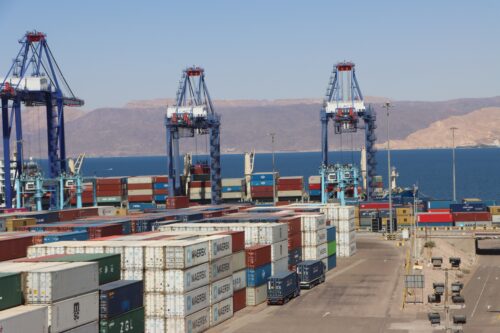
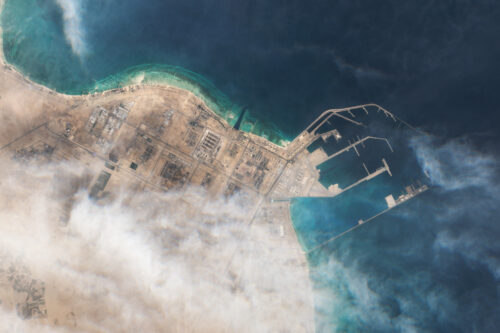
    The India-Middle East-Europe Economic Corridor (IMEC) is a proposed multinational infrastructure initiative aimed at upgrading connectivity between the three regions through integrated trade, energy, and digital networks. Announced at the G20 summit in New Delhi in September 2023, IMEC is envisioned partially as a counterweight to China’s international infrastructure project, the Belt and Road Initiative.

    June 3, 2026

    Syria’s New Investment Law and the Return of State-Mediated Market Access
  • Analysis
  • Syria’s New Investment Law and the Return of State-Mediated Market Access

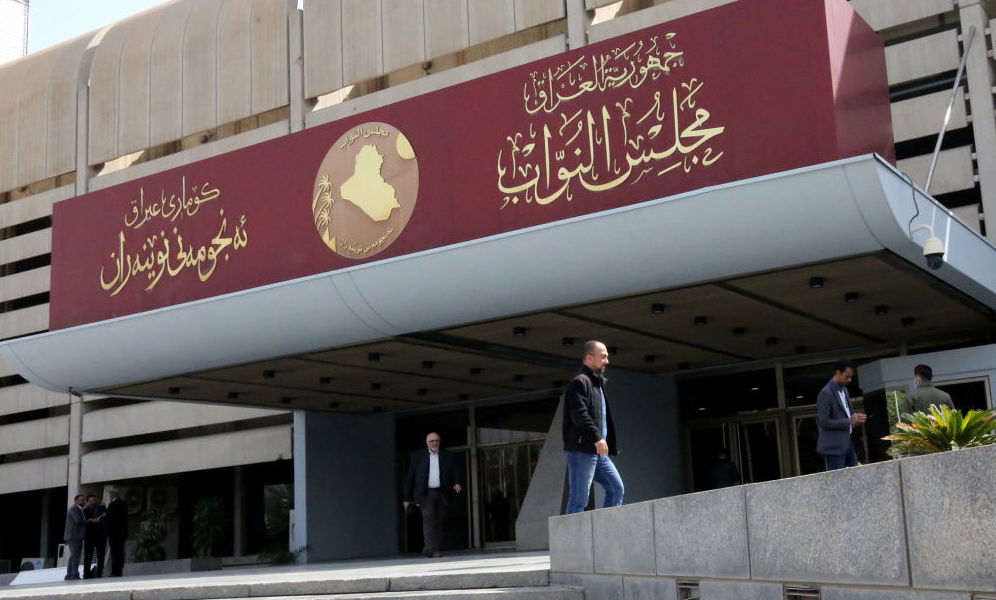
    As Syria moves toward reconstruction, the country’s new authorities have already made a consequential decision about who will control the postwar economy. Last June, President Ahmed al-Sharaa enacted Investment Law 114 by presidential decree, granting sweeping and permanent concessions to investors. Yet rather than make those incentives broadly accessible, the law preserves the country’s longstanding model of state-mediated market access.

    May 21, 2026

    MENA Energy Recap, Q1-2026: Four Lessons From the Return of Tail Risk
    Photo by Elke Scholiers/Getty Images
  • Report
  • MENA Energy Recap, Q1-2026: Four Lessons From the Return of Tail Risk

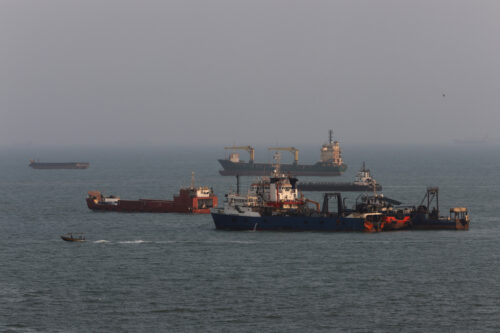
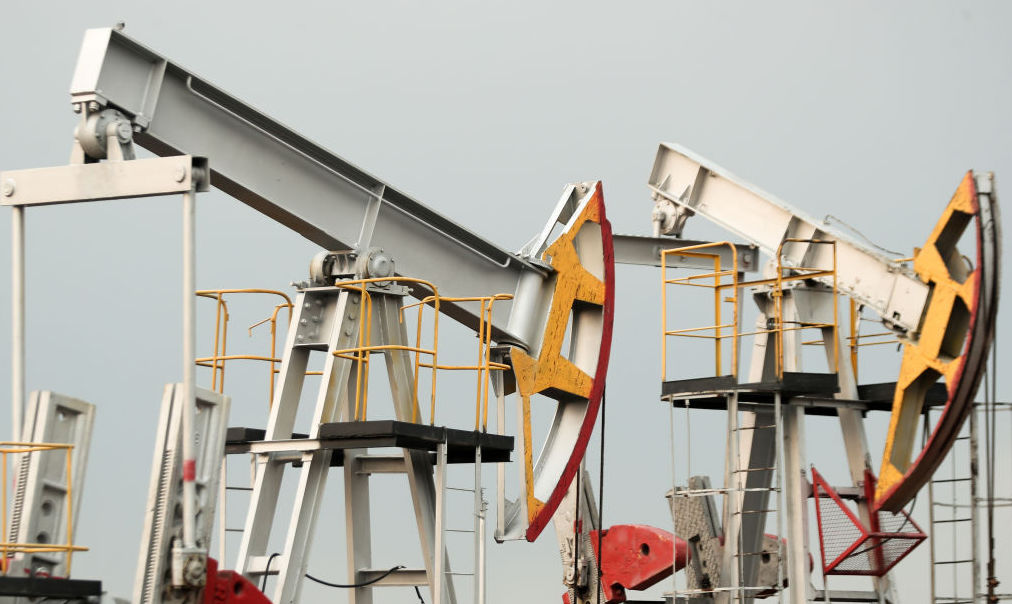
    This is a special edition of the MENA Energy Recap — a quarterly review of key energy developments that took place in the region from January through March of 2026 and what they signal in the months ahead. For Q1-26, the recap considers some of the long-term implications of the ongoing war in the region, which have caused the largest energy supply disruption in history, and what lessons these events hold for both near- and long-term energy dynamics in both the Middle East and the wider world.

    Filter by
    750 Results
    Could COVID-19 push Jordan to the edge?
    Xinhua/Mohammad Abu Ghosh via Getty Images
  • Analysis
  • Could COVID-19 push Jordan to the edge?

    Since the establishment of the Hashemite Kingdom of Jordan a hundred years ago, many have argued at one point or another that the country is on the brink of political or economic instability. It seems increasingly true these days, however. The unexpected shock of the COVID-19 pandemic adds even more pressure to the already floundering economy.

    March 30, 2020

    What does COVID-19 mean for Egypt’s economy?
    Photo by KHALED DESOUKI/AFP via Getty Images
  • Analysis
  • What does COVID-19 mean for Egypt’s economy?

    COVID-19 has disrupted both supply and demand around the world. Egypt is not immune to the recessionary trends caused by the sudden halt in supply chains and the sharp decline in demand, domestically and globally, resulting from the rapid spread of the virus.

    March 26, 2020

    Could coronavirus lead to an Arab Spring 2.0?
    Xinhua/via Getty Images
  • Analysis
  • Could coronavirus lead to an Arab Spring 2.0?

    No part of the world will emerge unscathed from the fallout of the coronavirus pandemic of 2020. Just because China and Italy were the first to be severely hit, does not imply, that when all is said and done, that they will have sustained the brunt of the damage. North Africa is a region dependent on global commodities prices, tourism, and political and monetary support from Europe and the Gulf, where regime brittleness, youth unemployment, and Islamic radicalism all intersect.

    March 25, 2020

    The best of a bad situation? Considering next steps for Lebanese leaders
    Riot policemen use water cannons to disperse anti-government protesters during clashes near the Grand Serail, headquarters of the Prime Minister of Lebanon. Photo: Marwan Naamani/dpa (Photo by Marwan Naamani/picture alliance via Getty Images)
  • Analysis
  • The best of a bad situation? Considering next steps for Lebanese leaders

    The Lebanese are in trouble. Lebanese leaders have borrowed and spent money for decades without addressing fundamental flaws in their state, economy, and society — operating in an order that, while not the cause of every problem under the sun, aggravates their poor politics, policy, planning, and governance.

    March 23, 2020

    The US must remain engaged in Lebanon or risk Russian and Chinese gains
    US Secretary of State Mike Pompeo (L) meets with Lebanon's President Michel Aoun (R) at the presidential palace in Baabda, east of the capital Beirut on March 22, 2019.
  • Analysis
  • The US must remain engaged in Lebanon or risk Russian and Chinese gains

    Amid an unprecedented political, economic, and financial crisis and the emergence of a new threat from the global coronavirus pandemic, Lebanon needs all the help it can get. The U.S. has long been an important source of assistance, and yet, as conversations with officials in both Beirut and Washington make clear, the argument for halting U.S. aid to Lebanon seems to be gaining ground.

    March 18, 2020

    Algeria-Europe economic integration: Where are we now and where do we go?
    Federal Chancellor Angela Merkel (CDU) receives Abdelmadjid Tebboune (r), President of Algeria, in front of the Federal Chancellery for the Libya Conference.
  • Analysis
  • Algeria-Europe economic integration: Where are we now and where do we go?

    In the face of Algeria’s Hirak protest movement, the response of the EU so far has been measured, and it is notable that the EU’s calls for democratic reform are framed in economic terms that emphasize the benefits of greater economic integration between the states of the Maghreb. What opportunities do the ongoing changes in Algeria present for enhancing economic integration in the long term?

    March 17, 2020

    Iran and Russia: A tale of unfulfilled economic potential
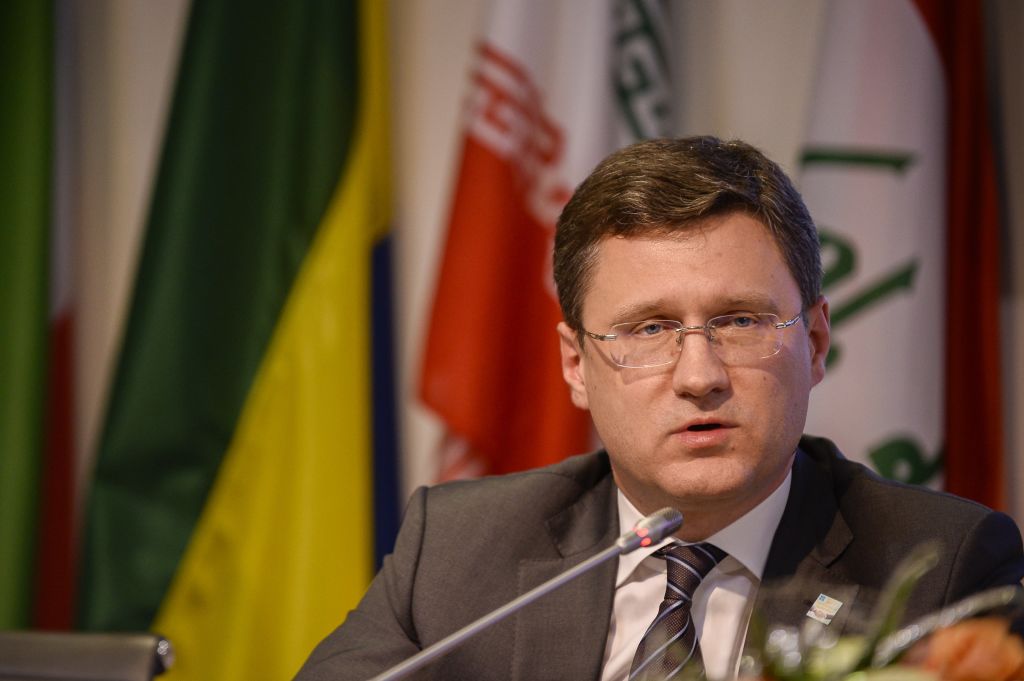
    Iran's Minister of Economic Affairs and Finance, Masoud Karbasian (L) and Russias Energy Minister Alexander Novak shake hands at a signing ceremony following a meeting of the Russian-Iranian intergovernmental commission for trade and economic cooperation at Moscow's President Hotel
  • Analysis
  • Iran and Russia: A tale of unfulfilled economic potential

    The outbreak of a Russian-Saudi oil price war earlier this month might offer some comfort to Iran, a country which has in recent years become unnerved by the increasingly close ties between Moscow and Riyadh. However, it is premature to see an Iranian geopolitical win emerging from the Russian-Saudi spat, and history should give Tehran plenty of reservations about Moscow’s ability to deliver on its economic promises to Iran. While Iran and Russia will likely continue to pay lip-service to the idea of an economic partnership, each side will remain preoccupied with larger concerns. This is a tale of unfulfilled economic potential.  

    The economic outlook for MENA amid COVID-19 and the oil price drop
    A labourer sprays disinfectant in Jordan's archaeological city of Petra south of the capital Amman on March 17, 2020, to prevent the spread of COVID-19.
  • Analysis
  • The economic outlook for MENA amid COVID-19 and the oil price drop

    Economies around the world are being battered by two “black swan” events at the same time: the COVID-19 virus and the oil price war between Russia and Saudi Arabia. Naturally, the countries of the Middle East and North Africa (MENA) are also affected, although each in different ways. Those that are net users of energy, which could have benefitted substantially from the vastly lower energy prices, are getting hit hard by COVID-19, while oil and gas producers are suffering from an all-out oil price war made worse by the steep decline in worldwide demand caused by the pandemic. 

    March 17, 2020

    The Forgotten Iraq
     Iraqi civilians, who fled from Daesh controlled Hawija district of Kirkuk, are seen at Daqouq tent city southern Kirkuk, Iraq on November 12, 2017. (Photo by Ali Mukarrem Garip/Anadolu Agency/Getty Images)
  • Analysis
  • The Forgotten Iraq

    The story from Iraq since last October has been mainly one of uplifting hope, as mass protests sweep across the country in a fight against corruption, nepotism, and bad governance. But what of the places left behind and ignored? For most of its modern history, Iraq has been embroiled in sectarianism and conflict, most recently with the rise of ISIS. The country has celebrated its ability to fight ISIS and take back the areas the group controlled between 2013 and 2017, but for those that remain in the most vulnerable liberated areas, life is precarious and dangerous, with underserviced communities living in the most dire of conditions.

    March 16, 2020

    Missing the long game: Washington’s high-risk energy diplomacy in Iraq
    An employee walks at the Hammar Mushrif new Degassing Station Facilities site inside the Zubair oil and gas field, north of the southern Iraqi province of Basra on May 9, 2018. (Photo by HAIDAR MOHAMMED ALI / AFP) (Photo credit should read HAIDAR MOHAMMED ALI/AFP via Getty Images)
  • Analysis
  • Missing the long game: Washington’s high-risk energy diplomacy in Iraq

    Washington’s foreign relations in the Middle East are often characterized by ebb and flow, tracking the region’s dynamic politics. But when it comes to Iraq, this ebb and flow is especially turbulent, and the country’s energy sector has been thrown under the spotlight as Washington presses Baghdad to take swift action to ensure its “energy independence” from Iran.

    March 13, 2020

    Seizing the Moment for Change: Pathways to a Sustainable US-Pakistan Relationship
  • Analysis
  • Seizing the Moment for Change: Pathways to a Sustainable US-Pakistan Relationship

    It is a near truism that U.S. relations with Pakistan have been historically unstable, waxing and waning, climbing to heights of interdependence and sinking to mutual recrimination. Yet this is presently a period unmarked by either high promise or driven by crisis. Rather than a reason, however, for leaving the relationship untouched and unexamined, this can be a time of unusual opportunity to create a more deliberative approach to thinking about the bilateral relationship and for shaping fresh initiatives.

    “People can’t even afford to buy bulgur”: Discontent is on the rise as Syria’s economic crisis worsens
    Shoppers walk through the Bzourieh market in the centre of the Syrian capital Damascus on September 11, 2019.
  • Analysis
  • “People can’t even afford to buy bulgur”: Discontent is on the rise as Syria’s economic crisis worsens

    The latest economic crisis in Syria is hitting the population hard. Syrians have been beset by currency depreciation, soaring prices for basic goods, and energy shortages that have left people to freeze in the harsh winter, leading to growing and increasingly vocal discontent.

    February 28, 2020

    How can Egypt capitalize on its start-up boom?
    Social entrepreneur, Amr Sobhy, CEO of Pushbots, works in the office space at Flat6Labs on November 7, 2012 in Cairo, Egypt.
  • Analysis
  • How can Egypt capitalize on its start-up boom?

    There has been a largely overlooked yet significant trend in entrepreneurship in Egypt, the Arab world’s most populous country. Much of this has been concentrated in the country’s two main economic centers, Cairo and Alexandria, but there are also signs of a broader and more inclusive trend. Despite this boom, few start-ups seem to have left much of a mark beyond the early development stages. A lack of access to finance has long been recognized as a key obstacle, yet the approaches taken by the government and international development lenders have proven largely ineffective. If this, along with other obstacles, can be addressed, the country’s nascent start-up scene could become a catalyst for economic development.

    February 20, 2020

    Read the Middle East Journal

    The oldest peer-reviewed publication dedicated to the study of the modern Middle East, MEI’s flagship journal covers politics, society, and culture in the region.