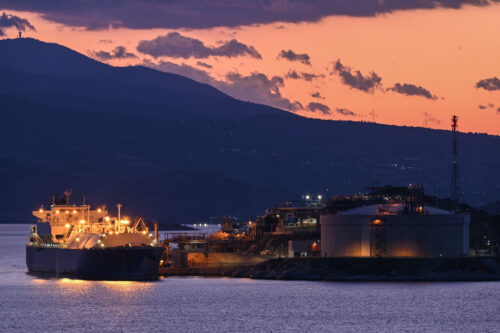
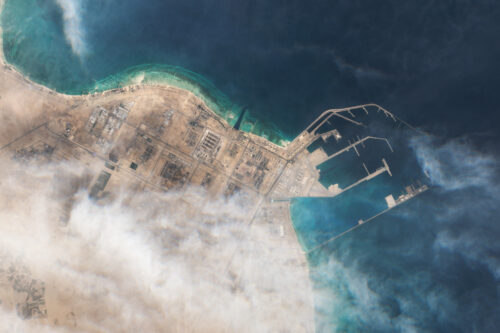
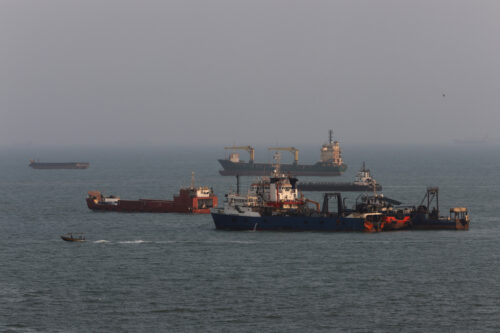
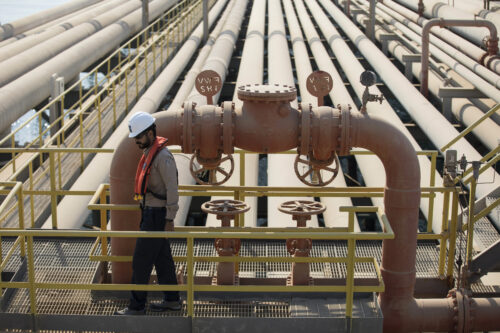
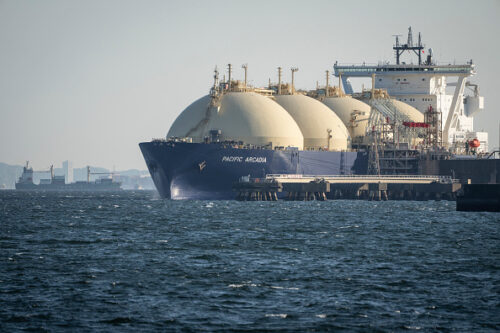
In less than two decades, a string of offshore discoveries has turned the Eastern Mediterranean into a significant gas-producing region, making Israel an exporter, twice lifting Egypt into the ranks of liquefied natural gas (LNG) exporters, and giving Cyprus finds it has yet to bring to market. This backgrounder explores the potential and challenges of exploiting and managing LNG resources in the region.
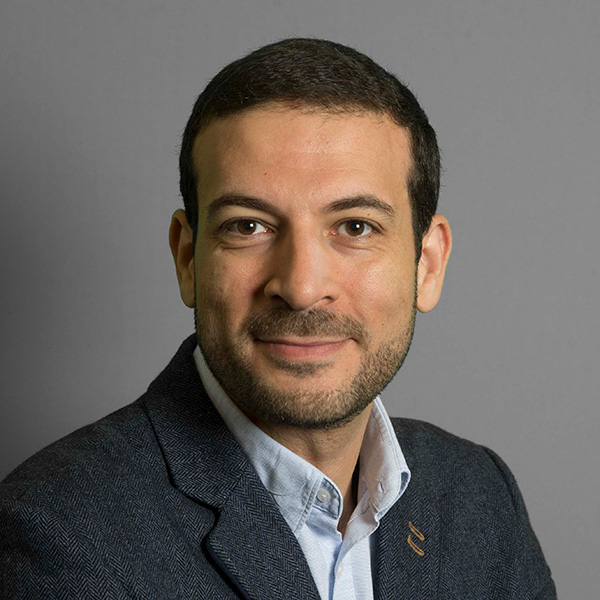
From the Middle East to Middle America: Engineering Better Policy with Andrew J. Tabler
Brian sits down with Andrew J. Tabler, the Martin J. Gross Senior Fellow in the Linda and Tony Rubin Program on Arab Politics at The Washington Institute, to trace his unique and distinctive path from Oil City, Pennsylvania, to fourteen years living and working in the Middle East. Tabler discusses his time in Syria under the Assad regime, his service as director for Syria at the National Security Council and as senior advisor to the Special Envoy for Syria Engagement at the US State Department’s Bureau of Near Eastern Affairs in the first Trump administration, and explains how these experiences shaped his perspective and inspired him to found the Drake Energy Forum.
Special Episode: Saudi Oil After the East-West Pipeline Attack
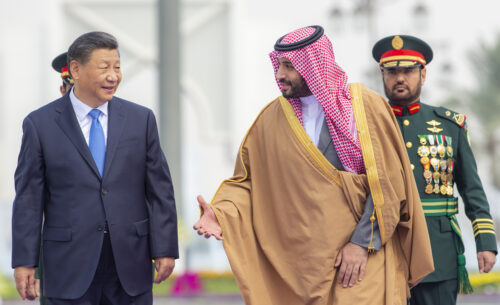
Saudi Arabia’s East-West pipeline is back in operation after a drone attack from Iraq, blamed on Iran-backed militias, shut it down for nearly two weeks. The pipeline is the kingdom’s main way to export oil while the Strait of Hormuz is closed, so the shutdown dealt another blow to global energy markets. How vulnerable is this route, and what does that mean for the kingdom and the world economy? This episode of Middle East Focus features a recent MEI Virtual Briefing in which Director of Communications Zeina Al-Shaib is joined by MEI Senior Fellow Colby Connelly and MEI Affiliate Yesar Al-Maleki. They examine the new geopolitical risks facing the oil market, what further losses of global supply could mean for Saudi Arabia and the world economy, and which buffers outside the Persian Gulf could ease the pressure.
In less than two decades, a string of offshore discoveries has turned the Eastern Mediterranean into a significant gas-producing region, making Israel an exporter, twice lifting Egypt into the ranks of liquefied natural gas (LNG) exporters, and giving Cyprus finds it has yet to bring to market. This backgrounder explores the potential and challenges of exploiting and managing LNG resources in the region.
From the Middle East to Middle America: Engineering Better Policy with Andrew J. Tabler
Brian sits down with Andrew J. Tabler, the Martin J. Gross Senior Fellow in the Linda and Tony Rubin Program on Arab Politics at The Washington Institute, to trace his unique and distinctive path from Oil City, Pennsylvania, to fourteen years living and working in the Middle East. Tabler discusses his time in Syria under the Assad regime, his service as director for Syria at the National Security Council and as senior advisor to the Special Envoy for Syria Engagement at the US State Department’s Bureau of Near Eastern Affairs in the first Trump administration, and explains how these experiences shaped his perspective and inspired him to found the Drake Energy Forum.
Special Episode: Saudi Oil After the East-West Pipeline Attack
Saudi Arabia’s East-West pipeline is back in operation after a drone attack from Iraq, blamed on Iran-backed militias, shut it down for nearly two weeks. The pipeline is the kingdom’s main way to export oil while the Strait of Hormuz is closed, so the shutdown dealt another blow to global energy markets. How vulnerable is this route, and what does that mean for the kingdom and the world economy? This episode of Middle East Focus features a recent MEI Virtual Briefing in which Director of Communications Zeina Al-Shaib is joined by MEI Senior Fellow Colby Connelly and MEI Affiliate Yesar Al-Maleki. They examine the new geopolitical risks facing the oil market, what further losses of global supply could mean for Saudi Arabia and the world economy, and which buffers outside the Persian Gulf could ease the pressure.
Gulf Political Economy: The Cost of Accommodating Iran
There may be no near-term resolution to the conflict between the United States, Israel, and Iran. The cease-fire and memorandum of understanding (MoU) signed on June 18 have broken down, there is little diplomatic engagement, and new flare-ups in early September indicate a further round of escalation. Gulf states may have no choice but to protect their assets and populations while trying to deter Iran by finding mechanisms of both containment and accommodation.
Gulf Energy Markets: The Region’s Edge Will Survive — At a Price
Across the Gulf, views differ widely on how the Iran war can and should end, and what the region will look like once it does. Yet on the crisis over the closure of the Strait of Hormuz, the view is near-unanimous that a repeat is not only possible but likely. That expectation, more than any single incident over the past year, is becoming a major driver of decision-making in industry and policy circles alike.
Hormuz crisis has forced Japan into rethinking – and domesticating – its energy security needs
Japan’s Foreign Minister Motegi Toshimitsu phoned his Iranian counterpart, Abbas Araghchi, on Sept. 8, 2026, to express concern over the de facto closure of the Strait of Hormuz. It was reportedly the ninth such phone call between the pair since March.
Six months into the U.S.-Israeli war against Iran, Southeast Asia’s exposure to a conflict thousands of miles away has proven durable rather than transient — and it is beginning to function as a genuine stress test of the region’s institutions, not just its energy bills.
MENA Energy Recap, Q2-2026: Mideast Energy Confronts its Hormuz Era
The MENA Energy Recap is a quarterly review of key energy developments that took place in the region from April through June of 2026 and what they signal in the months ahead. The Recap views these developments through the lens of policy and strategy, energy security, and markets.
The Other MoU: Launching a Europe-Gulf Resilience Initiative After the US-Iran Deal
The Islamabad Memorandum of Understanding (MoU) between the United States and Iran may have ended one of the most consequential Middle Eastern crises in decades, but it has not resolved the strategic problem it exposed. Whether the 60-day talks it set in motion will produce a final agreement remains far from certain.Yet the central lessons are already clear: Iran has preserved significant leverage, Washington has had to scale back its ambitions, and Europe and the Gulf face the prospect of protracted regional tension. Europe and the Gulf should therefore use the aftermath of the US-Iran deal to articulate their own “other MoU”: a Europe-Gulf Resilience initiative.
The Gulf’s Strategic Paradox: Lost Confidence in the US Security Umbrella, Enduring Trust in the Dollar
This essay argues that the current debate about the future of the international monetary system is not really about Gulf currencies, oil pricing, or de-dollarization in the narrow technical sense. It is about something deeper and more important: whether institutional trust can survive when geopolitical certainty is eroding.
When Will Energy Markets Recover From the Iran War?
Two and a half months into the blockade of the Strait of Hormuz, what lessons can markets draw from the resulting global energy shock? Colby Connelly, MEI Senior Fellow, joins hosts Alistair Taylor and Matthew Czekaj to assess the crisis’s impact on the energy industry. Together, they examine how producers are responding to the conflict in both the short and long term, how this moment differs from past energy disruptions, and how regional reverberations may shape international energy policies going forward.
The oldest peer-reviewed publication dedicated to the study of the modern Middle East, MEI’s flagship journal covers politics, society, and culture in the region.