
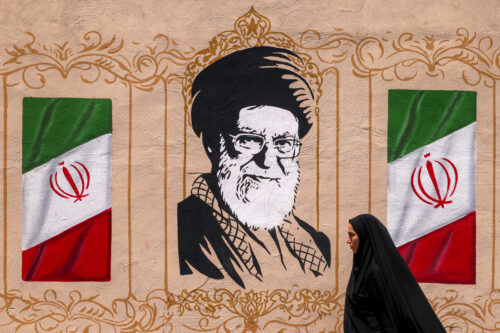
Wars don’t just end. They get interpreted, reinterpreted, and turned into strategic doctrine. That is what happened after the Iran-Iraq War of the 1980s, a conflict that saw the United States back Tehran’s Iraqi adversaries. The war taught Tehran three lessons it never unlearned: that Washington wants the Islamic Republic gone, that Iran stands essentially alone in the world, and that it cannot survive a direct, overt fight with the U.S. and Israel.
In other words, it can only prevail through an indirect, ambiguous confrontation. Those lessons have governed four decades of Iranian behavior: the support for proxies like Hezbollah and the Houthis, the nuclear brinkmanship, and the refusal to trust any American overture.
Now Iran has fought two more wars, in 2025 and 2026, and it is drawing new lessons on top of the old ones. Washington should pay close attention to what those lessons are, because they will shape Iranian strategy for years to come.
Photo by ATTA KENARE / AFP via Getty Images
The Middle East Institute (MEI) is an independent, non-partisan, not-for-profit, educational organization. It does not engage in advocacy and its scholars’ opinions are their own. MEI welcomes financial donations, but retains sole editorial control over its work and its publications reflect only the authors’ views. For a listing of MEI donors, please click here.
Yemen: The Houthis’ Role in the Next Evolution of the Axis of Resistance

US Regional Foreign Policy: Unforced Diplomatic Errors Risk Accelerating American Retrenchment