Brian Katulis is a senior fellow at the Middle East Institute, specializing in US foreign policy and national security. He authors the column “Making Sense: A Regular Take on US Foreign Policy” and hosts the podcast “Taking the Edge Off the Middle East.” Katulis draws on decades of experience living and working in the Middle East, where he has forged relationships of trust and confidence across the region with top leaders in government, the private sector, media, national security, and thought leaders from a wide variety of international organizations.
As a foreign policy strategist and senior fellow, Katulis has produced influential studies that have shaped key regional policy debates and provided expert testimony to congressional committees on his findings. Prior to MEI, he was a senior fellow at the Center for American Progress (CAP), where he built the center’s Middle East program. His career also includes significant experience at the National Security Council, the US Department of State, and the US Department of Defense.
Katulis co-authored The Prosperity Agenda (2008) with Nancy Soderberg, a book that examines how America’s economic advantages can be used to positively shape global dynamics. He is also frequently quoted in leading news publications and media outlets.
He holds a Master in Public Affairs from Princeton University’s School of Public and International Affairs and a BA in History and Arab and Islamic Studies from Villanova University. He was a Fulbright Scholar in Amman, Jordan from 1994-1995, where he conducted a research project on the peace process between Israel and Jordan.
Against the backdrop of the Iranian government’s brutal crackdown on protestors, Brian is joined by Emad Shargi, an Iranian-American businessman who was unjustly detained by the regime in 2018 until his release in 2023. Shargi recounts his firsthand experience in the notorious Evin Prison and offers rare insights into the mentality and tactics of the Islamic Republic. He and Brian also discuss his recommendations for US engagement in Iran and his hopes for the country’s future.
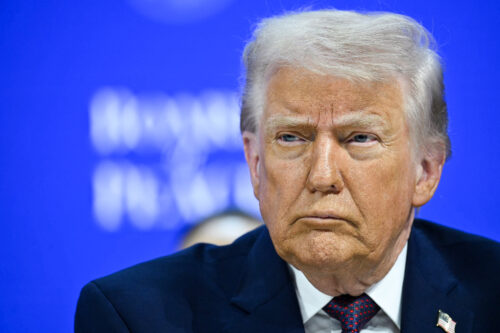
From a US military build-up in the region to Trump’s growing unpopularity at home, several factors could influence his decision on whether or not to attack.
Brian sits down with Behnam Taleblu, Senior Fellow at the Foundation for Defense of Democracies, to unpack the ongoing protests in Iran and what this moment reveals about the long struggle between the state and the street. They discuss the regime’s brutal crackdown, the prospect of US intervention, and what both could mean for the future of the Islamic Republic. The episode centers on agency, imagination, and the possibilities facing Iranians at a critical juncture in the country’s history.
US President Donald Trump is scheduled to deliver a prime time address to the nation this evening at a moment when public support for his second term has hit new lows. No matter the topic Trump chooses to frame the national conversation as America heads into the holiday season, it is worth taking a step back and reflecting on the bigger story of what has occurred in the United States in 2025 and how these dynamics affect America’s relations with the rest of the world, including the Middle East.
Unfinished business will drive the Mideast agenda in 2026
Following another year of pivotal developments and transformational change, the Middle East could be poised to turn the page on many of its long-running conflicts and sources of instability. But lasting fruits of the processes begun in 2025 will require a determined, intentional focus by regional actors and the United States. Given current trends, MEI experts weigh in on where the region may be headed in 2026.
Brian sits down with Robert Malley, a former US official best known for his role as the lead negotiator of the 2015 Joint Comprehensive Plan of Action. Malley discusses the motivations behind his new book, Tomorrow Is Yesterday: Life, Death, and the Pursuit of Peace in Israel/Palestine, and offers his assessment of American perspectives on the war in Gaza. The conversation also explores his personal background as the son of an Egyptian Jewish father and an American Jewish mother—both outspoken on the political left—and how that upbringing shaped his worldview, alongside a career spanning the Clinton, Obama, and Biden administrations.
How Palestinian Roots Shaped an American Ambassador
Brian welcomes Ambassador (ret.) Theodore “Ted” Kattouf, who previously served as US Ambassador to Syria and the United Arab Emirates, as well as President and CEO of the leading nonprofit organization Amideast. Kattouf reflects on how his Palestinian-American background shaped his diplomatic career and worldview. The two also take time to honor the life and legacy of Paul Kattouf, Ted’s son and Brian’s high school classmate, who was murdered in 2024.
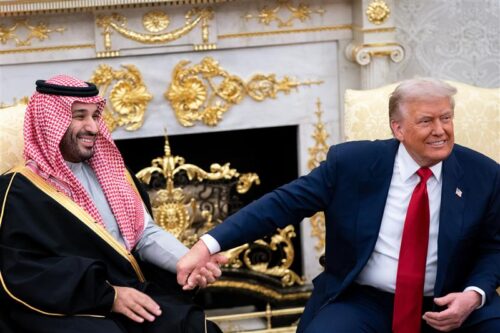
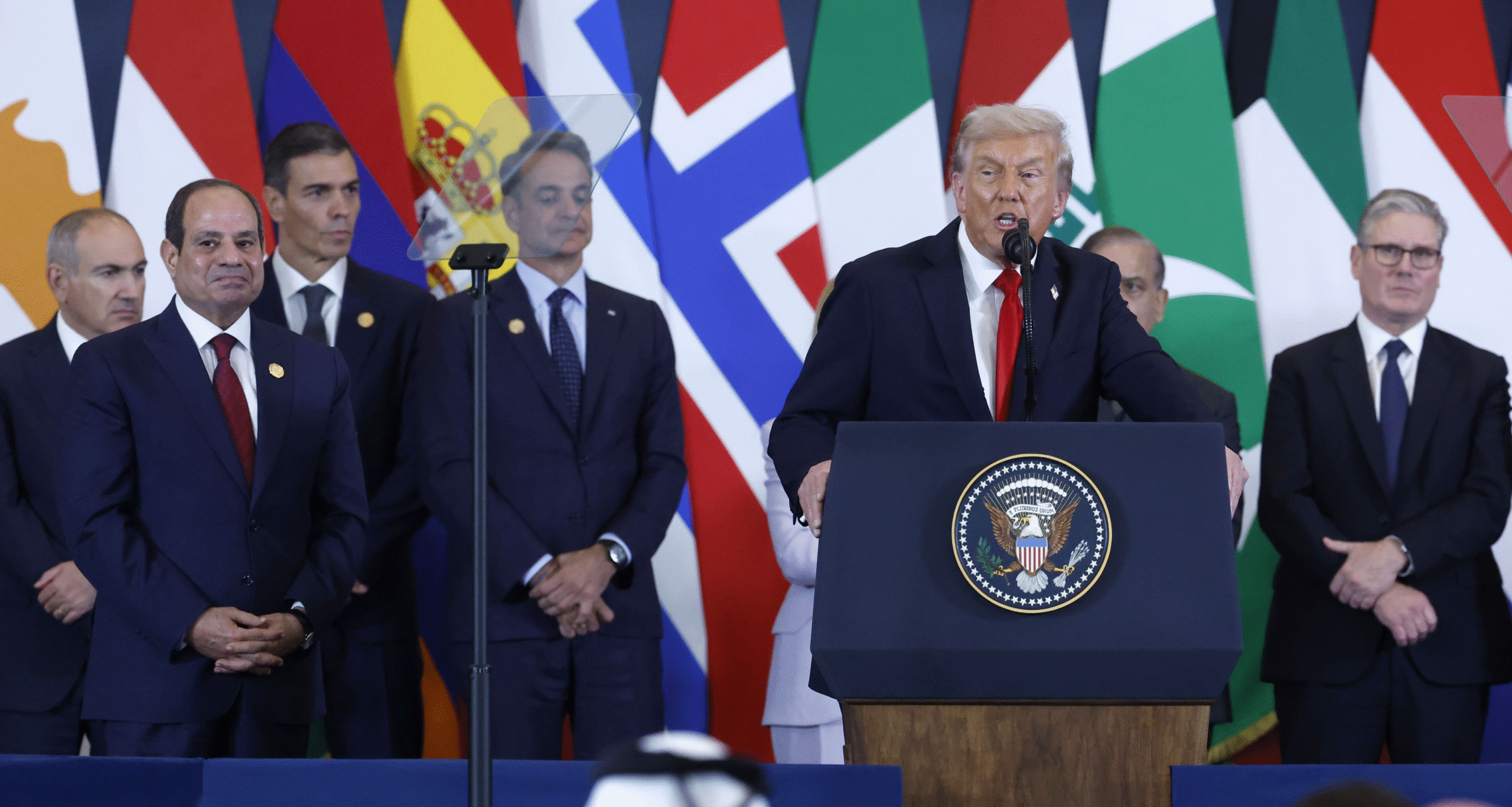
Last week’s visit by Saudi Crown Prince Mohammed bin Salman to Washington, DC marked a pivotal moment in the 80-year relationship between the United States and Saudi Arabia. History could look back on this moment as a major turning point for both countries, depending on how key strategic issues are addressed in the months to come.
Special Feature: A Front-Row Seat to Saudi Arabia’s Transformation
In this episode, Brian sits down with Faisal Abbas, editor-in-chief of Arab News. Abbas, who reported on Saudi Crown Prince Mohammed bin Salman’s November 18 visit to the White House, unpacks his impressions from the visit and the opportunities it presents for US-Saudi relations. The conversation also explores the Kingdom’s transformation over the past decade, its relationships with key partners including the United States, and Abbas’s recommendations for deepening the US-Saudi partnership going forward.
Saudi Crown Prince Mohammed bin Salman’s November 2025 visit to the United States is his first in more than seven years, and during the past few years Saudi Arabia has assumed an increasingly prominent role in regional and global affairs. In this episode, Brian Katulis sits down with Richard Fontaine, CEO of the Center for a New American Security, for a discussion focused on Saudi Arabia’s emergence as a key “swing state” in regional and global dynamics. The two discuss “Global Swing States and the New Great Power Competition,” a report that Fontaine published earlier this year with Gibbs McKinley. Richard also discusses his many travels around the world with the late Senator John McCain’s delegations, the recent changes in the politics of US national security, and shares personal stories from trips Brian and Richard took together across the Middle East.
US-Saudi ties are the cornerstone of Trump’s Mideast policy
When Saudi Crown Prince Mohammed bin Salman visits the White House to meet with US President Donald Trump on 18 November, there will be no shortage of issues for the two leaders to discuss. Follow-up on the robust bilateral cooperation frameworks in economics and technology, including artificial intelligence — outlined during Trump’s visit to the country in May — is sure to be on the agenda, as are still-unresolved thorny regional security issues, such as Iran, Israel-Palestine, and the continued threats presented by the Houthis in Yemen.
Divisions at home hinder America’s ambitions abroad
Over the past week, US President Donald Trump made an extended trip to Asia and threatened military actions against Latin American and African countries. But despite his administration’s continuing ambitions in the Middle East region, few major breakthroughs are expected there in the immediate future due to the government shutdown and unilateral cuts to national security infrastructure.
From the West Wing to the West Bank, Israel, and Gaza with Bill Clinton
In this episode of Taking the Edge Off the Middle East, host Brian Katulis is joined by Mara Rudman, MEI Distinguished Diplomatic Fellow and veteran of the Obama and Clinton administrations. Together, they discuss political process, peacemaking, and the human side of diplomacy. From accompanying President Bill Clinton to Israel, Gaza, and the West Bank to navigating today’s complex foreign policy landscape, Rudman reflects on what can make or break U.S. engagement abroad.
US Policy in the Middle East: Third Quarter 2025 Report Card
President Donald Trump continued to rewrite the playbook of US foreign policy this summer and early fall, with mixed results on the global stage but producing some important openings for progress in the Middle East due to a negotiated Gaza cease-fire and hostage-release deal.
A Passion for Policy: Marvin Weinbaum on Afghanistan, Pakistan, and U.S. Engagement Abroad
Brian Katulis speaks with Dr. Marvin Weinbaum—senior fellow at the Middle East Institute, professor emeritus of political science at the University of Illinois at Urbana-Champaign, and former Department of State analyst—about his remarkable career spanning more than five decades in academia, government, and policy analysis. Drawing on his deep expertise in Afghanistan and Pakistan, Weinbaum reflects on the evolution of U.S. foreign policy, the lessons learned from state-building efforts, and how personal conviction and intellectual curiosity have shaped his life’s work.