The Impact of the Iran War on the Gulf’s Grand AI Plans
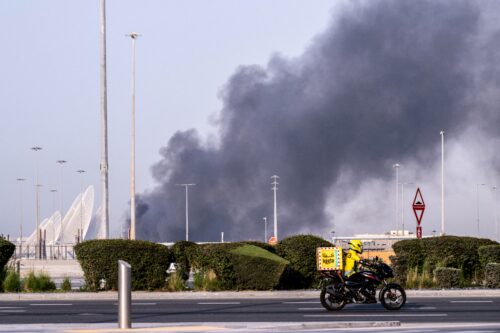
When Iranian drone strikes hit two of Amazon’s data centers in the United Arab Emirates and Bahrain in early March, amid the ongoing US-Israeli war with Iran, much of the media’s reflex was to declare it the end of the Gulf’s artificial intelligence (AI) ambitions. That read is misguided, and it misses why what Iran was trying to accomplish failed.
Syria’s New Investment Law and the Return of State-Mediated Market Access
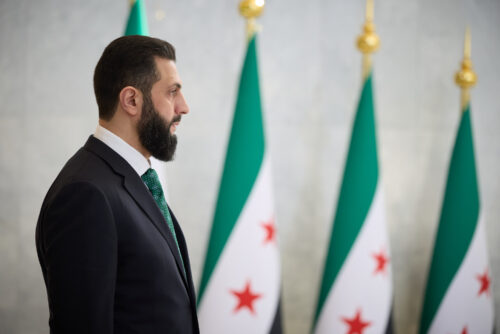
As Syria moves toward reconstruction, the country’s new authorities have already made a consequential decision about who will control the postwar economy. Last June, President Ahmed al-Sharaa enacted Investment Law 114 by presidential decree, granting sweeping and permanent concessions to investors. Yet rather than make those incentives broadly accessible, the law preserves the country’s longstanding model of state-mediated market access.
When Will Energy Markets Recover From the Iran War?
Two and a half months into the blockade of the Strait of Hormuz, what lessons can markets draw from the resulting global energy shock? Colby Connelly, MEI Senior Fellow, joins hosts Alistair Taylor and Matthew Czekaj to assess the crisis’s impact on the energy industry. Together, they examine how producers are responding to the conflict in both the short and long term, how this moment differs from past energy disruptions, and how regional reverberations may shape international energy policies going forward.
MENA Energy Recap, Q1-2026: Four Lessons From the Return of Tail Risk
This is a special edition of the MENA Energy Recap — a quarterly review of key energy developments that took place in the region from January through March of 2026 and what they signal in the months ahead. For Q1-26, the recap considers some of the long-term implications of the ongoing war in the region, which have caused the largest energy supply disruption in history, and what lessons these events hold for both near- and long-term energy dynamics in both the Middle East and the wider world.
How Israel-Backed Sweida Became Syria’s Narcotics Capital
In the early hours of Sunday, May 3, Jordanian F-16 fighter jets crossed into Syrian airspace and launched strikes on at least six locations in the southern province of Sweida. In a statement issued hours later, Jordan’s military said that “Operation Jordanian Deterrence” had targeted “factories, facilities and warehouses used by trafficking groups as launch points for smuggling operations into Jordan.”
The Living Thread: Sadu Weaving and the Role of Cultural Institutions in Keeping Heritage Alive
Lunch & Panel Discussion | A panel conversation exploring how Sadu weaving, a disappearing, centuries-old craft, can thrive and evolve in a contemporary context.
The Houthis are a political-military faction and Zaydi religious movement founded in northwestern Yemen in the 1980s. A key member of Iran’s Axis of Resistance with links to other militant organizations in the Arabian Peninsula and the Horn of Africa, the group has continued to pose a threat to Western interests on a global scale.
How is competition for influence in the Horn of Africa among Middle Eastern powers — especially the UAE, Saudi Arabia, Turkey, and Israel — reshaping the political landscape? Hosts Alistair Taylor and Matthew Czekaj are joined by MEI Senior Fellows Mirette Mabrouk and Gönül Tol to unpack the dynamics driving this rivalry and its implications for conflicts and alliances across the region.
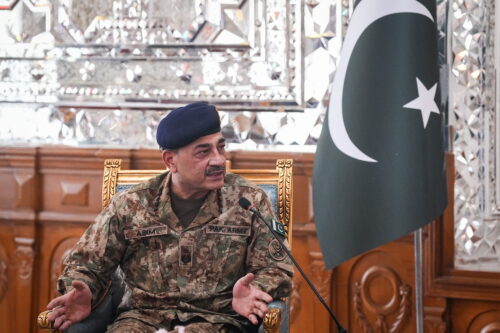
The Pakistani General Running Washington’s Backchannel to Tehran
As Washington and Tehran edge closer to escalation, the most critical line of communication keeping the crisis from spiraling is being run not by polished diplomats, but by an unlikely figure: a Pakistani general. Field Marshal Asim Munir, Pakistan’s powerful army chief, has quietly become the key intermediary in the U.S.-Iran standoff, managing what may be the most important backchannel between the two sides. The mediation has thrust Pakistan to the center of the crisis while exposing it to enormous risk.
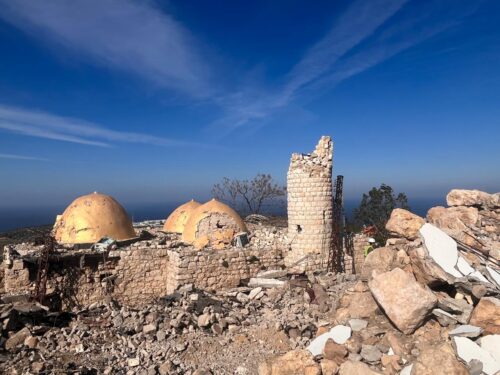
The news from Lebanon reads like a litany of loss. Since the war began more than two months ago, not only have 2,882 people been killed and 8,768 wounded, according to Lebanon’s Health Ministry, but once again multiple heritage sites — especially those in the south — have been damaged and destroyed. Indeed, Lebanese heritage, inexorably linked to its peoples, shares in their vulnerability and suffering.
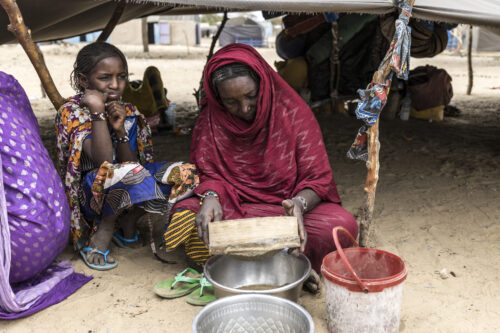
The Far Reach of the Iran War: Food Insecurity from North Africa to the Sahel
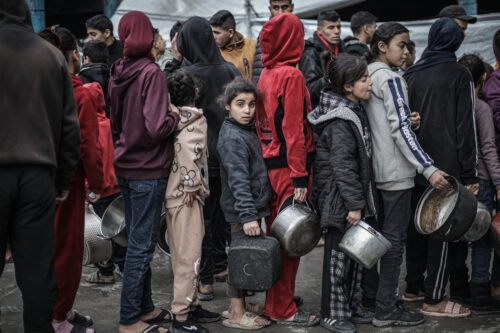
Within weeks of the Strait of Hormuz closure, fertilizer prices began to rise sharply. Tanker traffic through the strait, which handles one-third of the global fertilizer trade, fell by 90%. Across North Africa the impacts are multiplying, and this is having ripple effects for the Sahel in the south, adding to food price inflation, migration pressures, and the erosion of state legitimacy. The situation underscores how food security is a governance issue compounded by geopolitical crisis.