John Calabrese is a senior fellow at the Middle East Institute (MEI) and book review editor for The Middle East Journal. His work focuses on the international relations of the Middle East, with a particular emphasis on cross-regional ties between the Middle East and Asia. He also teaches US foreign policy at American University.
He holds a PhD in International Relations and a Diploma (with Distinction) in Comparative and International Politics from the London School of Economics, and a BA in English and Government from Georgetown University.
Intersections: China and the US in the Middle East
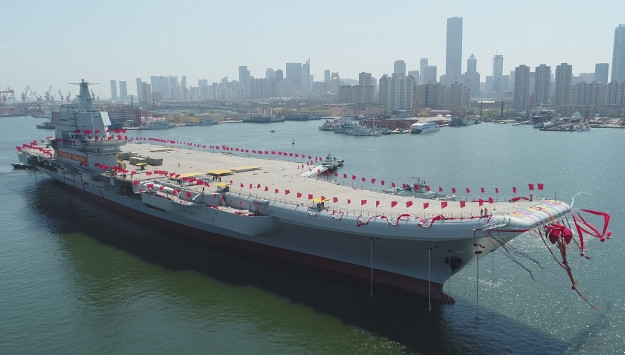
China’s inroads into the Gulf and wider Middle East are occurring against the backdrop of intensifying global strategic competition with the United States. Does China’s expanding footprint in the Gulf constitute an additional source of contention in an increasingly rivalrous relationship with the United States? Part 1 of this article discusses China’s role as Iran’s “limited partner” in a constrained environment. Part 2 examines China as Saudi Arabia’s next best friend. Part 3 considers China as a niche player in the Middle East arms market.
Monday Briefing: Conflict is far from over in Syria
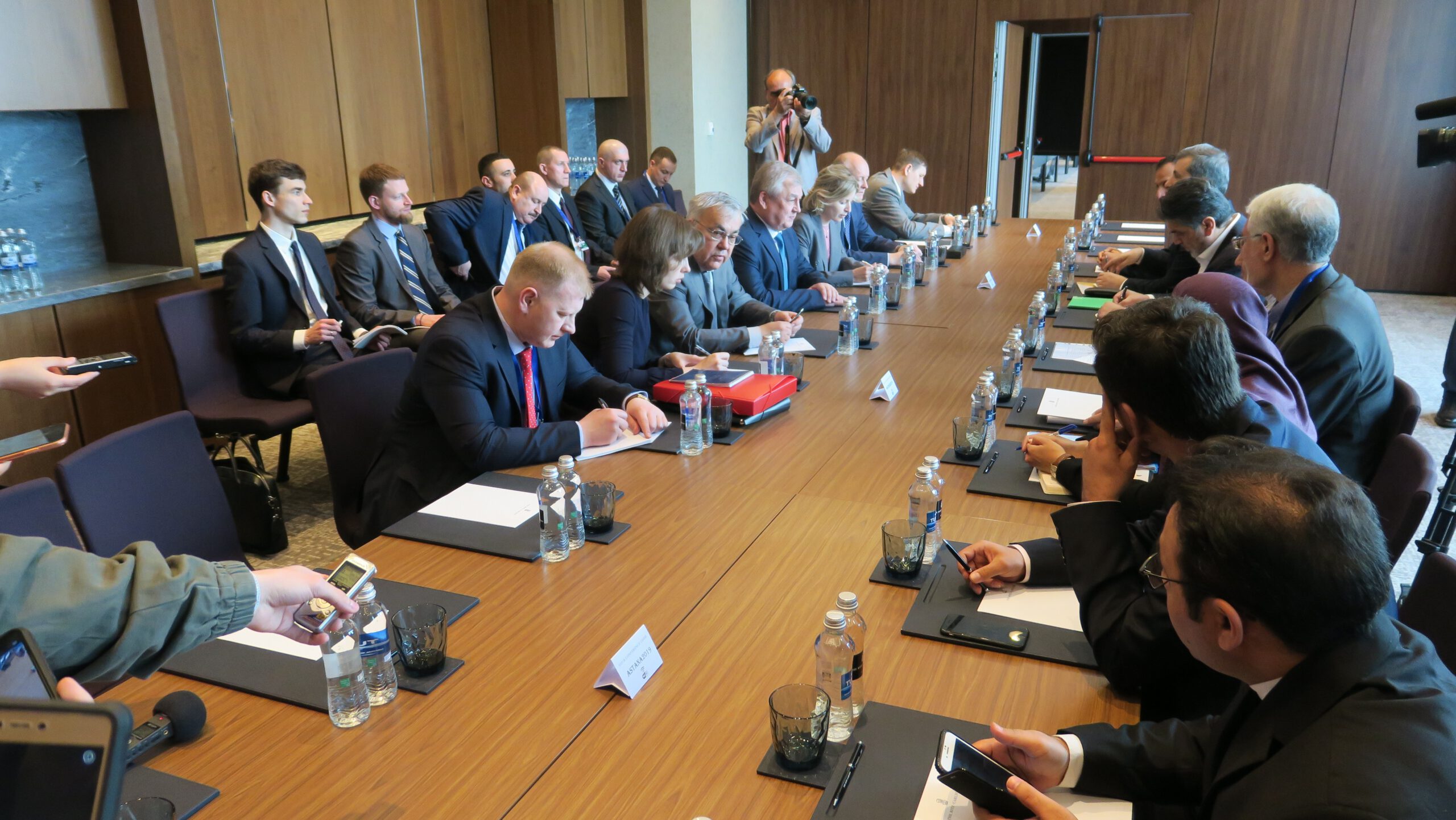
In this week’s Monday Briefing, contributors Charles Lister, Gerald Feierstein, Ruba Husari, Guney Yildiz, Mirette F. Mabrouk, and John Calabrese provide analysis on recent and upcoming events including the failure of the twelfth rounds of Syria peace talks in Astana, negotiations over Yemen’s strategic port of Hodeida, a new report on Iraq’s oil production potential, ongoing US-Turkey talks about a buffer zone in Syria, Egypt’s recently passed constitutional amendments, and Beijing’s second Belt and Road Forum.
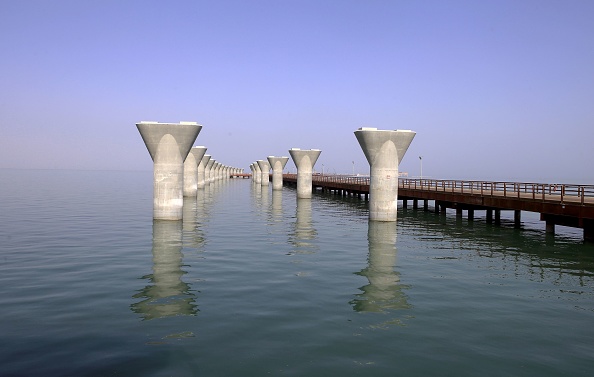
Bridge to a Brighter Future? South Korea’s Economic Relations with the Gulf
This article discusses the broad effort by Korean firms — supported by three successive administrations — to enhance their position in the fiercely competitive Gulf regional market at a time when the domestic economy is sputtering.
Iran under Sanctions: India and China over a Barrel
Bearish and bullish factors are both at play in the global oil market, weighing on prices. The next big date on the calendar is November 4 — the point at which the 180-day wind-down period ends and U.S. sanctions on the Iranian energy sector are to be reinstated. Two days later, the U.S. midterm elections are due to take place.
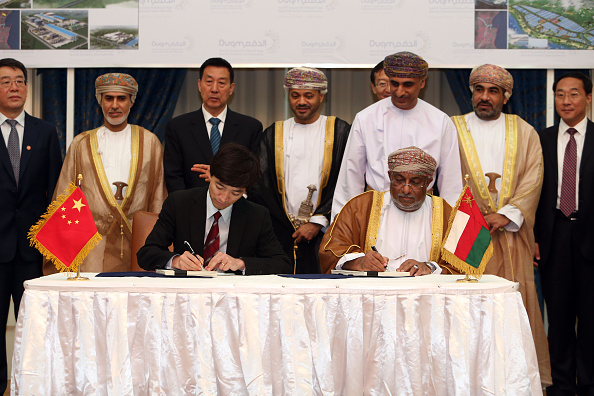
Oman’s Transition to a Post-Oil Economy: Arching Toward Asia
The development of Duqm Port and Special Economic Zone (SEZ) is at the forefront of Oman’s efforts to transition to a post-oil economy. The Malaysian economic transformation management model, the Singaporean example of achieving prosperity through combining free trade and business-friendly policies with its role as a trans-shipment and logistics hub, and an initial infusion of substantial Chinese investment capital and project participation all have played central roles in how this process has unfolded — and will likely remain key determinants of its future progress.
Iran’s Sixth Five-Year Development Plan (2016-21) identifies the energy sector as a key source of revenue and driver of economic growth.[1] The plan envisages increasing oil output by 2 million barrels per day (bpd) to 4.8 million bpd.[2] Achieving this ambitious target will require substantial foreign investment, technology, and expertise.
Japan’s Elusive Quest for a “Balanced Energy Mix” and Middle East Energy Relations
Japan’s energy policy is at a turning point. Seven years ago, the country experienced a devastating earthquake and tsunami that severely damaged the Tokyo Electric Power Company (TEPCO) Fukushima Daiichi nuclear power plant. The accident led to the shutdown of all 54 of Japan’s nuclear power reactors[1] and to a revision of the country’s energy policy.
Global LNG Markets in a State of Flux: Qatar in the Crosshairs?
International markets for natural gas — fragmented regionally and with differing price-setting mechanisms — are undergoing profound changes. The foundation is being laid for the emergence of a more globally integrated gas market, and the rapid expansion of the seaborne liquified natural gas (LNG) trade, which has forged links between distant markets, is a major reason why. Qatar — an LNG powerhouse — has dominated the Asia Pacific market, the world’s largest LNG-importing region. However, the Asian market is in a state of flux, as is the entire global LNG sector. This article explores the major changes taking place in international LNG markets, with particular attention to how Qatar is being affected by, and is adapting to them.
Sino-Algerian Relations: On a Path to Realizing Their Full Potential?
China’s footprint in Algeria has expanded since 2001, much as it has throughout the Middle East and the continent of Africa. In 2014, the Sino-Algerian bilateral relationship was elevated to a “Comprehensive Strategic Partnership,” and since then has further developed. This essay discusses the roots, substance and scope, and limitations of the blossoming Sino-Algerian relationship.
‘Linking West’ in ‘Unsettled Times’: India-G.C.C. Trade Relations
Economic and trade relations have been the most dynamic and significant component of the fundamental changes that have taken place in India’s relations with the Gulf Cooperation Council (G.C.C.) countries since the early 1990s. As a consequence, the Gulf has become of vital strategic importance for India in terms of energy security, trade, investment, and remittances. This essay discusses the contours of India’s trade relations with the G.C.C. countries, including the contributions they have made to India’s economic ascent and the scope for their further development.
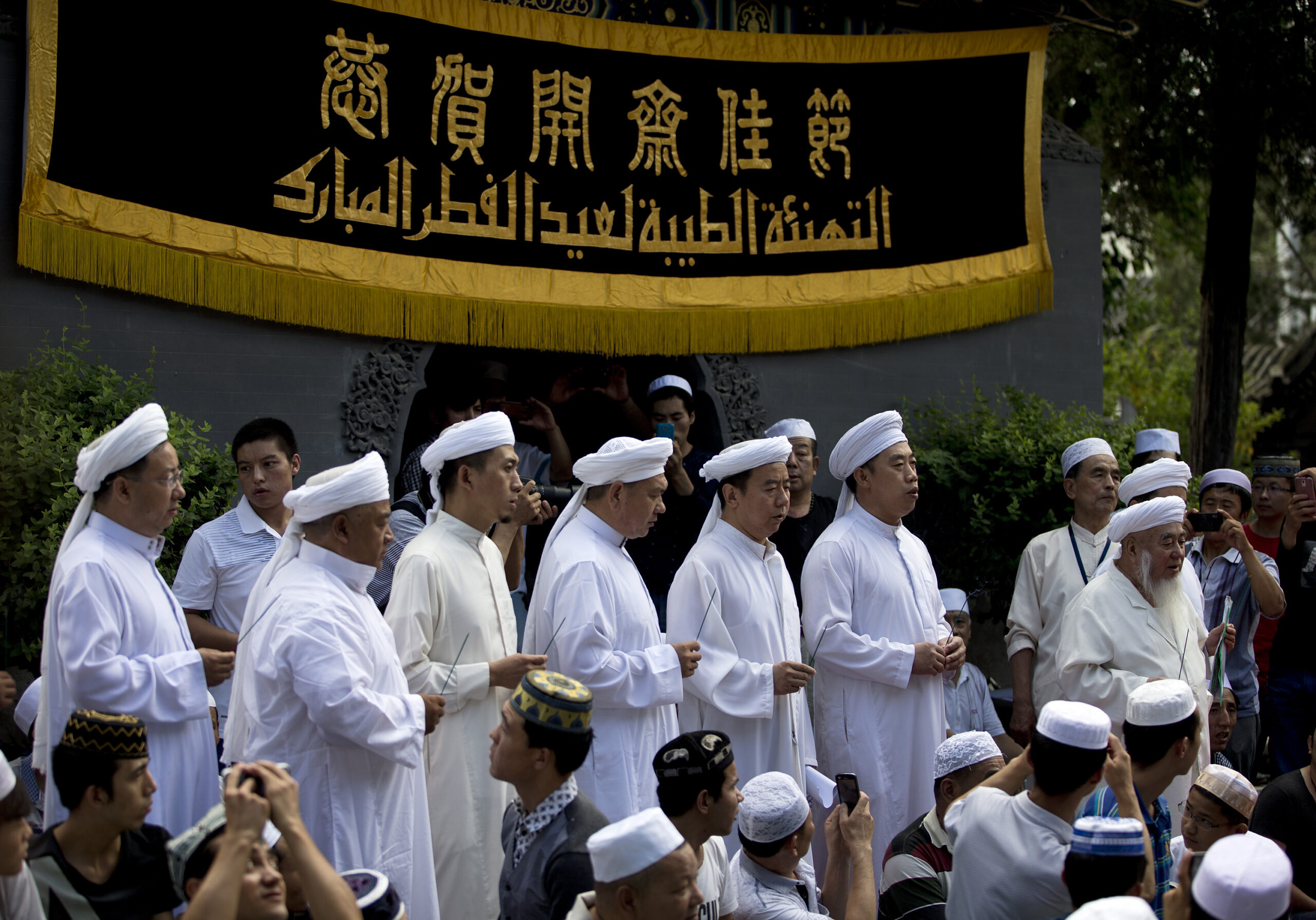
In incorporating Muslim minorities into the nation-state, Chinese policymakers have faced two sets of challenges: The first involves balancing ethno-religious diversity and national integration; and the second entails fostering enhanced connectivity to the outside world while at the same time consolidating CCP-state control over the public sphere. This essay examines the Chinese government’s recent and current struggles to address these challenges.
The China-Pakistan Economic Corridor (CPEC): Underway and Under Threat
China is already Pakistan’s largest trade and defense partner. But the coming into operation of the CPEC lends a new meaning to, and could transform the relationship between these two “all-weather allies,” including insofar as their ties to the Middle East are concerned — provided that the territorial and maritime security challenges associated with the completion and use of this corridor can be satisfactorily addressed.
This essay provides a brief overview of Iran’s relations with Southeast Asian nations during the sanctions period, looks at the initial results of President Rouhani’s October 2016 visit to the region, and considers the prospects for the further expansion of these ties.
Responding to Natural Disasters: Rowing Against a Fast-Rising Tide of Risk
This essay provides a brief overview of the increasing frequency and growing risk of natural disasters, surveys the natural disaster landscape in the MENA region, and briefly discusses efforts to develop strategies for reducing losses by emphasizing prevention and preparedness.