After decades of political setbacks, Iran’s former Revolutionary Guards commander has returned to the center of power. Is he an incidental beneficiary of war, or have observers underestimated him all along?
The Unavoidable Neighbor: Managing Iran Beyond the War
Gulf states and their partners are increasingly looking beyond their most immediate interests of containing the war with Iran. While recent talks between Saudi Arabia, Turkey, Pakistan, and Iran have kept de-escalation on the agenda, a broader regional security framework and non-aggression pact has also emerged, envisioning a longer-lasting solution to regional conflicts. The talks have yet to produce a settlement, but they reflect a growing recognition that Gulf security cannot depend entirely on Washington. Iran will still be there, and its neighbors will have to find ways of living with it.
Recent Elections and What They May Mean for the Middle East
Recent elections for the Israeli Knesset and American Congress may make less of a difference in the Middle East than some people think. Elections are significant indicators of national political trends, but do not always translate into changes in national security strategies. That is likely the case now in both nations.
The Baghdad Declaration: good neighborhood principles for the Middle East
Over the course of the last three years, the Middle East Institute convened a regional dialogue involving participants acting in their personal capacities from Egypt, Iraq, Iran, Jordan, Lebanon, Saudi Arabia, Syria, United Arab Emirates and Turkey. The dialogue also involved participants from China, Europe, Russia and the United States. The discussions resulted in the following declaration of good neighborhood principles for the Middle East agreed in Baghdad 15-16 December 2017.
…….
The Middle East dialogue, which began its twice-a-year meetings in October 2012, convened its eleventh meeting in Baghdad 15-16 December. Participants included current and former officials and senior experts from Egypt, Iraq, Iran, Jordan, Lebanon, Saudi Arabia, Syria and United Arab Emirates as well as China, Europe, Russia, and the United States.
Iran-backed Afghan fighters in Syria vow to battle Israel and Saudi Arabia next
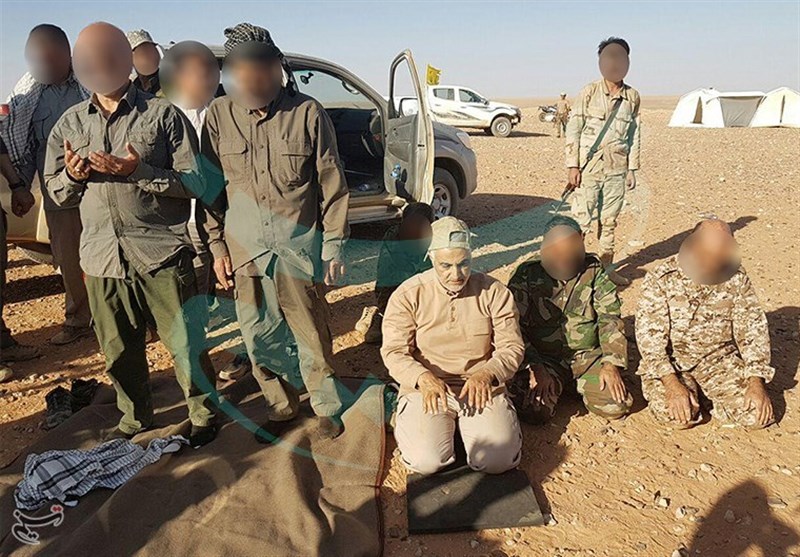
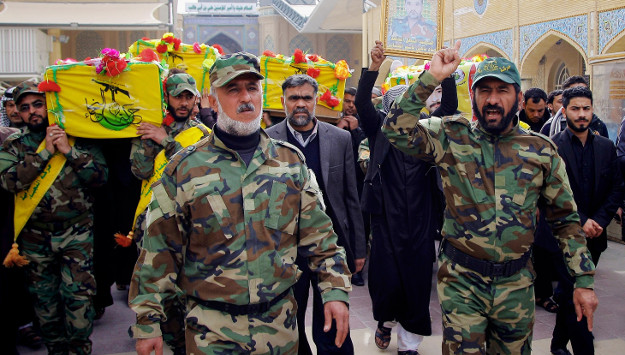
Sayed Ali-Asghar Hosseini, an Afghan national living in Iran, says he hopes to quickly recover from injuries he sustained in the Syrian conflict in order to return to the Arab country and take part in the next phase of war against Israel and Saudi Arabia. “Our real war with Israel and the al-Saud family is still there.
Tehran fails to appreciate European efforts to preserve the nuclear deal
Sobh-e Sadeq, a weekly outlet affiliated with the Islamic Revolution Guards Corps (IRGC), has lashed out at European powers for cooperating with Washington on the 2015 Iran nuclear agreement. One of its lead articles on February 26 condemned the “shameless behavior of the European troika” – referring to France, Germany and Britain which are the three signatories of the Iran deal.
Iran-backed Asaib Ahl al-Haq: We’ll form next Iraqi government and will expel US forces
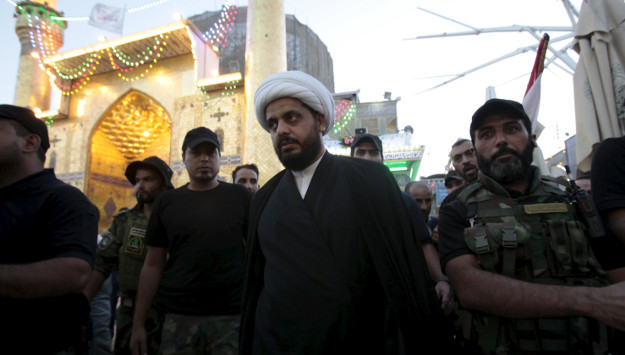
The head of a prominent Iranian-backed militia group in Iraq has said that the priority of the next government in Baghdad will be to “expel the American forces from Iraq and terminate the strategic cooperation agreement between the two countries.” Qais al-Khazali, who is the leader of Asa’ib Ahl al-Haq, also predicted that a coalition of Popular Mobilization Forces (PMF) will form the next government after the upcoming parliamentary elections slated for May 12.
Tightening the screws on Pakistan | Monday Briefing
In this week’s Monday Briefing, MEI experts Marvin G. Weinbaum, Charles Lister, and Gerald Feierstein provide analysis on recent and upcoming events including the placement of Pakistan on a global terrorist financing “gray list,” the ongoing assault on eastern Ghouta following a UNSC cease-fire resolution, and diplomatic efforts on the war in Yemen.
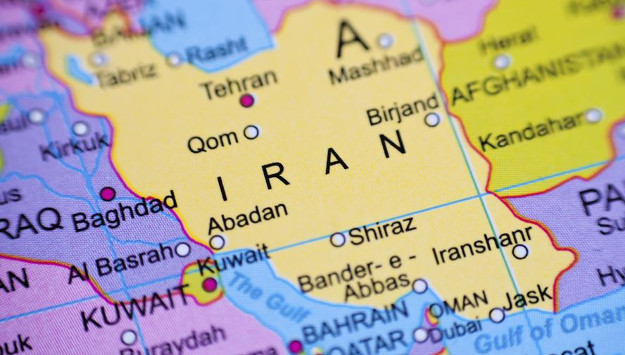
Iran has announced that it will allow Iraqi travelers and businesspeople to visit the Iranian cities of Abadan and Khorramshahr without the need for a visa, Iranian and Iraqi media reported. According to the consulate general of Iran in the Iraqi city of Basra, Tehran is waiting for the Iraqi government to approve the new policy and cancel the visa requirement for its citizens planning on traveling to the two Iranian cities.
Tehran says attacks on Eastern Ghouta will continue despite UN resolution
In defiance of a 30-day ceasefire resolution by the UN Security Council, Tehran said on Sunday that pro-Damascus forces would continue military operations against a rebel-held enclave near the Syrian capital,
IRGC sends medical units to Syria and Iraq to help “resistance front”
Iran’s Islamic Revolution Guards Corps (IRGC) has dispatched medical practitioners and equipment to Syria and Iraq to treat those injured in combat from its allied forces, a top IRGC general revealed earlier today.
Jazayeri: Iran and its anti-US “resistance” allies will shape Middle East’s future
Every resistance group emerging in the region is a “thorn in the eye” of the United States and Israel and the future of the Middle East belongs to Iran and its regional allies, Brigadier General Massoud Jazayeri, the deputy chief of staff of the Iranian Armed Forces, said today.
Iran's energy potential: domestic and regional implications
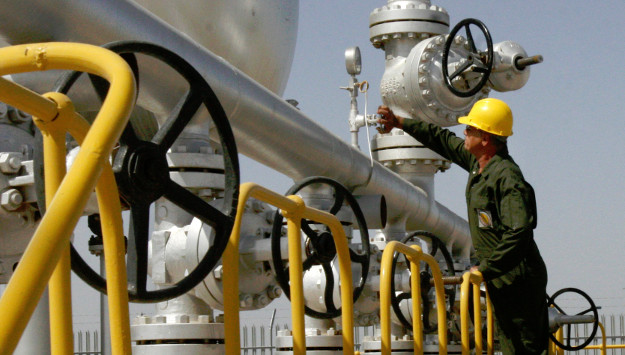
Decision-makers in Iran are in a unique position. Years of sanctions, which ostracized the country and crippled its economy, have been lifted, giving way to a deluge of foreign investment in energy, consumer goods and other key economic sectors. These two factors together have already paid political dividends for the leadership in Tehran, which has used the influx of investment to finance its military opposition to the Saudi-led Sunni bloc in Syria and Yemen and to legitimize its status as a critical regional and even global actor.
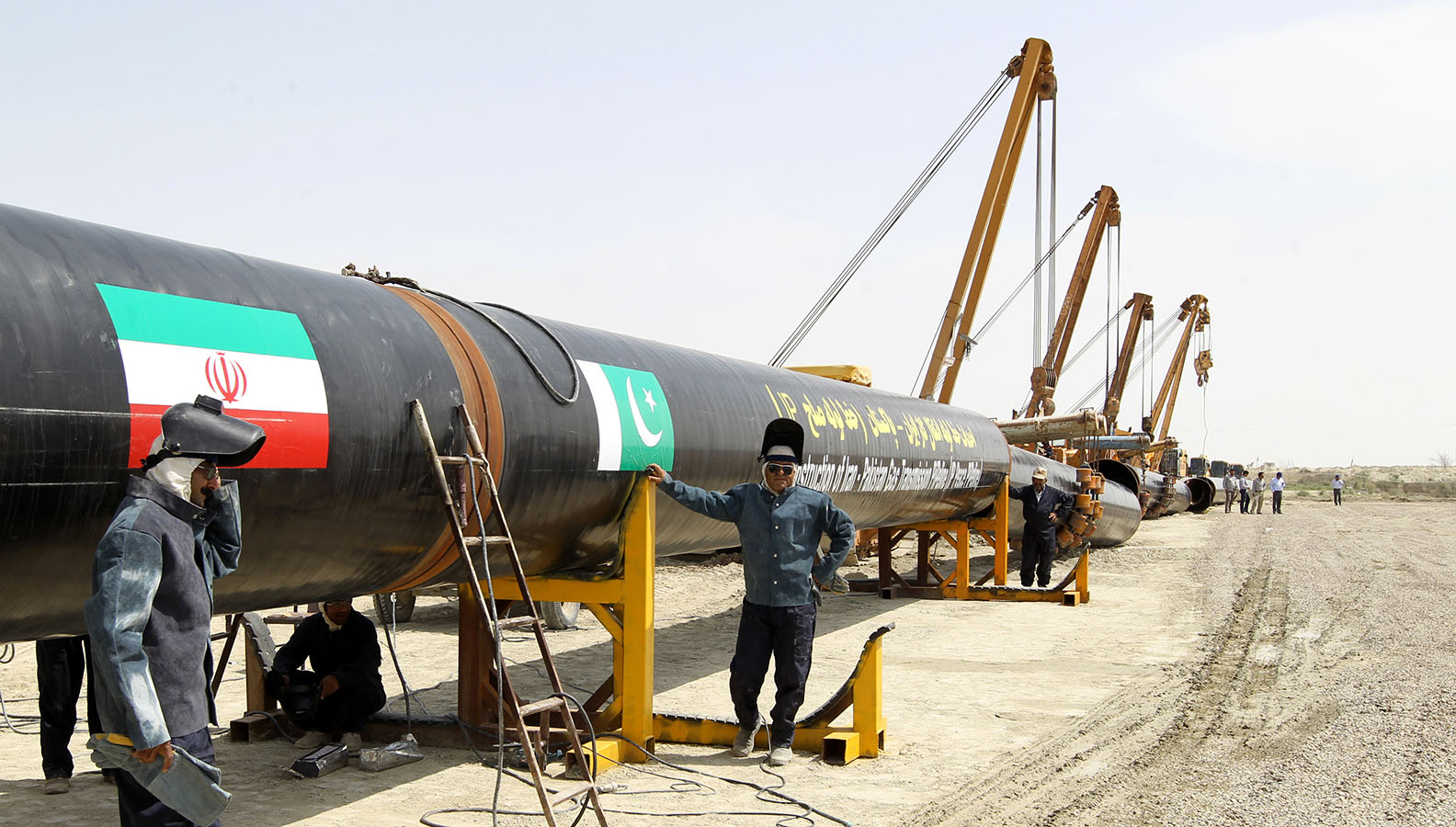
Afghan authorities say Iran-trained militants planned to sabotage TAPI inauguration
Afghan authorities in Herat Province today paraded a group of 10 militants who were reportedly trained in Iran to sabotage the inauguration ceremony of the landmark TAPI gas pipeline project in western Afghanistan. Mohammad Ayub Alizai, the head of the extremist group, claimed that he and his colleagues had received all necessary training and equipment to disrupt the ceremony.
Iran-Backed group: We’ll avenge our casualties by cleansing Iraq of US presence
The secretary-general of Harakat al-Nujaba, an Iraqi militia group with close ties with the Islamic Revolution Guards Corps (IRGC), has said that the group will avenge the blood of Iraqi paramilitary forces recently killed in the Iraqi province of Kirkuk by “cleansing” Iraq of the American presence,
IRGC seeking to exploit rising instability in Khuzestan Province
The latest anti-regime protests and internal security problems are more damaging to Iran’s national security than external threats, Major General Yahya Rahim Safavi, a senior adviser to Supreme Leader Ali Khamenei, warned today.
The extraterritorial operations Quds Force of the Islamic Revolution Guards Corps (IRGC-QF) is supposedly a secret special operations unit. Yet, leading commanders of the Quds Force have aggressively been seeking public attention lately.
The oldest peer-reviewed publication dedicated to the study of the modern Middle East, MEI’s flagship journal covers politics, society, and culture in the region.