After decades of political setbacks, Iran’s former Revolutionary Guards commander has returned to the center of power. Is he an incidental beneficiary of war, or have observers underestimated him all along?
The Unavoidable Neighbor: Managing Iran Beyond the War
Gulf states and their partners are increasingly looking beyond their most immediate interests of containing the war with Iran. While recent talks between Saudi Arabia, Turkey, Pakistan, and Iran have kept de-escalation on the agenda, a broader regional security framework and non-aggression pact has also emerged, envisioning a longer-lasting solution to regional conflicts. The talks have yet to produce a settlement, but they reflect a growing recognition that Gulf security cannot depend entirely on Washington. Iran will still be there, and its neighbors will have to find ways of living with it.
Recent Elections and What They May Mean for the Middle East
Recent elections for the Israeli Knesset and American Congress may make less of a difference in the Middle East than some people think. Elections are significant indicators of national political trends, but do not always translate into changes in national security strategies. That is likely the case now in both nations.
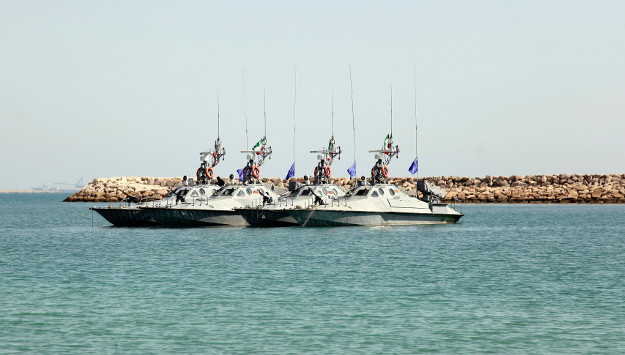
Iran’s Defense Ministry today unveiled a new propulsion system for military speedboats, Tasnim News Agency, which is affiliated with the Revolutionary Guards, reported. “The maritime propulsion system, which allows military speedboats to reach higher velocities, leads to lower fuel consumption, and increases maneuverability in shallow waters, is also equipped with automatic running systems,” Brigadier General Qassem Taqizadeh, the deputy minister, pointed out. The system has a mobile shaft for transmission of power as high as 1,800 horsepower.
Afghan intelligence chief warns Iran and Russia against aiding Taliban
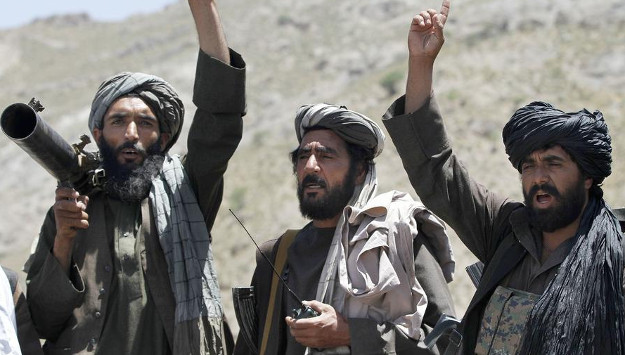
The head of Afghanistan National Directorate of Security (NDS) has said that Iran and Russia are in contact with the Taliban and are supporting the militant group in Afghanistan. In an interview with the BBC Persian, Mohammad Masoom Stanekzai pointed out that Tehran and Moscow provide assistance to the Taliban under the pretext of fighting the Islamic State, which has gained a foothold in South Asia in recent years.
Iran-backed Yemeni rebels fire another missile into Saudi Arabia
The Houthi rebels, Iran’s allies in Yemen, today launched another missile attack into Saudi Arabia, targeting an air defense operations center in the kingdom’s border province of Najran, Iranian and Lebanese media outlets reported.
Iran set to launch four new satellites despite international concerns
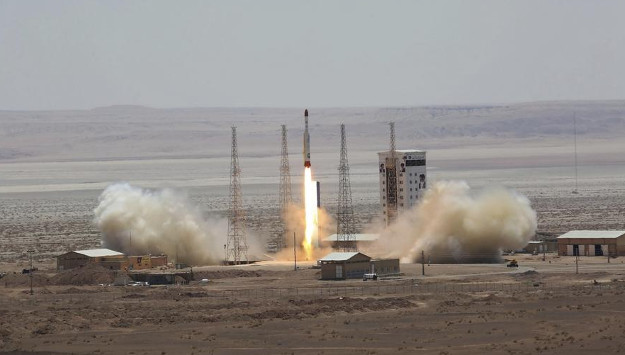
Iran’s minister of communication and information technology has said that the country is making the final preparations for the launch of four satellites into space, Mehr News Agency reported.
Iran’s militia allies gearing up for Iraq’s parliamentary elections
Iraj Masjedi, Tehran’s ambassador to Baghdad, met with Ammar al-Hakim, the leader of Iraq’s National Alliance, to discuss the latest security and political developments in Iraq.
Khamenei’s aide: Iran will boost its missile power, continue support for Hezbollah and Hamas
A senior aide to Iran’s Supreme Leader Ayatollah Ali Khamenei has said that the Islamic Republic will not accept any European or American proposals to curb the country’s controversial missile program,
Nowhere in the world are women more unequal than in the Middle East and North Africa, but there have been signs of progress in the region and several key reforms took place in 2017, such as Saudi Arabia’s decision to lift the ban on women driving. Manal Omar, founder of Across Red Lines, and Hala Aldosari, a fellow at the Radcliffe Institute for Advanced Study at Harvard University, join guest host Kate Seelye to discuss these reforms and whether they signal real change in attitudes toward women’s rights in the region.
Iran dispatches flotilla of warships to international waters
A flotilla of the Iranian Navy warships has left the country’s southern port of Bandar Abbas to conduct “routine missions” and project power in international waters, particularly in the Gulf of Aden the Iranian media reported. The Navy’s 50th fleet comprises Shaheed Naqdi and Bayandor destroyers and a logostic combat warship called Tonb.
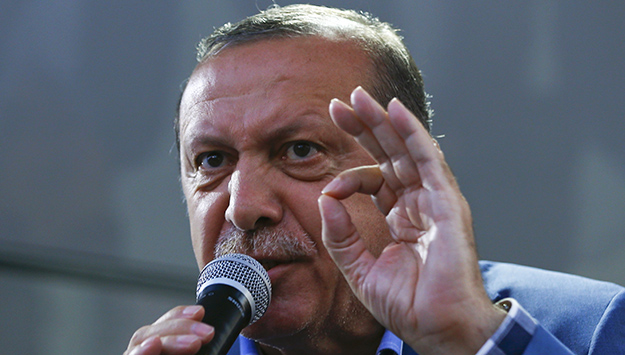
Erdogan’s advisor: Iran shows support for Turkey but tries to stab it in the back
Iran is a state that shows support for Turkey and then tries to stab it in the back, a senior adviser to Turkish President Recep Tayyip Erdogan has said. Ilnur Cevik, who is also a columnist with pro-government Daily Sabah, added that although Tehran has not publicly opposed Turkey’s Olive Branch Operation in the Syrian northern town of Afrin, it is trying to sabotage the Turkish offensive secretly and undermines Ankara’s efforts to facilitate peace in the war-torn Arab country.
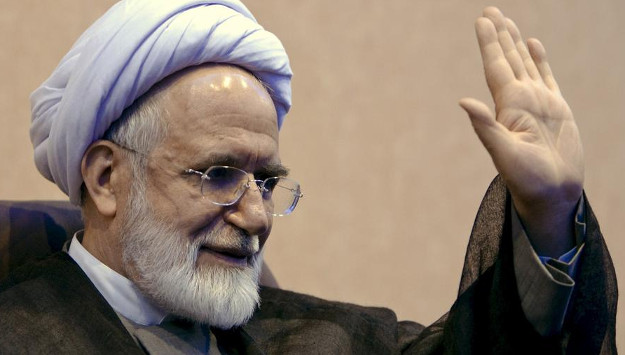
Karroubi to Khamenei: Take responsibility for failures of past 30 years
In a strong rebuke of Iran’s Supreme Leader, a leading reformist leader has said that Ayatollah Ali Khamenei is responsible for the country’s growing political, social, and economic problems. “You have been the head of state for three decades, yet you still speak from the stance of an opposition,” Mehdi Karroubi, who has been under house arrest for the past seven years, wrote to Khamenei in an open letter. He bluntly told the supreme leader to take responsibility for his leadership failures instead of blaming others.
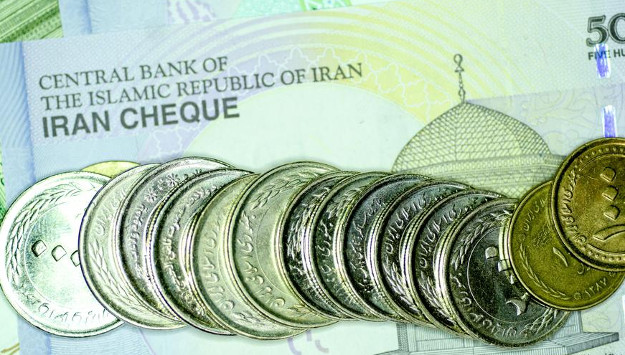
Kuwaitis investing in Iranian financial firms losing their money
Kuwaiti citizens have lost hundreds of millions of dollars as a result of the collapsing investment firms in Iran, Kuwait’s al-Qabas Arabic daily reported. According to the paper, a sizeable number of Kuwaitis have invested in Iran’s investment institutions that offer returns of more than 20 percent, which is significantly lower than the profit offered by Kuwaiti banks and investment schemes.
Iran-backed Iraqi militias may send reinforcements to Syria
The chief commander of Iraq’s Popular Mobilization Units has said that the paramilitary forces are ready to go to Syria to fight ISIS and defend Iraq’s borders, Iranian and Lebanese media reported. Abu Mahdi al-Muhandis, the deputy chairman of Hashd al-Shaabi (PMUs), further stressed that his forces will “respond forcefully” to any potential ISIS attack originating from Syria. “We cannot remain passive vis-à-vis the Syrian-Iraqi border and attacks carried out by Daesh [ISIS] in Syria,” he added.
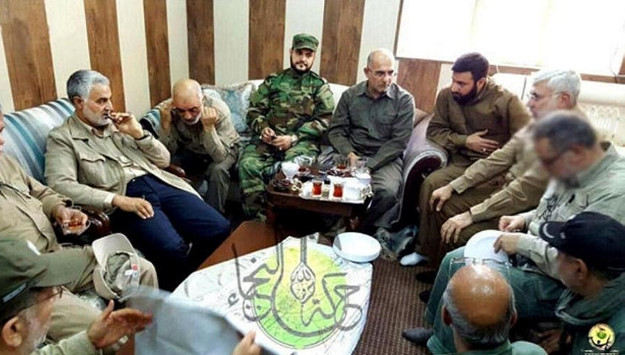
Harakat al-Nujaba claims US troops targeted its militiamen in Iraq
The secretary general of Harakat al-Nujaba, an Iranian-sponsored Iraqi militia group fighting in Syria and Iraq, alleges that the US military has targeted the organization’s forces in Iraq, Lebanon’s al-Mayadeen and Iran’s
The oldest peer-reviewed publication dedicated to the study of the modern Middle East, MEI’s flagship journal covers politics, society, and culture in the region.