After decades of political setbacks, Iran’s former Revolutionary Guards commander has returned to the center of power. Is he an incidental beneficiary of war, or have observers underestimated him all along?
The Unavoidable Neighbor: Managing Iran Beyond the War
Gulf states and their partners are increasingly looking beyond their most immediate interests of containing the war with Iran. While recent talks between Saudi Arabia, Turkey, Pakistan, and Iran have kept de-escalation on the agenda, a broader regional security framework and non-aggression pact has also emerged, envisioning a longer-lasting solution to regional conflicts. The talks have yet to produce a settlement, but they reflect a growing recognition that Gulf security cannot depend entirely on Washington. Iran will still be there, and its neighbors will have to find ways of living with it.
Recent Elections and What They May Mean for the Middle East
Recent elections for the Israeli Knesset and American Congress may make less of a difference in the Middle East than some people think. Elections are significant indicators of national political trends, but do not always translate into changes in national security strategies. That is likely the case now in both nations.
Iranian Official Hails Iraqi Forces for Foiling Israeli “Plot” in Iraqi Kurdistan
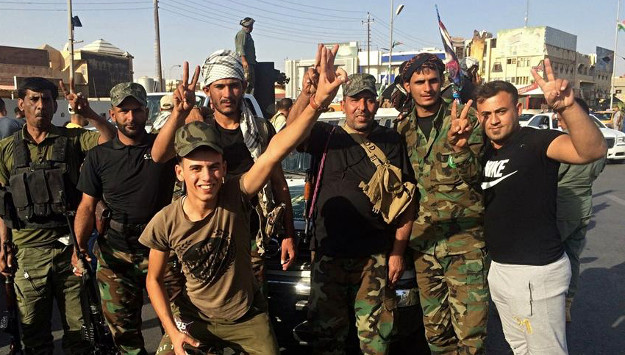
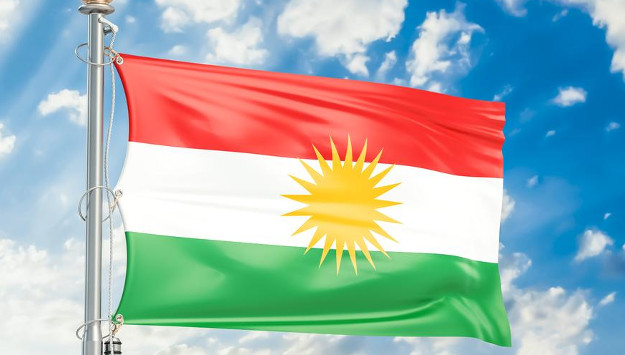
A senior Iranian official praised the Iraqi forces and Tehran-backed Popular Mobilization Forces (P.M.F.) for seizing the disputed province of Kirkuk and “thwarting” the Iraqi Kurdish leadership’s push for independence. Ali Akbar Velayati, a member of Iran’s Expediency Council, accused Masoud Barzani, the president of the Iraqi Kurdistan region, of advancing Israeli agenda in the region. “Barzani’s, and behind the scenes Israel’s, objective was seizing Kirkuk’s oil wells in favor of Israel.
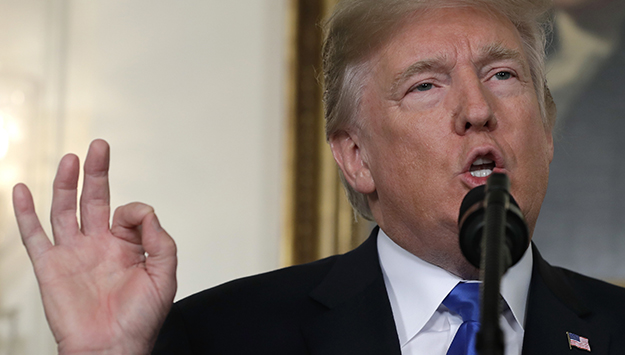
President Donald Trump declared today that he will not certify the Iran nuclear agreement, arguing the deal does not serve U.S. national security interests. “I am announcing today that we cannot and will not make this certification,” he said during a speech at the White House.
Iran Reacts Angrily to Trump’s Speech, Rules out Renegotiation of Deal
The Iranian government has released a statement in reaction to President Donald Trump’s speech today, accusing the United States of violating its commitments under the 2015 nuclear accord and emphasizing that Tehran will not renegotiate the deal. “The JCPOA is a valid international instrument and an outstanding achievement in contemporary diplomacy. It cannot be renegotiated or altered. The nuclear deal is not a bilateral agreement that can be annulled by unilateral action.” The statement called on the international community not to allow the Trump administration to undermine the deal.
Iran Sees Iraqi Kurdistan’s Push for Independence as “Israeli Project”
Iranian officials and state-run media outlets continue to label the recent Iraqi Kurdish leaders’ push for independence as an “Israeli project” aimed at countering Iran’s influence in the region. Grand Ayatollah Hossein Nuri Hamedani, a senior Iranian cleric, said this week that Tehran would not “allow a new Israel to take shape in the region.” An article in Fars News Agency, which is affiliated with the Islamic Revolution Guards Corps (I.R.G.C.), echoed a similar view.
Iranian Outlet Assesses Russia's Options If U.S. Leaves Nuclear Deal
An article in hardline Javan Online analyzes Russia’s potential responses if the Trump administration walks away from the Joint Comprehensive Plan of Action – the nuclear deal Iran signed with the United States, Russia, China, Germany, France and Britain in 2015. The analysis piece, entitled “Russia and J.C.P.O.A.
Iran’s Central Bank Chief Visits Turkey to Finalize Currency Swap Deal
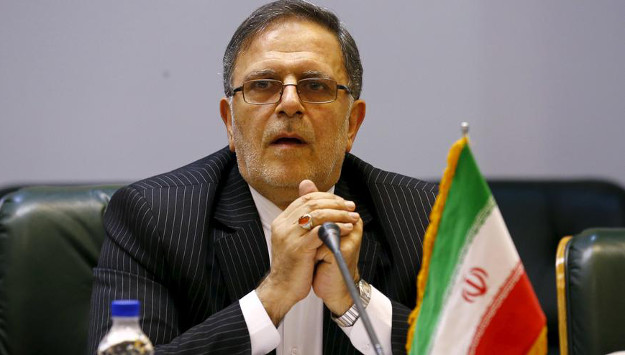
Valiollah Seif, the head of the Central Bank of Iran (C.B.I.), has traveled to Ankara to meet with his Turkish counterpart and finalize a plan to do trade exchanges based on currency swap, Tasnim News Agency reported. He expressed the hope that the move would help the two countries efforts to meet their goal of boosting the volume of annual bilateral trade to $30 billion.
Iran Warns Trump against Leaving J.C.P.O.A., Blacklisting I.R.G.C.
As the Trump administration is expected to decertify Iran’s compliance with the nuclear agreement this week, Iranian leaders are mulling their options on how to respond. While de-certification does not mean Washington is necessarily walking away from the accord and it will be up to Congress to decide whether to keep the deal or re-impose sanctions on Iran, Tehran is preparing for the worst-case scenario. Even if U.S. unilaterally abandons the deal, the Rouhani government appears willing to stay in the deal as long as European powers disregard U.S.
Top Iranian Military Official: It's Time to Teach America New Lessons
The deputy chief of staff of Iran’s armed forces has warned that his country will confront the Trump administration’s “aggressive policies” by “teaching America new lessons.” Hinting that Iran may take action against U.S. interests in the region, Brigadier General Massoud Jazzayeri emphasized that it is essential for Tehran to confront America’s “destabilizing behavior” in the region. “The era of America’s presence and domination in West Asia has come to an end,” he stressed, adding that the U.S.
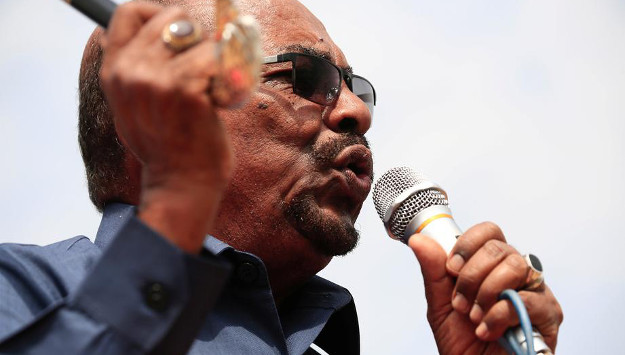
The Trump administration has decided to lift most sanctions on Sudan, according to a report in the Washington Post, October 6. The move reflects a range of administration priorities, including a desire to isolate North Korea further as well as to use sanctions relief rather than the sanctions themselves to leverage additional Sudanese reforms.
Iran Rejects Reports on Possible Talks over Its Missile Program
Iran’s Foreign Ministry rejected media reports on Iran’s willingness to negotiate its missile program with the United States. Baharm Ghassemi, the ministry’s spokesman, said the Iranian government vehemently refutes claims made in a Reuters report that Tehran was ready to negotiate parts of its controversial missile activities.
An article in state-run Islamic Republic News Agency (I.R.N.A.) analyzes Tehran’s options if the United States unilaterally abandons the Joint Comprehensive Plan of Action – the nuclear agreement Iran signed with world powers in July 2015. It points out that the Trump administration appears to be refusing to certify Iran’s compliance with the J.C.P.O.A. despite objections from the other signatories of the deal – Germany, France, Britain, Russia and China.
Debate in Iran over Europe as Reliable Partner in Nuclear Standoff
As the Trump administration is threatening to walk away from the Iran nuclear agreement, an intense debate is taking place inside Iran about whether the Islamic Republic can count on Europe as a reliable partner against Washington’s “unilateralism.” During Friday prayers in Tehran today, Ayatollah Ahmad Khatami, a member of Iran’s Assembly of Experts, called on the Rouhani government “not to rely on European support because if Europe has to choose between Iran and America, it will choose America.” He accused Washington of
Zarif: Iran Will Always Be Iraqi Kurds’ Friend despite “Strategic Mistake”
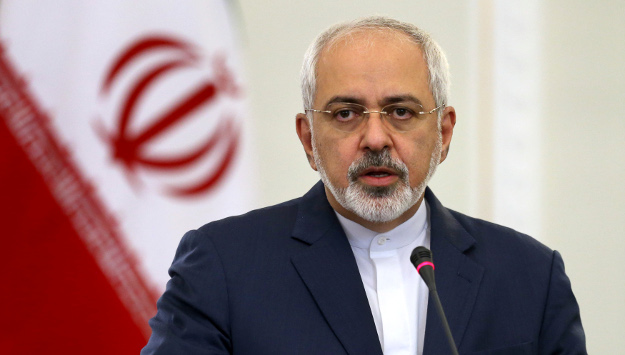
Iranian Foreign Minister Mohammad Javad Zarif today attended the funeral procession of Jalal Talabani, Iraqi Kurdish leader and former President, in the Sulaymaniyah city of Iraqi Kurdistan.
The oldest peer-reviewed publication dedicated to the study of the modern Middle East, MEI’s flagship journal covers politics, society, and culture in the region.