After decades of political setbacks, Iran’s former Revolutionary Guards commander has returned to the center of power. Is he an incidental beneficiary of war, or have observers underestimated him all along?
The Unavoidable Neighbor: Managing Iran Beyond the War
Gulf states and their partners are increasingly looking beyond their most immediate interests of containing the war with Iran. While recent talks between Saudi Arabia, Turkey, Pakistan, and Iran have kept de-escalation on the agenda, a broader regional security framework and non-aggression pact has also emerged, envisioning a longer-lasting solution to regional conflicts. The talks have yet to produce a settlement, but they reflect a growing recognition that Gulf security cannot depend entirely on Washington. Iran will still be there, and its neighbors will have to find ways of living with it.
Recent Elections and What They May Mean for the Middle East
Recent elections for the Israeli Knesset and American Congress may make less of a difference in the Middle East than some people think. Elections are significant indicators of national political trends, but do not always translate into changes in national security strategies. That is likely the case now in both nations.
Iran’s New Defense Minister: Support for “Resistance Front” Will Continue
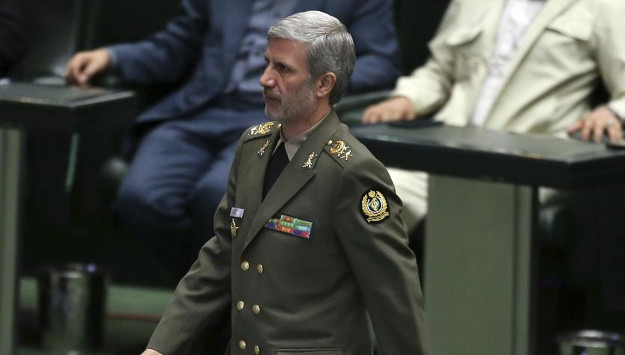
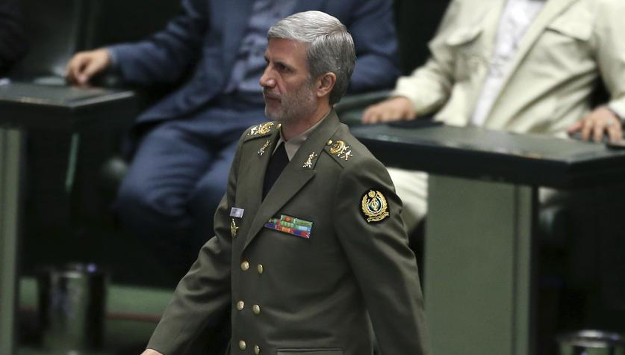
Iran’s new defense minister has said that the country will continue to support the “resistance front” by providing “advisory” assistance. In an interview with the Islamic Republic of Iran Broadcasting (I.R.I.B.), Brigadier General Amir Hatami also stressed the need for employing “defense diplomacy” to ensure Iran’s national security interests in the region. He claimed that Iran’s enemies are worried that the Islamic Republic has become a “role model for resistance” and supports resistance groups in the region.
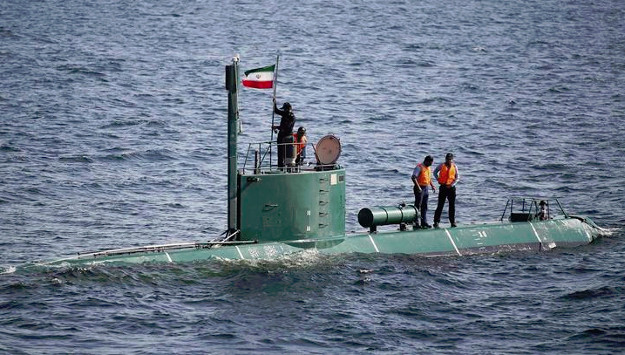
A new homegrown military submarine Fateh (Conqueror) is going through final tests and will soon join the Iranian naval forces, Defense Minister Brigadier General Amir Hatami has said. Speaking to reporters on Wednesday, the new Iranian defense minister added that the 527-ton Fateh submarine is a semi-heavy undersurface vessel. The submarine reportedly is equipped with an advanced sonic radar system which can identify enemy vessels and uses a missile defense system.
U.S. and Iran on a Collision Course in Syria, Again
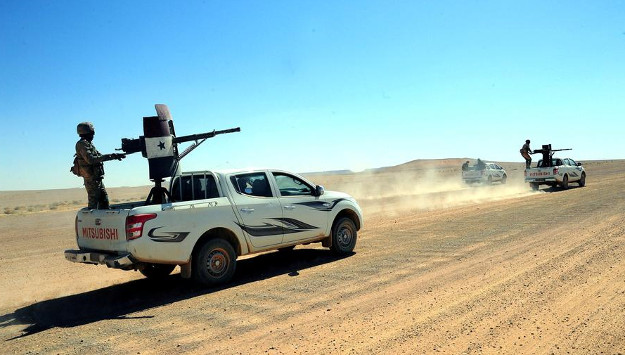
Iran and its allies are sending reinforcements near a de-confliction zone in southeastern Syria to pressure the U.S. military to withdraw from a strategic garrison near al-Tanf border crossing. Both Tehran and Damascus see the presence of U.S. troops training rebel forces in al-Tanf, as well as in northeastern Syria, as a serious threat. Iran also views the expulsion of the U.S.
Rouhani: Anti-Iran Sanctions Irreversible, World Not Siding with U.S. against Iran
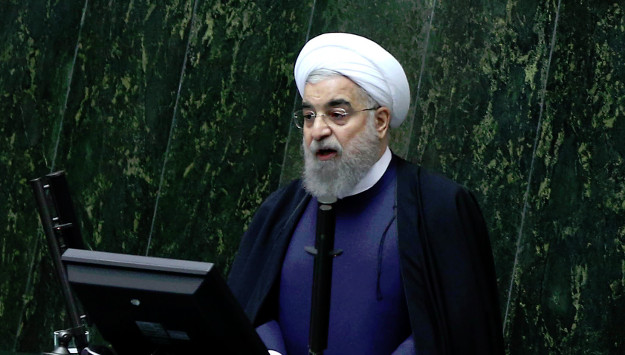
The world’s view toward Iran has changed and previous international sanctions will not be reinstated against the Islamic Republic, President Hassan Rouhani
Iran Rejects U.S. Demand for Inspection of Military Sites
Senior Iranian political and military officials have rejected a demand by U.S. Ambassador to U.N. Nikki Haley that U.N. inspectors visit Iran’s military sites, the Iranian media reported today.
Iran’s Intelligence Ministry Says It Has Eliminated 100 Terrorist Groups inside Country
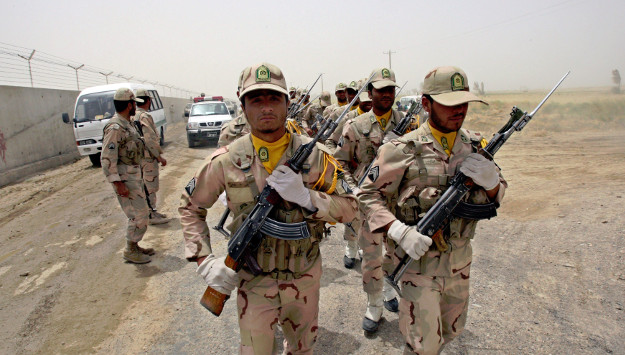
Iran’s Intelligence Ministry has said that the country’s security forces have disbanded nearly 100 terrorist groups across the country, Fars News Agency reported. “Highly serious measures have been taken in the Southern, Southeastern and Western parts of Iran and nearly 100 teams have been confronted,” the deputy intelligence minister said on Monday. He noted that the Islamic State seeks to carry out attacks in Iran but assured the public that the security forces are able to deal with any threats.
Iranian Drone Allegedly Spotted Flying over Western Afghanistan
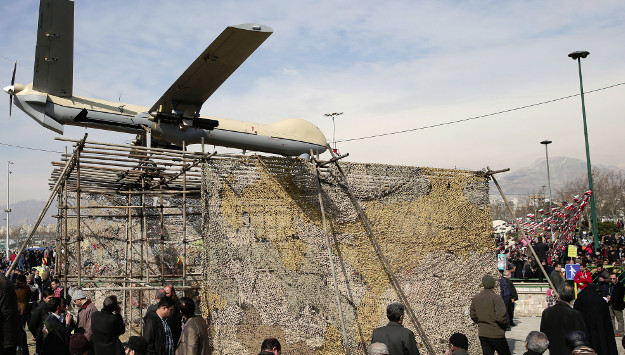
Afghan officials say they are investigating reports that an unmanned aerial vehicle has recently entered western Afghanistan from Iran. Jilani Farhad, the spokesman of western Herat Province, said the governor’s office has been informed about the incident and is probing the case to find out which country the drone belonged to. Some Afghan media outlets have alleged that the drone was Iranian and it disappeared after local Afghan forces fired at it. The Iranian government has not reacted to the reports.
A Return to Ambiguity in U.S.-Egyptian Relations | Monday Briefing
In this week’s Monday Briefing, MEI experts Paul Salem, Gerald Feierstein, Randa Slim, Bilal Y. Saab, and Jean-François Seznec provide analysis on recent and upcoming events including tensions between Washington and Cairo over Egypt’s excessive authoritarian crackdown, Russia’s attempt to help mediate the G.C.C. crisis, the likely postponement of the Kurdish independence referendum, the performance of the Lebanese Army in anti-ISIS operations, and the Iraqi oil minister’s trip to Moscow to discuss oil production cuts.
August 25, 2017 – Journalist Yeganeh Rezaian joins host Paul Salem for a discussion of social and cultural trends inside Iran, how youth are dealing with unemployment and other economic pressures, and how women are seeking opportunities for socioeconomic advancement and gender equality.
I.R.G.C. Outlet: Tal Afar Liberation Paves Way for Expulsion of U.S. from Iraq
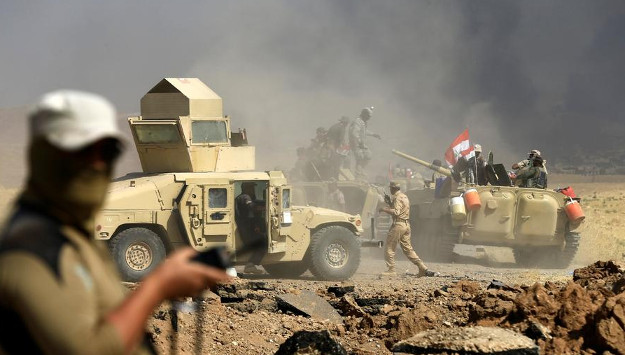
The liberation of Tal Afar is a “major defeat for America and terrorists” and paves the way for the expulsion of U.S. Troops from Iraq, says an article in hardline Javan Online, a mouthpiece of the Islamic Revolution Guards Corps (I.R.G.C.).
Hamas Chief Hails Iranian Support after “Restoration” of Ties
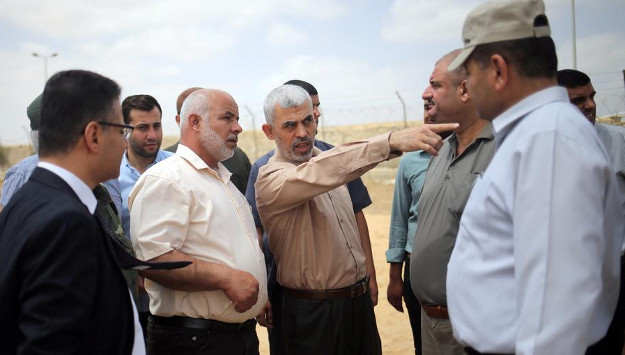
The new leader of the Palestinian militant group Hamas in Gaza has announced that it has restored its relations with the Islamic Republic of Iran, Tasnim News Agency
Iran Says Trump Determined to Cancel Nuclear Deal, Urges E.U. to Confront U.S.
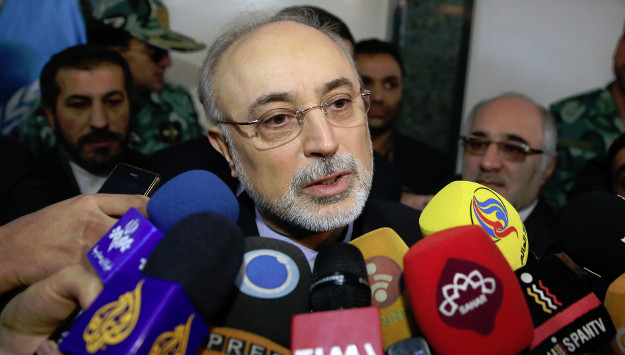
The head of the Atomic Energy Organization of Iran (A.E.O.I.) has said that President Donald Trump is trying to cancel the nuclear deal Tehran signed with world powers two years ago. He claimed that the latest U.S. sanctions violate the nuclear accord and also accused the Trump administration of pressuring the International Atomic Energy Agency (I.A.E.A.) to declare that Iran is in breach of the agreement. The top Iranian nuclear official said that the Islamic Republic will not be the first party to violate the agreement, but stressed that it will not accept any U.S.
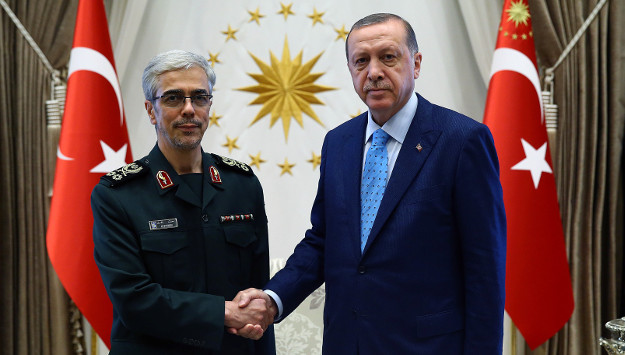
A series of high level diplomatic visits have signaled a surprising rapprochement between Iran and Turkey in recent weeks. What’s driving this warming in relations, and how has Russia been involved? What are the potential consequences in the region and for U.S. policy there? MEI’s Gonul Tol and Alex Vatanka join Paul Salem to discuss.
The oldest peer-reviewed publication dedicated to the study of the modern Middle East, MEI’s flagship journal covers politics, society, and culture in the region.