After decades of political setbacks, Iran’s former Revolutionary Guards commander has returned to the center of power. Is he an incidental beneficiary of war, or have observers underestimated him all along?
The Unavoidable Neighbor: Managing Iran Beyond the War
Gulf states and their partners are increasingly looking beyond their most immediate interests of containing the war with Iran. While recent talks between Saudi Arabia, Turkey, Pakistan, and Iran have kept de-escalation on the agenda, a broader regional security framework and non-aggression pact has also emerged, envisioning a longer-lasting solution to regional conflicts. The talks have yet to produce a settlement, but they reflect a growing recognition that Gulf security cannot depend entirely on Washington. Iran will still be there, and its neighbors will have to find ways of living with it.
Recent Elections and What They May Mean for the Middle East
Recent elections for the Israeli Knesset and American Congress may make less of a difference in the Middle East than some people think. Elections are significant indicators of national political trends, but do not always translate into changes in national security strategies. That is likely the case now in both nations.
Growing Environmental Problems Strain Iran’s Ties with Its Neighbors
Iran’s growing environmental challenges have recently reached crisis point. Water scarcity and air pollution, in particular, have not only caused sociopolitical and security problems inside the country, but have also strained Iran’s relations with its neighbors. As the Islamic State is losing ground in Iraq and Syria, Iran and Turkey are particularly vying for the control of water in the region.
Senior Iraqi Leader Visits Tehran, Says Foreign Troops Not Allowed in Post-Islamic State Iraq
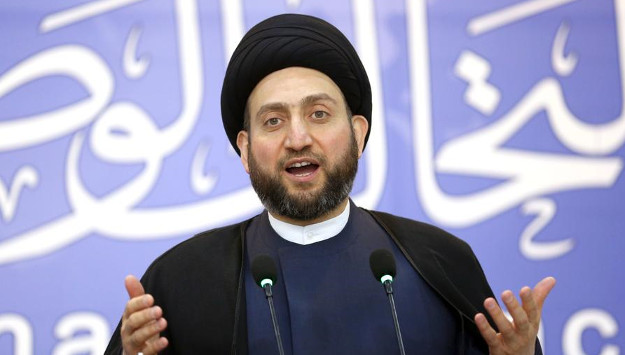
Ammar al-Hakim, the head of Iraq’s Shiite ruling coalition, has said that the Baghdad government will not allow a single foreign soldier to remain in Iraq after the fight against the Islamic State is over, Iranian media reported on Monday. Fars News Agency, an outlet affiliated with the Islamic Revolution G
Rouhani Calls for “Revolutionary” Foreign Policy to “Isolate America”
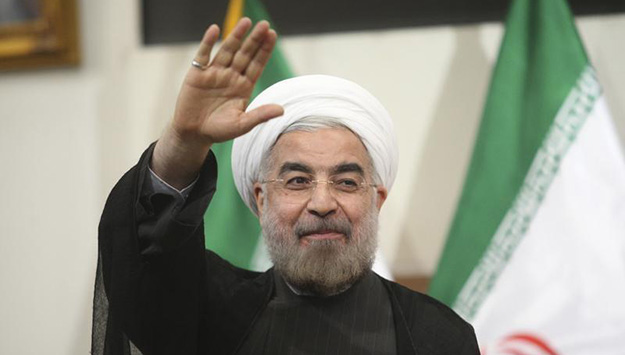
Iranian President Hassan Rouhani has said that all centers of power in Iran should work together to seek the support of European and Asian powers to isolate the United States, the
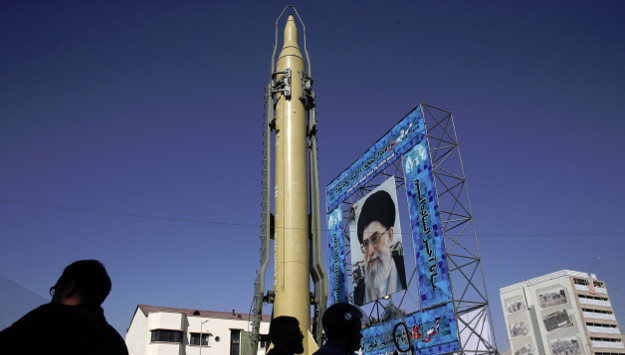
Iranian Parliament Seeks to Increase Budget for Missile Program, I.R.G.C. Quds Force
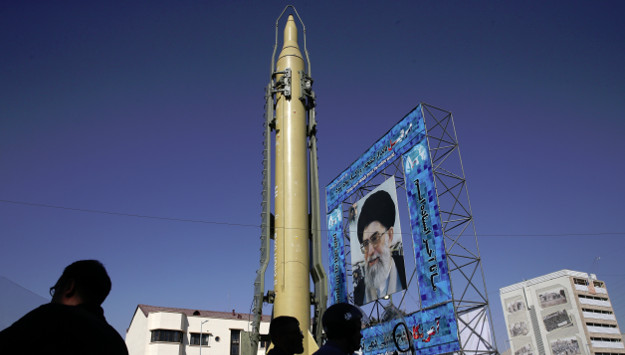
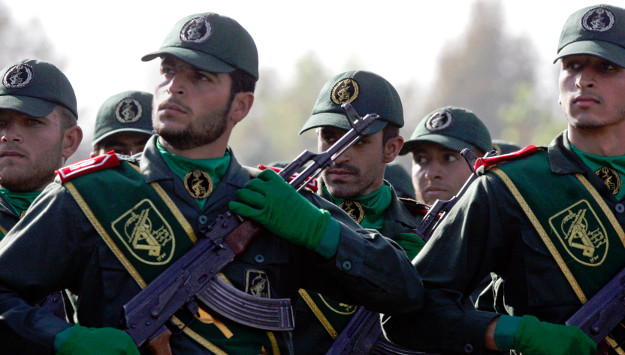
The Iranian parliament is finalizing a bill to increase the annual budget for the Islamic Revolution Guards Corps (I.R.G.C.), the Iranian media reported. The estimated surplus budget of more than half a billion dollars is specifically designed to help the I.R.G.C. to further enhance the country’s missile program and military activities in the region. The move came as a response to the latest U.S. Senate legislation that would impose new sanctions against Iran’s missile program.
Iran Warns White House against “Playing with Fire” in Syria
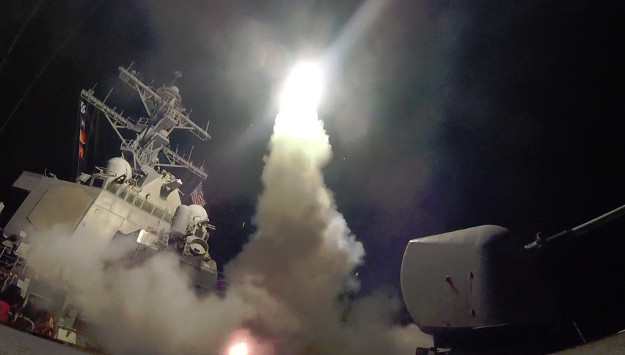
A senior Iranian official called on the Trump administration to avoid taking any further military action against the Syrian government and its allies and threatened that any such move would not go unanswered.
Iran’s Mixed Track Record of Fighting Drugs Trafficking
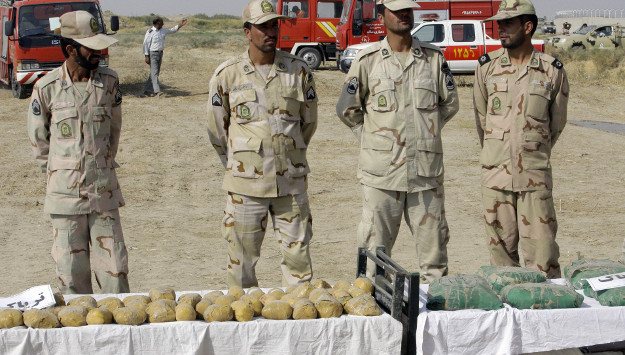
Iran’s anti-narcotics police forces have seized more than 16 tons of illicit drugs in the southern province of Hormozgan, the Iranian media reported. According to Hormozgan’s Police Chief Brigadier General Azizollah Maleki, the security forces confiscated the drugs from 219 vehicles over the past three months.
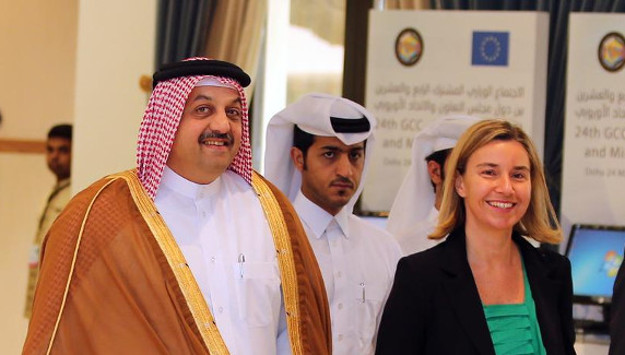
The ongoing Saudi-led blockade of Qatar came as a surprise to the international community, including the European Union. When Saudi Arabia, the U.A.E., Egypt, and Bahrain cut ties with the Qatari monarchy, the E.U. found itself in a new and complex political reality. Though the intra-Gulf crisis had been simmering for quite a long time, it seems that the Europeans were not prepared for such a scenario. Ultimately, Europe must consider the severity of the current crisis’ potential diplomatic and economic consequences.
Iran Steps up Efforts to Oust U.S. Military from Middle East
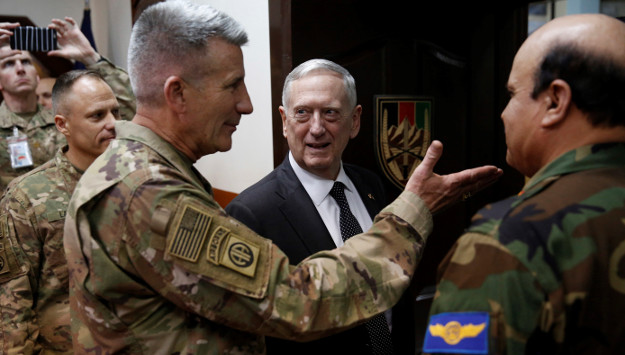
With the Islamic State collapsing in Iraq and losing ground in Syria, Iran and its regional proxies see the United States as the primary threat to their influence and ambitions and have stepped up efforts to oust the U.S. military from the region. Through diplomatic outreach – and at times veiled threats – Iranian leaders have been urging the Afghan and Iraqi governments to expel American forces from their countries. Tehran has also deepened its ties with the Taliban and has reportedly teamed up with Moscow to undermine U.S.-led stabilization efforts in war-torn Afghanistan.
I.R.G.C. Commander Rejects Rouhani’s Criticism about Guards' Role in Iran’s Economy
The chief commander of the Islamic Revolution Guards Corps has rejected President Hassan Rouhani’s criticism of the I.R.G.C.’s involvement in Iran’s economy and defended his forces’ track record, the
Tehran Seeks International Support to Mitigate Impact of U.S. Sanctions
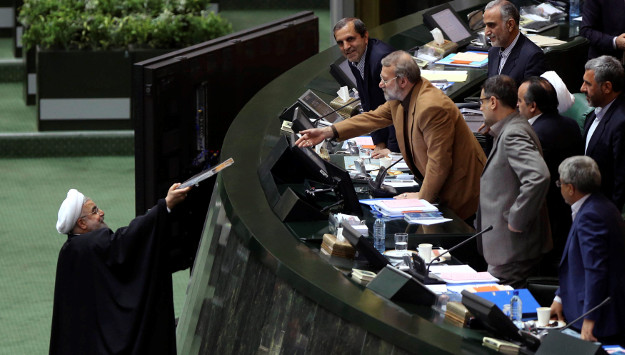
Iran’s Parliament Speaker Ali Larijani said the latest U.S. Senate legislation that would impose new sanctions on Iran was a violation of international law and U.N. conventions, the Iranian media reported. He made the remarks in a speech at the meeting of the Eurasia’s parliament speakers in South Korea on Tuesday.
Iran’s Parliament Finalizing Bill to Counter U.S. Actions in Middle East
A top Iranian lawmaker said that the parliament’s National Security and Foreign Policy Commission has finalized a legislation that would counter the U.S. “adventurous and terrorist” actions in the region, state-run Islamic Republic News Agency reported today. “This bill has set some obligations for the government and the government is obliged to implement them,” Alaeddin Boroujerdi emphasized. He further noted that the bill is a reaction to the latest U.S.
The oldest peer-reviewed publication dedicated to the study of the modern Middle East, MEI’s flagship journal covers politics, society, and culture in the region.