After decades of political setbacks, Iran’s former Revolutionary Guards commander has returned to the center of power. Is he an incidental beneficiary of war, or have observers underestimated him all along?
The Unavoidable Neighbor: Managing Iran Beyond the War
Gulf states and their partners are increasingly looking beyond their most immediate interests of containing the war with Iran. While recent talks between Saudi Arabia, Turkey, Pakistan, and Iran have kept de-escalation on the agenda, a broader regional security framework and non-aggression pact has also emerged, envisioning a longer-lasting solution to regional conflicts. The talks have yet to produce a settlement, but they reflect a growing recognition that Gulf security cannot depend entirely on Washington. Iran will still be there, and its neighbors will have to find ways of living with it.
Recent Elections and What They May Mean for the Middle East
Recent elections for the Israeli Knesset and American Congress may make less of a difference in the Middle East than some people think. Elections are significant indicators of national political trends, but do not always translate into changes in national security strategies. That is likely the case now in both nations.
Saudi King Salman’s appointment of his son Mohammed bin Salman to be first in line to the throne has sent shockwaves in Tehran. While the Iranian government has not officially reacted to the announcement yet, the country’s state media warn that the 31-year-old prince will pursue a more aggressive policy vis-à-vis Iran – pointing out that Prince Mohammed has made explicit threats against the Islamic Republic, has cultivated close ties with the Trump administration, and has not shied away from confronting Iran’s proxies in Yemen, Syria and the broader region.
Europe Eyes Further Cooperation with Iran under Rouhani
European leaders welcomed the re-election of Iranian President Hassan Rouhani with a sigh of relief. The European Union’s foreign affairs chief, Federica Mogherini, congratulated Rouhani and highlighted the high electoral turnout. It is worth noting that both Donald Tusk, the president of the European Council, and Mogherini had developed a good working relationship with Rouhani in face-to-face talks during the Iranian president’s first term.
Iran Denies Saudi Claims about Arrest of I.R.G.C. Members Plotting Attacks
On Tuesday, a senior Islamic Revolution Guards Corps (I.R.G.C.) official refuted claims by Saudi Arabia that it had detained three I.R.G.C. members plotting attacks against the kingdom. “The claim lacks any value … and looks more like a joke,” General Rassoul Sanaeerad, the deputy I.R.G.C. head for political affairs, said in an interview with Tasnim News Agency. He claimed Riyadh was fabricating the allegations for psychological warfare purposes against Iran.
U.S. Shoots Down Second Iran-Made Drone in Southern Syria
An American aircraft today shot down an Iranian-made armed drone approaching U.S.-led coalition forces in southern Syria, the U.S. Central Command said in a statement.
Rouhani Administration Seeks to Expand Iran’s Relations with Africa
The Islamic Republic of Iran seeks to boost its relations with African countries, President Hassan Rouhani said on Tuesday in a meeting with Benin’s new ambassador to Tehran Naim A
Iran: Missile Strikes in Syria Carry Wider Warning to Regional States and U.S.
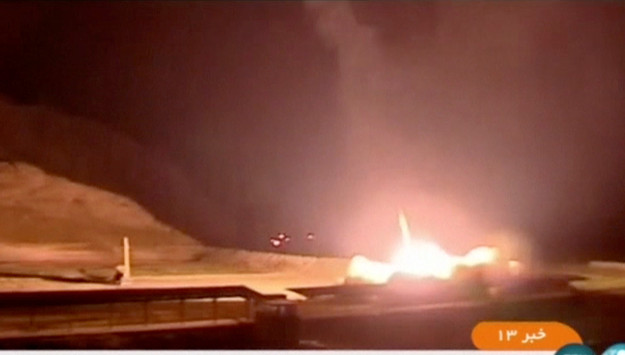
On Sunday, the Iranian military said it had launched six missiles at Islamic State positions in Syria in retaliation for the June 7 attacks in Tehran claimed by the terrorist group. A statement by the Islamic Revolution Guards Corps (I.R.G.C.) confirmed that it fired medium-range missiles from bases in the western Iranian provinces of Kermanshah and Kurdistan and killed a “large number” of Islamic State terrorists in Syria’s Deir Az Zour province.
Monday Briefing: Eastern Syria a Hotbed of Geopolitical Interests
In this week’s Monday Briefing, MEI experts Charles Lister, Alex Vatanka, Marvin G. Weinbaum, and Gerald Feierstein provide analysis on eastern Syria as a new hotbed of geopolitical competition, Iranian responses to the Islamic State attack, additional U.S. troops in Afghanistan, and renewed Saudi succession speculation.
I.R.G.C. Claims It Killed Leader of Sunni Militant Group in Southeast Iran
The Islamic Revolution Guards Corps (I.R.G.C.) announced today that its ground forces have killed the ringleader of a Sunni militant group in Iran’s restive province of Sistan and Baluchestan.
Iran-Backed Forces Link Up along Syrian-Iraqi Border near al-Tanf despite U.S. Warnings
Iranian-supported Shiite militia forces in Iraq and Syria have finally linked up along the shared border between the two countries, Fars News Agency reports.
Top Khamenei Aide Says U.S. Senate Sanctions Bill Violates Nuclear Deal
Iranian officials on Friday reacted angrily to the latest U.S. Senate decision to impose new sanctions against Iran. Ali Akbar Velayati, a senior aide to Supreme Leader Ali Khamenei, said the Senate bill was a violation of the Joint Comprehensive Plan of Action – the nuclear accord Iran signed with the United States and five other world powers in July 2015. “The U.S.
Senior Iranian Official Blasts Tillerson’s Remarks about Transition of Power in Iran
Mohsen Rezaei, the secretary of Iran’s Expediency Council, has strongly criticized U.S. Secretary of State Rex Tillerson’s comments about a peaceful transition of power in Iran.
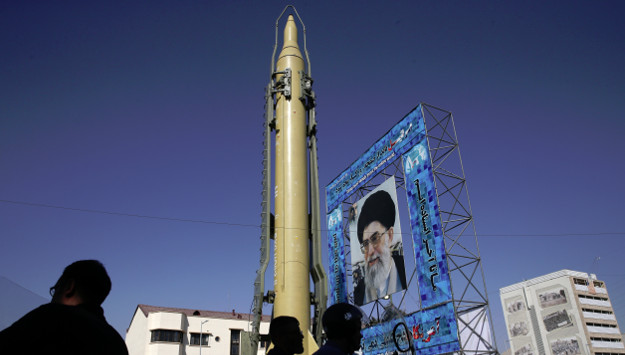
Iran Says Will Continue Missile Activity despite New U.S. Sanctions
Iran’s Foreign Ministry said new U.S. sanctions would not force Tehran to halt its missile program. The ministry’s spokesman argued that Iran’s missile program does not violate the 2015 nuclear deal or the U.N. resolution that endorsed the agreement.
The oldest peer-reviewed publication dedicated to the study of the modern Middle East, MEI’s flagship journal covers politics, society, and culture in the region.