Brian is joined by His Excellency Talal Al Rahbi, the ambassador of the Sultanate of Oman to the United States of America, to discuss what it means to represent the “Switzerland of the Middle East” and the role of Oman’s quiet diplomacy. He also reflects on growing up during Oman’s transformation, his time spent in the United States, and why the two nations’ long-standing partnership matters today.
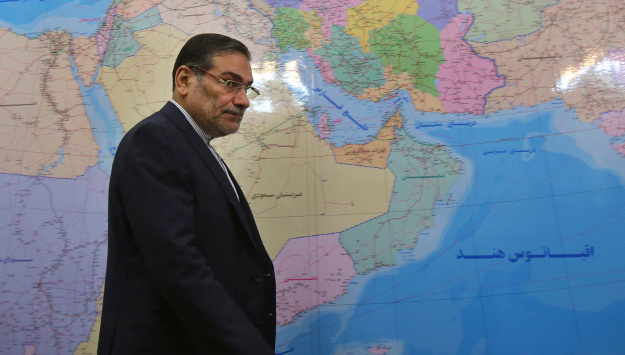
After decades of political setbacks, Iran’s former Revolutionary Guards commander has returned to the center of power. Is he an incidental beneficiary of war, or have observers underestimated him all along?
The Unavoidable Neighbor: Managing Iran Beyond the War
Gulf states and their partners are increasingly looking beyond their most immediate interests of containing the war with Iran. While recent talks between Saudi Arabia, Turkey, Pakistan, and Iran have kept de-escalation on the agenda, a broader regional security framework and non-aggression pact has also emerged, envisioning a longer-lasting solution to regional conflicts. The talks have yet to produce a settlement, but they reflect a growing recognition that Gulf security cannot depend entirely on Washington. Iran will still be there, and its neighbors will have to find ways of living with it.
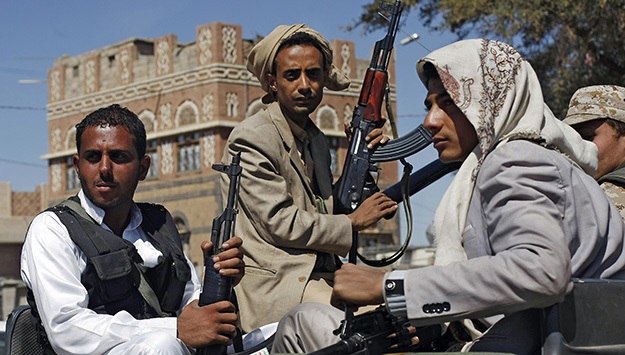
A month after the Houthi conquest of Sana, Yemen’s new political landscape remains uncharted. In Sana, the Houthi leadership is trying to coax Yemen’s political elite into a coalition government, while south of Sana, Houthi forces are pressing to consolidate their military power on the ground. Both efforts are encountering considerable resistance, but the Houthis may prevail still.
Contemporary Patterns in Transregional Islam: Indonesia’s Shi‘a
Representing about 1% of the country’s 200 million Muslims, Indonesia’s Shi‘a are but a small group in the overwhelmingly Sunni majority. These contemporary communities of devotees of the ahl al-bayt (“people of the house,” referring to the Prophet Muhammad, his daughter Fatima, her husband ‘Ali, and their sons Hasan and Husayn) explain their identities, albeit with differences, in transregional terms. Recently, this transregional focus has turned from South Asia toward the Islamic Republic of Iran.
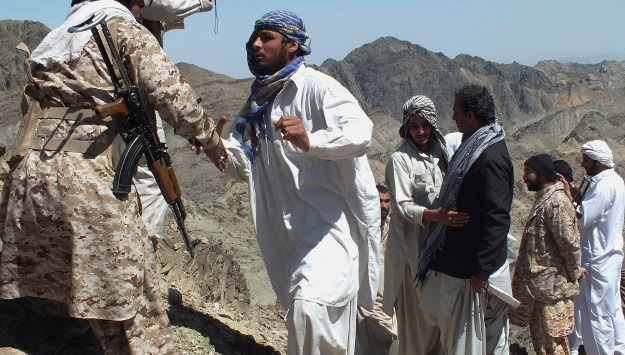
There have been a number of rounds of border skirmishes between Iran and Pakistan since the first week of October. However, reports that Pakistani forces have returned mortar fire is highly unusual and represents an increase in tensions that have marred this region for years.
Contemporary Indonesian Pilgrimage to Hadramawt, Yemen
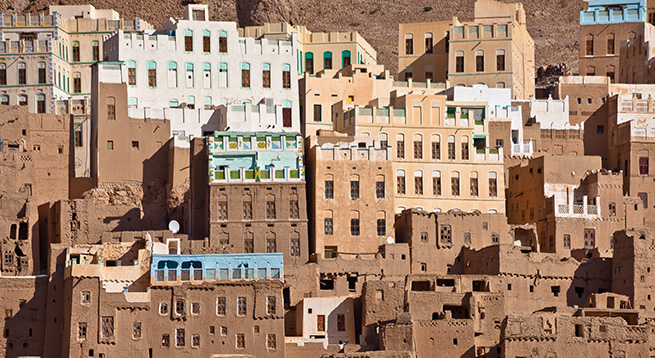
The past decade has witnessed a steady increase in the numbers of Indonesians embarking on pilgrimage (ziyara) to the Hadramawt valley of the former South Yemen. Despite the considerable presence of the Hadrami diaspora in Indonesia, the idea of a pilgrimage to Hadramawt did not really exist among Indonesian Muslims of non-Hadrami descent until rather recently.
Thanks to unprecedented current account surpluses, the Gulf Cooperation Council (GCC) countries are investing billions abroad and looking more toward the East. The GCC’s growing trade ties with China have been accompanied by encouraging development in investment relations. For these countries, investment projects in China promise access not only to large and rapidly growing energy markets, but also to other booming sectors.
Gulf Investment in China: Beyond the Petroleum Sector
This essay explores recent GCC investment in sectors of the Chinese economy other than the petrochemicals industry and examines the challenges confronted by Gulf investors.
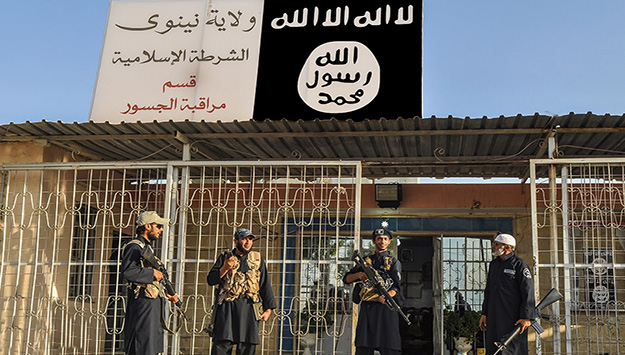
Defeating the Islamic State Militarily is Only Half the Battle
In his speech on September 10 President Obama characterized the Islamic State (ISIS) as a terrorist group.[1] There were clear political benefits to using this label, not the least of which was to facilitate the formation of a broad-based military coalition against the organization.
The rise of China and India, coupled with major changes in the global energy market such as the US shale revolution have shifted the Gulf countries’ economic focus towards the Asian continent. East Asia has already emerged as the GCC’s most important trade partner, accounting for over 57% of its external trade.
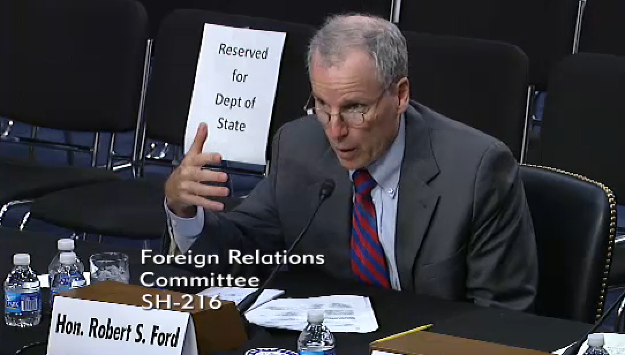
The following is the written testimony prepared and delivered by Amb (ret) Robert S. Ford for the Senate Foreign Relations Committee hearing held on September 17, 2014. Click here to watch video of the full hearing (Amb. Ford’s testimony begins at the 3 hours and 26 minutes mark).
The conventional wisdom in Washington is that Tehran regards Sunni-jihadist movements as ideologically incompatible rivals. This is not surprising, as the bulk of Sunni-jihadist literature makes it clear that Shia-majority Iran is considered to be the embodiment of apostasy. To most Sunni jihadists, including those from ISIS, Iran is an archenemy surpassing both Israel and the United States.
The New Iraqi Prime Minister: A Change in Style or Substance?
During his first week in office, Iraq’s new prime minister, Haydar al-Abbadi, has made a number of significant announcements, ranging from highly symbolic moves to more wide-ranging initiatives. Signs of divergence between Abbadi and his predecessor, Nuri al-Maliki, are clearly visible.
One way to grasp the immense difficulty facing President Obama as he tries to forge an effective international coalition to oppose the Islamic State is to examine the difference between this effort and the last time the United States led a diverse group of countries to take on a conflict in the Middle East: Operation Desert Storm, in 1991.
The oldest peer-reviewed publication dedicated to the study of the modern Middle East, MEI’s flagship journal covers politics, society, and culture in the region.