Brian is joined by His Excellency Talal Al Rahbi, the ambassador of the Sultanate of Oman to the United States of America, to discuss what it means to represent the “Switzerland of the Middle East” and the role of Oman’s quiet diplomacy. He also reflects on growing up during Oman’s transformation, his time spent in the United States, and why the two nations’ long-standing partnership matters today.
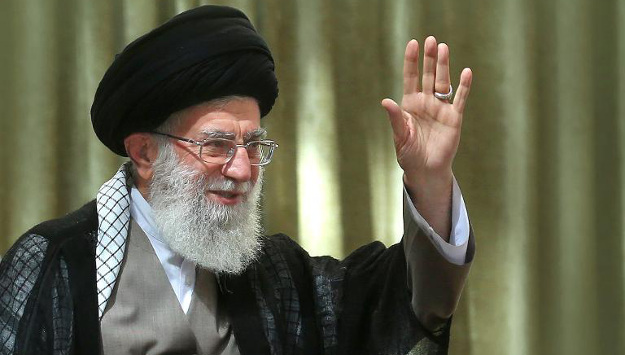
After decades of political setbacks, Iran’s former Revolutionary Guards commander has returned to the center of power. Is he an incidental beneficiary of war, or have observers underestimated him all along?
The Unavoidable Neighbor: Managing Iran Beyond the War
Gulf states and their partners are increasingly looking beyond their most immediate interests of containing the war with Iran. While recent talks between Saudi Arabia, Turkey, Pakistan, and Iran have kept de-escalation on the agenda, a broader regional security framework and non-aggression pact has also emerged, envisioning a longer-lasting solution to regional conflicts. The talks have yet to produce a settlement, but they reflect a growing recognition that Gulf security cannot depend entirely on Washington. Iran will still be there, and its neighbors will have to find ways of living with it.
"Marked" for Exclusion: The Problem of Pluralism, State-building, and Communal Identities in Iraq and the Arab World
In this essay, the author argues that the dynamics of contemporary Sunni-Shi‘a relations in Iraq and elsewhere in the Arab world are not fundamentally different from those animating other societal cleavages. The modern Iraqi state’s awkwardness vis-à-vis its Shi‘a population, and indeed other outgroups and minorities, was most directly a product of exclusionary nation-building based on problematic conceptions of “unity” and “pluralism.” Rather than actually fostering unity or respecting and nurturing pluralism (politically or communally), these concepts have often been used to exclude dissenters whose non-conformity was deemed a threat to the body politic.
Israel’s ongoing military operation in Gaza — Protective Edge — has animated the Shia Islamist leadership in Tehran.
The bloody conflict, and the global Muslim outrage it has provoked, is held by the Iranian regime as a chance to redeem itself in the eyes of the Sunni Muslim majority in the world.
When US commanders in Iraq in 2006 were trying to figure out the best way to approach the burgeoning insurgency, two points of view emerged from the debate.
With the Syrian civil war raging and the ISIS offensive in northern Iraq creating a fresh crisis, Turkey now effectively has two failed states on its southern border and is dealing with new security, political, and economic challenges. Gonul Tol, director of MEI’s Turkish Center, explains how Turkey is responding to this predicament.
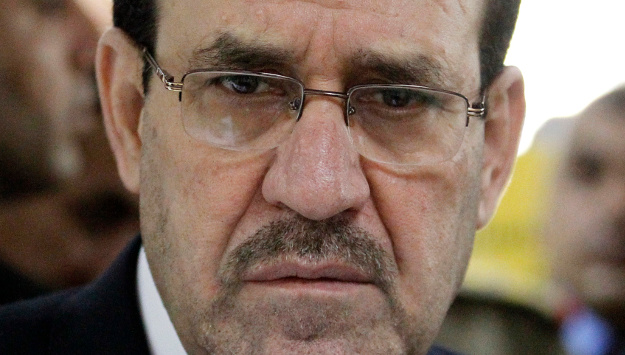
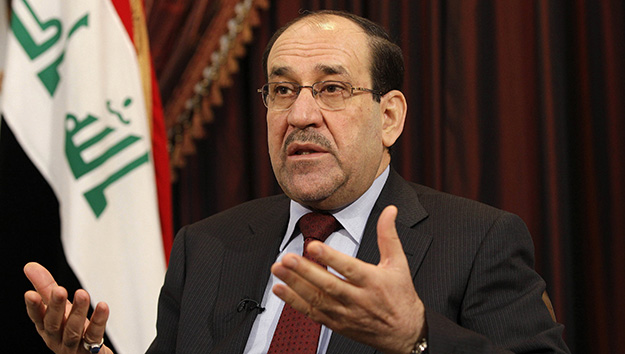
The swift and violent rise of the Islamic State in Iraq and Syria (ISIS) continues to rattle the cages of power in Tehran. Overnight, Iran’s ally in Baghdad, Prime Minister Nuri al-Maliki, is suddenly fighting for his political life and the country of Iraq, which he had largely inherited from the Americans. Maliki has been a solid friend of Iran, but rapidly shifting realities inside Iraq can turn him into an expendable ally, making him more into a liability than an asset.
President Obama’s decision to send 300 troops to Iraq to help Prime Minister Nuri al-Maliki’s government organize and gain the intelligence needed to fight off a Sunni rebellion spearheaded by the Islamic State in Iraq and Syria (ISIS) is getting decidedly mixed reviews.
The oldest peer-reviewed publication dedicated to the study of the modern Middle East, MEI’s flagship journal covers politics, society, and culture in the region.