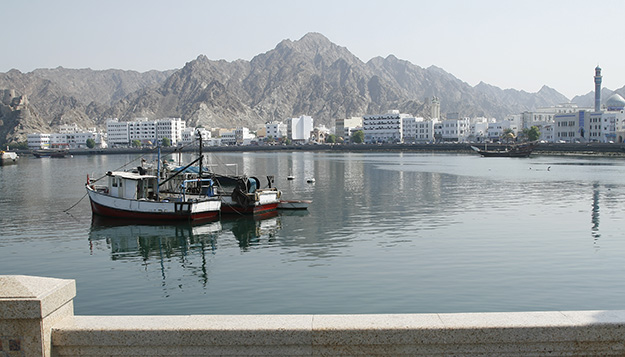
Brian is joined by His Excellency Talal Al Rahbi, the ambassador of the Sultanate of Oman to the United States of America, to discuss what it means to represent the “Switzerland of the Middle East” and the role of Oman’s quiet diplomacy. He also reflects on growing up during Oman’s transformation, his time spent in the United States, and why the two nations’ long-standing partnership matters today.
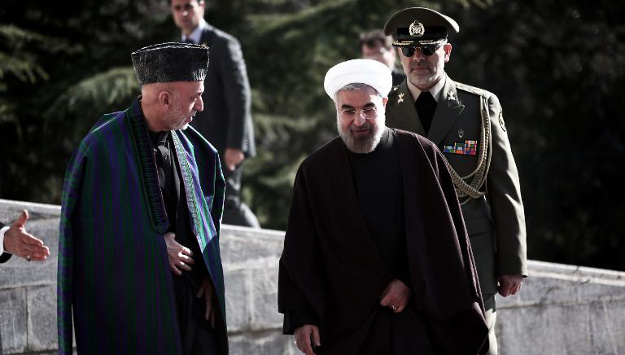
After decades of political setbacks, Iran’s former Revolutionary Guards commander has returned to the center of power. Is he an incidental beneficiary of war, or have observers underestimated him all along?
The Unavoidable Neighbor: Managing Iran Beyond the War
Gulf states and their partners are increasingly looking beyond their most immediate interests of containing the war with Iran. While recent talks between Saudi Arabia, Turkey, Pakistan, and Iran have kept de-escalation on the agenda, a broader regional security framework and non-aggression pact has also emerged, envisioning a longer-lasting solution to regional conflicts. The talks have yet to produce a settlement, but they reflect a growing recognition that Gulf security cannot depend entirely on Washington. Iran will still be there, and its neighbors will have to find ways of living with it.
All Retributive Justice, No Restorative Justice in the Post-Arab Spring Middle East
In the wake of the revolutionary fervor that has swept the Middle East and North Africa since the beginning of 2011, retributive justice has taken precedence over restorative justice approaches as countries seek to address human rights violations.
The Popular Committees of Abyan, Yemen: A Necessary Evil or an Opportunity for Security Reform?
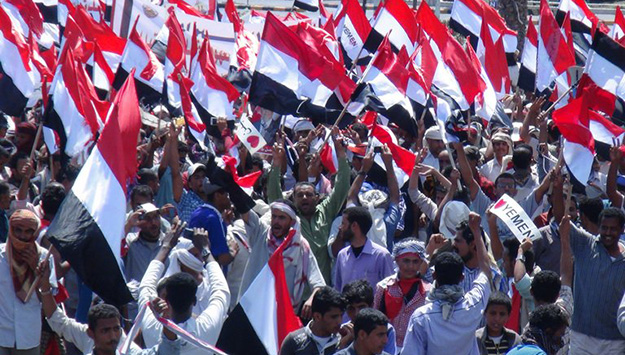
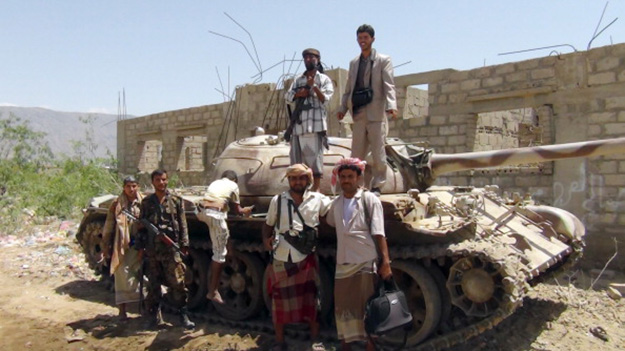
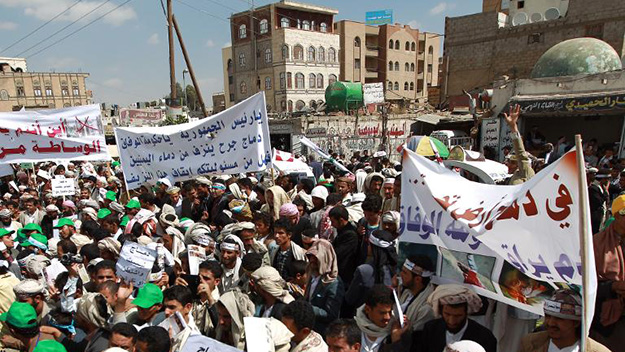
In early 2011, Yemeni youths took to the street to demand the downfall of the regime and much-needed democratic reforms. This eventually led to the removal of former president Ali Abdullah Saleh from power later the same year. The political turmoil associated with the uprising has resulted in an alarming deterioration of the security situation throughout the country, most notably the seizure of two major cities in the southern governorate of Abyan by Ansar al-Shariah (AAS), an offshoot of al-Qa`ida. Backed by the Yemeni government, the Popular Committees (PCs), local armed resistance groups, pushed AAS out of major cities in Abyan.
Yemen’s Contentious Transitional Justice and Fragile Peace
Yemen was not immune to the wave of popular uprisings that swept some countries of the Middle East and North Africa region. However, because of the Yemeni state’s fragility, concurrent zones of conflict, and a power struggle that divided the core military and tribal elites, the international community was afraid that the youth uprising that started in January 2011 might lead to a collapse of the state. Given the consequences of such a collapse on the security of the Gulf states, oil production, and the international war on terror, the Gulf Cooperation Council brokered a deal in November 2011—the Gulf initiative—which laid the foundation for a transitional government. The main aim of the initiative was to secure a peace deal that halted Yemen’s slide into chaos. Peace was sought through the brokering of an inclusive National Dialogue Conference (NDC), but peace did not entail changing the regime or its pattern of politics. While transitional justice has been a part of this process of peaceful reconciliation, it raises questions about the sustainability of this peace and provides a showcase of the precarious state of Yemeni affairs.
Turkey and the Kurds: From Predicament to Opportunity
This report was co-authored by Ömer Taşpınar and was published by the Center on the United States and Europe at the Brookings Institution on Jan. 22, 2014. Click here to download the full report as a PDF.
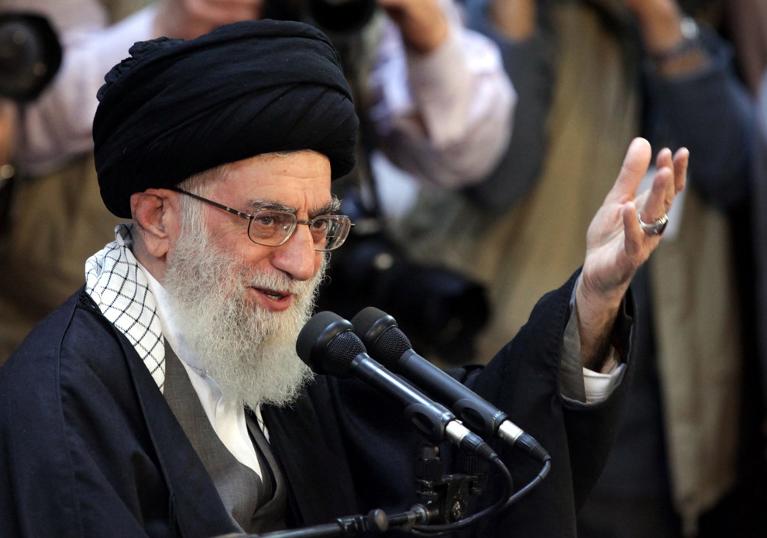
As President Obama met his top Afghanistan commanders in the Oval Office on February 4 to discuss his decision to reduce the U.S. military presence in Afghanistan, he received a compliment from an unlikely source. Ali Akbar Velayati, the top foreign policy aid to Iran’s Supreme Leader, Ayatollah Khamenei, called Obama’s Afghan withdrawal policy “wise.”
Osama bin Laden may be dead, but his ghost was in Riyadh the other day, hovering over Saudi Arabia’s King Abdullah as he issued a decree making it a crime for any Saudi citizen to take part in a war outside the kingdom.
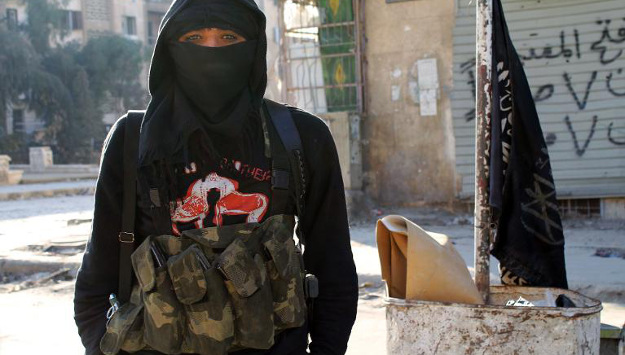
The obvious motivator was the civil war in Syria, where hundreds of young Saudis have been spotted in the ranks of the most radical jihadi groups battling both the government and other less extreme rebels. But the roots of the king’s action, and the problem it was designed to address, can be traced to the 1980s war against the Soviet occupation of Afghanistan.
De-Ba`thification in Iraq: How Not to Pursue Transitional Justice
The de-Ba`thification process in Iraq has fallen profoundly short as a transitional justice mechanism over the past decade. Poorly conceived, badly implemented, and controlled by hard-liners, the process has been so highly politicized that it has eroded the rule of law and intensified the sectarian tensions that are at the heart of the violence haunting Iraq.
Turkish Prime Minister Recep Tayyip Erdogan is in Tehran January 28 and 29 for his first meeting with Iranian President Hassan Rouhani. Foreign Minister Ahmet Davutoglu, Energy Minister Taner Yildiz, and Economy Minister Nihat Zeybekci are accompanying him. MEI spoke to Gonul Tol, Director of the Institute’s Center for Turkish Studies, about the meeting.
Dressing for Diplomatic Success: Iranian Negotiations Lead the Way
In the Middle East today, diplomatic success and failure are unfolding side by side, often with some of the same players. High-profile attempts are being made to end the conflict between Israel and the Palestinians, to stop the massacre of innocents in Syria, and to bring Iran in from the cold.
Collection Spotlight: America's Great Game: The CIA's Secret Arabists and the Shaping of the Modern Middle East
America’s Great Game: The CIA’s Secret Arabists and the Shaping of the Modern Middle East, by Hugh Wilford, 2013
A tale of how the CIA set sail into the Middle East with the best intentions, ran aground on its own failings, and was overwhelmed by forces and events it could not control.
Qanats and Water Cooperation for a Sustainable Future
This essay is part of the Middle East-Asia Project (MAP) series on “Harvesting Water and Harnessing Cooperation: Qanat Systems in the Middle East and Asia.”
The removal of Yemeni President Ali Abdullah Saleh in 2011 has created an existential crisis for Yemen’s Houthis. Like many other armed political groups in Yemen and elsewhere, the Houthis’ survival depends on the continued existence of an enemy. With Saleh gone, their raison d’être has become difficult to define and their armed opposition hard to defend.
The oldest peer-reviewed publication dedicated to the study of the modern Middle East, MEI’s flagship journal covers politics, society, and culture in the region.