Skip to Content
Iran’s Role in Arab Allies’ Underground Warfighting
  • Analysis
  • Iran’s Role in Arab Allies’ Underground Warfighting

    Hamas, Hizballah and Houthi tunnel networks resemble Iran’s underground missile cities. But their origins reveal a more complicated story of local necessity, Iranian assistance and military adaptation.

    Dr. Marwan Muasher: Has the Middle East Really Changed?
  • Podcast
  • Dr. Marwan Muasher: Has the Middle East Really Changed?

    Have October 7 and the Iran war remade the Middle East, or just made it more dangerous? In the first episode of Re-Orient, Gönül Tol puts that question to Dr. Marwan Muasher, Jordan’s former Deputy Prime Minister and Foreign Minister. Muasher draws on his extensive career to unpack the key issues driving today’s Middle East, from regional alignments to US influence, and offers insights on what has the potential to shape this volatile part of the world.

    In Iran, a Divided Regime Is Not a Paralyzed One
  • Analysis
  • In Iran, a Divided Regime Is Not a Paralyzed One

    President Donald Trump’s next move on Iran should follow from what he actually wants, and with his legacy at stake, the choice matters. If the ultimate goal is regime change through internal collapse, the logic points to a long squeeze: tighter enforcement of the economic blockade and periodic military strikes to limit Iranian actions in the Strait of Hormuz, a campaign that might outlast his presidency. Whether by design or by drift, that is roughly the course Washington is on today.

    Featured Experts

    Filter by
    4590 Results
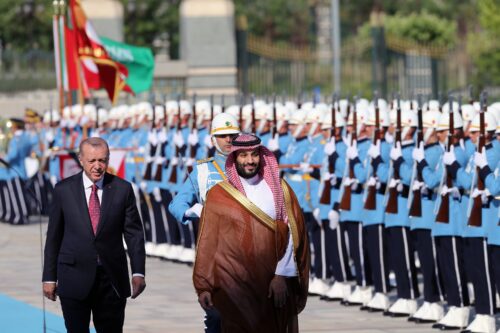
    What Ankara sees in Riyadh — and why it still needs Abu Dhabi
    Photo by Mustafa Kaya/Xinhua via Getty Images
  • Analysis
  • What Ankara sees in Riyadh — and why it still needs Abu Dhabi

    As the rivalry between Riyadh and Abu Dhabi sharpens in Yemen and beyond, Turkey has begun edging closer to Saudi Arabia, sparking claims that a new regional order is taking shape: a Turkey-Saudi axis backed by a NATO-like defense architecture, implicitly aligned against Israel and the United Arab Emirates. This reading overstates the case.

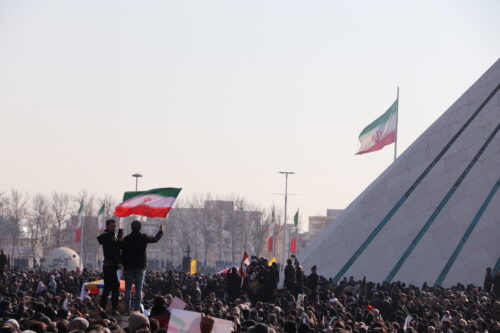
    From Peripheries to Tehran: Iran’s New Geography of Protest
  • Commentary
  • From Peripheries to Tehran: Iran’s New Geography of Protest

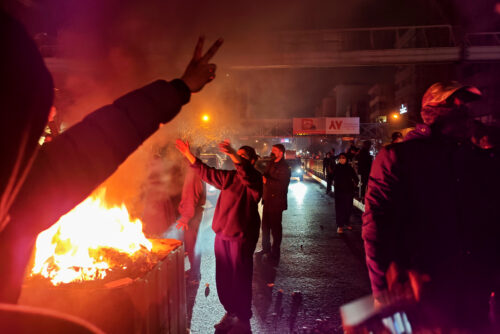
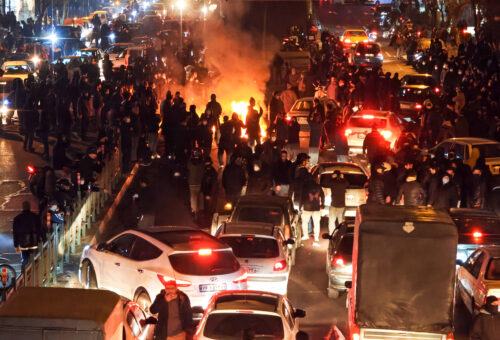
    Iran is once again in the midst of nationwide unrest. Protests that erupted in late 2025—initially driven by an acute economic crisis rapidly spreading across the entire country—are ongoing. Whether this latest wave culminates in revolutionary rupture, regime adaptation, or a familiar cycle of repression and exhaustion remains uncertain. What is already clear, however, is that the structural forces animating the unrest extend far beyond the present.

    At the heart of Iran’s protests lies a set of sharp and enduring regional disparities that have long shaped patterns of development, political control, and social mobilization. These center–periphery divides have repeatedly rendered Iran’s border provinces more vulnerable to deprivation, marginalization, and protest, while allowing the political and economic core to absorb shocks with greater resilience. Today, those divides are under unprecedented strain, as economic hardship is no longer confined to the margins but increasingly shared across the country.


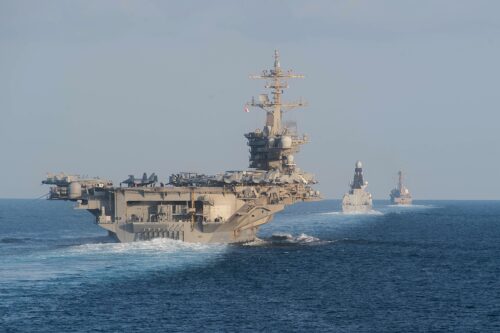
    Potential US military strikes on Iran: This won’t be another 12-Day War
    Photo by Zachary Pearson- U.S. Navy via Getty Images
  • Analysis
  • Potential US military strikes on Iran: This won’t be another 12-Day War

    President Donald Trump has sharply warned the Iranian regime to halt its brutal crackdown on protesters. Amid speculation that the US is preparing for military action in Iran, Washington should take the lessons and fundamentally different context of its successful June 2025 operation against the Islamic Republic into account as it plans for how to respond.

    Assessing the Dangerous Unrest in Iran
  • Event
  • Assessing the Dangerous Unrest in Iran

    The Middle East Institute invites you to an on-the-record briefing examining what comes next for Iran's leadership and the protest movement. To unpack these issues, we will be joined by MEI Distinguished Military Fellow Vice Admiral Kevin Donegan, USN (Ret.), former senior advisor at the World Bank Nadereh Chamlou, and MEI Senior Fellow Alex Vatanka.

    January 15, 2026, 3:00 PM – 4:30 PM

    Middle East Institute, 1763 N St NW, Washington, DC 20036

    Venezuela’s Shadow Over MENA: Perceptions and Precedents
  • Podcast
  • Venezuela’s Shadow Over MENA: Perceptions and Precedents

    MEI Vice President for Policy Ken Pollack joins hosts Alistair Taylor and Matthew Czekaj to explore what the precedent set by the Trump administration’s military capture of Venezuelan President Nicolás Maduro could mean for US policy in the Middle East — particularly in light of ongoing anti-regime protests in Iran. The conversation unpacks the reverberations of Operation Absolute Resolve, Washington’s options for and potential consequences of responding to the Iranian regime’s brutal crackdown, regional perceptions of recent US actions and stated objectives, and broader questions around the direction of the Trump administration’s evolving grand strategy.

    January 15, 2026

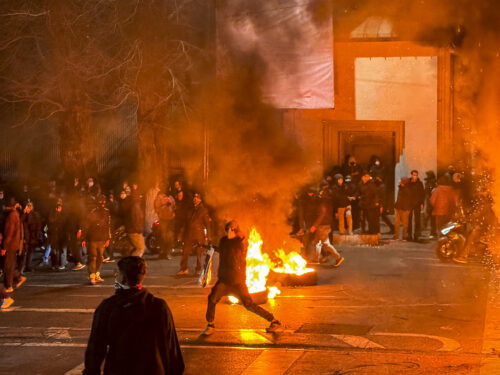
    Khamenei did this to himself. The US can help — without another Middle East quagmire
  • Commentary
  • Khamenei did this to himself. The US can help — without another Middle East quagmire

    Last week, Iran’s Supreme Leader Ali Khamenei effectively greenlit mass killing to save his regime. His message was blunt: blood would be spilled to preserve the system. His security forces followed through, unleashing a level of violence against protesters that even by the Islamic Republic’s grim standards marks a dangerous escalation.

    Can Iran’s Regime Survive This?
  • Podcast
  • Can Iran’s Regime Survive This?

    Iran is facing the largest demonstrations since 2022, when the death of Mahsa Amini in police custody ignited a nationwide uprising. This time, the unrest comes as the Islamic Republic is unusually exposed—still reeling from a bruising 12-day war with Israel last summer. What does this moment mean for the regime’s survival? How is this wave of protests different from those that came before? And is there anything the outside world can do to support Iran’s pro-democracy movement without backfiring?

    Read the Middle East Journal

    The oldest peer-reviewed publication dedicated to the study of the modern Middle East, MEI’s flagship journal covers politics, society, and culture in the region.