Skip to Content
Special Episode: Saudi Oil After the East-West Pipeline Attack
  • Podcast
  • Special Episode: Saudi Oil After the East-West Pipeline Attack

    Saudi Arabia’s East-West pipeline is back in operation after a drone attack from Iraq, blamed on Iran-backed militias, shut it down for nearly two weeks. The pipeline is the kingdom’s main way to export oil while the Strait of Hormuz is closed, so the shutdown dealt another blow to global energy markets. How vulnerable is this route, and what does that mean for the kingdom and the world economy? This episode of Middle East Focus features a recent MEI Virtual Briefing in which Director of Communications Zeina Al-Shaib is joined by MEI Senior Fellow Colby Connelly and MEI Affiliate Yesar Al-Maleki. They examine the new geopolitical risks facing the oil market, what further losses of global supply could mean for Saudi Arabia and the world economy, and which buffers outside the Persian Gulf could ease the pressure.
    October 1, 2026

    The Middle East Beyond the Iran War
  • Report
  • The Middle East Beyond the Iran War

    This article is part of a collection of short essays written by the Fellows of the Middle East Institute to explore aspects of the ongoing war with Iran. The intent of the collection is to help readers see new and unexpected elements of the dynamics and impact of the ongoing hostilities and to think harder, deeper, and broader about the implications of the conflict.

    September 28, 2026

    Yemen: The Houthis’ Role in the Next Evolution of the Axis of Resistance
  • Analysis
  • Yemen: The Houthis’ Role in the Next Evolution of the Axis of Resistance

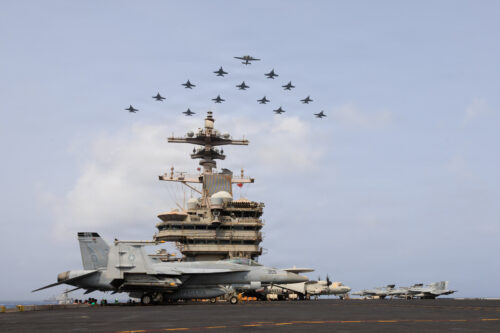
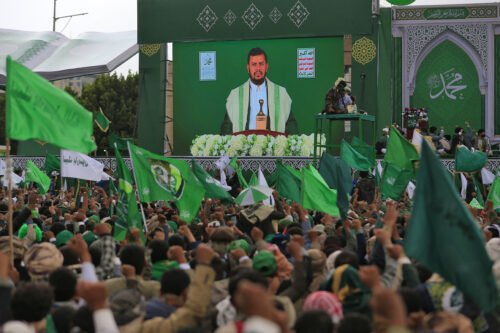
    The outbreak of the war with Iran demonstrated the strategic value of maritime chokepoints in the Islamic Republic’s confrontation with the United States. But as Tehran’s strategy of using the Strait of Hormuz to pressure Washington seems to be backfiring, Iran is working with the Houthis to strengthen its leverage over another strategic chokepoint: the Bab el-Mandeb. The recent escalation in Yemen should be viewed within this context.

    Featured Experts

    Filter by
    4509 Results
    Bonus Episode: Tehran’s Brewing Troubles
  • Podcast
  • Bonus Episode: Tehran’s Brewing Troubles

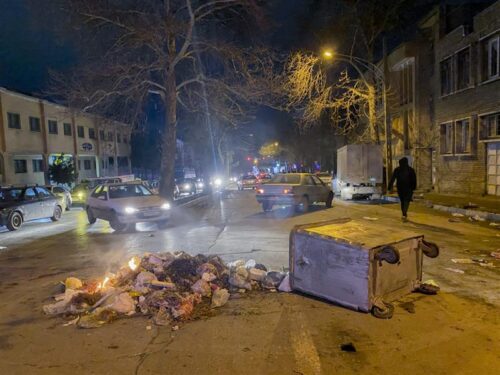
    This bonus episode of Middle East Focus features a conversation from MEI’s Virtual Briefing Series. Director of Communications Zeina Al-Shaib is joined by Distinguished Diplomatic Fellow Alan Eyre and Senior Fellow Alex Vatanka to discuss the ongoing protests in Iran. The street demonstrations, sparked by the country’s economic nosedive and at times turning violent, are the largest in three years. As regime arrests and killings of protesters have intensified, US President Donald Trump has threatened to intervene, his remarks potentially taking on a more vivid significance in light of the American military extraction over the weekend of Venezuela’s President Nicolás Maduro, an ally of Tehran. Eyre and Vatanka discuss what these latest developments mean for an Iranian regime already under intense internal and international pressure; the political impact of President Trump’s threats; the limits of Iranian President Masoud Pezeshkian’s power to de-escalate the situation at home; and how the instability inside Iran may affect the wider region.

    January 8, 2026

    Iran’s political deadlock — and a way out the regime is unlikely to take
    Photo by Mobina / Middle East Images / AFP via Getty Images
  • Analysis
  • Iran’s political deadlock — and a way out the regime is unlikely to take

    On Sunday, December 28, Iran’s latest wave of unrest began not on a university campus or in a symbolic political square, but in the very heart of the country’s economic sphere: the Grand Bazaar commercial center in downtown Tehran. What distinguishes the current moment is not simply the persistence of unrest but its emotional register. Iranian commentary increasingly describes not just hardship but a collapse of expectations of a better future.

    From coalition to confrontation: Saudi-UAE rivalry in Yemen and its regional implications
  • Analysis
  • From coalition to confrontation: Saudi-UAE rivalry in Yemen and its regional implications

    The final days of 2025 marked a turning point in the Middle East, as competition between Saudi Arabia and the United Arab Emirates in Yemen spilled out into the open. Tensions between the two coalition partners, which jointly launched a military intervention in Yemen in 2015, have simmered for years and are now rapidly escalating, with far-reaching implications for both Yemen and regional security more broadly.

    Iran’s Axis of Resistance After the 12-day War: Adaptation, Restructuring, and Reconstitution
    Photo by Kaveh Kazemi/Getty Images
  • Analysis
  • Iran’s Axis of Resistance After the 12-day War: Adaptation, Restructuring, and Reconstitution

    Since Israel’s 12-day war against Iran, Tehran and its network of regional proxies and non-state allies, the so-called Axis of Resistance, have entered a phase of strategic dormancy — an outward calm concealing rearmament, financial adaptation, and ideological renewal.

    December 19, 2025

    US-Saudi Relationship in the Wake of MBS’s Visit
  • Event
  • US-Saudi Relationship in the Wake of MBS’s Visit

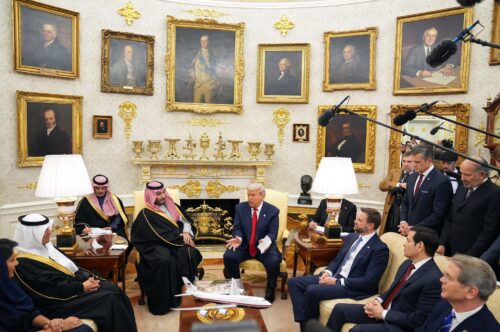
    The Middle East Institute hosted Dr. Gregory Gause, Ambassador Michael Ratney, and Dr. Karen Young for an assessment of Saudi policy and the US-Saudi relationship in the wake of the MBS visit.

    December 17, 2025, 2:30 PM – 4:00 PM

    Middle East Institute 1763 N St NW Washington, District of Columbia 20036

    Moral compass lost: US foreign policy in 2025
    Photo by Andrew Harnik/Getty Images
  • Analysis
  • Moral compass lost: US foreign policy in 2025

    US President Donald Trump is scheduled to deliver a prime time address to the nation this evening at a moment when public support for his second term has hit new lows. No matter the topic Trump chooses to frame the national conversation as America heads into the holiday season, it is worth taking a step back and reflecting on the bigger story of what has occurred in the United States in 2025 and how these dynamics affect America’s relations with the rest of the world, including the Middle East.

    Unfinished business will drive the Mideast agenda in 2026
  • Brief
  • Unfinished business will drive the Mideast agenda in 2026

    Following another year of pivotal developments and transformational change, the Middle East could be poised to turn the page on many of its long-running conflicts and sources of instability. But lasting fruits of the processes begun in 2025 will require a determined, intentional focus by regional actors and the United States. Given current trends, MEI experts weigh in on where the region may be headed in 2026.

    The GCC AI Stack: A Roadmap for Gulf Leadership in the Global Technology Race
  • Event
  • The GCC AI Stack: A Roadmap for Gulf Leadership in the Global Technology Race

    The Middle East Institute (MEI) was pleased to host the launch of The GCC AI Stack, a new report by MEI Senior Fellow Mohammed Soliman.

    December 16, 2025, 3:30 PM – 5:00 PM

    Middle East Institute 1763 N St NW Washington, District of Columbia 20036

    Rob Malley Argues Two States Is an Illusion
  • Podcast
  • Rob Malley Argues Two States Is an Illusion

    Brian sits down with Robert Malley, a former US official best known for his role as the lead negotiator of the 2015 Joint Comprehensive Plan of Action. Malley discusses the motivations behind his new book, Tomorrow Is Yesterday: Life, Death, and the Pursuit of Peace in Israel/Palestine, and offers his assessment of American perspectives on the war in Gaza. The conversation also explores his personal background as the son​ of an Egyptian Jewish father and an American Jewish mother—both outspoken on the political left—and how that upbringing shaped his worldview, alongside a career spanning the Clinton, Obama, and Biden administrations.


    Read the Middle East Journal

    The oldest peer-reviewed publication dedicated to the study of the modern Middle East, MEI’s flagship journal covers politics, society, and culture in the region.