Jordan’s Economy Weathers Iran War’s Shocks and Finds New Opportunities
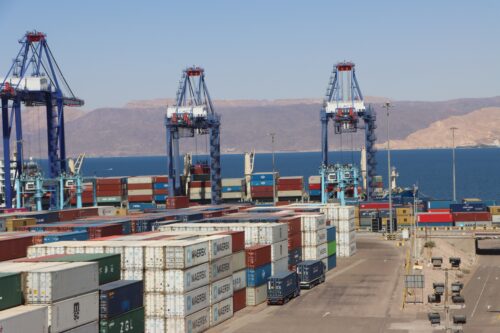
In the summer of 2003, King Abdullah II told Bloomberg Jordan sits “between Iraq and a hard place,” a play on words designed to describe the kingdom’s challenging environment to an American audience amid the US-led Iraq war to the east and the lingering Palestinian-Israeli conflict to the west. Jordan is grappling with a much “harder place” today.
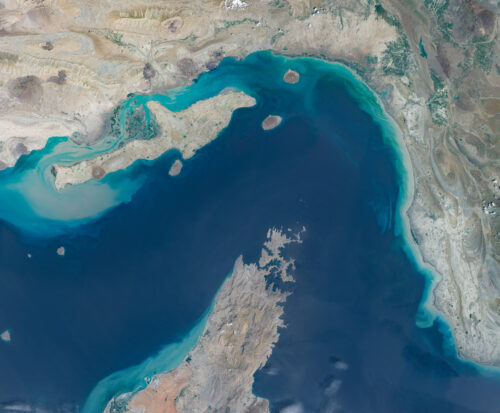
Proponents of the war with Iran have taken recent increases in crude-oil flows through the Strait of Hormuz as proof that the US strategy is finally working. President Trump is so confident in this that he recently rejected a seven-day plan, set forward by Iran’s foreign ministry, to end the war and open the strait. The United States is “winning tremendously,” Trump boasted.
Special Episode: Saudi Oil After the East-West Pipeline Attack
Saudi Arabia’s East-West pipeline is back in operation after a drone attack from Iraq, blamed on Iran-backed militias, shut it down for nearly two weeks. The pipeline is the kingdom’s main way to export oil while the Strait of Hormuz is closed, so the shutdown dealt another blow to global energy markets. How vulnerable is this route, and what does that mean for the kingdom and the world economy? This episode of Middle East Focus features a recent MEI Virtual Briefing in which Director of Communications Zeina Al-Shaib is joined by MEI Senior Fellow Colby Connelly and MEI Affiliate Yesar Al-Maleki. They examine the new geopolitical risks facing the oil market, what further losses of global supply could mean for Saudi Arabia and the world economy, and which buffers outside the Persian Gulf could ease the pressure.
Monday Briefing: Will Washington risk a collapse in Iraq?
This week’s briefing on recent news and upcoming events in the region featuring Robert S. Ford, Gonul Tol, Paul Salem, Dr. Marwa Maziad, and Marvin G. Weinbaum.
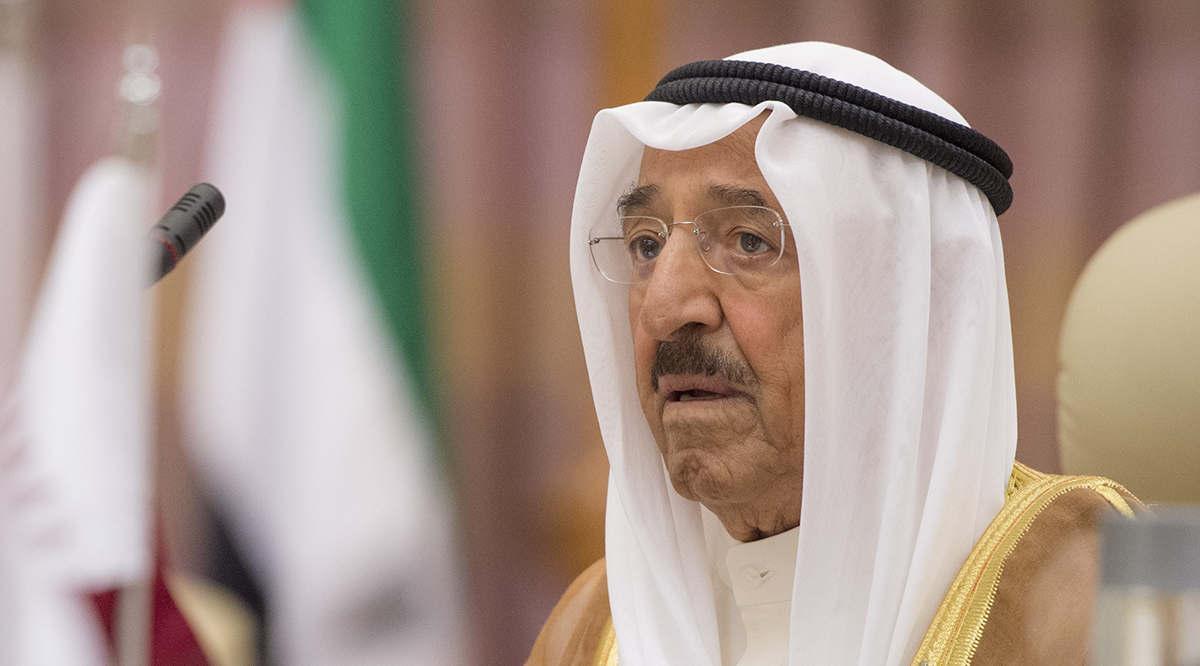
What are the implications of the passing of Kuwait’s emir, Sheikh Sabah?
With the announcement that Kuwait’s long-time ruler, Sheikh Sabah al-Ahmad al-Sabah, had passed away, on Sept. 29, at the age of 91, the Gulf states lost their second senior statesman of 2020 following the death of Sultan Qaboos of Oman at the beginning of the year. Like Qaboos, Sheikh Sabah played an outsized role within the GCC as well as in regional and international affairs.
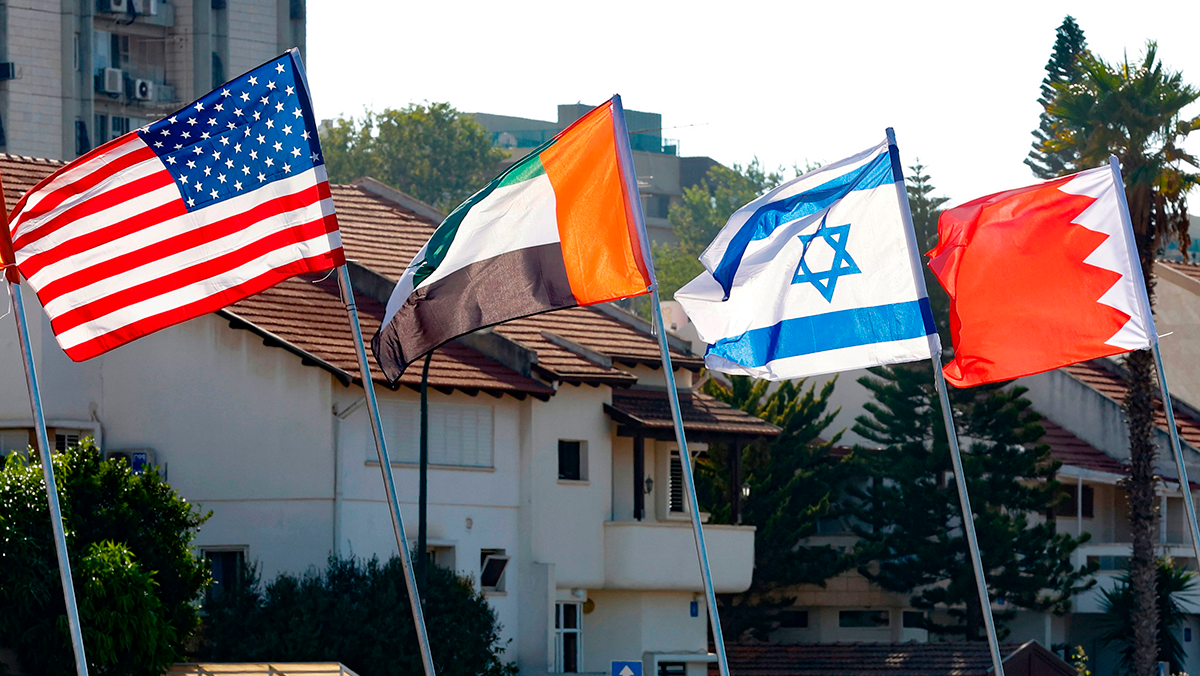
As the United Arab Emirates (UAE) and Bahrain move forward with their separate processes to normalize relations with Israel, the question that seems to be on the mind of many, both in Washington and in the region, is whether or when the Saudis will follow.
Using digital tools, the IRGC strengthens its grip on power in Iran
Over the past decade, Iran has made a concerted push to expand its cyber capabilities, an effort in which the IRGC has played a central role. Given the IRGC’s expansive and growing power, scholars, analysts, and many Iran watchers have long thought that at some point it could take over control in Iran, replacing the theocratic government with a military one. As Iran approaches an inflection point over the issue of succession after Ayatollah Khamenei, that day could be coming soon, and the IRGC is well placed to bring about such a transition given the hybrid mix of physical and cyber capabilities that it has developed and perfected over recent decades.
How can China maintain good relations with both Israel and Iran?
In recent years, China has become increasingly involved in the international arena, including the Middle East. As a rising superpower, China finds itself, time and again, needing to maintain relationships with countries that are hostile to one another. This is particularly true in the Middle East, which is one of the most conflictual areas in the world. China faces a challenge as it seeks to maintain good relations with both Iran and Israel, two of the region’s fiercest and loudest adversaries. How does Beijing manage to do this, and can it continue to do so going forward?
Dictators and civilizational thinking in Iran: From the Great Civilization to Islamic Civilization
Despite critical differences between the two political regimes that have dominated Iran for nearly a century, there are striking similarities between the Pahlavi monarchy (1925-1979) and the Islamic Republic (1979-present). Like Mohammad Reza Shah, Ayatollah Ali Khamenei has built a cult of personality around himself and has engaged in “civilizational thinking” — a preoccupation with defining the eternal essence and world-historical destiny of Iran through references to a glorious (one might say “glorified”) collective past. Nonetheless, the two leaders have interpreted Iranian history in vastly differing ways that serve divergent ideological ends.
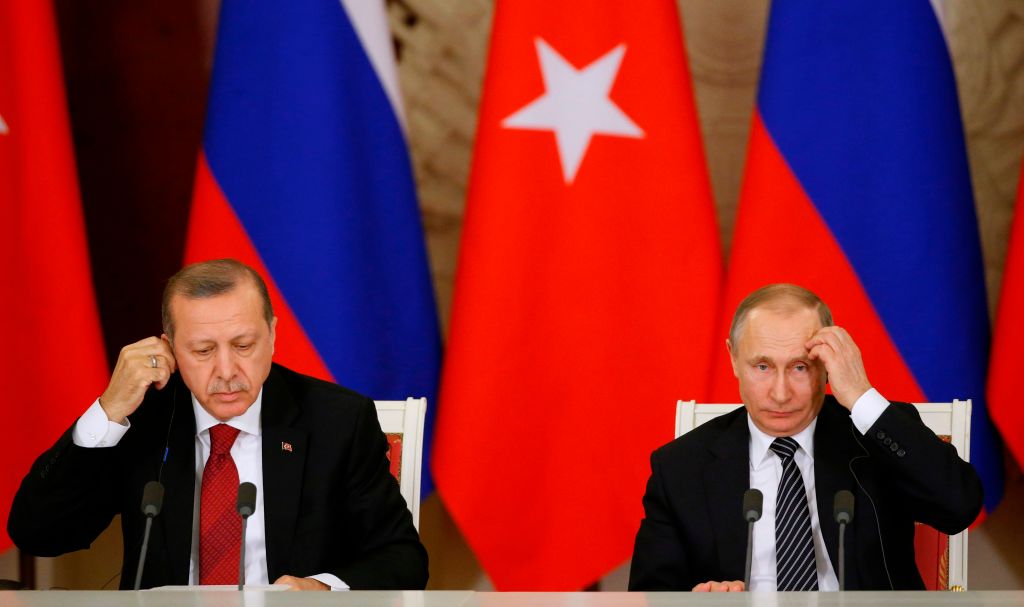
Monday Briefing: Will Russia and Turkey face off over Nagorno-Karabakh?
This week’s briefing on recent news and upcoming events in the region featuring Maxim A. Suchkov, Ibrahim Jalal, Eliza Campbell, Alex Vatanka, and Marvin G. Weinbaum.
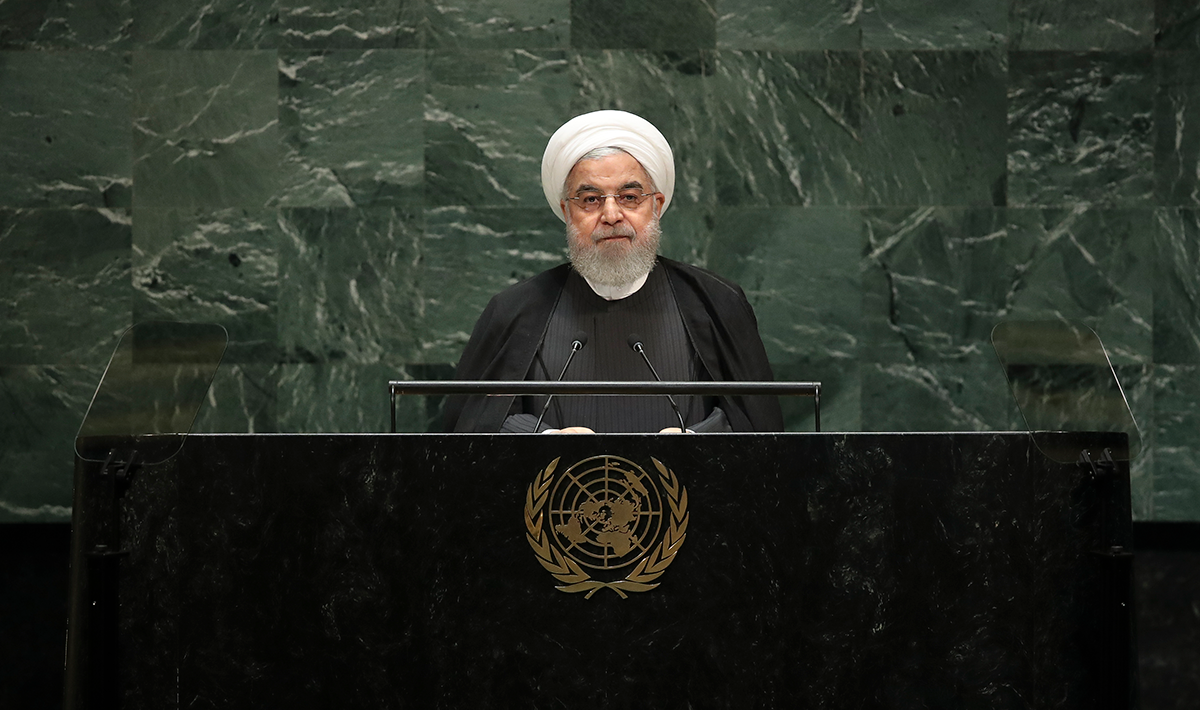
Last September, at the 74th session of the U.N. General Assembly, Iranian President Hassan Rouhani proposed the optimistically named “Hormuz Peace Endeavor” (HOPE). Over the past year, however, Iran’s plan has failed to gain any traction with the GCC states, even as the region’s security environment has fundamentally changed in ways that are detrimental to the Islamic Republic.
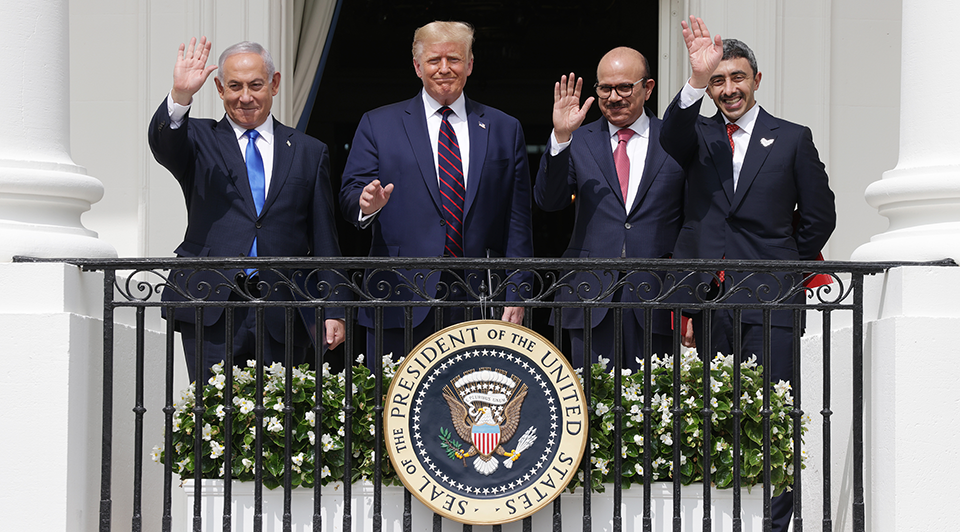
On September 15, President Trump presided over a ceremony on the South Lawn of the White House where Prime Minister Benjamin Netanyahu of Israel and the foreign ministers of the United Arab Emirates (UAE) and Bahrain, Abdullah bin Zayed Al Nahyan and Abdullatif Al Zayani, respectively, signed a general declaration of principles, called “The Abraham Accords.” Numerous analysts have focused on the regional impact of the normalization of relations between Israel and these two Gulf Arab countries. However, this development has worldwide geopolitical implications — including for China.
China’s plan to dominate the Middle East centers around Iran
The agreement with Iran could end up being the first major foray of many that gave Beijing a long reach into the Middle East at the expense of the United States, and even Russia.
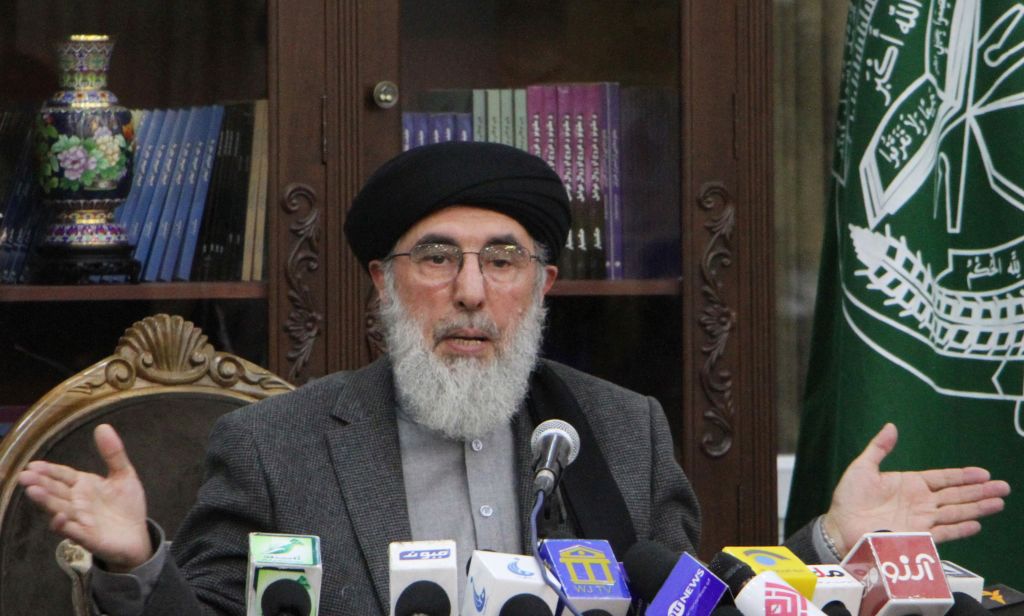
Monday Briefing: In Afghanistan a major player plans to jump ship
This week’s briefing on recent news and upcoming events in the region featuring Marvin G. Weinbaum, Charles Lister, Hafsa Halawa, Bilal Y. Saab, Anthony Elghossain, and Michael Sexton.
Trump, the CIA, and our disorienting Iranian policy ride
Understanding President Donald J. Trump’s position on Iran over the two remaining months until the November election is no feat for the fainthearted. Depending on the source to which one subscribes, Trump is either provoking conflict with Iran or working a secret back channel to secure a deal, both variables purportedly intended to support his election prospects. So which is it? Or can it be both?
The benefits and challenges of UAE-Israel normalization
Israel and the United Arab Emirates (UAE) have initiated a process that, if it comes to fruition, will bring about the normalization of relations between the two countries. The broader geostrategic challenges that the agreement could pose for Israel and the UAE have not been part of the public discourse, however, and any balanced treatment requires a discussion of those aspects as well.
Is the Israel-UAE agreement a game changer for Israel?
In an Aug. 13 tweet, U.S. President Donald Trump celebrated the Israeli-Emirati accord to normalize relations as a “HUGE breakthrough.” Israel’s integration into the region has been a goal of U.S. and Israeli foreign policy for decades, and the mid-August announcement was the first major official step in that direction in over 25 years. But is this really a game changer for Israel’s strategy in the Middle East?
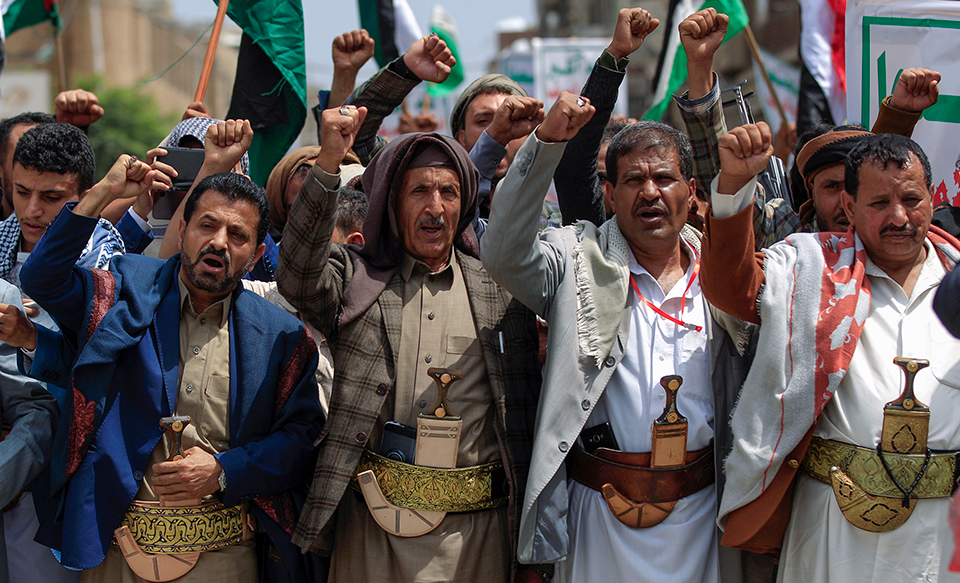
UAE-Israel normalization gives rise to new risks for Yemen and the region
As unimportant as the move may seem for Yemen, the UAE’s normalization of relations with Israel and patronage of the STC, if left unaddressed, may ultimately lead to undesirable outcomes for both Yemen and the broader Arab world
The oldest peer-reviewed publication dedicated to the study of the modern Middle East, MEI’s flagship journal covers politics, society, and culture in the region.