After decades of political setbacks, Iran’s former Revolutionary Guards commander has returned to the center of power. Is he an incidental beneficiary of war, or have observers underestimated him all along?
The Unavoidable Neighbor: Managing Iran Beyond the War
Gulf states and their partners are increasingly looking beyond their most immediate interests of containing the war with Iran. While recent talks between Saudi Arabia, Turkey, Pakistan, and Iran have kept de-escalation on the agenda, a broader regional security framework and non-aggression pact has also emerged, envisioning a longer-lasting solution to regional conflicts. The talks have yet to produce a settlement, but they reflect a growing recognition that Gulf security cannot depend entirely on Washington. Iran will still be there, and its neighbors will have to find ways of living with it.
Recent Elections and What They May Mean for the Middle East
Recent elections for the Israeli Knesset and American Congress may make less of a difference in the Middle East than some people think. Elections are significant indicators of national political trends, but do not always translate into changes in national security strategies. That is likely the case now in both nations.
Iran Rejects Kurdish Vote, Threatens to Punish Erbil over "Israeli Project"
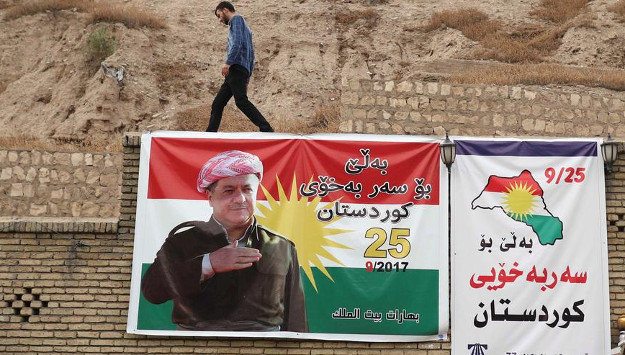
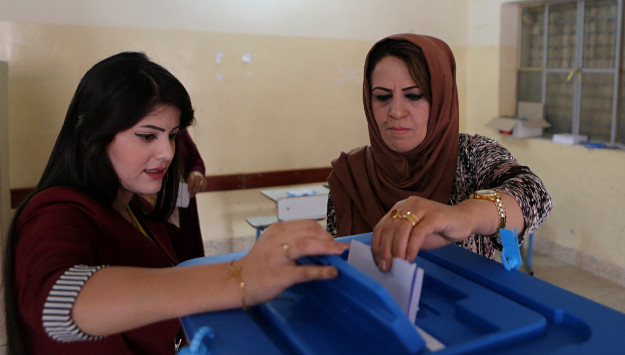
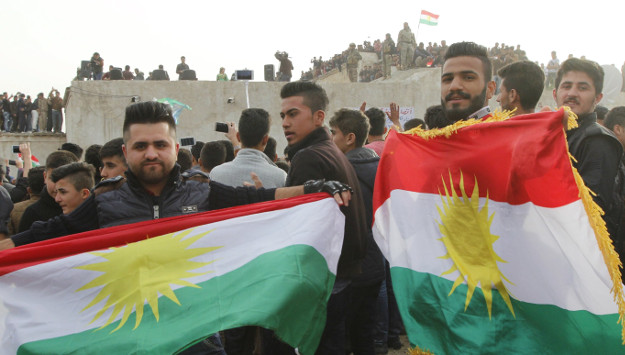
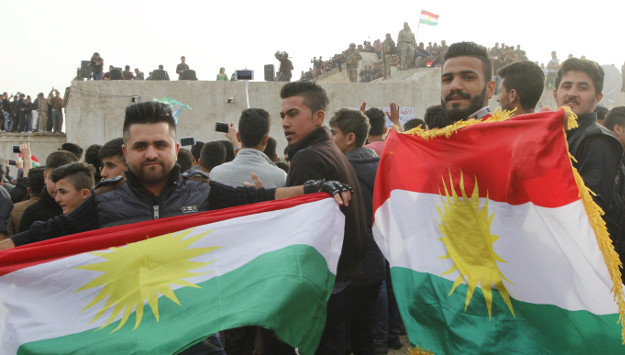
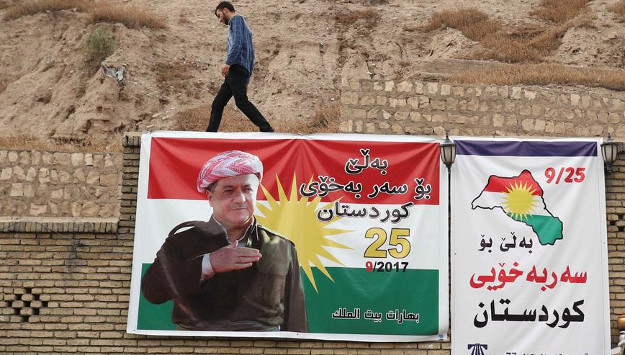
Iranian leaders and state-run media outlets reacted angrily to Iraqi Kurdistan’s decision to hold an independence referendum on Monday, and threatened retaliatory actions against Erbil. Tehran halted all flights to and from Erbil and Sulaymaniyah in northern Iraq and the Iranian military launched war games near the Kurdish border. Senior Iranian officials stressed that the Islamic Republic rejects the plebiscite and described it as an “Israeli and American plot” to divide Iraq and counter Iranian influence in the region.
President Donald Trump spent a portion of his first speech before the U.N. General Assembly attacking Iran. MEI experts Gerald Feierstein and Ahmad Majidyar join host Paul Salem for a discussion of the speech and what lies ahead for U.S.-Iran relations and the nuclear deal.
President Donald Trump spent a portion of his first speech before the U.N. General Assembly attacking Iran. MEI experts Gerald Feierstein and Ahmad Majidyar join host Paul Salem for a discussion of the speech and what lies ahead for U.S.-Iran relations and the nuclear deal.
High-Level Turkish Military Delegation to Visit Iran Next Week
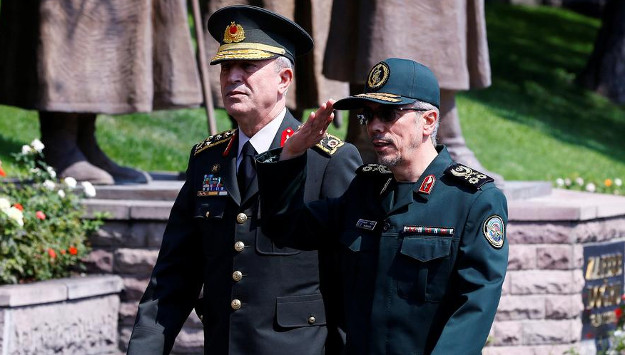
Turkey’s Chief of the General Staff Hulusi Akar, leading a high-ranking military delegation, will visit Tehran for strategic talks next week, the Iranian media reported today. Akar is expected to meet with his Iranian counterpart General Mohammad Hossein Bagheri, President Hassan Rouhani and other top Iranian military and political leaders.
Iran and Venezuela to Build $1 Billion Oil Refinery in Syria
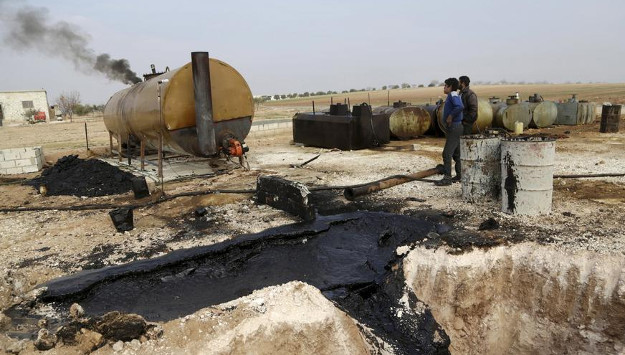
Iran will start constructing an oil refinery in Syria by this year’s end, a senior official of Iran’s Research Center of Petroleum Industry (R.I.P.I.) announced today.
Kurdish Leaders Confident Referendum Won’t Result in War | Monday Briefing
In this week’s Monday Briefing, MEI experts Randa Slim, Gonul Tol, W. Robert Pearson, and Alex Vatanka provide analysis on recent and upcoming events including the Kurdish independence referendum and how it will impact the K.R.G.’s negotiations with Baghdad, Turkey’s limited options to respond to the referendum, growing ties between Turkey and Russia, and the mounting political pressure on Iran’s President Rouhani amid President Trump’s attacks on the nuclear deal.
Iran-Backed Groups Threaten Violence in Kirkuk after Kurdish Vote
An Iraqi militia group today accused the Kurdish peshmerga forces of having “occupied” the province of Kirkuk and stressed that his forces are ready to “liberate disputed regions” in Iraq. “The Iraqi government should act with determination to liberate Kirkuk from separatist paramilitaries before it is too late,” Harakat al-Nujaba, an Iranian-sponsored group fighting in Iraq and Syria, said in a statement as Iraqi Kurds were casting their ballots for an independence referendum.
Iran Rejects Kurdish Vote, Mulls Options against Erbil
Iranian leaders strongly denounced today’s referendum vote for the Iraqi Kurdistan region and warned that the move could have serious ramifications for Iraq and the broader region.
Article in Fars News Agency Hints Tehran May Be Open to Macron’s Proposal
An analysis article in Iran’s Fars News Agency suggests that Tehran may be open to French President Emmanuel Macron’s proposal to “supplement” the Iran nuclear deal if such negotiations are to start near the year 2025. But it stressed that Tehran will under no circumstances hold talks about the country’s missile program. “At present, the French proposal seeks to address two issues: the sunset provision about Iran’s nuclear activities after 2025 and the country’s missile program.
Iran Unveils New Ballistic Missile in Show of Defiance to Trump
Iran today unveiled a new ballistic missile with a range of 2,000 kilometer and capable of carrying multiple warheads, Iran’s Tasnim News Agency reported today.
Iran-Backed Militia Leader: We Will Block “Israeli Project” in Iraqi Kurdistan
Qais al-Khazali, the leader of Iran-backed Iraqi militia group Asa’ib Ahl al-Haq, has accused the Kurdistan Regional Government of executing an “Israeli project” by dividing Iraq and warned that his forces will not allow it to happen. “The enemies of Imam Hussein raised the flag of the homosexuals in Erbil at the wishes of the Israelis,” he said in a speech to his followers.
Iran-Backed Militia Commander Warns of Bloodshed over Kurdish Referendum
A prominent Iranian-sponsored Iraqi militia group has rejected a U.N.-sponsored initiative on the Iraqi Kurdistan and warned that Erbil’s plan to hold an independence referendum is a “foreign conspiracy” that will destabilize Iraq. Earlier today, the political bureau of Asaib Ahl al-Haq, a unit within Iraq’s Popular Mobilization Forces (P.M.F.), issued a statement calling for unity in Iraq and rejected a U.N.-sponsored initiative on Kurdistan.
P.M.F. Forces Participate in Hawija Offensive ahead of Kurdish Referendum Vote
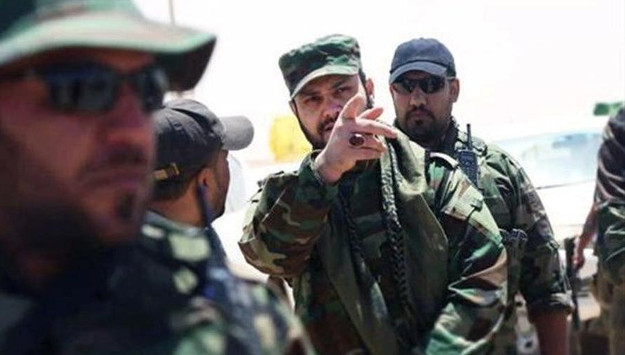
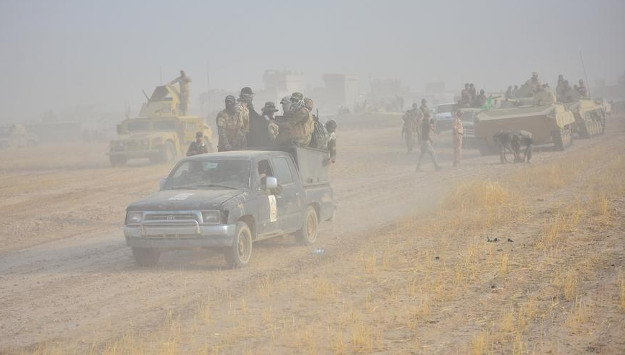
On Thursday, Abu Mahdi al-Muhandis, the operational chief commander of Iraq’s Popular Mobilization Forces, announced the start of the first phase of a military operation to liberate the town of Hawija in the disputed province of Kirkuk. The P.M.F. vice-chairman explained that the offensive began from four main fronts: the Iraqi security forces and P.M.F. paramilitary troops will first capture al-Shirqat, a Sunni Arab town in Salahuddin Province, and then advance into Hawija.
The oldest peer-reviewed publication dedicated to the study of the modern Middle East, MEI’s flagship journal covers politics, society, and culture in the region.