Skip to Content

Iran

Trump’s South Caucasus Peacemaking Is His Most Successful, but It Remains Unfinished
  • Commentary
  • Trump’s South Caucasus Peacemaking Is His Most Successful, but It Remains Unfinished

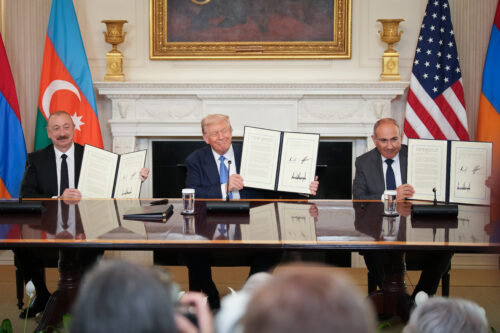
    Of all the fronts in President Trump’s peacemaking agenda, the South Caucasus has delivered the most concrete results. The August 2025 Washington Declaration, signed between Armenia and Azerbaijan and witnessed by Trump, marked an important step toward peace in the region. The two sides initialed a peace agreement and advanced plans to unblock regional connectivity, including through the establishment of the Trump Route for International Peace and Prosperity (TRIPP), which would connect Azerbaijan to its Nakhijevan exclave through southern Armenia. Implementation of TRIPP has since made notable progress, but construction has yet to start. A breakthrough on those two tracks would, in turn, unlock Armenia–Türkiye normalization, transforming a long-fractured region into an area of trade and interdependence.
    The Iran War Was Always About Regime Change
  • Commentary
  • The Iran War Was Always About Regime Change

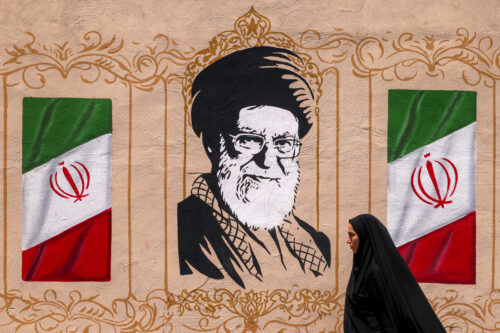
    Wars don’t just end. They get interpreted, reinterpreted, and turned into strategic doctrine. That is what happened after the Iran-Iraq War of the 1980s, a conflict that saw the United States back Tehran’s Iraqi adversaries. The war taught Tehran three lessons it never unlearned: that Washington wants the Islamic Republic gone, that Iran stands essentially alone in the world, and that it cannot survive a direct, overt fight with the U.S. and Israel.

    Iran’s New War Cabinet Is Really an Old One
  • Analysis
  • Iran’s New War Cabinet Is Really an Old One

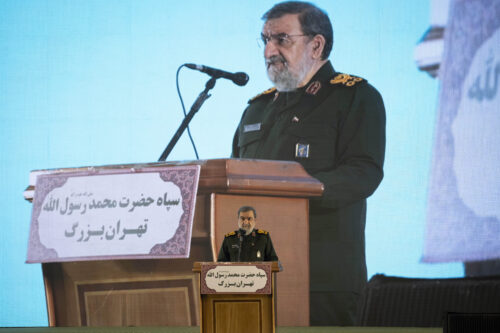
    Within 48 hours this week, Iran filled six of the most important posts in its battered military and security establishment. Read together with the biographies and mandates behind them, the appointments show how Tehran is drawing lessons from successive wars and preparing for a prolonged period of insecurity, without proving it has abandoned negotiation.

    Filter by
    2769 Results
    Governing Megacities in the MENA and Asia
    Middle East Institute
  • Analysis
  • Governing Megacities in the MENA and Asia

    According to the UN’s World Urbanization Prospects 2014, there are 28 “megacities” worldwide (i.e., urban agglomerations with populations in excess of 10 million). By 2030 another dozen will likely be added to their ranks.

    November 7, 2015

    Syria's Peace Talks Would Be Nowhere without the Iran Nuclear Deal
  • Analysis
  • Syria's Peace Talks Would Be Nowhere without the Iran Nuclear Deal

    Read the full article at The National Interest.

    Critics of the July 14 nuclear deal with Iran railed against it on the grounds that it would embolden what they argue is Tehran’s destabilizing behavior in the Middle East. The reasoning goes like this: lifting sanctions gives Iran access to tens of billions of dollars that will flow to fund disruptive activities and lets Iran freely pursue its regional ambitions without fear of reprisals.

    Russia’s New Middle East Great Game
  • Analysis
  • Russia’s New Middle East Great Game

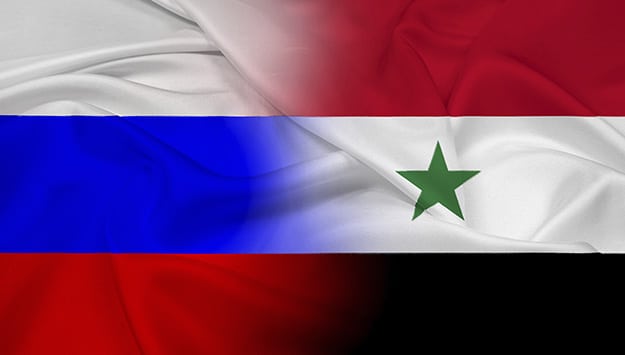
    Recent Russian activity in Syria is not about combating the Islamic State, despite Russian claims to the contrary. Though actively fighting ISIS and thus propagating its long-stated goal of keeping Assad in power would seem to be the straightforward explanation for Russia’s recent behavior, the fact that Russian strikes are also hitting U.S.-backed, rebel-held areas demonstrates the hollowness of official discourse.

    October 5, 2015

    Russia, Iran, and the Syria Test
  • Analysis
  • Russia, Iran, and the Syria Test

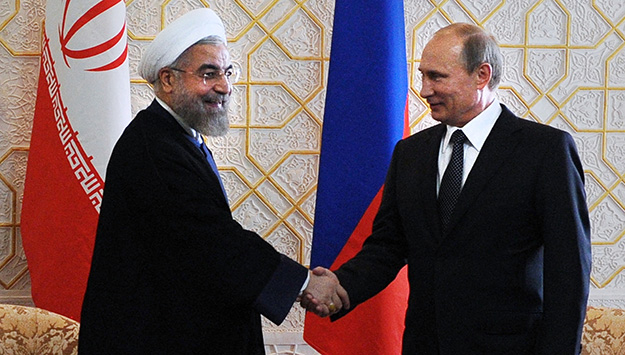
    Russian President Vladimir Putin made waves leading into the UN General Assembly with new military deployments to Syria and an accord with Iran and the Iraqi government, signaling the formation of something like an alternate coalition combating ISIS. The sudden moves serve as a wakeup call not only for the United States and its allies, but also for Iran. The Russian actions are not enough to lead the Iranians to openly second-guess their support for Syria’s President Bashar al-Assad, but they are bound to raise tough questions among officials in Tehran.

    The Saudis and Iran’s Moderates
  • Analysis
  • The Saudis and Iran’s Moderates

    Looking to capitalize on the momentum from the July 14 nuclear deal, the moderate government of Iranian President Hassan Rouhani is now seeking ways to reduce tensions with its regional rivals, particularly Saudi Arabia. This is no small task. Not only must Rouhani convince his domestic critics that mending ties with their arch rival is in Iran’s interest, but he must also get a read on Riyadh’s new leader, King Salman, and the ruling elite.

    Upgrading Civil Society in Iran: Dynamics of Adaptation
    Middle East Institute
  • Analysis
  • Upgrading Civil Society in Iran: Dynamics of Adaptation

    Since the end of Mahmoud Ahmadinejad’s government in June 2013 and the election of the moderate Hassan Rouhani, Iran’s diplomatic activity has changed, specifically its engagement in nuclear talks. The possibility of an agreement reignited enthusiasm for and attention to Iran’s civil society, which played an important role in supporting a diplomatic solution to the nuclear dispute. While many lauded Minister of Foreign Affairs Javad Zarif as the champion of the diplomatic breakthrough, others interpreted the progress in the negotiations to be the result of effective collective efforts by pro-democracy activists.

    September 17, 2015

    Iran's Top Man is Still For the Nuclear Deal
  • Analysis
  • Iran's Top Man is Still For the Nuclear Deal

    In the United States the nuclear deal with Iran has become a political football of historic proportions, but that hasn’t been the case in Iran. Why not? Most likely it is because for Iran’s Supreme Leader, Ayatollah Ali Khamenei, there is no viable alternative to the Joint Comprehensive Plan of Action (JCPOA). It’s a choice between a deal with the world community or more isolation and economic pain, as well as the social-political uncertainty at home that could come with it.

    After the Iran Deal: Regional Repercussions and Dynamics
    Middle East Institute

    After the Iran Deal: Regional Repercussions and Dynamics

    August 10 – January 1, 1970, August 10 - 12:00 PM – 12:00 AM
    January 1 - 12:00 PM – 12:00 AM

    SEIU Building, 1800 Massachusetts Ave NW , Washington, District of Columbia 20036

    After the Deal: A Veteran Journalist's View from Tehran

    After the Deal: A Veteran Journalist's View from Tehran

    August 5 – January 1, 1970, August 5 - 12:00 PM – 12:00 AM
    January 1 - 12:00 PM – 12:00 AM

    Johns Hopkins-SAIS, Rome Auditorium, 1619 Massachusetts Ave., NW, Washington, District of Columbia 20036

    The Truth in Criticisms of the Iran Deal
  • Analysis
  • The Truth in Criticisms of the Iran Deal

    This article was first published on Peacefare.net.

    Here are some criticisms of the Iran deal that contain at least a kernel of truth; they are worth addressing for the sake of clarifying some of the arguments pro and con.

    July 29, 2015

    Read the Middle East Journal

    The oldest peer-reviewed publication dedicated to the study of the modern Middle East, MEI’s flagship journal covers politics, society, and culture in the region.