Skip to Content

Iran

Trump’s South Caucasus Peacemaking Is His Most Successful, but It Remains Unfinished
  • Commentary
  • Trump’s South Caucasus Peacemaking Is His Most Successful, but It Remains Unfinished

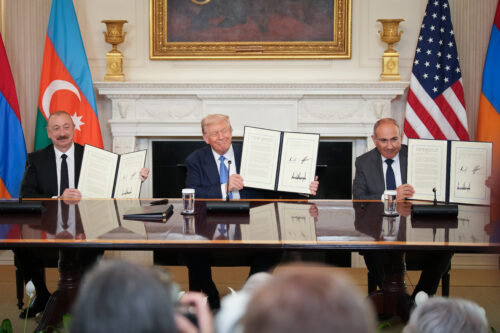
    Of all the fronts in President Trump’s peacemaking agenda, the South Caucasus has delivered the most concrete results. The August 2025 Washington Declaration, signed between Armenia and Azerbaijan and witnessed by Trump, marked an important step toward peace in the region. The two sides initialed a peace agreement and advanced plans to unblock regional connectivity, including through the establishment of the Trump Route for International Peace and Prosperity (TRIPP), which would connect Azerbaijan to its Nakhijevan exclave through southern Armenia. Implementation of TRIPP has since made notable progress, but construction has yet to start. A breakthrough on those two tracks would, in turn, unlock Armenia–Türkiye normalization, transforming a long-fractured region into an area of trade and interdependence.
    The Iran War Was Always About Regime Change
  • Commentary
  • The Iran War Was Always About Regime Change

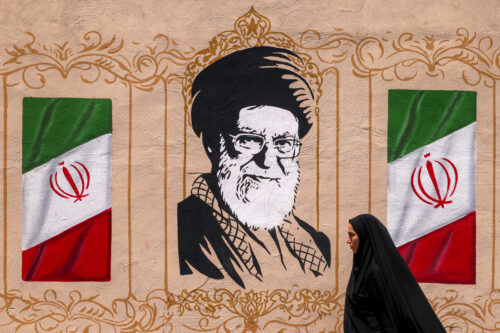
    Wars don’t just end. They get interpreted, reinterpreted, and turned into strategic doctrine. That is what happened after the Iran-Iraq War of the 1980s, a conflict that saw the United States back Tehran’s Iraqi adversaries. The war taught Tehran three lessons it never unlearned: that Washington wants the Islamic Republic gone, that Iran stands essentially alone in the world, and that it cannot survive a direct, overt fight with the U.S. and Israel.

    Iran’s New War Cabinet Is Really an Old One
  • Analysis
  • Iran’s New War Cabinet Is Really an Old One

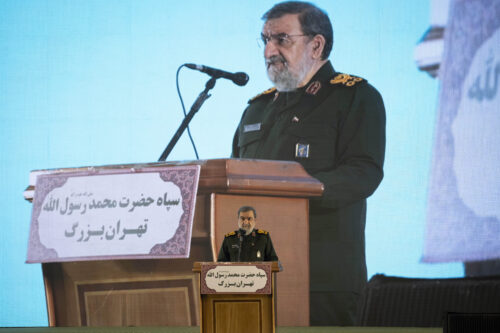
    Within 48 hours this week, Iran filled six of the most important posts in its battered military and security establishment. Read together with the biographies and mandates behind them, the appointments show how Tehran is drawing lessons from successive wars and preparing for a prolonged period of insecurity, without proving it has abandoned negotiation.

    Filter by
    2769 Results
    Is Iran Overstretched in Syria?
  • Analysis
  • Is Iran Overstretched in Syria?

    Read the full article on Foreign Policy.

    For the majority of Arabs, Syria symbolizes all that is wrong with Iranian influence in the Middle East. Since 2011, Tehran and its regional proxies have poured men, money, and weapons into Syria to prevent President Bashar al-Assad’s military defeat. In June 2013, Hezbollah’s intervention in the western city of Qusayr single-handedly turned the tide of the war in Assad’s favor.

    April 20, 2015

    Kalaam-e-Arifaan: Poetry of Mystics and Sufis

    Kalaam-e-Arifaan: Poetry of Mystics and Sufis

    April 16 – January 1, 1970, April 16 - 6:00 PM – 12:00 AM
    January 1 - 6:00 PM – 12:00 AM

    The Oman Library at the Middle East Institute, 1761 N Street NW, Washington, District of Columbia 20036

    Turkey’s Balancing Act between Iran and Saudi Arabia
  • Analysis
  • Turkey’s Balancing Act between Iran and Saudi Arabia

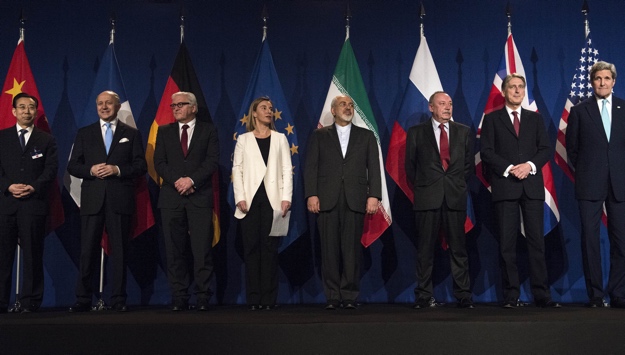
    Turkish Foreign Minister Mevlut Cavusoglu, reiterating Turkey’s support for a diplomatic solution over the use of force regarding Iran’s nuclear program, welcomed the interim deal between Tehran and the world powers. Turkey’s slowing economy may be among the first to reap economic benefits from the deal, and Ankara’s longtime quest to become an energy hub could finally be realized. Yet the deal could also pose a challenge to Ankara’s Iraq and Syria policies and its recent rapprochement with the Saudis.

    The Middle East in China’s Silk Road Visions: Business as Usual?
    Middle East Institute
  • Analysis
  • The Middle East in China’s Silk Road Visions: Business as Usual?

    Chinese President Xi Jinping’s 2013 proclamation of the Silk Road Economic Belt (“One Belt, One Road”) and Twenty-First Century Maritime Silk Road initiatives provided an overarching framework for understanding China’s strategic priorities over the coming decade. The land-based and sea-based Silk Roads will link Asia and Europe via the Middle East and Central Asia through a series of transcontinental railroads, pipelines, ports, airports, and other infrastructure projects.

    April 14, 2015

    The Hashd: Redrawing the Military and Political Map of Iraq
  • Analysis
  • The Hashd: Redrawing the Military and Political Map of Iraq

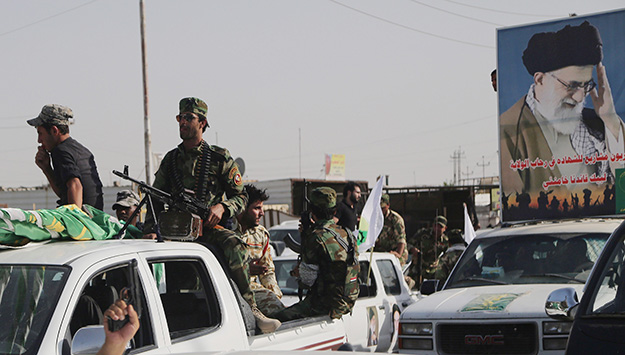
    Al-Hashd al-Sha‘bi—also known as the Popular Mobilization Units, the Shi‘i militias, or simply “the Hashd”—has joined Iraqi security forces and the Kurdish peshmerga to spearhead Iraq’s ongoing offensive against ISIS. The coordinated assault has scored significant successes in various parts of Diyala, Babil, and Salah al-Din, including the recapture of Tikrit. With this string of recent triumphs, the Hashd has provided a potent rallying point for a reinvigorated sense of Iraqi nationalism, albeit one with distinctly Shi‘i overtones.

    April 9, 2015

    Camp David, Dayton, Lausanne
  • Analysis
  • Camp David, Dayton, Lausanne

    Read the full article on LobeLog.

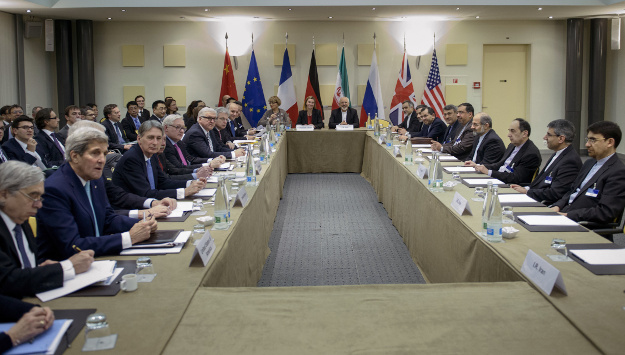
    In the past four decades, the greatest achievements of American diplomacy were probably the Camp David Accords and the Dayton Agreement. Camp David led to the end of the perpetual state of war between Israel and Egypt. Dayton ended the carnage of the war in the Balkans.

    April 9, 2015

    Ambassador Lukman Faily on the Future of Iraq
    Middle East Institute

    Ambassador Lukman Faily on the Future of Iraq

    April 7 – January 1, 1970, April 7 - 3:00 PM – 12:00 AM
    January 1 - 3:00 PM – 12:00 AM

    Johns Hopkins School of Advanced International Studies , Rome Auditorium, 1619 Massachusetts Ave, NW, Washington, District of Columbia 20036

    Collection Spotlight: See No Evil
    Middle East Institute
  • Analysis
  • Collection Spotlight: See No Evil

    Robert Baer’s See No Evil presents a firsthand account of the life of a CIA case officer in the war on terror. From recruiting agents in the volatile Bekaa Valley in Lebanon to wiretapping Abu Nidal students in France, Baer provides a fascinating description of his CIA service.
    April 6, 2015

    What Iranians Are Saying about the Nuke Deal
  • Analysis
  • What Iranians Are Saying about the Nuke Deal

    Read full article at The National Interest.

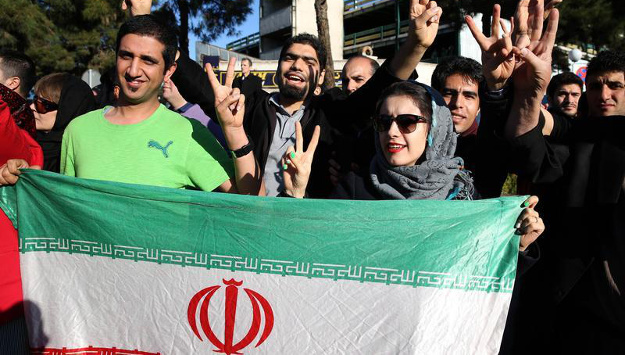
    Iran’s foreign minister, Javad Zarif, was on his way back to Tehran from Lausanne as accolades began to pile up. At the airport, he received a rapturous reception, as if the Team Melli, Iran’s national soccer team, had beat Germany.

    Will the Nuclear Deal Help or Harm Regional Stability?
  • Analysis
  • Will the Nuclear Deal Help or Harm Regional Stability?

    As the United States and other world powers pursued nuclear negotiations with Iran over the past 18 months, the Middle East descended into one of the worst periods of chaos and proxy conflict in its modern history, with Iran engaged aggressively in many of the region’s hotspots. Most leaders in the region fear that a nuclear deal with Iran will abet its aggressive interventionism and lead to further geopolitical and sectarian confrontation. But could the agreement—if it is completed—also create conditions for rebuilding stability?

    April 3, 2015

    Assessing Iran's Strategy Toward the Arab World

    Assessing Iran's Strategy Toward the Arab World

    March 27 – January 1, 1970, March 27 - 12:00 PM – 12:00 AM
    January 1 - 12:00 PM – 12:00 AM

    SEIU Conference Center, 1800 Massachusetts Ave. NW, Washington, District of Columbia 20036

    The Day After an Iran Nuclear Deal
    Middle East Institute
  • Analysis
  • The Day After an Iran Nuclear Deal

    March 24, 2015: Alex Vatanka, senior fellow at The Middle East Institute, discusses the mood in Tehran as the deadline for negotiations approaches, the state of U.S.-Iranian relations, and what reaching a deal could mean to that relationship and the Arab world, in a brief interview.

    Does Iran Have a 'Bridge' to Central Asia?
  • Analysis
  • Does Iran Have a 'Bridge' to Central Asia?

    This article was first published on Al-Monitor.

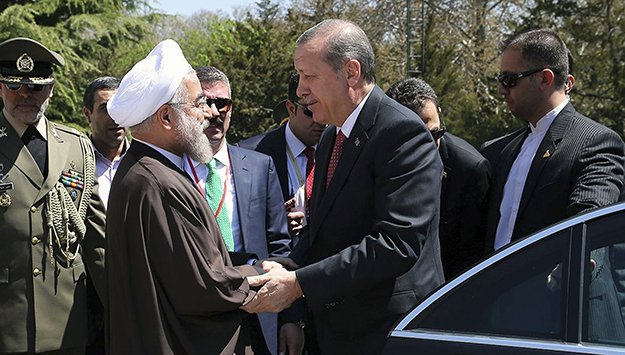
    President Hassan Rouhani’s recent trip to Turkmenistan cannot be dismissed as a one-off. Since coming to office in August 2013, the Rouhani administration has prioritized relations with the Muslim states of the former Soviet Union. Given the potential for economic ties and trade, Tehran’s aspirations are fully understandable.

    How Netanyahu's Speech Played in Iran
  • Analysis
  • How Netanyahu's Speech Played in Iran

    This article was first published on CNN.

    Israeli Prime Minister Benjamin Netanyahu’s speech to the Congress this week was as eagerly anticipated in Tehran as it was in Washington.

    The Iranian reaction to the speech has been a combination of indignation and indifference.

    Iran's Yemen Play
  • Analysis
  • Iran's Yemen Play

    This article was first published on Foreign Affairs.

    When the Houthis, a Shia rebel group in Yemen, forced the country’s pro-Western president, Abed Rabbo Mansour Hadi, to flee the capital this past January, many in the region concluded that another Arab state had fallen into Tehran’s lap—a result, as one prominent commentator put it, of Iran’s “offensive state, the likes of which we have not seen in modern history.”

    Read the Middle East Journal

    The oldest peer-reviewed publication dedicated to the study of the modern Middle East, MEI’s flagship journal covers politics, society, and culture in the region.