This text has been translated by AI and may contain errors.
Skip to Content

Iran

A Strategic Conundrum: Pakistan’s Transit Corridor to Iran as Lifeline or Liability
  • Analysis
  • A Strategic Conundrum: Pakistan’s Transit Corridor to Iran as Lifeline or Liability

    The US-Iran standoff over the Strait of Hormuz — disruptive to global trade and energy flows, and devastating for debt-burdened economies — has handed Pakistan an unexpected geoeconomic opportunity, one that may persist even if the framework agreement announced on June 14 results in a lasting peace and permanent reopening of the strait. But seizing it will have interlocking consequences for Islamabad’s ties with Tehran, Washington, and the Gulf states.

    June 17, 2026

    Iran: What’s Next for US Policy as the Region Seeks to Move On
  • Analysis
  • Iran: What’s Next for US Policy as the Region Seeks to Move On

    As the US and Iran move to reopen the Strait of Hormuz, the war’s real lesson lies in how Gulf states rapidly adapted — building pipelines, ports, and rail to bypass the chokepoint. Washington should seize this momentum, pursuing a “long game” of regional connectivity that serves shared security and economic interests.

    Filter by
    2744 Results
    Obama's Legacy on Iran
  • Analysis
  • Obama's Legacy on Iran

    This paper is part of an MEI scholar series, titled “Obama’s Legacy in the Middle East: Passing the Baton in 2017.” Click here to view the full project, or navigate using the table of contents to the right.

    Iran's Headscarf Politics
  • Analysis
  • Iran's Headscarf Politics

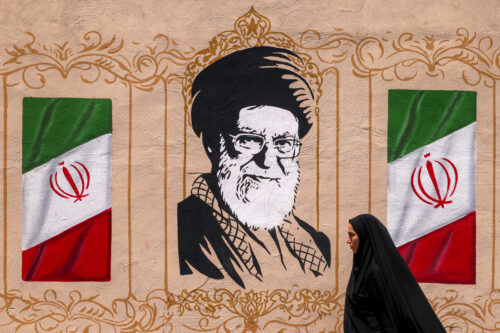
    Iranian women have long been in a cat-and-mouse game with the interpretation and enforcement of many aspects of Islamic law, but most especially the hijab. Since 1983, when the first written law was passed, the Islamic Republic has made it officially mandatory for women to wear the headscarf and loose clothing, with punishment for failing to comply ranging from lashes to imprisonment. Even before the law was passed, just a few strands of hair outside the scarf would not be tolerated.

    November 3, 2014

    Contemporary Patterns in Transregional Islam: Indonesia’s Shi‘a
    Middle East Institute
  • Analysis
  • Contemporary Patterns in Transregional Islam: Indonesia’s Shi‘a

    Representing about 1% of the country’s 200 million Muslims, Indonesia’s Shi‘a are but a small group in the overwhelmingly Sunni majority. These contemporary communities of devotees of the ahl al-bayt (“people of the house,” referring to the Prophet Muhammad, his daughter Fatima, her husband ‘Ali, and their sons Hasan and Husayn) explain their identities, albeit with differences, in transregional terms. Recently, this transregional focus has turned from South Asia toward the Islamic Republic of Iran.

    October 31, 2014

    Iran-Pakistan: Will Border Tensions Boil Over?
  • Analysis
  • Iran-Pakistan: Will Border Tensions Boil Over?

    This article was first published on BBC News.

    There have been a number of rounds of border skirmishes between Iran and Pakistan since the first week of October. However, reports that Pakistani forces have returned mortar fire is highly unusual and represents an increase in tensions that have marred this region for years.

    Iran’s Approach to Extreme Sunni Militants
  • Analysis
  • Iran’s Approach to Extreme Sunni Militants

    This article was first published by The National Interest.

    The conventional wisdom in Washington is that Tehran regards Sunni-jihadist movements as ideologically incompatible rivals. This is not surprising, as the bulk of Sunni-jihadist literature makes it clear that Shia-majority Iran is considered to be the embodiment of apostasy. To most Sunni jihadists, including those from ISIS, Iran is an archenemy surpassing both Israel and the United States.

    Iran and Saudi Arabia: Detente on the Horizon?
  • Analysis
  • Iran and Saudi Arabia: Detente on the Horizon?

    This article first appeared in The National Interest.

    After a year of hesitation, Iranian president Hassan Rouhani is signaling his readiness to reach out to Tehran’s chief regional rival—Saudi Arabia. Last week, a top official was sent to Riyadh; he was the most senior Iranian visitor to the country since Rouhani’s election in June 2013.

    War in Gaza: A chance for Iran, Hamas to turn a page?
  • Analysis
  • War in Gaza: A chance for Iran, Hamas to turn a page?

    Read full article on CNN.

    Israel’s ongoing military operation in Gaza — Protective Edge — has animated the Shia Islamist leadership in Tehran.

    The bloody conflict, and the global Muslim outrage it has provoked, is held by the Iranian regime as a chance to redeem itself in the eyes of the Sunni Muslim majority in the world.

    A Conversation on Diplomacy and Religion in the Middle East
    Middle East Institute

    A Conversation on Diplomacy and Religion in the Middle East

    July 10 – January 1, 1970, July 10 - 10:00 AM – 12:00 AM
    January 1 - 10:00 AM – 12:00 AM

    Carnegie Endowment for International Peace, 1779 Massachusetts Ave NW, Washington, District of Columbia 20036

    Iran’s Moment of Truth with Maliki
  • Analysis
  • Iran’s Moment of Truth with Maliki

    The swift and violent rise of the Islamic State in Iraq and Syria (ISIS) continues to rattle the cages of power in Tehran. Overnight, Iran’s ally in Baghdad, Prime Minister Nuri al-Maliki, is suddenly fighting for his political life and the country of Iraq, which he had largely inherited from the Americans. Maliki has been a solid friend of Iran, but rapidly shifting realities inside Iraq can turn him into an expendable ally, making him more into a liability than an asset.

    Read the Middle East Journal

    The oldest peer-reviewed publication dedicated to the study of the modern Middle East, MEI’s flagship journal covers politics, society, and culture in the region.