Skip to Content
The India-Middle East-Europe Economic Corridor
  • Backgrounder
  • The India-Middle East-Europe Economic Corridor

    The India-Middle East-Europe Economic Corridor (IMEC) is a proposed multinational infrastructure initiative aimed at upgrading connectivity between the three regions through integrated trade, energy, and digital networks. Announced at the G20 summit in New Delhi in September 2023, IMEC is envisioned partially as a counterweight to China’s international infrastructure project, the Belt and Road Initiative.

    June 3, 2026

    MP Fouad Makhzoumi on Lebanon’s Future
  • Podcast
  • MP Fouad Makhzoumi on Lebanon’s Future

    A fragile cease-fire between Lebanon and Israel is barely holding as military delegations from both countries arrive in Washington for a new round of direct talks scheduled for this Friday. But diplomatic success could mean new strategic opportunities for the Lebanese nation. Guest host and MEI Senior Fellow Brian Katulis is joined by Lebanese Member of Parliament Fouad Makhzoumi to unpack the challenges facing the Lebanese government today, Hizballah’s influence over state institutions, and what all of this means for the country’s future. Makhzoumi also reflects on his personal journey and what inspired him to transition from business to politics in an effort to help shape a better life for his granddaughters in Lebanon.

    May 28, 2026

    Can Hamas Be Disarmed?
  • Podcast
  • Can Hamas Be Disarmed?

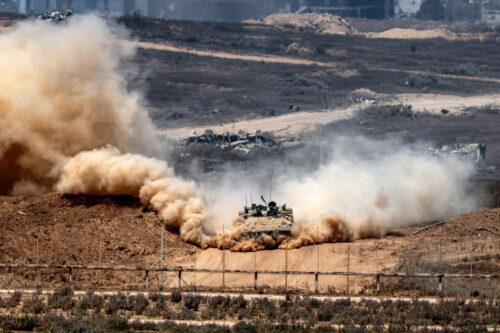
    As the world’s attention shifts to the Iran war, Gaza is increasingly disappearing from the international spotlight. But more than six months after the United Nations endorsed a peace plan for Gaza, the humanitarian catastrophe continues. Israeli strikes remain relentless, while major international NGOs and aid groups say critical supplies are still not entering Gaza at anywhere near the scale needed.

    Filter by
    3585 Results
    Priority policies for an economic recovery in Lebanon
    Photo by Golden_Brown via Getty Images
  • Analysis
  • Priority policies for an economic recovery in Lebanon

    The current government in Lebanon is keen to encourage financial recovery and find a new path to economic growth. A thorough understanding of the causes behind the country’s recession and the factors constraining a recovery are necessary to shape policy priorities. These are also important as an input into the discussions of the 2026 budget and to the ongoing negotiations with the International Monetary Fund (IMF). Using the wrong framework for these decisions could yield low economic growth, which would be harmful for a quick and decisive economic recovery. Conversely, improved economic outcomes and broad buy-in, following public consultations, will ease the implementation of politically difficult reforms. Thus, policymakers must take great care to develop a narrative about how to achieve progress in the short and medium terms that is adjusted to local circumstances.

    October 20, 2025

    Reviving Lebanon’s economy
    Photo by Bilal Photos via Getty Images
  • Analysis
  • Reviving Lebanon’s economy

    Restoring both domestic and international confidence in the Lebanese government will ultimately depend on taking tangible steps towards economic revival. This article presents key policy options to achieve this result, including rebuilding trust through improved governance and judicial reforms, investing in digital infrastructure, driving sustainable growth via regional integration and innovation, and balancing economic revival with sovereign debt restructuring.

    October 20, 2025

    Lebanon’s monetary crisis and the future of the Central Bank
    Photo by Anwar Amro/AFP via Getty Images
  • Analysis
  • Lebanon’s monetary crisis and the future of the Central Bank

    While the banking crisis remains unresolved, there is still ample scope for Lebanon’s central bank to advance reforms and set the stage for a sustainable economic recovery even without a comprehensive reform program supported by the IMF.

    October 20, 2025

    A realistic, step-by-step approach to restoring Lebanese sovereignty
  • Analysis
  • A realistic, step-by-step approach to restoring Lebanese sovereignty

    Seizing Lebanon’s once-in-a-generation opportunity hinges on its ability to resolve its core dysfunction: reclaiming the state’s monopoly on force and its exclusive authority to determine matters of war and peace. Beirut, backed by deepening US support, must focus on achieving tangible milestones and strategic victories that momentum, making Hizballah’s disarmament unstoppable and the state’s reassertion of authority irreversible.

    October 20, 2025

    Defining and stabilizing Lebanon’s borders
    Photo by Christina Assi/AFP via Getty Images
  • Analysis
  • Defining and stabilizing Lebanon’s borders

    The central challenge facing Lebanon today is whether the country will graduate to functional statehood or continue struggling to survive. Yet with Lebanese officials now insisting that the state “monopolize arms” and become the decisive arbiter on matters of war and peace, a relevant question arises: Where, territorially, does Lebanon begin and end?

    October 20, 2025

    An international hands-on approach to Lebanon
    Photo by Houssam Shbaro/Anadolu via Getty Images
  • Analysis
  • An international hands-on approach to Lebanon

    To encourage and incentivize long-overdue structural reforms, the European Union and the broader international community should adopt a more proactive, hands-on approach to Lebanon. The current context calls for an approach that balances assistance delivery with active support to the Lebanese government in its quest to reform and rebuild the state.

    October 20, 2025

    Trump’s big week in the Middle East weighed down by troubles on other fronts
    Photo by Suzanne Plunkett - Pool / Getty Images
  • Analysis
  • Trump’s big week in the Middle East weighed down by troubles on other fronts

    US President Donald Trump started off his week by flying to Israel and Egypt to mark the Gaza cease-fire and release of the last remaining Israeli hostages. But as these positive developments unfolded in the Middle East, the Trump administration’s overall agenda remained weighed down on other fronts.

    From Gaza Cease-fire to Middle East Peace?
    Photo by Suzanne Plunkett - Pool / Getty Images
  • Analysis
  • From Gaza Cease-fire to Middle East Peace?

    The October 2025 cease-fire and hostage-release deal that ended the Israel-Hamas conflict marks the beginning of a complicated post-war phase. In a new MEI Policy Memo, Brian Katulis breaks down why it matters for the US and the relevant policy considerations.

    From Gaza Cease-fire to Middle East Peace?
  • Policy Memo
  • From Gaza Cease-fire to Middle East Peace?

    The October 2025 cease-fire and hostage-release deal that ended the Israel-Hamas conflict marks the beginning of a complicated post-war phase. The agreement has created important opportunities to advance stability in the Middle East and build a lasting and sustainable peace marked by enhanced regional security and integration, but there are considerable risks to manage. Achieving these goals will require coordinated international action along multiple lines of effort: security, rule of law, recovery and reconstruction, responsive governance, and steady and focused diplomacy to build confidence among key parties. 

    Light at the end of the tunnel in the Gaza war? Three questions about Trump’s 20-point plan
    Photo by Kobi Wolf/Bloomberg via Getty Images
  • Analysis
  • Light at the end of the tunnel in the Gaza war? Three questions about Trump’s 20-point plan

    US President Donald Trump sent his top Middle East envoy Steve Witkoff and his son-in-law Jared Kushner to take part in Israel-Hamas talks hosted by Egypt this week aimed at ending the war in Gaza, securing the release of hostages, and producing progress toward a lasting and sustainable resolution to the conflict. Here are three things to watch for in US policy on this front in the coming days and weeks.

    Pakistan’s strategic defense pact with Saudi Arabia: A new security architecture in the wider Middle East
    Photo via Saudi Ministry of Foreign Affairs
  • Analysis
  • Pakistan’s strategic defense pact with Saudi Arabia: A new security architecture in the wider Middle East

    Following Israel’s September 9 strike on Hamas targets in Qatar, Pakistan has taken swift and significant foreign policy steps in response and adopted an unusually assertive stance. This shift was largely influenced by Pakistan’s military chief, Field Marshal Asim Munir. The latter is determined to enhance his country’s strategic autonomy and diplomatic leverage in an increasingly complex international environment by positioning Pakistan as a key security actor and an emerging middle power on the global stage.

    Silent leverage, quiet gains? China and the Saudi-Pakistan defense pact
    Photo by Madoka Ikegami-Pool/Getty Images
  • Analysis
  • Silent leverage, quiet gains? China and the Saudi-Pakistan defense pact

    The Strategic Mutual Defense Agreement (SMDA) between Saudi Arabia and Pakistan, signed in Riyadh on September 17, is far more than a bilateral pledge. It represents a profound reordering of alignments in the Gulf and South Asia, reflecting and reinforcing the broader erosion of US preeminence in the Eurasian security architecture. While much of the initial commentary centered on the striking commitment of a wealthy Gulf monarchy to the defense of a nuclear-armed South Asian state, as well as the question of whether Pakistan had in fact extended its nuclear umbrella to Saudi Arabia, the deeper story is arguably China’s potential advance.

    Don't believe the hype: The modest reality of the Saudi-Pakistani defense pact
    Image created by Oleksii Liskonih via Getty Images
  • Analysis
  • Don't believe the hype: The modest reality of the Saudi-Pakistani defense pact

    The September 17 Saudi-Pakistani defense agreement generated a wave of overheated commentary about Saudi Arabia now residing under a Pakistani nuclear umbrella and how a new strategic reality was in the offing in the Persian Gulf and South Asian regions. Analysts need to slow their roll. Extended deterrence is an extremely difficult thing to pull off. The devil is in the details, about which we know nothing.

    Peace in the Middle East — or constructive ambiguity in reverse
    Photo by Win McNamee/Getty Images
  • Analysis
  • Peace in the Middle East — or constructive ambiguity in reverse

    After two terrible years — beginning on the horrific morning of October 7, 2023 — there is now a chance the Gaza war could end. This chance exists not because the 20-point proposal released by the United States on September 29, 2025, is a model of diplomatic detail or nuance. It exists because its patron, President Donald Trump, appears determined not to take “no” for an answer.

    Read the Middle East Journal

    The oldest peer-reviewed publication dedicated to the study of the modern Middle East, MEI’s flagship journal covers politics, society, and culture in the region.