This article is part of a collection of short essays written by the Fellows of the Middle East Institute to explore aspects of the ongoing war with Iran. The intent of the collection is to help readers see new and unexpected elements of the dynamics and impact of the ongoing hostilities and to think harder, deeper, and broader about the implications of the conflict.
Turkey: Ankara’s Nuclear Ambitions in the Post-Iran War Environment
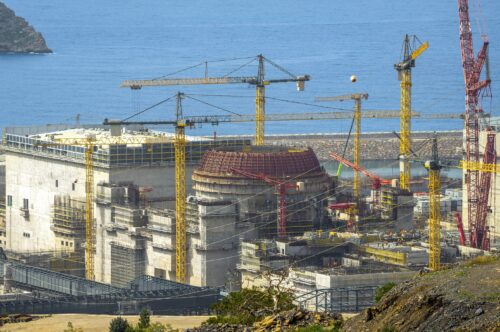
In February 2026, Turkish Foreign Minister Hakan Fidan suggested that shifting international dynamics could push Turkey to acquire nuclear weapons. That rhetoric, combined with Turkey’s civilian nuclear energy and research programs and its indigenous surface-to-surface missile development projects, has fueled concerns that these capabilities could eventually form the backbone of a Turkish nuclear weapons program.
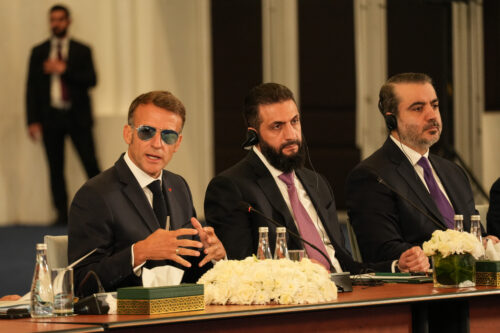
When the US and Israel launched military action against Iran on February 28, 2026, it set in motion a chain of events that saw violence spread across the Middle East. Yet as the region found itself engulfed in conflict, Syria has experienced its most peaceful months in 15 years, and the government in Damascus appears determined to stay its course toward recovery.
Defying Gravity: Working Toward a Regional Strategy for a Stable Middle East
In this MEI Policy Paper, Ross Harrison asserts that a new regional order is emerging out of the conflicts of the Middle East. The relationships among the pillars of this order–Egypt, Saudi Arabia, Turkey, and Iran–are crucial, as they will largely determine “whether the future of the Middle East will be a continuation of the current chaos and destruction or a more positive transition toward stability and prosperity.” Harrison argues that global powers must concentrate on creating conditions conducive to cooperation among the pillars.
Will China Interfere in the Israeli-Palestinian Conflict?
In June 1954, the leaders of China, India, and Burma (now Myanmar) issued a joint statement affirming the Five Principles of Peaceful Coexistence―mutual respect for sovereignty and territorial integrity, mutual non-aggression, non-interference in each other’s internal affairs, equality and mutual benefit, and peaceful coexistence―as the basis for conducting international relations. Since then, China has adhered strictly to the principle of non-interference in other countries’ domestic turmoil, as displayed prominently over the past several years in Beijing’s response to the Syrian civil war.
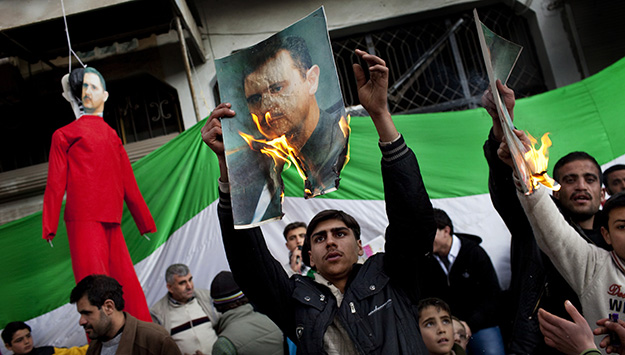
Bashar al-Assad’s regime in Syria did not have a good winter. His forces lost a provincial capital, Idlib, and despite repeated efforts could not even seize northern and eastern suburbs adjoining Damascus. There were also failures in Aleppo and Dara‘a. He had to relieve heads of two of the regime’s four secret police services. The economic situation worsened.
When it Comes to Israeli Occupation, Better is Not Good Enough
Palestinians, beset by calamities at every turn, have all but ceased to think about their indeterminate prospects for independence and freedom. This dismal state of affairs suits Israel’s newly reelected Prime Minister Benjamin Netanyahu fine. His opposition to a sovereign Palestinian state, broadcast in word and deed, leaves little room for doubt.
The bar has been set so low that all concerned are searching for any shred of evidence that merely hints at better times for Palestinians, who have now lived under Israeli rule for almost a half century.
Turkey and Armenia: Make History Instead of Repeating It
On April 24, Turks, Armenians, and millions of others around the globe will clash again over the events that began 100 years ago in the Ottoman domains. The mass deportations and massacres of Armenians in 1915 and later years have led many to call this great tragedy a genocide. The old arguments and contested evidence are now going to be heard once more. It might also be the perfect moment for Ankara and Yerevan to take practical steps that benefit all and harm none.
For the majority of Arabs, Syria symbolizes all that is wrong with Iranian influence in the Middle East. Since 2011, Tehran and its regional proxies have poured men, money, and weapons into Syria to prevent President Bashar al-Assad’s military defeat. In June 2013, Hezbollah’s intervention in the western city of Qusayr single-handedly turned the tide of the war in Assad’s favor.
Turkey’s Balancing Act between Iran and Saudi Arabia
Turkish Foreign Minister Mevlut Cavusoglu, reiterating Turkey’s support for a diplomatic solution over the use of force regarding Iran’s nuclear program, welcomed the interim deal between Tehran and the world powers. Turkey’s slowing economy may be among the first to reap economic benefits from the deal, and Ankara’s longtime quest to become an energy hub could finally be realized. Yet the deal could also pose a challenge to Ankara’s Iraq and Syria policies and its recent rapprochement with the Saudis.
In Turkey today, as President Recep Tayyip Erdogan and Prime Minister Ahmet Davutoglu wrestle over who governs, the political uncertainty they are creating may be a ground tremor about to generate an earthquake. The earthquake, however, may not only be political in nature; it may also be economic.
Turkey’s remarkable economic growth is now in jeopardy. Its economy is drifting, beset by contrary winds of economic policies and political wrangling. There is a clear track forward, but to reach the next level of prosperity, the government must undertake a major new effort.
The Middle East in China’s Silk Road Visions: Business as Usual?
Chinese President Xi Jinping’s 2013 proclamation of the Silk Road Economic Belt (“One Belt, One Road”) and Twenty-First Century Maritime Silk Road initiatives provided an overarching framework for understanding China’s strategic priorities over the coming decade. The land-based and sea-based Silk Roads will link Asia and Europe via the Middle East and Central Asia through a series of transcontinental railroads, pipelines, ports, airports, and other infrastructure projects.
The oldest peer-reviewed publication dedicated to the study of the modern Middle East, MEI’s flagship journal covers politics, society, and culture in the region.