This article is part of a collection of short essays written by the Fellows of the Middle East Institute to explore aspects of the ongoing war with Iran. The intent of the collection is to help readers see new and unexpected elements of the dynamics and impact of the ongoing hostilities and to think harder, deeper, and broader about the implications of the conflict.
Turkey: Ankara’s Nuclear Ambitions in the Post-Iran War Environment
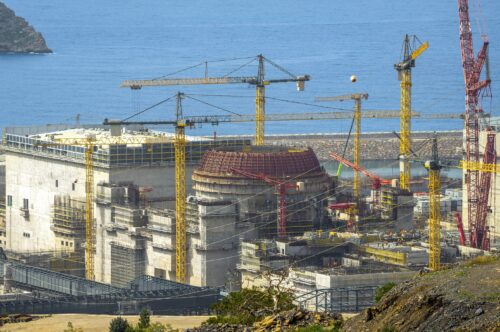
In February 2026, Turkish Foreign Minister Hakan Fidan suggested that shifting international dynamics could push Turkey to acquire nuclear weapons. That rhetoric, combined with Turkey’s civilian nuclear energy and research programs and its indigenous surface-to-surface missile development projects, has fueled concerns that these capabilities could eventually form the backbone of a Turkish nuclear weapons program.
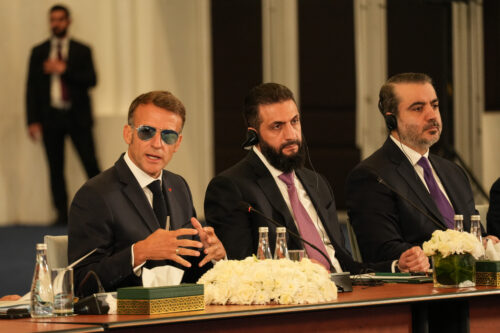
When the US and Israel launched military action against Iran on February 28, 2026, it set in motion a chain of events that saw violence spread across the Middle East. Yet as the region found itself engulfed in conflict, Syria has experienced its most peaceful months in 15 years, and the government in Damascus appears determined to stay its course toward recovery.
After the Jordan Elections: Challenges Ahead for the Hashemite Kingdom
The Middle East Institute is proud to host Leslie Campbell, senior associate and regional director for the Middle East, and Danya Greenfield, deputy director of the Rafik Hariri Center for the Middle East at the Atlantic Council, for an assessment of the Jordanian elections and an examination of the political challenges ahead for Jordan’s King Abdullah II.
After the Jordan Elections: Challenges Ahead for the Hashemite Kingdom
The Middle East Institute is proud to host Leslie Campbell, senior associate and regional director for the Middle East, and Danya Greenfield, deputy director of the Rafik Hariri Center for the Middle East at the Atlantic Council, for an assessment of the Jordanian elections and an examination of the political challenges ahead for Jordan’s King Abdullah II.
After the Jordan Elections: Challenges Ahead for the Hashemite Kingdom
The Middle East Institute is proud to host Leslie Campbell, senior associate and regional director for the Middle East, and Danya Greenfield, deputy director of the Rafik Hariri Center for the Middle East at the Atlantic Council, for an assessment of the Jordanian elections and an examination of the political challenges ahead for Jordan’s King Abdullah II.
After the Jordan Elections: Challenges Ahead for the Hashemite Kingdom
The Middle East Institute is proud to host Leslie Campbell, senior associate and regional director for the Middle East, and Danya Greenfield, deputy director of the Rafik Hariri Center for the Middle East at the Atlantic Council, for an assessment of the Jordanian elections and an examination of the political challenges ahead for Jordan’s King Abdullah II.
After the Jordan Elections: Challenges Ahead for the Hashemite Kingdom
The Middle East Institute is proud to host Leslie Campbell, senior associate and regional director for the Middle East, and Danya Greenfield, deputy director of the Rafik Hariri Center for the Middle East at the Atlantic Council, for an assessment of the Jordanian elections and an examination of the political challenges ahead for Jordan’s King Abdullah II.
This piece was originally published by ForeignAffairs.com on January 15, 2013
Assertions and opinions in this publication are solely those of the above-mentioned author(s) and do not necessarily reflect the views of the Middle East Institute, which expressly does not take positions on Middle East policy.
This piece was originally published by Reuters on January 3, 2013 under the title Will This Be the Year That Israel Goes to War with Iran?
Assertions and opinions in this publication are solely those of the above-mentioned author(s) and do not necessarily reflect the views of the Middle East Institute, which expressly does not take positions on Middle East policy.
Israel did not bomb Iran last year. Why should it happen this year?
The Middle East Institute is proud to present a paper based on a series of discussions with Middle East analysts sponsored by the Hollings Center for International Dialogue held in Istanbul and Washington about the regional implications of the Syria Crisis.
The oldest peer-reviewed publication dedicated to the study of the modern Middle East, MEI’s flagship journal covers politics, society, and culture in the region.