The West Bank economy is in crisis. Since the Hamas attack on Israel on October 7, 2023, Israeli policies, compounded by Palestinian Authority (PA) governance and fiscal management weaknesses, have driven the economy into free fall. The measures are imposing severe hardship on the lives and livelihoods of Palestinians; risk destabilizing the West Bank; carry spillover implications for Israel and its neighbors; and threaten to derail the US administration’s efforts to implement its 20-point plan for Gaza.
Israelis turned out in their highest numbers in decades on October 27 for the country’s first election since the Hamas attacks of October 7, 2023. Prime Minister Benjamin Netanyahu’s bloc lost 15 seats and its Knesset majority, but Gadi Eisenkot’s opposition bloc also fell short, leaving Arab parties, with a record 19 seats, potentially decisive in forming the next government. MEI Senior Fellow Natan Sachs joins hosts Alistair Taylor and Matthew Czekaj to unpack the results, the coalition math, and what comes next for Israel’s security policy, the wider region, and US-Israeli relations.
Recent Elections and What They May Mean for the Middle East
Recent elections for the Israeli Knesset and American Congress may make less of a difference in the Middle East than some people think. Elections are significant indicators of national political trends, but do not always translate into changes in national security strategies. That is likely the case now in both nations.
What Trump’s 2026 Mideast approach could look like
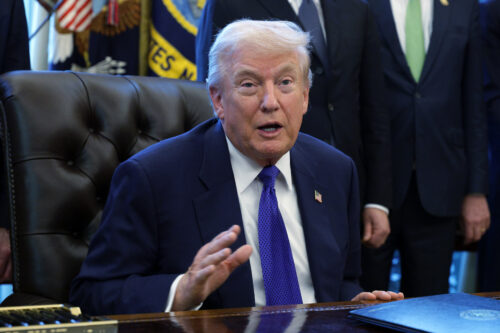
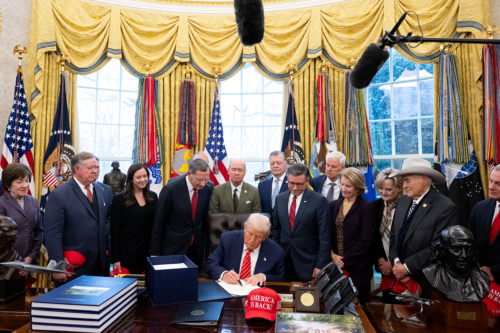
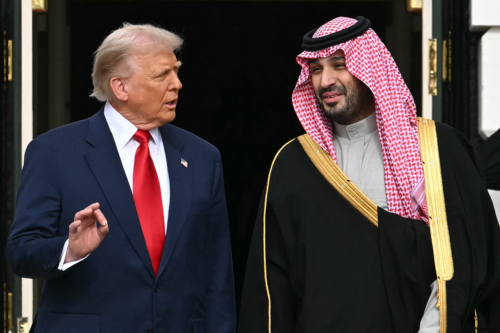
Donald Trump’s first year of his second presidential term has been a roller coaster of twists and turns both at home and abroad—particularly in the Middle East. His regional focus was driven by two main factors: first, Trump’s own ego and sense of possible place in history; and second, the volatile, dynamic events driven by actors in the region.
US Policy in the Middle East in the First Year of Trump 2.0: A Report Card
In the first year of his second term in office, US President Donald Trump focused considerable time and energy on the Middle East, but the results so far have been uneven. This report assesses the US government’s actions in the region over the past 12 months, from January 2025 through January 2026.
Long before the Gaza war erupted in 2023, a broad consensus had already taken hold across policymakers, activists, and foreign-policy circles: the Israeli-Palestinian conflict was at a political dead end. The Oslo framework—and the promise of a two-state solution—had steadily lost credibility as a realistic path forward. Since Hamas’s October 7 attacks, the devastation in Gaza and the accelerating realities on the ground have made a two-state outcome even harder to imagine. And yet, it remains the default language of Middle East diplomacy. Most recently, UN Secretary-General António Guterres reaffirmed his determination to oppose Israeli actions undermining the two-state solution and called for renewed momentum toward Palestinian statehood.
Ambiguous Uncertainties: Phase Two of Trump’s Plan for Gaza
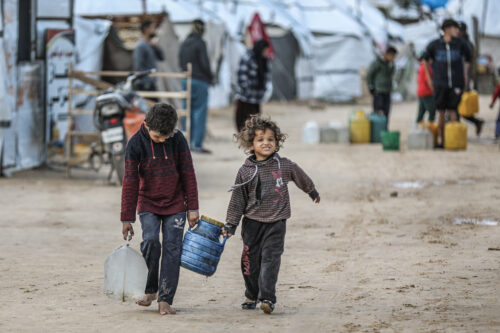
MEI Senior Fellow Lucy Kurtzer-Ellenbogen joins hosts Alistair Taylor and Matthew Czekaj to discuss the latest developments in Gaza. Nearly four months after the Israeli government and Hamas agreed to President Donald Trump’s 20-point plan, Washington has announced that phase two of the process is now underway. Kurtzer-Ellenbogen, Taylor, and Czekaj examine the humanitarian situation in the devastated coastal strip, assess what phase two could entail, break down how international actors are responding, and explore what would need to happen to realize the plan’s aspirations.
Ankara’s double win: Kurds, Israel, and the new Syria
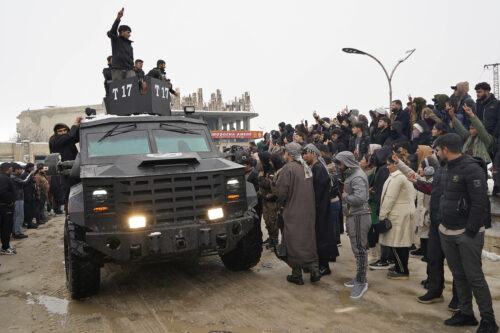
Whether the truce between Damascus and the Kurdish-led Syrian Democratic Forces holds or collapses will have major implications for neighboring Turkey, which has long-standing interests in Syria, but recent developments already point to a win for Ankara.
Potential US military strikes on Iran: This won’t be another 12-Day War
President Donald Trump has sharply warned the Iranian regime to halt its brutal crackdown on protesters. Amid speculation that the US is preparing for military action in Iran, Washington should take the lessons and fundamentally different context of its successful June 2025 operation against the Islamic Republic into account as it plans for how to respond.
Iran’s Axis of Resistance After the 12-day War: Adaptation, Restructuring, and Reconstitution
Since Israel’s 12-day war against Iran, Tehran and its network of regional proxies and non-state allies, the so-called Axis of Resistance, have entered a phase of strategic dormancy — an outward calm concealing rearmament, financial adaptation, and ideological renewal.
Brian sits down with Robert Malley, a former US official best known for his role as the lead negotiator of the 2015 Joint Comprehensive Plan of Action. Malley discusses the motivations behind his new book, Tomorrow Is Yesterday: Life, Death, and the Pursuit of Peace in Israel/Palestine, and offers his assessment of American perspectives on the war in Gaza. The conversation also explores his personal background as the son of an Egyptian Jewish father and an American Jewish mother—both outspoken on the political left—and how that upbringing shaped his worldview, alongside a career spanning the Clinton, Obama, and Biden administrations.
This backgrounder provides an overview of the history of Hamas, its ideology and leadership, military capabilities and goals, the October 7 attack, relevant US government policies and legislation, and the group’s future in Gaza.
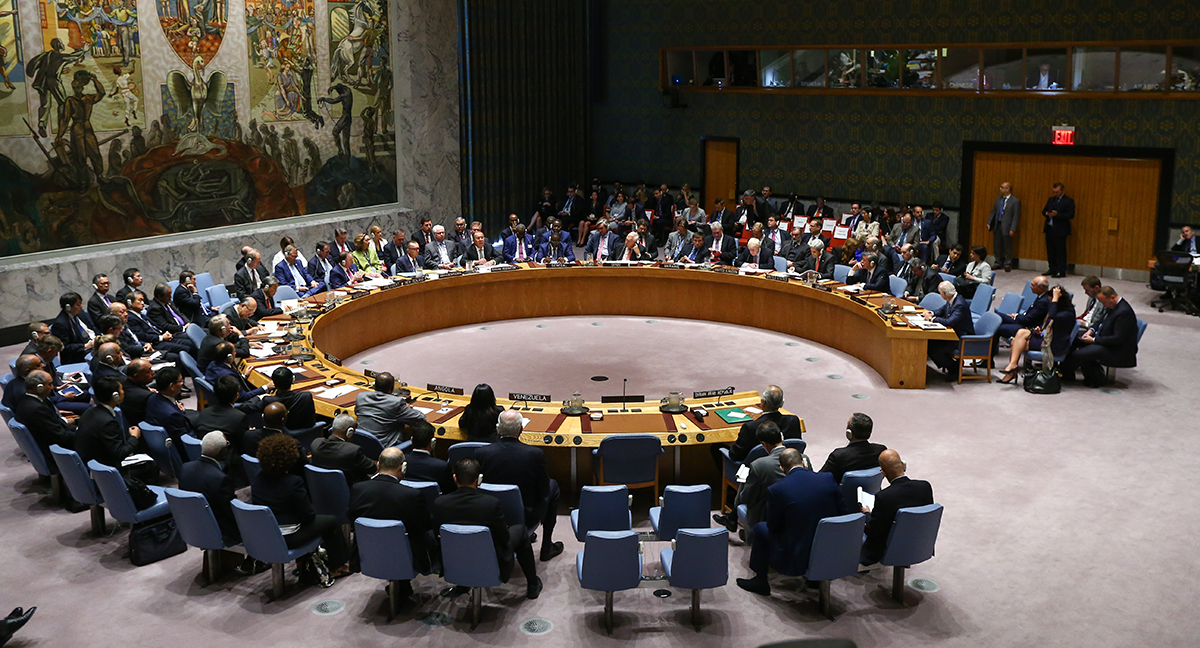
The United States plans to submit a resolution on Gaza to the United Nations Security Council by the end of November. Reportedly, the latest draft endorses President Donald Trump’s 20-point plan, recognizes the Board of Peace as a “transitional governance administration,” and authorizes the BoP to establish an International Stabilization Force. In a new MEI Policy Memo, Lucy Kurtzer-Ellenbogen breaks down why it matters for the US and the relevant policy considerations.
The United States plans to submit a resolution on Gaza to the United Nations Security Council (UNSC) by the end of November. Reportedly, thelatest draftendorses President Donald Trump’s 20-point plan, recognizes the Board of Peace (BoP) as a “transitional governance administration,” and authorizes the BoP to establish an International Stabilization Force (ISF). The UN resolution is a first stepto achieving buy-in from potential ISF contributors. In turn, a viable ISF will be one key to moving beyond the cease-fire to securing the 20-point plan’s envisioned Hamas disarmament, further Israeli military withdrawal, and a path to Palestinian governance. The US faces several dilemmas as it seeks to transition from cease-fire to stabilization and beyond.
The oldest peer-reviewed publication dedicated to the study of the modern Middle East, MEI’s flagship journal covers politics, society, and culture in the region.