Iran’s political deadlock — and a way out the regime is unlikely to take
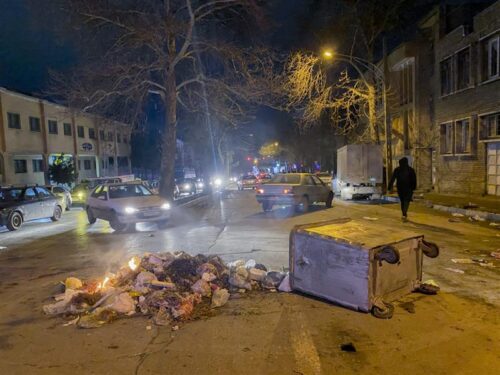
On Sunday, December 28, Iran’s latest wave of unrest began not on a university campus or in a symbolic political square, but in the very heart of the country’s economic sphere: the Grand Bazaar commercial center in downtown Tehran. What distinguishes the current moment is not simply the persistence of unrest but its emotional register. Iranian commentary increasingly describes not just hardship but a collapse of expectations of a better future.
From coalition to confrontation: Saudi-UAE rivalry in Yemen and its regional implications
The final days of 2025 marked a turning point in the Middle East, as competition between Saudi Arabia and the United Arab Emirates in Yemen spilled out into the open. Tensions between the two coalition partners, which jointly launched a military intervention in Yemen in 2015, have simmered for years and are now rapidly escalating, with far-reaching implications for both Yemen and regional security more broadly.
Iran’s Axis of Resistance After the 12-day War: Adaptation, Restructuring, and Reconstitution
Since Israel’s 12-day war against Iran, Tehran and its network of regional proxies and non-state allies, the so-called Axis of Resistance, have entered a phase of strategic dormancy — an outward calm concealing rearmament, financial adaptation, and ideological renewal.
Brian sits down with Robert Malley, a former US official best known for his role as the lead negotiator of the 2015 Joint Comprehensive Plan of Action. Malley discusses the motivations behind his new book, Tomorrow Is Yesterday: Life, Death, and the Pursuit of Peace in Israel/Palestine, and offers his assessment of American perspectives on the war in Gaza. The conversation also explores his personal background as the son of an Egyptian Jewish father and an American Jewish mother—both outspoken on the political left—and how that upbringing shaped his worldview, alongside a career spanning the Clinton, Obama, and Biden administrations.
The Methods and Means of Greenfield Direct Investment Between China and the GCC States
This article examines the changing volume and allocations of investment flows between China and the Gulf Cooperation Council (GCC) states over the last two decades, roughly from 2003 to the present.
Trump-MBS summit: Good feelings, real commitments, and unresolved questions
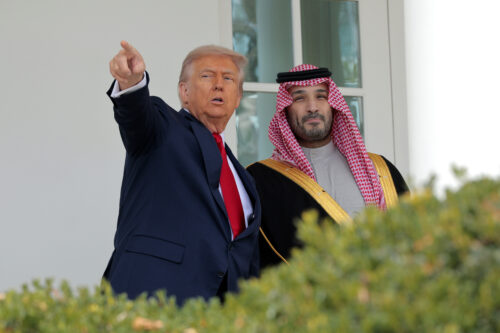
Mohammed bin Salman, the crown prince, prime minister, and main decision-maker in Saudi Arabia, left Washington and his summit with President Donald Trump with a number of promises made and commitments received. But several questions, including on shared diplomatic agenda items, the extent of civilian nuclear cooperation, and the nature of the American defense commitment to Saudi Arabia, remain unanswered.
Special Feature: A Front-Row Seat to Saudi Arabia’s Transformation
In this episode, Brian sits down with Faisal Abbas, editor-in-chief of Arab News. Abbas, who reported on Saudi Crown Prince Mohammed bin Salman’s November 18 visit to the White House, unpacks his impressions from the visit and the opportunities it presents for US-Saudi relations. The conversation also explores the Kingdom’s transformation over the past decade, its relationships with key partners including the United States, and Abbas’s recommendations for deepening the US-Saudi partnership going forward.
MENA Energy Recap, Q3-2025: Gulf Giants Abroad, Fragile Deals at Home
The MENA Energy Recap is a quarterly review of key energy developments that took place in the region from July through September of 2025 and what they signal in the months ahead. The Recap views these developments through the lens of policy and strategy, energy security, and markets.
How Iraq’s vote will shape the next phase of US-Iran competition
For Iran, Iraq is strategic depth, political sanctuary, and economic lifeline all at once. The results of the November 11 Iraqi elections will decide who in Baghdad controls the budgetary levers, internal security appointments, and committees that could codify, or constrain, Iraq’s Iran-backed militias.
On November 18, Saudi Crown Prince Mohammed
bin Salman (MBS) is scheduled to make his first trip to Washington since 2018. President Donald Trump has doubled down on the Gulf from the outset of his second term, making Riyadh his first planned overseas trip and reorienting ties around major artificial intelligence (AI) and investment deals. MBS’s visit will test whether both sides can translate ambitious pledges into concrete outcomes. Significant upgrades in defense and security are expected, with movement possible on semiconductor sales and nuclear cooperation. Behind the ambitions, harder questions about Saudi-Israeli normalization and alignment in a rapidly changing region loom as important Oval Office topics.
Will Syria join the Global Coalition to Defeat ISIS?
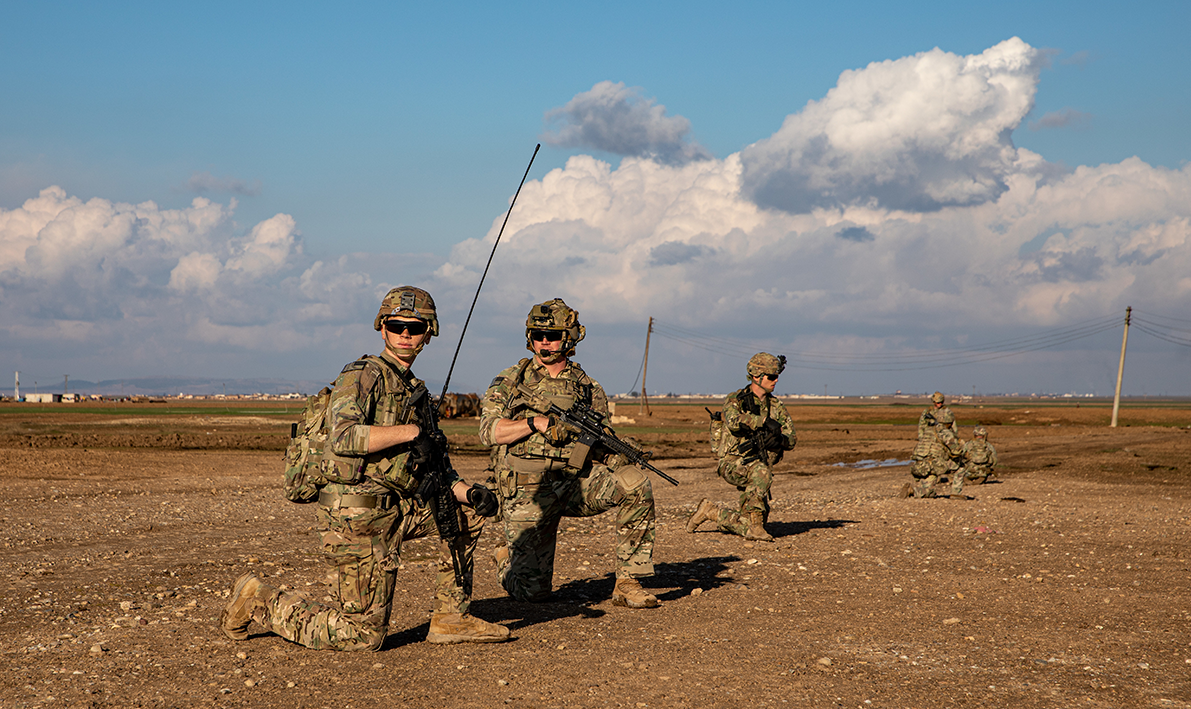
The joint al-Dumayr operation in mid-October was the fifth instance of coordination between the Global Coalition to Defeat ISIS and the Syrian government to confront the Islamic State, amid Western calls for Damascus to officially join the international effort. What’s at stake and what are the potential scenarios moving forward?
Priority policies for an economic recovery in Lebanon
The current government in Lebanon is keen to encourage financial recovery and find a new path to economic growth. A thorough understanding of the causes behind the country’s recession and the factors constraining a recovery are necessary to shape policy priorities. These are also important as an input into the discussions of the 2026 budget and to the ongoing negotiations with the International Monetary Fund (IMF). Using the wrong framework for these decisions could yield low economic growth, which would be harmful for a quick and decisive economic recovery. Conversely, improved economic outcomes and broad buy-in, following public consultations, will ease the implementation of politically difficult reforms. Thus, policymakers must take great care to develop a narrative about how to achieve progress in the short and medium terms that is adjusted to local circumstances.
Restoring both domestic and international confidence in the Lebanese government will ultimately depend on taking tangible steps towards economic revival. This article presents key policy options to achieve this result, including rebuilding trust through improved governance and judicial reforms, investing in digital infrastructure, driving sustainable growth via regional integration and innovation, and balancing economic revival with sovereign debt restructuring.
Has Pakistan agreed to use nuclear force to defend Saudi Arabia?
Saudi Arabia and Pakistan signed a mutual defense pact on September 17, 2025, declaring that “any aggression against either country shall be considered an aggression against both.” The wording of the agreement sparked speculation that Pakistan might use its nuclear capabilities to defend Saudi Arabia. MEI’s F. Gregory Gause contends otherwise, offering insight into the history and strategic calculations driving the deal. To learn more about the deal, visit our website.