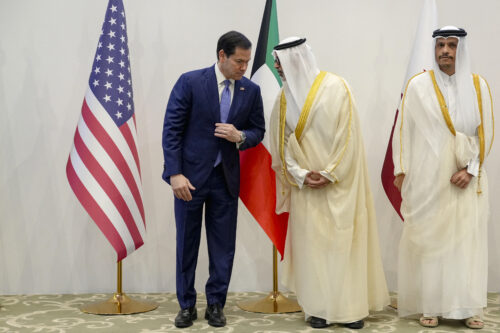
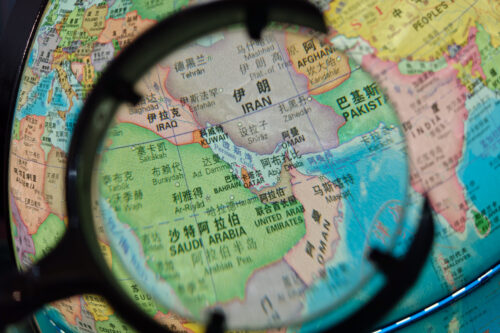
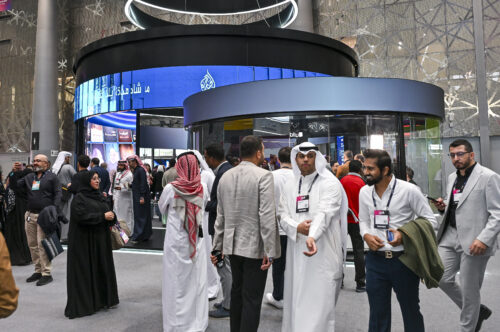
Gulf: The War Has Shaken Relations With Washington
When President Donald Trump ordered US forces into war against Iran, the administration’s ambitions reached well beyond Tehran’s nuclear program. Trump openly encouraged Iranians to topple their government. Israeli leaders spoke of reshaping the Middle East. The war’s architects got their wish — only not in the way they intended.
Egypt: How the Iran War Has Affected Egypt’s Calculations
Egypt, which is not party to the war on Iran, has become a target as well as an intermediary in the conflict. As a result, the war has affected Egypt’s future calculations, particularly in three major areas: its economy, its security, and its regional alliances.
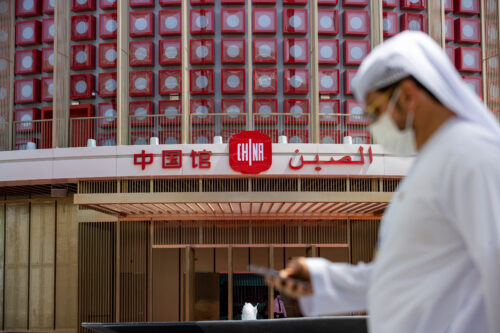
The conventional framing of China’s role in the Middle East in policy discourse centers on a familiar question: what challenge does Beijing pose to US primacy? The answer is often framed as a largely linear story in which expanding economic influence gradually translates into geopolitical leverage.Yet this view captures only part of the reality.
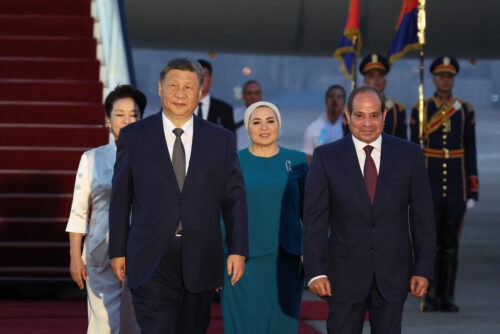
When President Xi Jinping arrived in Cairo this week for his first state visit to Egypt in a decade, trade, investment and geopolitics were inevitably high on the agenda. But Xi also made something else unusually prominent: culture.
Reflections on a Diplomatic Career in the Middle East: A Conversation With Ambassador Yael Lempert
Brian is joined by Amb. (ret.) Yael Lempert, Vice President for Outreach at MEI, to discuss her career in diplomacy and the importance of US diplomatic efforts abroad. She shares stories from postings across the Middle East in Baghdad, Cairo, Tripoli, Jerusalem, and Amman and examines how her personal and professional experiences shaped her approach to the work. Together, Brian and Yael discuss the realities of life in the Foreign Service, the core tenets of American diplomacy, and why it matters in today’s Middle East.
From Oil to AI: How Water Constraints Shape the Gulf’s Digital Future
Gulf Cooperation Council states are investing hundreds of billions in AI infrastructure, data centers, and semiconductor capabilities, making technology central to post-oil economic diversification. Yet this expansion faces a critical constraint: severe water scarcity turns AI growth into a challenge, as data centers in some of the world’s most water-stressed territories strain already overextended hydrological systems. The U.S.-Iran war has also underscored the physical vulnerability of the infrastructure supporting these ambitions. Together, these pressures raise pressing questions about the sustainability and scalability of Gulf states’ AI-driven development strategies.
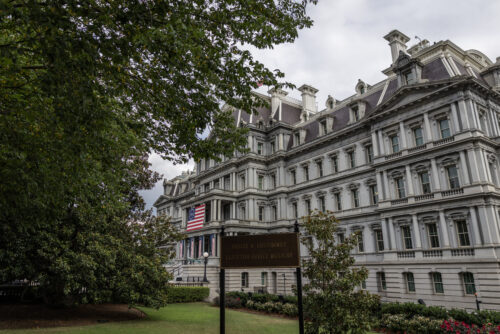
The “Anti-Strategic President” Needs to Revive a Policy Process to Resolve Iran
President Donald Trump’s disdain for strategy extends to process: mass National Security Council firings and reliance on a tiny circle of advisors have left the interagency policy process dormant amid the Iran war. The result is improvised, damaging moves like the Strait of Hormuz toll scheme. Reviving a professional, deliberative policy process is essential.
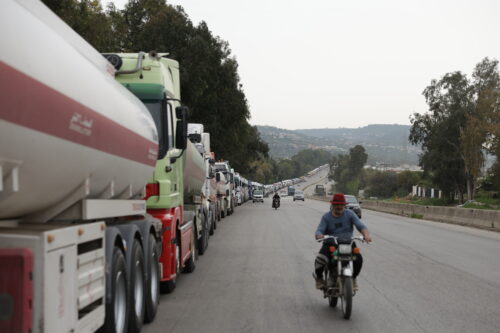
MENA Energy Recap, Q2-2026: Mideast Energy Confronts its Hormuz Era
The MENA Energy Recap is a quarterly review of key energy developments that took place in the region from April through June of 2026 and what they signal in the months ahead. The Recap views these developments through the lens of policy and strategy, energy security, and markets.
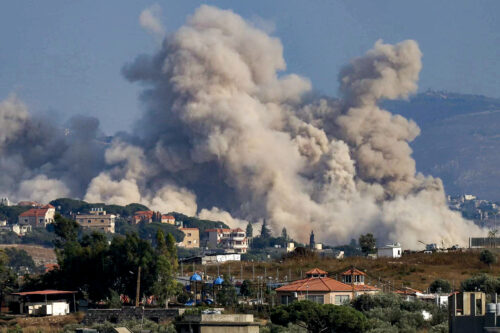
In many ways, the U.S.-Israeli war against Iran and the war in Gaza that preceded it seem transformative. After decades of shadow warfare, Iran and Israel have now attacked each other’s homelands directly. And Israel and the United States have joined forces in a genuinely novel way to wage war against Iran.
Beyond Ports: China’s Digital Networks of Influence in the Middle East and Africa
For more than a decade, assessments of Chinese strategy in the Middle East and Africa have focused on assets, including the ports Chinese firms own, the pipelines they finance, and the networks they build. This lens has produced familiar maps of Chinese “footholds” and debates over future military bases, but ownership alone reveals less about influence.
The more useful question is not what China owns, but how Chinese firms become embedded in the operational and digital systems that keep trade corridors moving. Influence derives not from controlling infrastructure outright but from participating in the governance of the networks that move goods, data, finance, and information across them.
United States Central Command (CENTCOM), one of the US Department of Defense’s (DoD) six geographical combatant commands, is responsible for countering threats, responding to crises, and strengthening regional stability in the Middle East, Central Asia, and parts of South Asia.
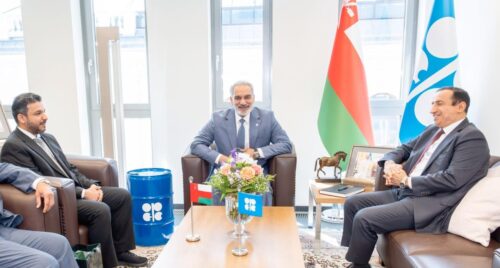
Something more consequential than another oil market disruption is underway. The Iran war has exposed and accelerated an institutional weakness within OPEC that had been building for years. The closure of the Strait of Hormuz, the UAE’s departure, Iraq’s brief flirtation with exit, and the continued rise of U.S. oil production all point to a deeper question about the cartel’s durability. The issue has shifted from OPEC’s ability to manage crises toward whether its model of collective discipline can withstand mounting structural strain.
Iran’s New Grand Design: The Next Evolution of the Axis of Resistance
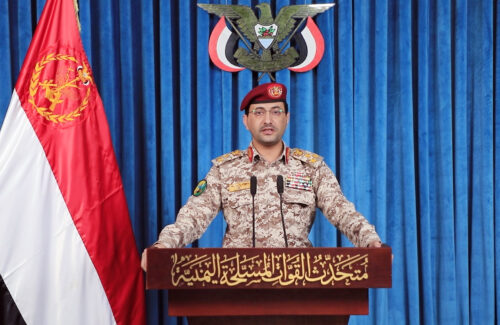
Iran is transforming its Axis of Resistance into a decentralized, Yemen-centered network that leverages the Houthis to threaten both the Strait of Hormuz and the Bab el-Mandeb, extending Tehran’s coercive reach over the world’s key maritime chokepoints and reshaping the post-war balance in the Middle East and Red Sea.
The Gulf’s New Information Battlefield: War, Technology, and the Reconfiguration of Security
During the opening days of the 2025–2026 U.S.–Israel war with Iran, Kuwait’s military briefings highlighted intercepted Iranian missiles and drones while revealing little about strike locations or damage. The approach reflected a familiar wartime dilemma in which governments must reassure populations while limiting information that could aid adversaries or fuel uncertainty. Yet Kuwait’s response revealed a broader shift across the Gulf. Information was no longer simply a messaging tool; it had become part of the battlefield.
This summer, brutally hot temperatures, deepening water scarcity, and spiking fertilizer costs have put North Africa’s agricultural sector under intense pressure. Host Alistair Taylor is joined by Mohammed Mahmoud, CEO and founder of the Climate and Water Initiative and lead for Middle East Climate and Water Policy at the United Nations University Institute for Water, Environment, and Health, to unpack the region’s food and water security challenges. Drawing on Mahmoud’s new report card on agricultural sustainability in North Africa, they explore the diverging picture across the region, why some countries have weathered the strain better than others, and what it will take to build a more resilient and secure food system.