Israel: Strategic Divergence and Weakened Deterrence
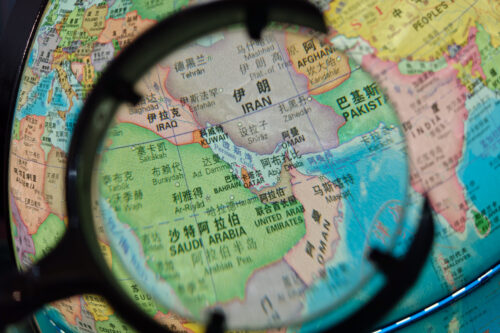
The American-Israeli campaign against Iran that began in February 2026 resulted in a regional conflict its authors never intended. The war’s chief product is not what the United States and Israel destroyed, though that was significant, but what Iran proved: that it holds a strategic lever over its neighbors, the world economy, and the US.
Iran’s Strategic Thinking: Lessons Learned and What Comes Next
The major wars Iran fights become the prism through which its leaders interpret future threats and opportunities. For four decades, Iranian foreign policy has reflected lessons learned from the Iran-Iraq war of 1980-88. Similarly, the US-Israeli wars of 2025 and 2026 will shape how Tehran thinks about deterrence, diplomacy, regional relationships, and the use of military power.
It has become a commonplace for Americans to describe our current war with Iran as stuck in a kind of limbo, neither full war nor real peace. We’re not the only ones. Iraq finds itself caught in a limbo of its own, and like our own muddled state of affairs, theirs too is one largely — but not solely — of our devising.
Iranian Domestic Politics: Who Is Really in Charge in Tehran Now?
Six months after the war began, Iran is neither collapsing nor returning to the order that existed before Israel and the US struck on February 28. Supreme Leader Ali Khamenei was killed, senior commanders and scientists were assassinated, and military, energy, and nuclear infrastructure were hit hard. The state kept functioning anyway. What that survival has obscured is how much shifted underneath it.
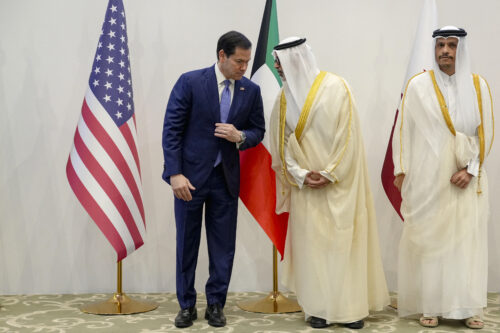
Gulf: The War Has Shaken Relations With Washington
When President Donald Trump ordered US forces into war against Iran, the administration’s ambitions reached well beyond Tehran’s nuclear program. Trump openly encouraged Iranians to topple their government. Israeli leaders spoke of reshaping the Middle East. The war’s architects got their wish — only not in the way they intended.
The conventional framing of China’s role in the Middle East in policy discourse centers on a familiar question: what challenge does Beijing pose to US primacy? The answer is often framed as a largely linear story in which expanding economic influence gradually translates into geopolitical leverage.Yet this view captures only part of the reality.
Europe did not choose the war with Iran, and most European governments still resist describing themselves as participants in it. But six months of military basing, missile-defense drawdowns, energy shocks, sanctions pressure and planning for possible migration crisis have made that distance harder to sustain.
The Houthis: Iran’s Bargaining Chip With Washington
As Washington scrambled to contain the consequences of the Houthis’ dramatic advance along Yemen’s Red Sea coast last week, US Vice President JD Vance confirmed US media reports that the Trump administration was “engaged in direct conversations with the Houthis.”
Algeria and Morocco have long been at odds, but recent diplomatic moves may signal a widening geopolitical split in North Africa. Hosts Alistair Taylor and Matthew Czekaj are joined by MEI Senior Fellow Intissar Fakir to unpack Algeria’s decision to sever diplomatic ties with the United Arab Emirates and Morocco’s warming relations with both the UAE and Israel. They also explore linkages between these diplomatic shifts and the Western Sahara conflict, Moroccan domestic concerns, particularly in light of this week’s elections, as well as broader regional stability.
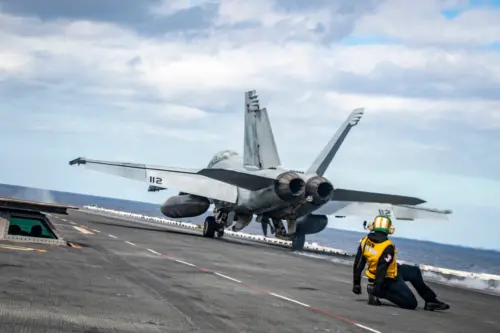
The consequences of the war with Iran are now showing up far beyond the Middle East. U.S. Patriot missile stocks in Europe are reportedly “beyond critical,” with the U.S. having burned through roughly 65% of its Patriot interceptor inventory during the conflict, while the Pentagon is extending Middle East deployments into 2027 and maintaining roughly 50,000 troops in the region, alongside 19 warships and other assets.
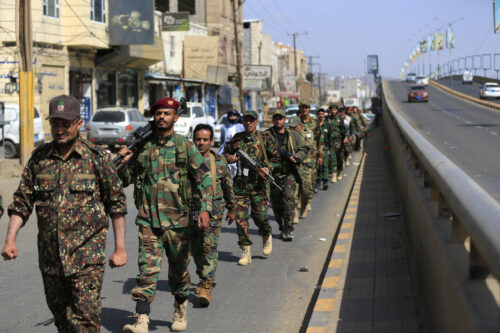
Over the past several weeks, the Houthis have seized the port city of Mokha, Yemen’s western coastline, and several islands in the Bab el-Mandeb Strait, and they are now massing around Marib and Taiz in the first major frontline shift since 2022. MEI Associate Fellow Nadwa Al-Dawsari joins host Matthew Czekaj to unpack the latest developments. Together, they discuss what has allowed the Houthis to advance against Yemeni government forces, the role the militant group plays in Iran’s regional strategy, and what it will take to contain the threat.
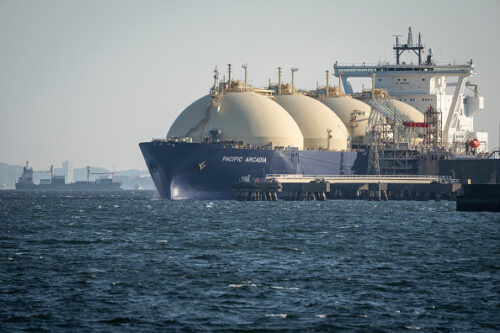
Hormuz crisis has forced Japan into rethinking – and domesticating – its energy security needs
Japan’s Foreign Minister Motegi Toshimitsu phoned his Iranian counterpart, Abbas Araghchi, on Sept. 8, 2026, to express concern over the de facto closure of the Strait of Hormuz. It was reportedly the ninth such phone call between the pair since March.
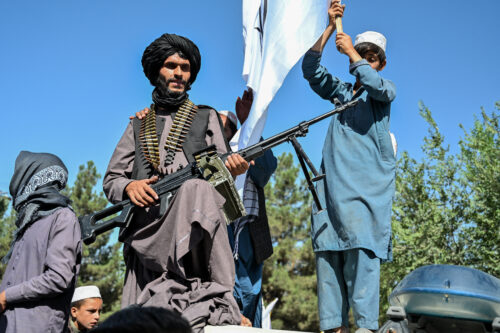
I was a teenage Afghan refugee in Pakistan’s tribal areas when the Twin Towers fell. Almost nobody around us understood the politics of what had happened, but we knew that something had changed for good. Afghanistan, which until then had been our private tragedy and our first exile from Taliban rule, had suddenly become the world’s concern, with the United States leading the response.
Though it has fallen out of the headlines because of the Iran war, Syria has had a dramatically consequential summer. Hosts Alistair Taylor and Matthew Czekaj are joined by MEI Senior Fellow Charles Lister to take stock of recent developments: the dissolution of the Kurdish-led Syrian Democratic Forces, Israeli strikes and the friction with Turkey they have exposed, the standoff in Sweida, as well as Damascus’s bid to turn Syria into a trade corridor between the Mediterranean and the Gulf. Is the transition consolidating or fragmenting nearly two years after the fall of the Assad regime?
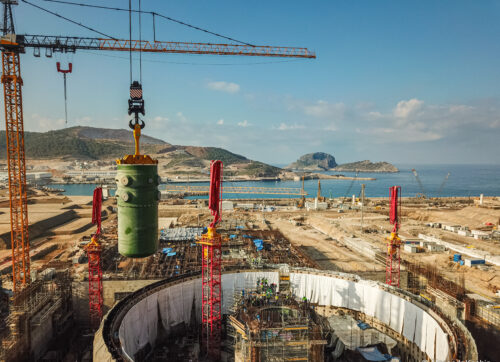
Turkey’s Nuclear Ambitions in the Post-Iran War Environment
Turkish ambitions to develop nuclear weapons are not new, but the changing security environment is strengthening Ankara’s motivations and rationale for moving away from its longstanding role as a champion of nonproliferation and toward a strategy of preserving the option to build nuclear weapons without actually pursuing them. The challenge for Washington is to manage the nuclear trajectory of regional powers such as Turkey and Saudi Arabia rather than preventing them from acquiring greater nuclear capabilities altogether.