Turkey Sees Short-Term Pain, Long-Term Gain in the Iran War
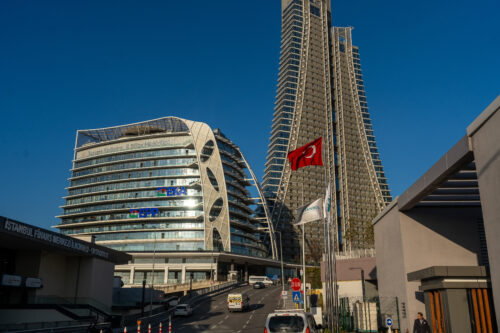
The Iran war has posed significant immediate challenges for Turkey, including rising energy prices. But Turkish officials think that Ankara could reap benefits from the war in the long term.
American Bases in the Gulf: Targets or Deterrents?
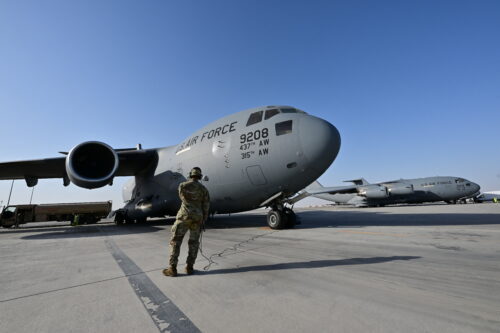
Did the presence of American military bases in the Gulf monarchies draw those states into the American-Israeli war against Iran, a war they had no say in initiating and no voice in prosecuting? That is certainly the feeling among some citizens of those states.
The Long Tail of Operation Epic Fury: Structural Disorder After the Guns Fall Silent
The central failure of Operation Epic Fury is strategic. Five weeks in, neither of its declared objectives – regime change as framed by U.S. President Donald Trump, nor the elimination of an existential threat as framed by Israeli Prime Minister Benjamin Netanyahu – is within reach. The Strait of Hormuz remains effectively closed. Iran’s leadership has reconstituted under Mojtaba Khamenei. The diplomatic track that might have constrained escalation has been shattered.
China’s quiet harvest: As America fights, Asia turns to Beijing
More than a month into the US-Israeli war with Iran, the central question is no longer whether China can avoid the costs. It cannot. The more important question is whether others will emerge even less able to bear them.
Now Would Be a Great Time to Send US Ambassadors to the Middle East
As a fragile cease-fire takes hold in the Middle East, countries are jockeying to shape the peace. But one group remains largely absent: US ambassadors.
Hosts Alistair Taylor and Matthew Czekaj are joined by MEI Distinguished Diplomatic Fellow Amb. (ret.) Robert S. Ford to examine what is at stake for Iraq in the Iran war. The only country to have been hit by both sides, Iraq is caught in the middle of a regional conflict, with the local Iranian-backed Popular Mobilization Forces (PMF) carrying out attacks on American interests and personnel — and the US responding. This escalation comes at a period of internal political transition in Iraq, which has been locked in negotiations to form a new government since the November 2025 elections. Ford, who served as Deputy and later Acting Ambassador in Baghdad from 2008 until 2010, unpacks how Iraq is navigating the current moment, how the Kurdistan region fits into this equation, and what this all means for the future of US-Iraqi relations.
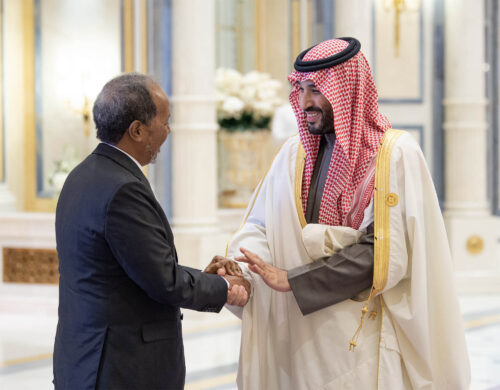
Riyadh’s deepening engagement in Somalia reflects a calculated strategy to shape the emerging Red Sea security order, counter UAE and Iranian influence, hedge against U.S. uncertainty, and safeguard alternative energy export routes following the Strait of Hormuz closure.
This special episode of Middle East Focus features a conversation from MEI’s Virtual Briefing Series. Host Alistair Taylor is joined by former National Security Council Senior Director Stephen Flanagan and MEI Senior Fellow Iulia-Sabina Joja to discuss the impacts of the Iran war on US-European relations. The conflict has hit Europe’s economy hard and created deep divisions across the continent, even as some European countries play a quiet supporting role to the US. President Donald Trump has called for NATO member states to help secure shipping through the Iranian-blocked Strait of Hormuz, a critical chokepoint for international maritime trade. Flanagan and Joja explore the prospects for stepped-up European military involvement, the knock-on effects on the war in Ukraine, and the potential longer-term impact on the future of the US-European alliance.
Suspended Between Escalation and Exit: The U.S.–Iran War’s Strategic Deadlock
Entering the second month of the war with Iran, the United States has delivered substantial military effects without articulating a viable political end state—a familiar pattern in which battlefield success fails to produce strategic clarity and increasingly risks an exit without resolution.
How the War Is Redefining Gulf Economic Power and Energy Strategy
The Gulf Cooperation Council (GCC) states are confronting the greatest threat to their economic security and energy strategy since their formation. The economic fallout of the US-Israeli war with Iran is severe, but uneven across the Gulf. So too is each state’s ability to sustain energy exports and protect critical infrastructure—both of which have been targeted unequally by Iran.
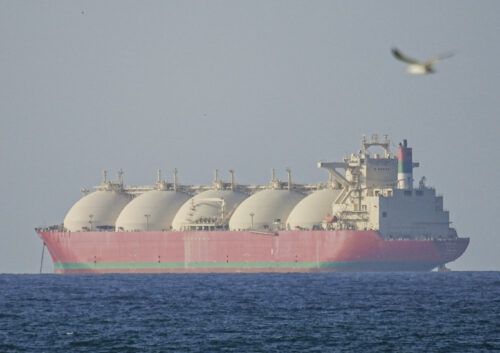
The US-Israeli war against Iran has created the largest disruption to global oil and liquefied natural gas supplies in modern history. There is a tremendous amount of economic uncertainty for Gulf states to navigate, and it will reshape the way they engage with one another and with Iran, Israel, and the United States for years to come. But this war has also laid bare how urgently the United States needs to update its own approach toward the Gulf states when it comes to energy.
China’s Model of Power Projection in the Middle East
China’s expanding role in the Middle East is often framed as geopolitical rivalry with other global powers, including the United States, Russia, India, and others; but this lens obscures the strategic subtlety of Beijing’s approach.
Strikes (and Now Boots?) Without Strategy as Iran War Escalates
“Tactics without strategy is the noise before defeat” is a well-known axiom attributed to the ancient Chinese military general and strategist, Sun Tzu. With the Iran war now at the one-month mark, it is evident that the Trump administration failed to outline a clear end state or devise a workable war termination strategy before initiating Operation Epic Fury on February 28.