The Kurdistan Region of Iraq (KRI), also known as Iraqi Kurdistan, is a semi-autonomous region in northeastern Iraq with a population of approximately 6.5 million. The KRI’s contemporary politics are rooted in a century of Kurdish efforts to achieve self-rule.
Reflections on a Diplomatic Career in the Middle East: A Conversation With Ambassador Yael Lempert
Brian is joined by Amb. (ret.) Yael Lempert, Vice President for Outreach at MEI, to discuss her career in diplomacy and the importance of US diplomatic efforts abroad. She shares stories from postings across the Middle East in Baghdad, Cairo, Tripoli, Jerusalem, and Amman and examines how her personal and professional experiences shaped her approach to the work. Together, Brian and Yael discuss the realities of life in the Foreign Service, the core tenets of American diplomacy, and why it matters in today’s Middle East.
It has become a commonplace for Americans to describe our current war with Iran as stuck in a kind of limbo, neither full war nor real peace. We’re not the only ones. Iraq finds itself caught in a limbo of its own, between America and Iran, between the tolerable and the intolerable, between progress and relapse.
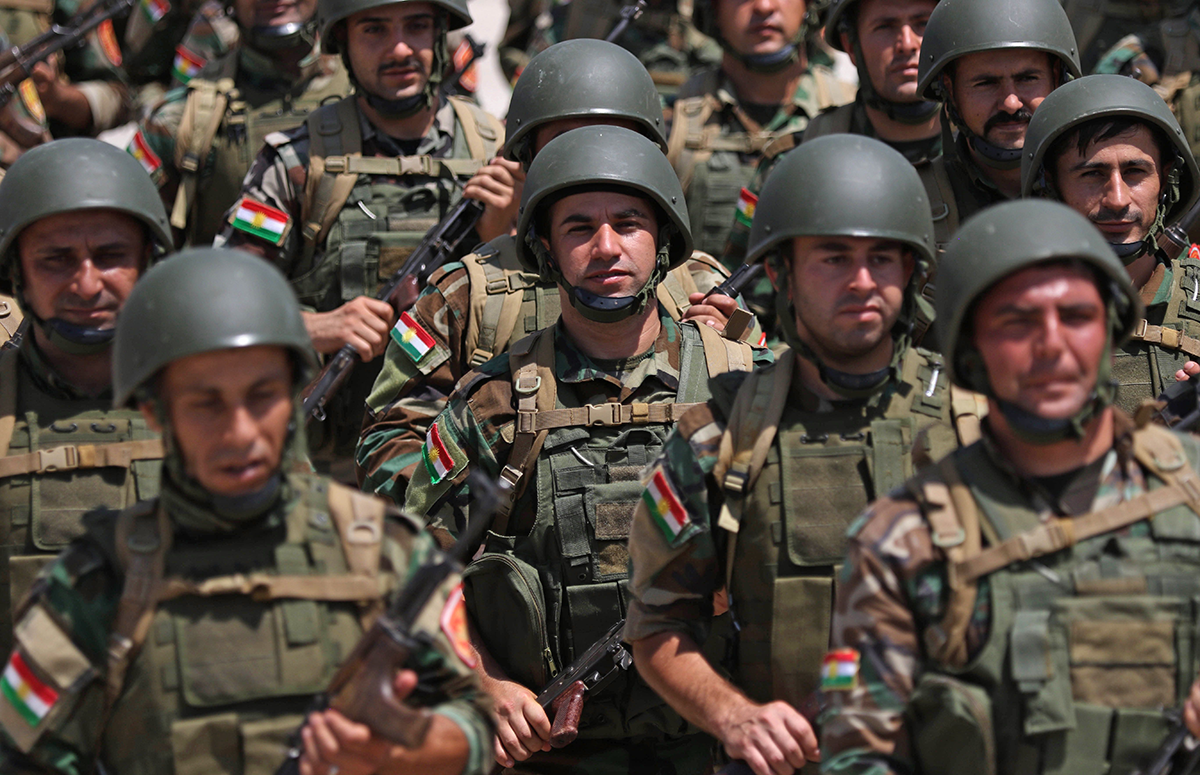
The Iraqi Peshmerga, the military arm of the Iraqi Kurdistan Regional Government (KRG), remains one of the United States’ most important defense partners in the Middle East. This monograph provides an in-depth assessment of Peshmerga combat effectiveness, particularly considering its experience in the war against the Islamic State and its subsequent clash with the Iraqi Army and Iran-backed militias. Drawing on past research and more than two dozen interviews with Peshmerga officers, US military officers, and subject matter experts, this study includes detailed policy recommendations as well as a discussion of their implications.
United States Central Command (CENTCOM), one of the US Department of Defense’s (DoD) six geographical combatant commands, is responsible for countering threats, responding to crises, and strengthening regional stability in the Middle East, Central Asia, and parts of South Asia.
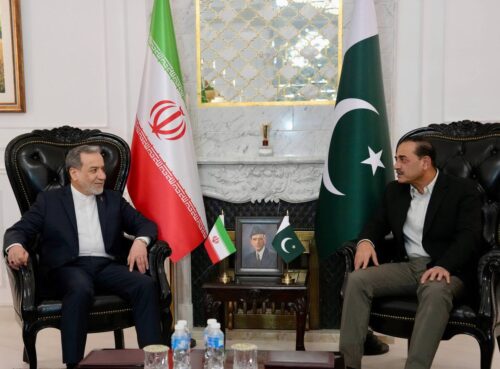
A Strategic Conundrum: Pakistan’s Transit Corridor to Iran as Lifeline or Liability
The US-Iran standoff over the Strait of Hormuz — disruptive to global trade and energy flows, and devastating for debt-burdened economies — has handed Pakistan an unexpected geoeconomic opportunity, one that may persist even if the framework agreement announced on June 14 results in a lasting peace and permanent reopening of the strait. But seizing it will have interlocking consequences for Islamabad’s ties with Tehran, Washington, and the Gulf states.
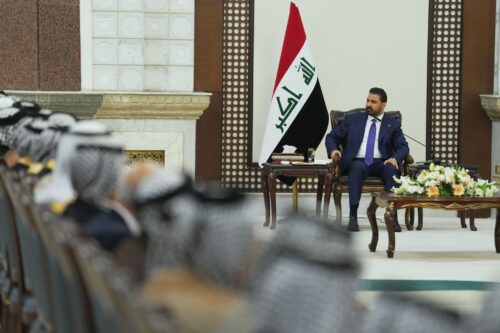
Attacked by All Sides Iraq’s New Government Faces Old Problems
After months of deadlock following the November 2025 elections, Iraq’s parliament approved a new government under Prime Minister Ali al-Zaidi on May 14, 2026 — just as the country has become a battleground in the US-Israel-Iran war. Zaidi inherits a daunting brief: reviving a struggling economy, reining in armed factions, and steering Iraq through a perilous regional landscape. Dr. Renad Mansour, deputy director of the Middle East and North Africa Programme and director of the Iraq Initiative at Chatham House, joins host Alistair Taylor to discuss the war’s impact on Iraq — from Iran’s militia networks to the surge of attacks on the Kurdistan region — and how it’s reshaping Baghdad’s ties with Tehran and Washington.
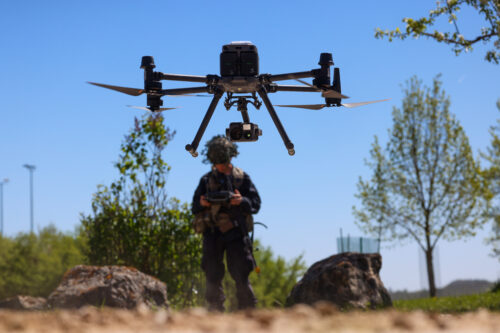
For two decades, US drones hunting terrorists across the mountains of South Asia were the symbol of American military power: precise, lethal, and unmatched. That era is now over. Drones are no longer exquisite tools of counterterrorism and have evolved into something far more common and destabilizing: cheap, expendable, and mass-produced tools of attrition.
Hosts Alistair Taylor and Matthew Czekaj are joined by MEI Distinguished Diplomatic Fellow Amb. (ret.) Robert S. Ford to examine what is at stake for Iraq in the Iran war. The only country to have been hit by both sides, Iraq is caught in the middle of a regional conflict, with the local Iranian-backed Popular Mobilization Forces (PMF) carrying out attacks on American interests and personnel — and the US responding. This escalation comes at a period of internal political transition in Iraq, which has been locked in negotiations to form a new government since the November 2025 elections. Ford, who served as Deputy and later Acting Ambassador in Baghdad from 2008 until 2010, unpacks how Iraq is navigating the current moment, how the Kurdistan region fits into this equation, and what this all means for the future of US-Iraqi relations.
Iraq’s oil paralysis: A self-inflicted wound and a gift to Tehran
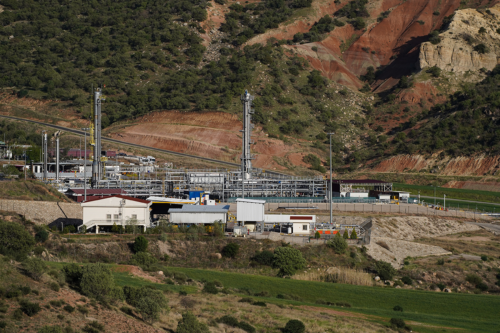
With the Strait of Hormuz closed and oil production from Iraq’s south in free fall, Baghdad’s failure to maximize the Iraq-Turkey Pipeline is no longer a policy dispute. It is a national emergency.
Media and politicians on both sides of the Atlantic are hyping the idea that President Trump’s attempt to gain sovereign control of Greenland has caused unprecedented and irreparable damage to the over 75 year-old Transatlantic Alliance. This “analysis” stems from multiple sources. On both sides of the ocean, there are those who pounce on any deviation from the norm by Trump as evidence the world as we know it is ending. And in Europe, there is the human but unattractive reaction of weak, dependent states against their one powerful ally when it rejects Europe’s preferred script. Much of the US media criticism is summarized by the concept that our other NATO allies can never again “trust” the US.
Iran’s Axis of Resistance After the 12-day War: Adaptation, Restructuring, and Reconstitution
Since Israel’s 12-day war against Iran, Tehran and its network of regional proxies and non-state allies, the so-called Axis of Resistance, have entered a phase of strategic dormancy — an outward calm concealing rearmament, financial adaptation, and ideological renewal.
Unfinished business will drive the Mideast agenda in 2026
Following another year of pivotal developments and transformational change, the Middle East could be poised to turn the page on many of its long-running conflicts and sources of instability. But lasting fruits of the processes begun in 2025 will require a determined, intentional focus by regional actors and the United States. Given current trends, MEI experts weigh in on where the region may be headed in 2026.