The conventional framing of China’s role in the Middle East in policy discourse centers on a familiar question: what challenge does Beijing pose to US primacy? The answer is often framed as a largely linear story in which expanding economic influence gradually translates into geopolitical leverage.Yet this view captures only part of the reality.
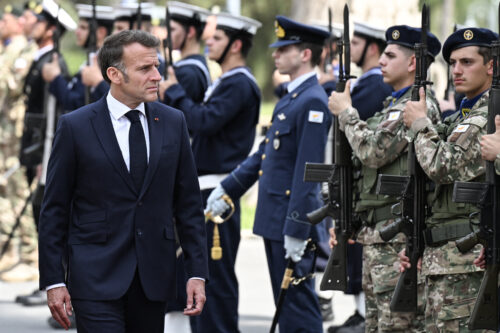
Europe did not choose the war with Iran, and most European governments still resist describing themselves as participants in it. But six months of military basing, missile-defense drawdowns, energy shocks, sanctions pressure and planning for possible migration crisis have made that distance harder to sustain.
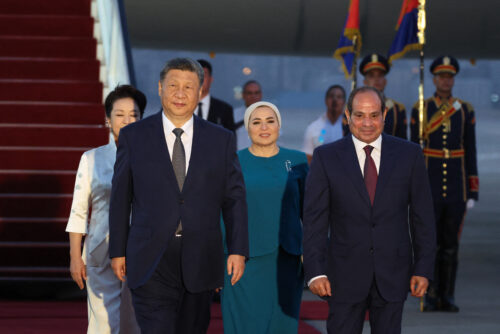
When President Xi Jinping arrived in Cairo this week for his first state visit to Egypt in a decade, trade, investment and geopolitics were inevitably high on the agenda. But Xi also made something else unusually prominent: culture.
In many ways, the U.S.-Israeli war against Iran and the war in Gaza that preceded it seem transformative. After decades of shadow warfare, Iran and Israel have now attacked each other’s homelands directly. And Israel and the United States have joined forces in a genuinely novel way to wage war against Iran.
It is now clear the United States is sinking into the quagmire of its war with Iran with no clear idea of how to get out. More than five months of intermittent bombing of Iran have not brought Tehran any closer to surrender. Recurring threats by US President Donald Trump to launch a massive military campaign against the country aren’t causing Iran to submit to US demands.
As the US-Israel-Iran war enters its sixth month, the conflict has taken a sharp turn. After a brief lull in the fighting, Iran launched a surprise ballistic missile attack on US forces on July 28, and the US and Saudi Arabia struck back at Iran-backed militias in Iraq, marking Riyadh’s entry into the war. MEI Senior Fellow Alex Vatanka joins host Alistair Taylor to discuss the escalation, what may come next, and the state of talks over sharing the Strait of Hormuz.
Russia’s Taliban Embrace Signals a New Power Shift in Afghanistan
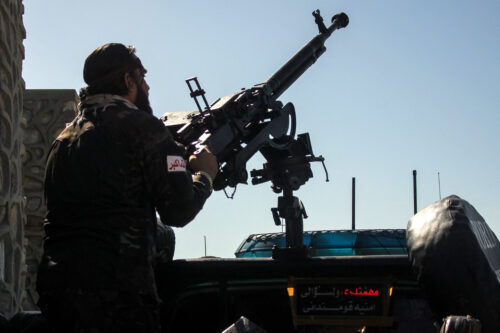
Sometimes the only thing more frightening than Afghanistan’s problems is the Taliban’s solutions and the recently signed Russia-Taliban military-technical agreement may be the most alarming one yet. The partnership signals that Afghanistan’s security architecture is being rebuilt without the United States, and increasingly by America’s rivals. Washington should pay close attention because the deal hands one of the world’s most repressive regimes a pathway to becoming more capable and deeply entrenched in a regional order where Russian influence is expanding at America’s expense.
Attacked by All Sides Iraq’s New Government Faces Old Problems
After months of deadlock following the November 2025 elections, Iraq’s parliament approved a new government under Prime Minister Ali al-Zaidi on May 14, 2026 — just as the country has become a battleground in the US-Israel-Iran war. Zaidi inherits a daunting brief: reviving a struggling economy, reining in armed factions, and steering Iraq through a perilous regional landscape. Dr. Renad Mansour, deputy director of the Middle East and North Africa Programme and director of the Iraq Initiative at Chatham House, joins host Alistair Taylor to discuss the war’s impact on Iraq — from Iran’s militia networks to the surge of attacks on the Kurdistan region — and how it’s reshaping Baghdad’s ties with Tehran and Washington.
Fixing America’s Failed Strategies in the Middle East
The Middle East is both central to key United States interests and prone to instability. Yet US national security and defense strategic guidance has struggled to account for the unique demands of the region. Calls for strategic divestiture from the region have grown in prominence among analysts and policymakers alike in recent years.
Former CIA operative: regime change in Iran is much harder than the US thinks
The United States and Israel have done significant damage to Iran’s military and security apparatus. Senior commanders have been killed at a pace rarely seen in modern warfare.
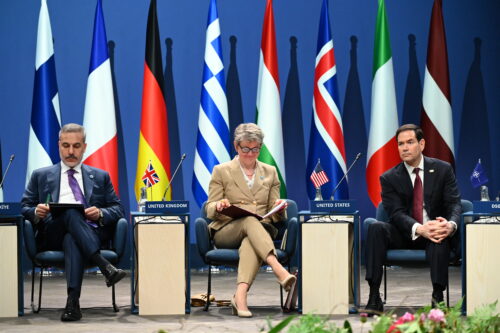
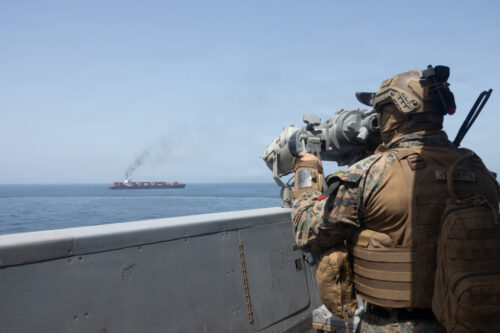
This special episode of Middle East Focus features a conversation from MEI’s Virtual Briefing Series. Host Alistair Taylor is joined by former National Security Council Senior Director Stephen Flanagan and MEI Senior Fellow Iulia-Sabina Joja to discuss the impacts of the Iran war on US-European relations. The conflict has hit Europe’s economy hard and created deep divisions across the continent, even as some European countries play a quiet supporting role to the US. President Donald Trump has called for NATO member states to help secure shipping through the Iranian-blocked Strait of Hormuz, a critical chokepoint for international maritime trade. Flanagan and Joja explore the prospects for stepped-up European military involvement, the knock-on effects on the war in Ukraine, and the potential longer-term impact on the future of the US-European alliance.
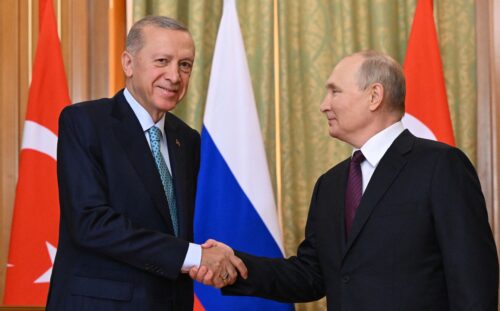
Nearly two weeks into the US and Israel’s war with Iran, MEI Senior Fellow Gönül Tol joins hosts Alistair Taylor and Matthew Czekaj to explore the impact of the widening regional conflict on Turkey. On March 9, Ankara announced that NATO air defenses shot down a second Iranian ballistic missile that had entered Turkish airspace since the start of the war and stated it would take all necessary defensive measures. Turkey is now caught in the middle of an escalating conflict that could pose risks to the country’s security, economy, and foreign policy. Tol, Taylor, and Czekaj discuss what a prolonged regional conflict could mean for Turkish President Recep Tayyip Erdoğan, his regional political objectives, and Turkey’s relationship with key Middle Eastern neighbors.