The Multiple Costs of the US–Iran War – From Hormuz to Europe and South Asia: The Widening Economic and Political Geography of the Conflict
Wars are decided by those who hold military power, but their costs are increasingly borne by those who have little or no voice in the decisions that start them. The US–Iran war shows this imbalance very clearly. Its economic consequences have gone far beyond the battlefield and have disrupted energy markets, trade routes, food supplies, public finances and investment in the Gulf, Europe, Africa and Asia. The most striking feature of the conflict, however, is not only the size of the damage but its very unequal distribution.
In recent weeks, the Iran-backed Houthis have fired missiles and drones deep into Saudi Arabia, striking high-profile targets, including Riyadh’s airport and Aramco’s headquarters. The attacks follow a rapid Houthi offensive in September to seize key parts of Yemen’s Red Sea coast, which Saudi-backed government forces are now trying to roll back. Fatima Abo Alasrar, an affiliated scholar at MEI and non-resident scholar at the Arab Gulf States Institute, joins hosts Alistair Taylor and Matthew Czekaj to unpack the latest phase of the conflict. They discuss what the Houthis want, Riyadh’s calculus and search for allies, and how this campaign ties into Iran’s confrontation with the United States.
Geopolitical influence over trade increasingly rests on controlling the systems that make them work. The Middle East illustrates the stakes. US ports, cable corridors, cloud facilities, artificial intelligence (AI) investments, and maritime routes connect regional economies to global commerce while exposing them to external decisions and disruptions. For the United States, the challenge is to translate technological advantage into resilient networks rather than rely on centrality that can itself become a source of vulnerability and coercion.
Since 1967, Israeli settlements in the West Bank have been a contested feature of the Israeli-Palestinian conflict. The ultimate disposition of the settlements and ongoing activity related to their growth have repeatedly defied agreement in negotiations over a resolution to the conflict.
The Houthis are a political-military faction and Zaydi religious movement founded in northwestern Yemen in the 1980s. A key member of Iran’s Axis of Resistance with links to other militant organizations in the Arabian Peninsula and the Horn of Africa, the group has continued to pose a threat to Western interests on a global scale.
The India-Middle East-Europe Economic Corridor (IMEC) is a proposed multinational infrastructure initiative aimed at upgrading connectivity between the three regions through integrated trade, energy, and digital networks. Announced at the G20 summit in New Delhi in September 2023, IMEC is envisioned partially as a counterweight to China’s international infrastructure project, the Belt and Road Initiative.
After a decade of post-Arab Spring isolation, Turkey’s leaders have recognized that their ambition to position the country as an agenda-setter on the world stage requires active engagement in all directions. President Recep Tayyip Erdoğan’s consolidation of executive authority has centralized foreign policy decision-making and tied it to his domestic political priorities, transforming the country’s revisionist approach to one shaped primarily by personal and pragmatic interests.
MEI Senior Fellow Brian Katulis engages friends, colleagues, and policy experts in casual conversations on the most important happenings in the Middle East.
Iran-backed Iraqi militias step up threat of violence against US forces in Iraq
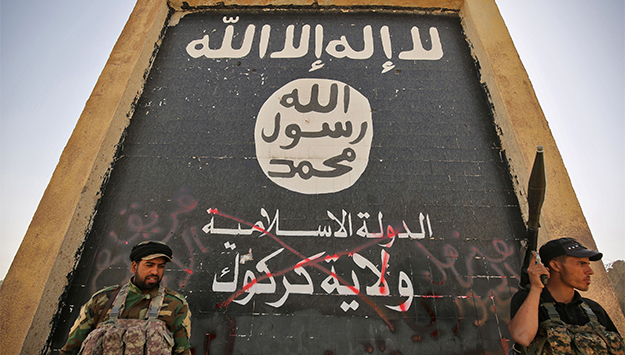
With ISIS militarily defeated, Iran’s militia allies in Iraq are increasingly threatening violence against American troops and calling for the US withdrawal from the country. On February 7, Kata’ib Hezbollah, an Iranian-supported unit within Iraq’s Popular Mobilization Force (PMF), issued a statement, warning that its fighters will begin to militarily confront American troops “at any moment” if Washington decides to keep a long-term military footprint in Iraq.
Syria: Which Way Forward? | Congressional Testimony by Charles Lister
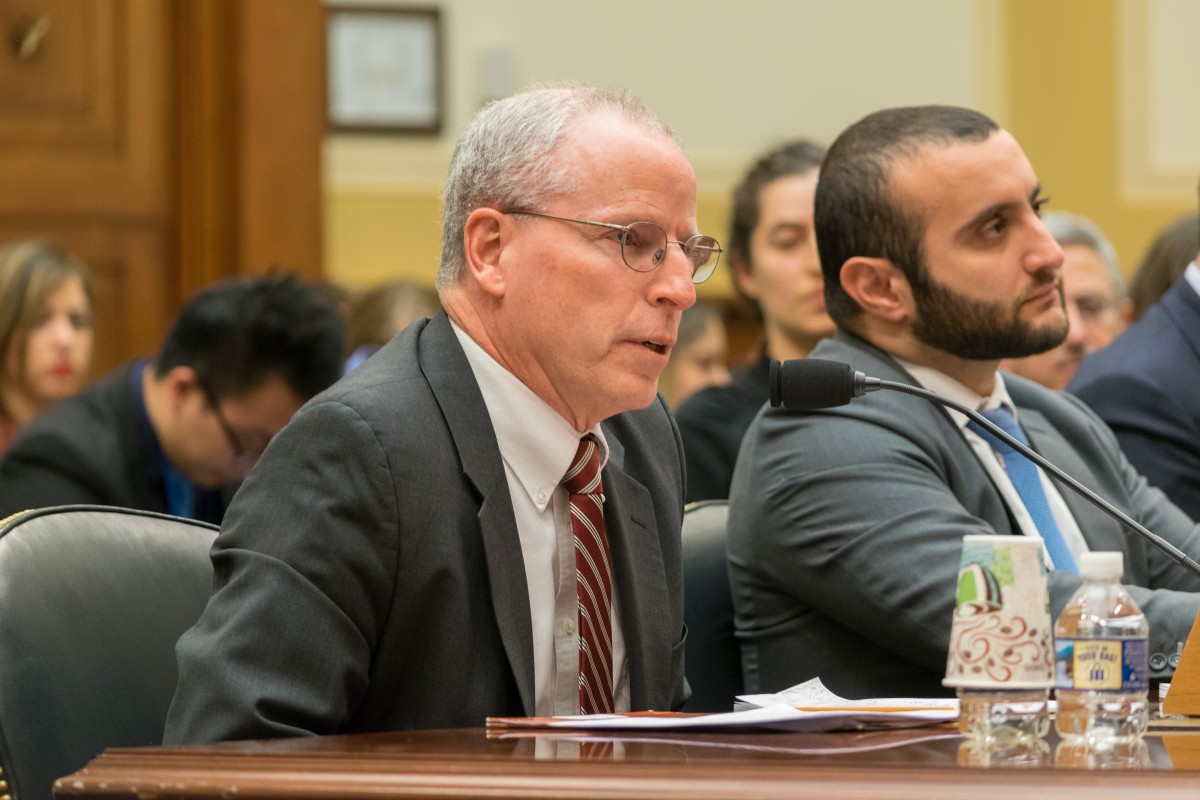
The below testimony was delivered to the House Foreign Affairs Committee by Charles Lister on February 6, 2018. See also testimony by Amb. Robert S. Ford, delivered at the same hearing, or the video webcast of the proceedings.
Syria: which way forward? | Testimony by Amb. Robert S. Ford
The below testimony was delivered before the House Foreign Affairs Committee by Amb. (ret.) Robert S. Ford on February 6, 2018. See also testimony by Charles Lister, delivered at the same hearing, or the video webcast of the proceedings.
Indonesia and Terrorism: Success, Failure, and an Uncertain Future
Over the last decade, many in the international community have asked how, as a country with the largest population of Muslims — 255 million in 2016 — Indonesia has successfully dealt with terrorism relative to other countries in the Muslim world. As the international community struggles to solve the problem of religion-inspired terrorism, experts, academics, and senior government officials alike have identified Indonesia as a country from which the world can learn lessons about how to defeat terrorists and build democracy. However, analysis of counterterrorism in Indonesia since Reformasi in 1998 suggests it may premature to draw conclusions about success and failure. Where lessons can be learned, many lie in the actions of the Indonesian government, the societal factors that have enabled it, and the precarious state of “success” against terrorism.
Russian diplomacy in Syria bolstered by Muslim minority outreach
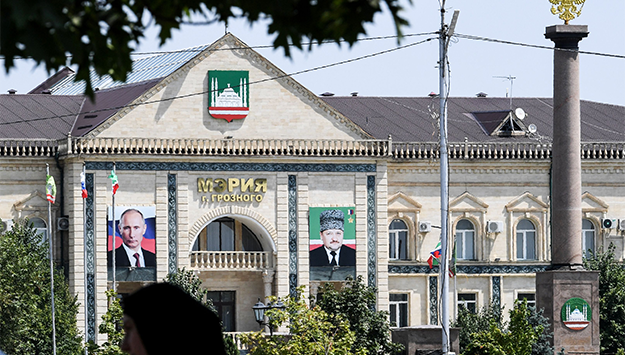
Russia’s military intervention and political maneuvering in Syria has garnered a large amount of media coverage. However, Moscow is also conducting a concerted outreach campaign to Syrian citizens and society through a unique resource: its Sunni Muslim North Caucasian regions. In particular, Head of the Chechen Republic Ramzan Kadyrov and Grand Mufti of Chechnya Salah-haji Mezhiev have emerged as a key conduit of Russian soft power with regard to Syrian civilian and Islamic figures.
Rouhani rules out nuclear deal renegotiation, missile talks
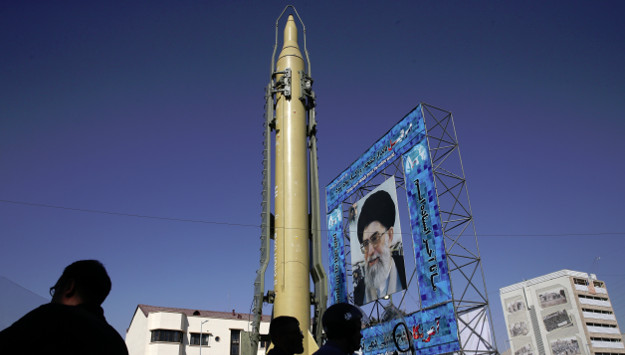
Iran will not negotiate with America and European countries over its ballistic missile program, Iranian President Hassan Rouhani said at a press conference in Tehran today. “We will not negotiate about our defense and missiles,” he emphasized, adding that Tehran will continue to boost its defense power by producing more planes, missiles and submarines. Rouhani also ruled out renegotiation of the 2015 nuclear agreement with the West. “Nothing will be added or subtracted from the JCPOA.
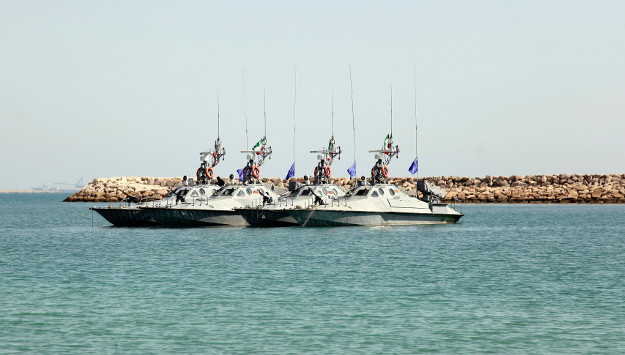
Iran’s Defense Ministry today unveiled a new propulsion system for military speedboats, Tasnim News Agency, which is affiliated with the Revolutionary Guards, reported. “The maritime propulsion system, which allows military speedboats to reach higher velocities, leads to lower fuel consumption, and increases maneuverability in shallow waters, is also equipped with automatic running systems,” Brigadier General Qassem Taqizadeh, the deputy minister, pointed out. The system has a mobile shaft for transmission of power as high as 1,800 horsepower.
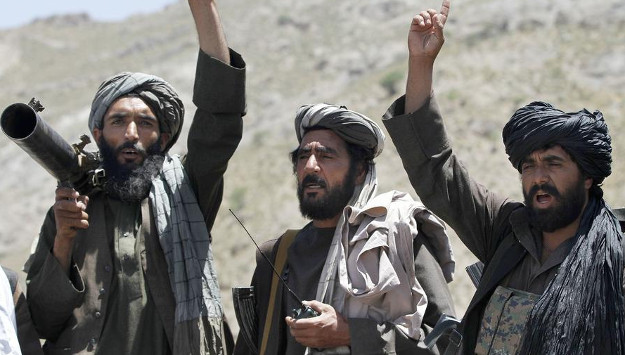
In this week’s Monday Briefing, MEI experts Charles Lister, Bilal Y. Saab, Marvin G. Weinbaum, and Gonul Tol provide analysis on recent and upcoming events including the unrelenting violence in Syria, President Trump’s “Buy American” plan, the Taliban’s anti-U.S. propaganda, and Erdogan’s meeting with the Vatican.
Afghan intelligence chief warns Iran and Russia against aiding Taliban
The head of Afghanistan National Directorate of Security (NDS) has said that Iran and Russia are in contact with the Taliban and are supporting the militant group in Afghanistan. In an interview with the BBC Persian, Mohammad Masoom Stanekzai pointed out that Tehran and Moscow provide assistance to the Taliban under the pretext of fighting the Islamic State, which has gained a foothold in South Asia in recent years.
Iran-backed Yemeni rebels fire another missile into Saudi Arabia
The Houthi rebels, Iran’s allies in Yemen, today launched another missile attack into Saudi Arabia, targeting an air defense operations center in the kingdom’s border province of Najran, Iranian and Lebanese media outlets reported.
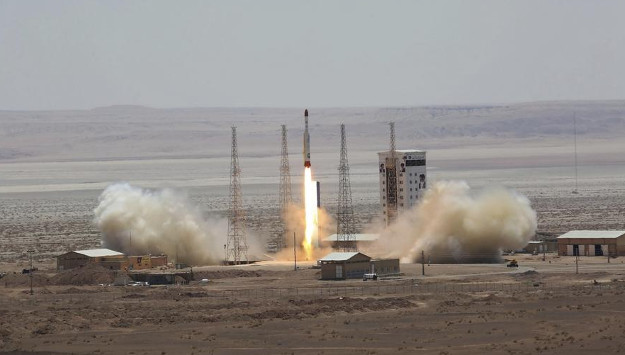
Iran set to launch four new satellites despite international concerns
Iran’s minister of communication and information technology has said that the country is making the final preparations for the launch of four satellites into space, Mehr News Agency reported.
Seven years after the outbreak of the Arab Spring in North Africa, demonstrators are taking to the streets again. In Tunisia, protesters demand change to new austerity laws, which compound already stagnant economic conditions and youth unemployment. Protests have also occurred in the small town of Jerada in Morocco following the deaths of two young miners. Both of these movements reflect ongoing socio-economic inequalities and were met with governmental crackdown.
The oldest peer-reviewed publication dedicated to the study of the modern Middle East, MEI’s flagship journal covers politics, society, and culture in the region.