Curb Your Enthusiasm: Why the Midterms Might Not Change Much in US Middle East Policy
With less than a week before the midterm elections in the United States, the spotlight is on the economy and cultural divides. US foreign policy remains mostly on the sidelines, but this year’s inconclusive Iran war and its effect on America’s economy have shaped the broader political environment in this electoral cycle.
The Multiple Costs of the US–Iran War – From Hormuz to Europe and South Asia: The Widening Economic and Political Geography of the Conflict
Wars are decided by those who hold military power, but their costs are increasingly borne by those who have little or no voice in the decisions that start them. The US–Iran war shows this imbalance very clearly. Its economic consequences have gone far beyond the battlefield and have disrupted energy markets, trade routes, food supplies, public finances and investment in the Gulf, Europe, Africa and Asia. The most striking feature of the conflict, however, is not only the size of the damage but its very unequal distribution.
In recent weeks, the Iran-backed Houthis have fired missiles and drones deep into Saudi Arabia, striking high-profile targets, including Riyadh’s airport and Aramco’s headquarters. The attacks follow a rapid Houthi offensive in September to seize key parts of Yemen’s Red Sea coast, which Saudi-backed government forces are now trying to roll back. Fatima Abo Alasrar, an affiliated scholar at MEI and non-resident scholar at the Arab Gulf States Institute, joins hosts Alistair Taylor and Matthew Czekaj to unpack the latest phase of the conflict. They discuss what the Houthis want, Riyadh’s calculus and search for allies, and how this campaign ties into Iran’s confrontation with the United States.
Since 1967, Israeli settlements in the West Bank have been a contested feature of the Israeli-Palestinian conflict. The ultimate disposition of the settlements and ongoing activity related to their growth have repeatedly defied agreement in negotiations over a resolution to the conflict.
The Houthis are a political-military faction and Zaydi religious movement founded in northwestern Yemen in the 1980s. A key member of Iran’s Axis of Resistance with links to other militant organizations in the Arabian Peninsula and the Horn of Africa, the group has continued to pose a threat to Western interests on a global scale.
The India-Middle East-Europe Economic Corridor (IMEC) is a proposed multinational infrastructure initiative aimed at upgrading connectivity between the three regions through integrated trade, energy, and digital networks. Announced at the G20 summit in New Delhi in September 2023, IMEC is envisioned partially as a counterweight to China’s international infrastructure project, the Belt and Road Initiative.
After a decade of post-Arab Spring isolation, Turkey’s leaders have recognized that their ambition to position the country as an agenda-setter on the world stage requires active engagement in all directions. President Recep Tayyip Erdoğan’s consolidation of executive authority has centralized foreign policy decision-making and tied it to his domestic political priorities, transforming the country’s revisionist approach to one shaped primarily by personal and pragmatic interests.
MEI Senior Fellow Brian Katulis engages friends, colleagues, and policy experts in casual conversations on the most important happenings in the Middle East.
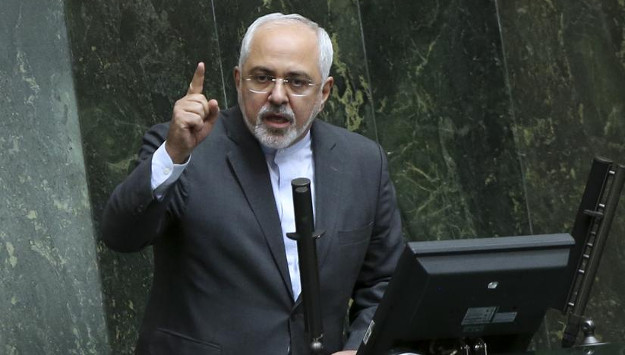
On Friday, Iranian Foreign Minister Javad Zarif held meetings with two African leaders visiting Tehran to attend President Hassan Rouhani’s swearing-in ceremony. In a meeting with Ghana’s Vice President Mahamudu Bawumia, the two leaders discussed ways to boost relations between the two countries, particularly in the fields of energy, banking, and agriculture.
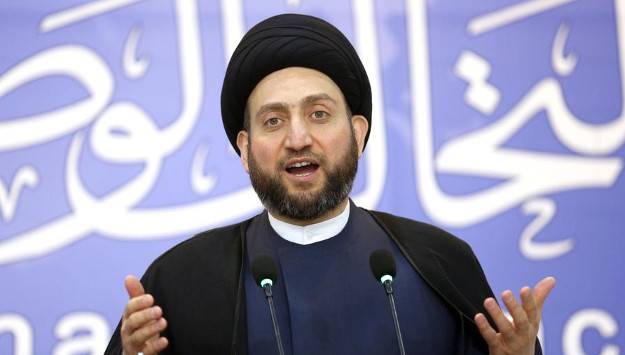
Iraqi Shiite Leader Assures Iran He Won’t Visit Saudi Arabia
A senior Iraqi Shiite leader has rejected reports that he plans to visit Saudi Arabia, telling Iranian journalists that he will only visit the Kingdom if Saudi troops leave Bahrain and Yemen. “Saudi Arabia recently sent a message to me through a mediator asking if I would go to meet this country’s leaders if they invite me. I responded by saying that if their gift to me is leaving Bahrain and ending the killing of Yemen’s innocent people, I will certainly accept. Of course, this request was rejected by them.
A Band of (Muslim) Brothers? Exploring Bahrain’s Role in the Qatar Crisis
The crisis which has engulfed the Gulf Cooperation Council (G.C.C.) states since June 5, 2017, leading to an unprecedented diplomatic and economic blockade of Qatar, has effectively split the Gulf into three camps, fracturing the uneasy yet much-lauded unity of an alliance which has long prided itself on stability and security. This essay offers a possible explanation for Bahrain’s contradictory position regarding the crisis, and considers whether Manama can maintain it.
Iran-Backed Popular Mobilization Forces Preparing for Post-Islamic State Iraq
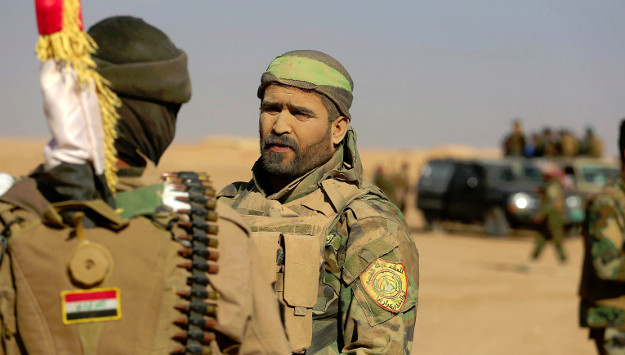
With the fall of Mosul, Iranian-supported Iraqi Popular Mobilization Forces (P.M.F.) is preparing for post-Islamic State Iraq. The paramilitary forces have recently launched a professional public relations campaign on the Internet and social media aimed at justifying and legitimizing P.M.F.’s existence beyond the collapse of the Islamic State. Should the P.M.F. prevail in this effort, it will mark a victory for the Islamic Revolution Guards Corps (I.R.G.C.), which has aided P.M.F. groups for years and sees them crucial for its influence in Iraq in the future.
Khamenei Vows to Continue Missile Activity Defying International Pressure
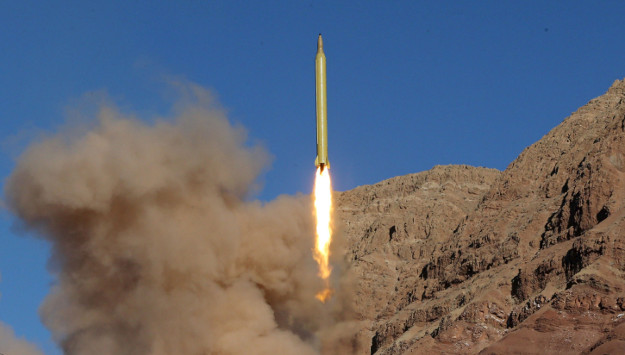
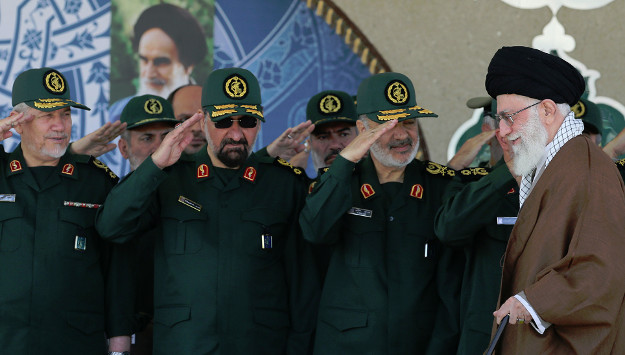
Iran’s Supreme Leader Ali Khamenei today sharply criticized the latest U.S. sanctions and vowed that the Islamic Republic will defy international pressure and continue its missile program. “We send orbital launch vehicles to the space, but suddenly we see that they’ve created uproar over it, throughout the world, while this is merely a scientific and technical activity,” he said at ceremony in which he officially validated President Hassan Rouhani’s reelection.
Iran’s Foreign Ministry Accuses U.S. of Violating Nuclear Deal, Vows Response
Iran’s Foreign Ministry has blasted President Donald Trump for signing a congressional bill that levies new sanctions against Iranian entities associated with the country’s missile program and support for terrorism in the region. “We will not remain silent regarding the breach of J.C.P.O.A. [Joint Comprehensive Plan of Action also known as the Iran nuclear agreement] by America and the government and parliament will soon announce this country’s retaliatory measures,” Foreign Ministry Spokesman Bahram Ghassemi said today.
Iran Counts on E.U. Support If U.S. Decides to Abandon Nuclear Deal
A senior Iranian official said that Tehran will not let the Trump administration to blame Iran if the nuclear deal falls apart. “America is seeking to walk away from the J.C.P.O.A. [Joint Comprehensive Plan of Action also known as the Iran nuclear deal] at the expense of Iran,” warned Ali Shamkhani, the Secretary General of Iran’s Supreme National Security Council.
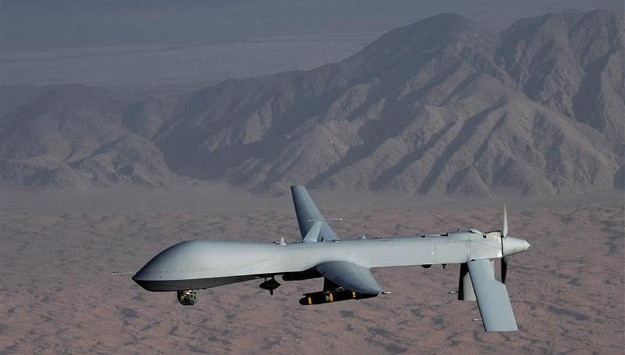
Armed drones are on the edge of widespread proliferation, with China now entering the market and a growing appetite for the lethal weapons in the Middle East. This new development, however, should not become reason for the United States to mimic China’s behavior. Instead, Washington should continue its policy of judicious flexibility in regard to drone sales.
My day job is as a Professor of Israel Studies at the University of Maryland; every fall I teach a large course entitled “Fundamental Questions of the Israeli/Palestinian Conflict.” A few years ago I was lecturing about the 1973 Yom Kippur War and explained that, as I see it, the war was essentially as a draw, in which Egypt and Israel both lost and won.
Iranian General to Tillerson: U.S. Has No Option but to Leave Region
The deputy head of the Iranian Armed Forces has threatened to respond to the latest U.S. “insults” and stressed that the United States has to leave the region. “Insults by American authorities result from their inability to counter the achievements of the resistance front,” Brigadier General Massoud Jazayeri said, referring to Secretary of State Rex Tillerson’s remarks about Iran’s role in destabilizing the region and its support for armed proxy groups.
Competing Iraqi Shiite Militias: Tehran’s Design or Strategic Blunder?
Since the 2003 U.S. invasion, Tehran has encouraged and contributed to the formation of countless Shiite militia groups in Iraq. While most of these armed groups are now formally organized under the umbrella of the Popular Mobilization Forces (P.M.F.), they have in reality remained independent entities and are not controlled by the civilian government in Baghdad.
But has Tehran committed a strategic blunder by fracturing the Iraqi Shiite armed groups or does the existence of competing Shiite Iraqi militias benefit the Islamic Republic?
Iran Vows to Further Empower I.R.G.C. after Trump Signs Sanctions Bill
Hours after President Donald Trump signed a legislation imposing new sanctions on Iran (as well as on Russia and North Korea), the Iranian government announced that it will take “appropriate and proportionate” retaliatory measures, including further empowering the Islamic Revolution Guards Corps (I.R.G.C.) and its elite Quds Force. “The aim of these sanctions is to scare economic firms from dealing with Iran,” said Deputy Foreign Minister Abbas Araghchi. “But Europe will continue economic exchanges with Iran,” he added.
Zarif’s Handshake with Saudi Counterpart Draws Mixed Reactions in Iran
Iranian Foreign Minister Javad Zarif’s handshake and brief conversation with his Saudi counterpart Adel al-Jubeir received mixed reactions inside Iran. While some described their meeting as an encouraging step to improving ties between the two neighbors, others criticized Zarif for seeking friendship with Riyadh. The two top diplomats exchanged diplomatic pleasantries on the sidelines of the Organization of Islamic cooperation (O.I.C.) summit in Istanbul on Tuesday.
The oldest peer-reviewed publication dedicated to the study of the modern Middle East, MEI’s flagship journal covers politics, society, and culture in the region.