Curb Your Enthusiasm: Why the Midterms Might Not Change Much in US Middle East Policy
With less than a week before the midterm elections in the United States, the spotlight is on the economy and cultural divides. US foreign policy remains mostly on the sidelines, but this year’s inconclusive Iran war and its effect on America’s economy have shaped the broader political environment in this electoral cycle.
The Multiple Costs of the US–Iran War – From Hormuz to Europe and South Asia: The Widening Economic and Political Geography of the Conflict
Wars are decided by those who hold military power, but their costs are increasingly borne by those who have little or no voice in the decisions that start them. The US–Iran war shows this imbalance very clearly. Its economic consequences have gone far beyond the battlefield and have disrupted energy markets, trade routes, food supplies, public finances and investment in the Gulf, Europe, Africa and Asia. The most striking feature of the conflict, however, is not only the size of the damage but its very unequal distribution.
In recent weeks, the Iran-backed Houthis have fired missiles and drones deep into Saudi Arabia, striking high-profile targets, including Riyadh’s airport and Aramco’s headquarters. The attacks follow a rapid Houthi offensive in September to seize key parts of Yemen’s Red Sea coast, which Saudi-backed government forces are now trying to roll back. Fatima Abo Alasrar, an affiliated scholar at MEI and non-resident scholar at the Arab Gulf States Institute, joins hosts Alistair Taylor and Matthew Czekaj to unpack the latest phase of the conflict. They discuss what the Houthis want, Riyadh’s calculus and search for allies, and how this campaign ties into Iran’s confrontation with the United States.
Since 1967, Israeli settlements in the West Bank have been a contested feature of the Israeli-Palestinian conflict. The ultimate disposition of the settlements and ongoing activity related to their growth have repeatedly defied agreement in negotiations over a resolution to the conflict.
The Houthis are a political-military faction and Zaydi religious movement founded in northwestern Yemen in the 1980s. A key member of Iran’s Axis of Resistance with links to other militant organizations in the Arabian Peninsula and the Horn of Africa, the group has continued to pose a threat to Western interests on a global scale.
The India-Middle East-Europe Economic Corridor (IMEC) is a proposed multinational infrastructure initiative aimed at upgrading connectivity between the three regions through integrated trade, energy, and digital networks. Announced at the G20 summit in New Delhi in September 2023, IMEC is envisioned partially as a counterweight to China’s international infrastructure project, the Belt and Road Initiative.
After a decade of post-Arab Spring isolation, Turkey’s leaders have recognized that their ambition to position the country as an agenda-setter on the world stage requires active engagement in all directions. President Recep Tayyip Erdoğan’s consolidation of executive authority has centralized foreign policy decision-making and tied it to his domestic political priorities, transforming the country’s revisionist approach to one shaped primarily by personal and pragmatic interests.
MEI Senior Fellow Brian Katulis engages friends, colleagues, and policy experts in casual conversations on the most important happenings in the Middle East.
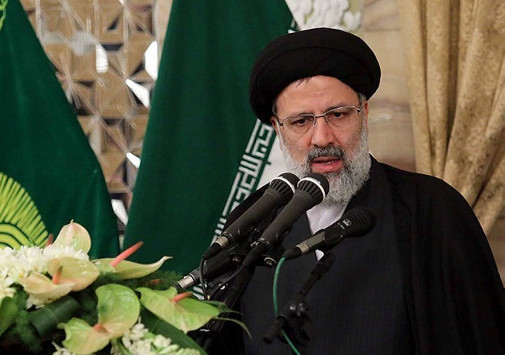
Iranian President Hassan Rouhani’s re-election is in doubt thanks to an unassuming cleric who only recently entered the public spotlight. On April 9, Ebrahim Raisi, a longtime behind-the-scenes operative of the Islamic Republic closely associated with Supreme Leader Ayatollah Ali Khamenei, declared his candidacy in Iran’s May 19 presidential election.
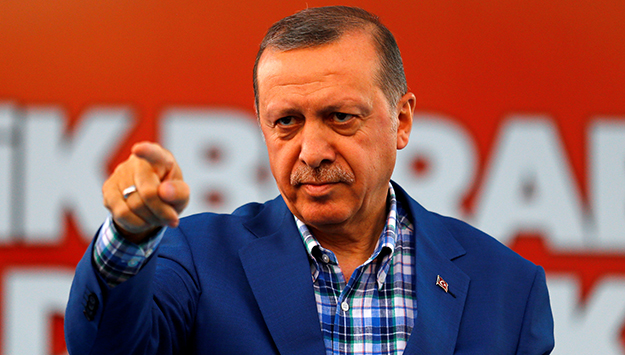
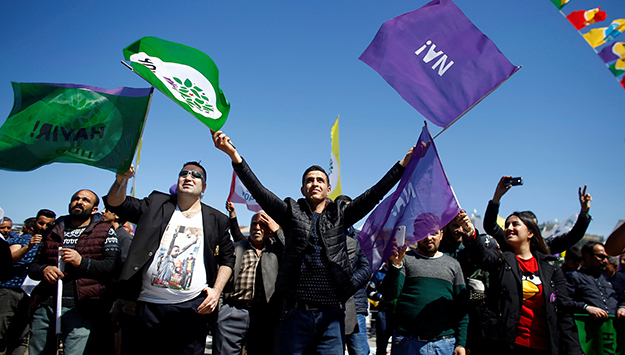
On Sunday, Turks will decide their political fate for decades to come. If President Recep Tayyip Erdogan wins, he will reach a new pinnacle in a remarkable career to solidify his unchallengeable rule in Turkey, and cement his role to rival that of Ataturk in modern Turkish history. He will still not be fully satisfied with a victory, if it comes. He will go on to use the win as a platform for securing an historic legacy to guide the Turkish state for the years ahead.
U.S. Treasury’s Latest Human Rights Sanctions Anger Tehran
Iran’s Foreign Ministry has reacted angrily to the latest U.S. sanctions on the Tehran Prisons Organization and a top Iranian official for human rights abuses in the country.
Iran and Russia Reaffirm Support for Damascus in Defiance of U.S. Warnings
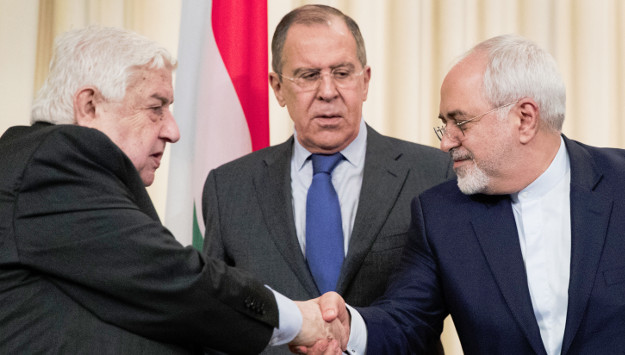
Foreign ministers of Iran, Syria and Russia warned the United States against further military strikes in Syria and reiterated support for the government of Bashar al-Assad in a trilateral meeting in Moscow on Friday, the Iranian media reports.
Voices from Turkey: What Locals Think of the Referendum
On April 16, Turkish citizens will head to the polls to vote in a landmark referendum on the proposed constitutional changes that, if passed, will transition the country from a parliamentary system to a presidential one. This referendum is the pinnacle of an election cycle that has been in motion since 2014, and has left the country increasingly polarized.
Hezbollah, the Lebanese Sectarian State, and Sectarianism
This essay discusses Hezbollah’s gradual acceptance of Lebanon’s sectarian political system, the means by which it has achieved hegemony over Lebanon’s Shiite population, and how its intervention in Syria has accentuated sectarianism and Sunni-Shiite tensions in Lebanon.
Iran-Controlled Militia Groups Playing Key Role in Operations in Mosul, Kirkuk
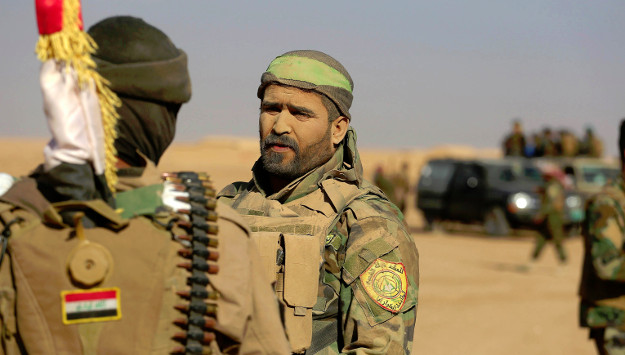
The spokesman of Iraq’s Popular Mobilization Forces (P.M.F.) reiterated today that its forces will play a leading role in military operations in the Iraqi provinces of Nineveh and Kirkuk – particularly in the strategic city of Tal Afar in western Mosul. “The Popular Mobilization Forces have a commanding and extensive presence and participation in operational zones in Nineveh Province,” P.M.F.
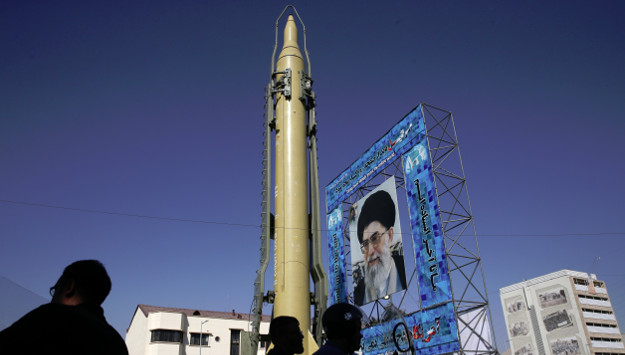
The commander of Iran’s Army Ground Forces has announced an increase in the number and range of drones used during the Ground Forces’ operations across the country.
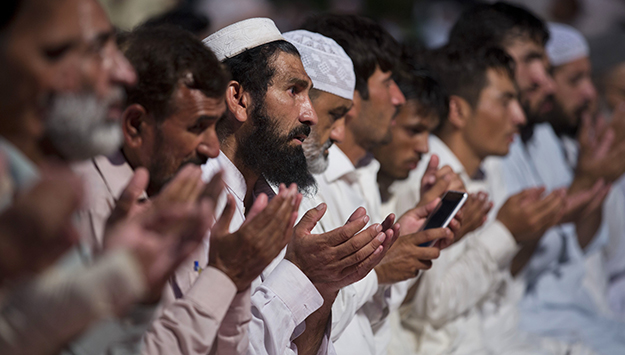
Islamist Terrorism in Pakistan: New Alignments, New Tactics
Much has been written on the evolution of Islamist terrorism in Pakistan, the role of military dictatorships in nurturing Islamist terrorist groups, and Islamist parties and proselytizing groups working hand in glove with terrorists. Al-Qaeda and the Afghan Taliban were born in Pakistan, in addition to the country’s own long list of local terrorist groups such as the multi-faceted Tehreek-e-Taliban Pakistan (T.T.P.). Pakistan is now going through a new phase of Islamist militancy, with new alignments and the adoption of new tactics by jihadists.
Iran’s Army Set to Launch Production Line for Four New Military Products
A top Iranian military commander has announced that the country’s Army Ground Force will commence the production lines of four “strategic” military products in the current Iranian year, wh
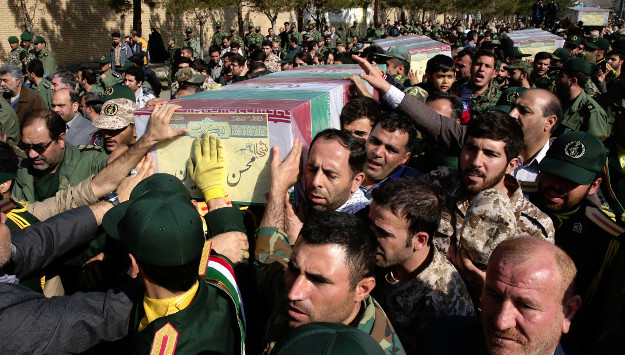
Two More I.R.G.C. Members Killed in Iran’s Volatile Southeast
Unidentified gunmen killed two members of the Islamic Revolution Guards Corps (I.R.G.C.) during a military operation on Wednesday in Zahedan, the capital of Iran’s southeastern province of Sistan and Baluchestan, the
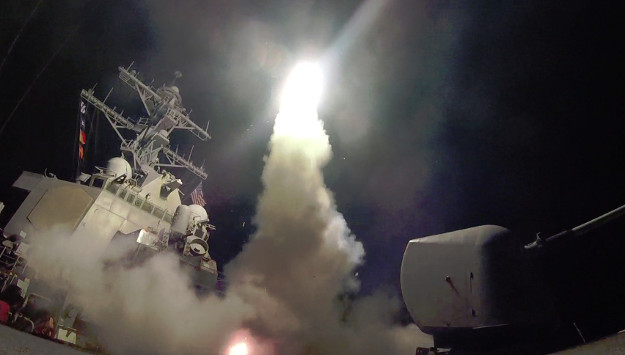
President Donald Trump’s decision last week to militarily punish the regime of Bashar al Assad for using chemical weapons caught Syria’s closest ally Iran by surprise. Political and military leaders in Tehran are still uncertain whether the U.S. strikes were a one-time mission or represented a sea change in Washington’s policy in Syria. The Islamic Republic hopes it was the former, but there is a growing concern in Tehran that it may be the beginning of concerted efforts by Washington and its regional Sunni allies to topple Iran’s ally in Damascus.
The oldest peer-reviewed publication dedicated to the study of the modern Middle East, MEI’s flagship journal covers politics, society, and culture in the region.