Recent Elections and What They May Mean for the Middle East
Recent elections for the Israeli Knesset and American Congress may make less of a difference in the Middle East than some people think. Elections are significant indicators of national political trends, but do not always translate into changes in national security strategies. That is likely the case now in both nations.
The Coming Debate Over the US Military Presence in the Gulf
The war with Iran is hardly over, but the debate over the shape and nature of the post-conflict American posture in the Gulf region is just beginning. Undoubtedly, how the war ends will affect how the United States adjusts its role. While this debate is still in its early stages, something of a conventional wisdom is already developing in policy circles that could seriously compromise American influence in the Middle East.
This report explores maritime security conditions in the Mediterranean and the evolving US engagement in the region. As critical infrastructure becomes increasingly vulnerable to sabotage, freedom of navigation is undermined by conflict, and energy disputes generate tension, US policy focus on the region has become fragmented and disengaged. The authors call for a sustained American role to strengthen maritime domain awareness, allied coordination, infrastructure protection, and the capacity to respond when Mediterranean crises affect US and transatlantic interests.
Since 1967, Israeli settlements in the West Bank have been a contested feature of the Israeli-Palestinian conflict. The ultimate disposition of the settlements and ongoing activity related to their growth have repeatedly defied agreement in negotiations over a resolution to the conflict.
The Houthis are a political-military faction and Zaydi religious movement founded in northwestern Yemen in the 1980s. A key member of Iran’s Axis of Resistance with links to other militant organizations in the Arabian Peninsula and the Horn of Africa, the group has continued to pose a threat to Western interests on a global scale.
The India-Middle East-Europe Economic Corridor (IMEC) is a proposed multinational infrastructure initiative aimed at upgrading connectivity between the three regions through integrated trade, energy, and digital networks. Announced at the G20 summit in New Delhi in September 2023, IMEC is envisioned partially as a counterweight to China’s international infrastructure project, the Belt and Road Initiative.
After a decade of post-Arab Spring isolation, Turkey’s leaders have recognized that their ambition to position the country as an agenda-setter on the world stage requires active engagement in all directions. President Recep Tayyip Erdoğan’s consolidation of executive authority has centralized foreign policy decision-making and tied it to his domestic political priorities, transforming the country’s revisionist approach to one shaped primarily by personal and pragmatic interests.
MEI Senior Fellow Brian Katulis engages friends, colleagues, and policy experts in casual conversations on the most important happenings in the Middle East.
The following represents findings from an MEI delegation trip to Egypt that took place between October 5 and 9. The delegation met with government, civil society, youth and business leaders, and heard a variety of views on the country’s challenges. What follows is a presentation of the views we heard, not an MEI assessment.
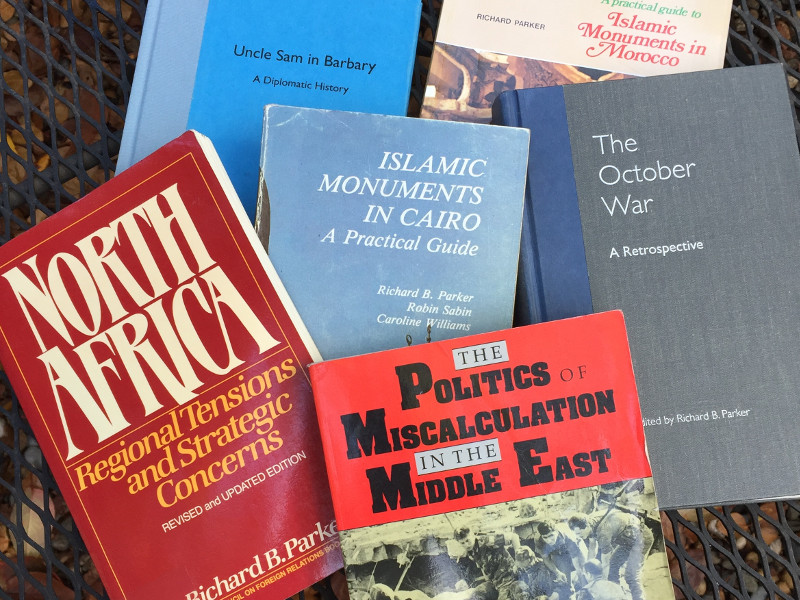
Only a few authors have works that can be found on both floors of the Oman Library at The Middle East Institute, and fewer still that have a personal connection to both the institute and the history of the region. The late Ambassador Richard B. Parker can claim this status, having served 31 years in the Foreign Service and as the third editor of The Middle East Journal. He was also a longtime MEI scholar-in-residence.
This essay explores what Hezbollah seek to accomplish through its intervention in Syria, how it views the conflict in Syria, the outcome it desires, and the possible adverse impact of Hezbollah’s involvement in Syria upon its popularity and mobilization in Lebanon.
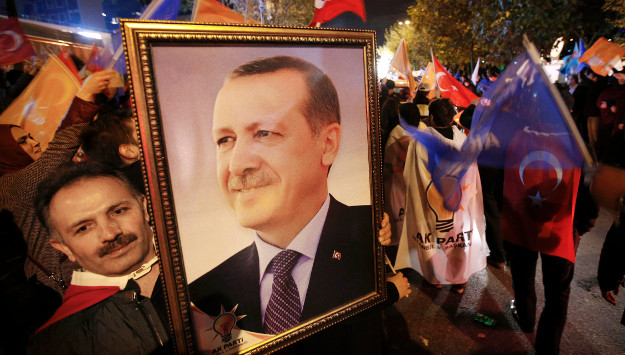
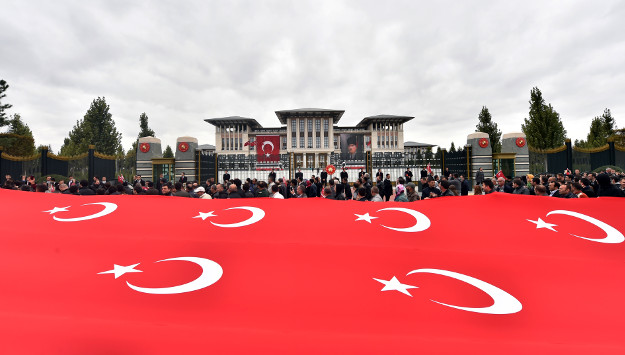
In a stunning electoral comeback that has surprised everyone, including its own legislators, Turkey’s ruling Justice and Development Party (AKP) captured almost 50 percent of the votes, but well over 50 percent of parliamentary seats, in Sunday’s elections. There are many lingering questions. Considering that even the pro-government pollsters did not foresee such a victory, many have asked whether the elections were free and fair. If so, how did the AKP manage to reverse its electoral fortunes in just five months in a country that has been mired in chaos and violence during that time?
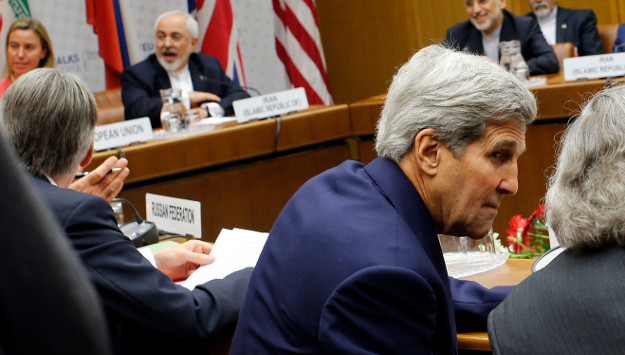
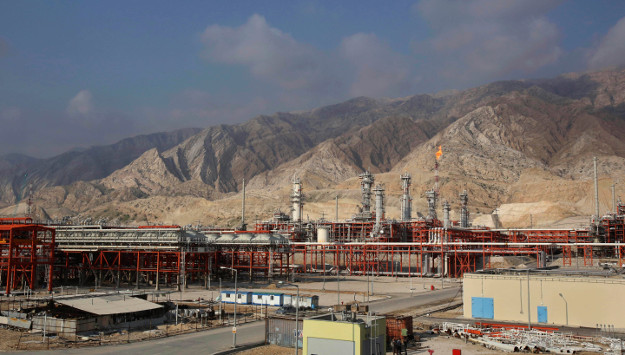
Critics of the July 14 nuclear deal with Iran railed against it on the grounds that it would embolden what they argue is Tehran’s destabilizing behavior in the Middle East. The reasoning goes like this: lifting sanctions gives Iran access to tens of billions of dollars that will flow to fund disruptive activities and lets Iran freely pursue its regional ambitions without fear of reprisals.
The Turkish electorate is going to the polls on Sunday for the second time in just over five months. After 13 years in power, the ruling Justice and Development Party (AKP) failed to secure enough votes in June to form a majority government. In the hope another vote could deliver a parliamentary majority to his party, President Recep Tayyip Erdogan called for snap elections. But polls indicate that Erdogan might not get what he wants.
A Message to Vienna: Build a Framework, but Leave the Details to Syrians
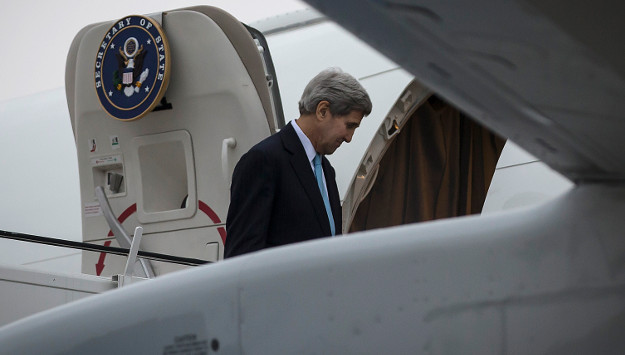
As Secretary of State John Kerry seeks to launch a new peace effort on Syria, he needs to be careful about the goals he sets and the language he uses. Getting the fundamentals wrong at the outset might scuttle the process or could ensure that whatever deal results will crumble under pressure. It will then lead to more warfare and a worsening of the refugee crisis. Moreover, it would preclude us from securing our strategic goal of mobilizing more Syrians to contain and eventually expel terrorists from Syria.
Dateline Egypt: Roadmaps, Refinancing, and Regional Roles
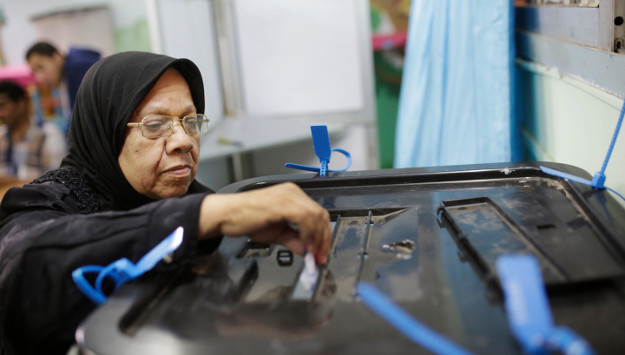
In the past ten days Egypt held a first round of parliamentary elections, announced renewed loan talks with the IMF, experienced new clashes with militants in the Sinai, and joined multinational talks to end the war in Syria. These headlines provide current glimpses into the country’s complex and challenging political, economic and security trajectories.
Toward a Political Theory of Sectarianism in the Middle East: The Salience of Authoritarianism over Theology
Sunni-Shi’i relations have not always been conflict-ridden nor was sectarianism a strong political force in modern Muslim politics until relatively recently. What factors contributed to this change? In this essay, the author argues that the national context is essential for understanding sectarian conflict in the Middle East today.
President Barack Obama has notoriously disparaged the moderate opposition as “farmers or dentists or maybe some radio reporters who didn’t have a lot of experience fighting.” The key question about the Syrian opposition is not whether it can fight — in fact many of its cadres are former Syrian army soldiers — but whether it can govern.
Arab Civil Society after the Arab Spring: Weaker but Deeper
Formal organizations can be easily studied, but they alone will not bring about democratization: the conceptual history of civil society scholarship in the Middle East is testament to this. We must instead peer into hidden spaces of resistance not captured by the formal sector.
A recent United Nations report warned that the Gaza Strip might become “uninhabitable” by 2020 for its 1.8 million residents.[1] Serious changes must be implemented as soon as possible to reverse the coastal enclave’s de-development.
Civil Society in Southeast Asia: Not All It’s Cracked Up to Be
In Southeast Asia, civil society arrived early and has mostly remained buoyant. But the region is complex, diverse, and highly dynamic, ensuring that civil society’s motivations and trajectories have been too. Despite the many democratic transitions in Southeast Asia, civil society’s performance has since been inconsistent. Some civil society organizations and social movements, then, have behaved in ways that have prevented new democracies from gaining in quality—or have even contributed to authoritarian reversals.
The oldest peer-reviewed publication dedicated to the study of the modern Middle East, MEI’s flagship journal covers politics, society, and culture in the region.