Recent Elections and What They May Mean for the Middle East
Recent elections for the Israeli Knesset and American Congress may make less of a difference in the Middle East than some people think. Elections are significant indicators of national political trends, but do not always translate into changes in national security strategies. That is likely the case now in both nations.
The Coming Debate Over the US Military Presence in the Gulf
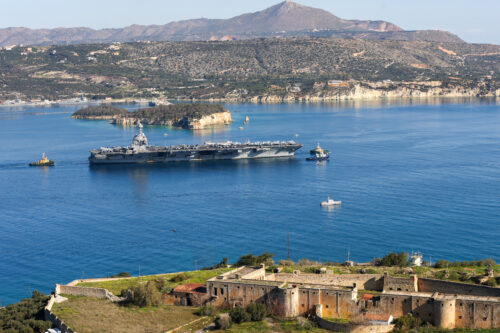
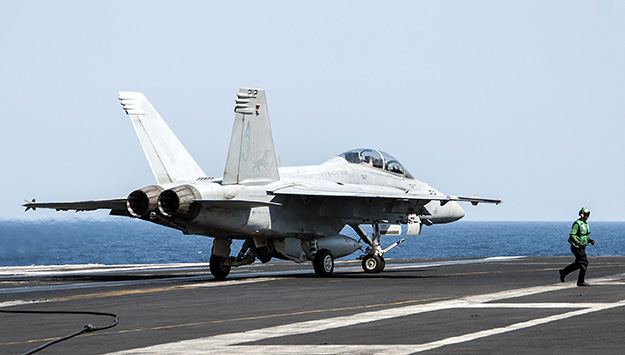
The war with Iran is hardly over, but the debate over the shape and nature of the post-conflict American posture in the Gulf region is just beginning. Undoubtedly, how the war ends will affect how the United States adjusts its role. While this debate is still in its early stages, something of a conventional wisdom is already developing in policy circles that could seriously compromise American influence in the Middle East.
This report explores maritime security conditions in the Mediterranean and the evolving US engagement in the region. As critical infrastructure becomes increasingly vulnerable to sabotage, freedom of navigation is undermined by conflict, and energy disputes generate tension, US policy focus on the region has become fragmented and disengaged. The authors call for a sustained American role to strengthen maritime domain awareness, allied coordination, infrastructure protection, and the capacity to respond when Mediterranean crises affect US and transatlantic interests.
Since 1967, Israeli settlements in the West Bank have been a contested feature of the Israeli-Palestinian conflict. The ultimate disposition of the settlements and ongoing activity related to their growth have repeatedly defied agreement in negotiations over a resolution to the conflict.
The Houthis are a political-military faction and Zaydi religious movement founded in northwestern Yemen in the 1980s. A key member of Iran’s Axis of Resistance with links to other militant organizations in the Arabian Peninsula and the Horn of Africa, the group has continued to pose a threat to Western interests on a global scale.
The India-Middle East-Europe Economic Corridor (IMEC) is a proposed multinational infrastructure initiative aimed at upgrading connectivity between the three regions through integrated trade, energy, and digital networks. Announced at the G20 summit in New Delhi in September 2023, IMEC is envisioned partially as a counterweight to China’s international infrastructure project, the Belt and Road Initiative.
After a decade of post-Arab Spring isolation, Turkey’s leaders have recognized that their ambition to position the country as an agenda-setter on the world stage requires active engagement in all directions. President Recep Tayyip Erdoğan’s consolidation of executive authority has centralized foreign policy decision-making and tied it to his domestic political priorities, transforming the country’s revisionist approach to one shaped primarily by personal and pragmatic interests.
MEI Senior Fellow Brian Katulis engages friends, colleagues, and policy experts in casual conversations on the most important happenings in the Middle East.
Renewable energy accounts for an ever-growing share of worldwide electricity generation capacity. Solar power, in particular, is on the rise globally. Indeed, within a decade solar power could become the most inexpensive source of electricity in many regions, including in the Middle East and North Africa (MENA). This essay examines the growth trajectory of solar energy in the MENA region and its relationship to developments in Asian, notably Chinese and Japanese, solar markets.
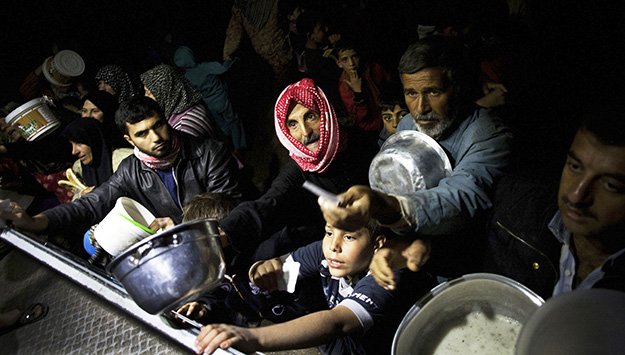
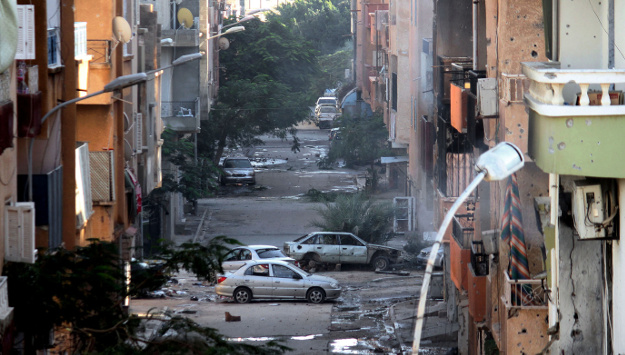
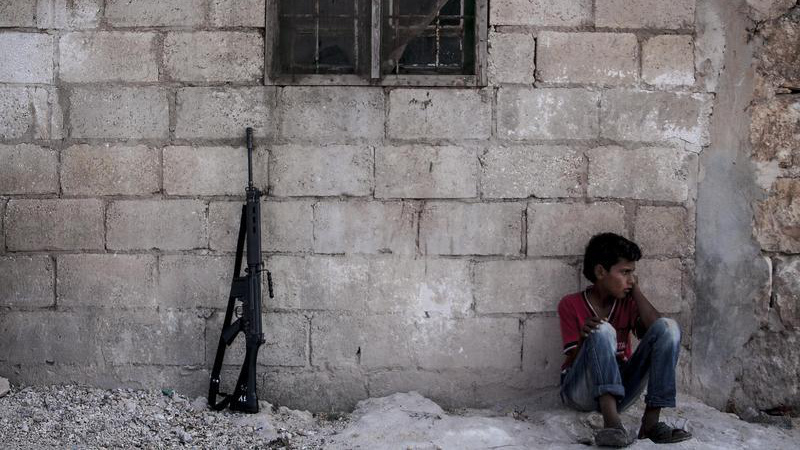
Despite the barrel bombs and chlorine gas, despite the threat from extremists—both religious and political—and despite the punishing dearth of resources, Syrian civil society continues to provide and protect. Though relatively little is written about it, Syrian civil society is remarkably active.
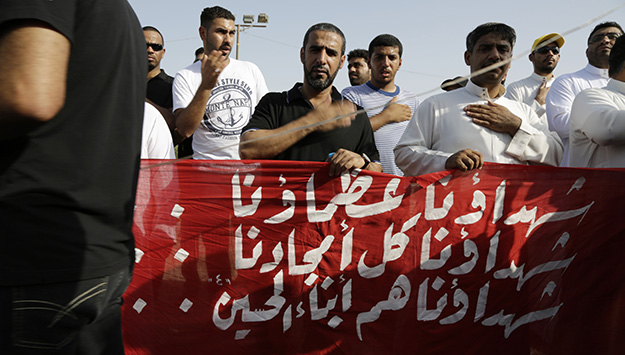
Saudi Arabia is a Sunni-majority state and home to a significant Shi‘i minority, most of whom live in the Eastern Province. The Shi‘a there are mainly of the Twelver sect, which is also the major Shi‘i sect in Iran, Iraq, Kuwait, and Bahrain. The Eastern Province Twelvers are not the only Shi‘a in Saudi Arabia—there are sizable communities of Twelvers in Medina and Isma‘ilis in Najran—but it is they who sit at the center of the Shi‘i political movement in the kingdom.
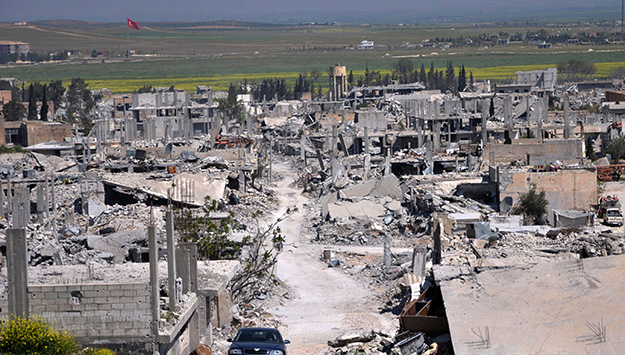
After more than four years of war, former U.S. Ambassador to Syria Robert Ford sees a fragmented country emerging, with six or more fluid and shifting zones of control:
**An Alawi/Hezbollah-controlled area along the Lebanese border and the Mediterranean coast, backed by Iran and Russia;
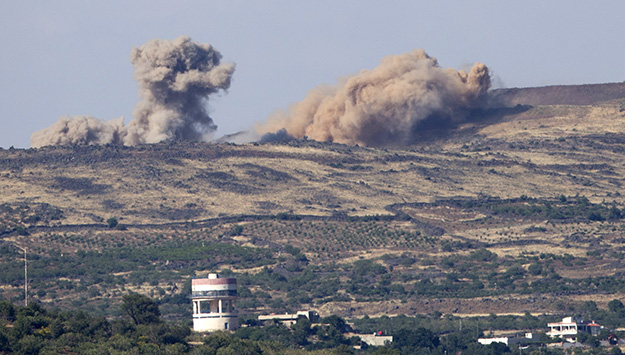
On June 22, members of the Druse minority in the Israeli town of Hurfeish threw rocks at an ambulance believed to be transporting wounded Syrian Jabhat al-Nusra rebels to medical care in Israel. The following day, a similar incident in the occupied Golan Heights resulted in the killing of one wounded rebel, also of Nusra.
Wringing Our Hands and Endless Bombing Won’t Help Us in Syria
Three months ago CIA Director John Brennan told a Congressional panel that the administration fears the fall of the Assad government in Damascus, as it could lead to “Islamist extremists, including the Islamic State, Jabhat al-Nusra, and al-Qa‘ida elements within Syria to seize power from a collapsed regime.” I heard similar fears during a Congressional hearing I attended June 17.
This article surveys and critically evaluates sectarian conflicts and trends in Balochistan during the War on Terror, concentrating primarily on the predominantly Shi‘i Hazara community based in Quetta.
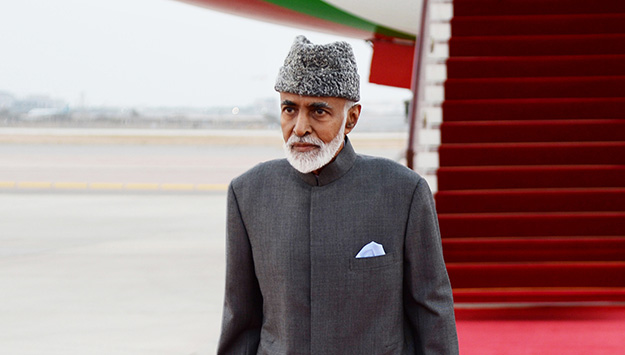
Oman’s government has declined to participate in the current Saudi-led military effort in Yemen. Instead, the country’s ruler, Sultan Qaboos, has called for “non-interference.” This position is an argument for internal political compromise that will eliminate the perceived need for Arab military intervention. To that end, Oman is offering a venue for talks with the hope of moving the political discussion forward.
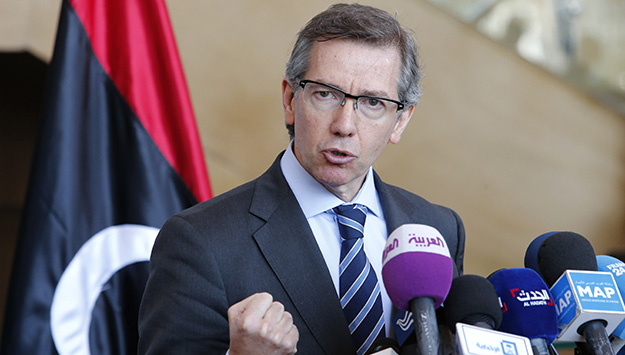
The United Nations has played a critical role in Libya’s modern political history, starting with a stewardship process that led to independence in 1951. It prepared a partial stabilization plan after the 2011 NATO intervention, which unfortunately was not imposed as a precondition for that intervention, and established an essential humanitarian channel to the outside world following the revolution. But for the last months, UN attempts to broker a unity government via its Libya envoy, Bernardino León, have worked against this legacy.
In the unending panorama of violence that is today’s Middle East, one hopeful note emerged earlier this month with a low-key announcement from Saudi Arabia that drew scant attention from the American news media.
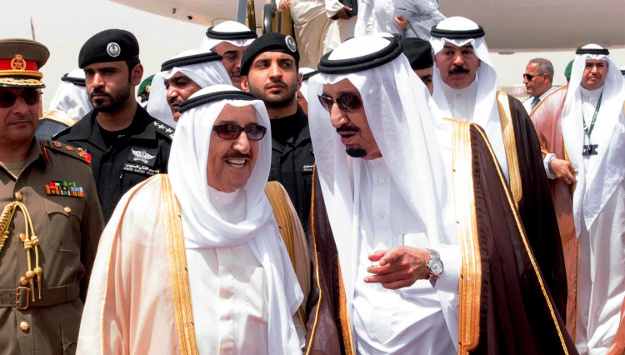
King Salman appointed a military officer, Gen. Thamer al-Sabhan, to be the kingdom’s first resident ambassador in Baghdad since Iraq invaded Kuwait in 1990.
The terrorist group known as the Islamic State (ISIS) has its eyes set on Saudi Arabia. Months of threatening to conquer “The Land of the Two Holy Mosques” culminated in an audio message in mid-May delivered by the leader of the group, Abu Bakr al-Baghdadi, in which he referred to Saudi Arabia’s government as “apostate leaders.” Since then ISIS has begun carrying out terrorist attacks inside the Kingdom. Two weeks in a row, individuals affiliated with ISIS have conducted suicide attacks against mosques in the Eastern Province, where the majority of Saudi Shi’a live.
Addressing Worldwide Flood Concerns: Empowering Local Communities
This essay focuses on the role of local communities during the recovery stage from floods. By drawing on a case study of rural communities in Laos, the essay highlights the potential benefits of equipping local communities with long-term practices that will assist them in recovery efforts. The essay concludes with a discussion of the lessons and insights gained from this case and that they could be applied in other countries to improve flood resiliency.
Deradicalization Programs and Counterterrorism: A Perspective on the Challenges and Benefits
This paper is part of a series, titled “Understanding Deradicalization: Pathway to Enhance Transatlantic Common Perception and Practices.” Click here to view the full series, or navigate using the table of contents to the right.
Understanding Deradicalization: Pathways to Enhance Transatlantic Common Perceptions and Practices
The Middle East Institute and the Fondation pour la Recherche Stratégique (Paris, France), with support from the European Union, undertook the project entitled “Understanding Deradicalization: Pathways to Enhance Transatlantic Common Perceptions and Practices.” The goal of this project is to compare and analyze transatlantic practices in developing and implementing preventative interventions to minimize violence and the spread of radicalized and violent groups.
The oldest peer-reviewed publication dedicated to the study of the modern Middle East, MEI’s flagship journal covers politics, society, and culture in the region.