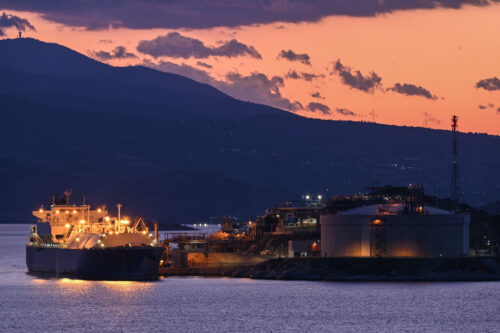
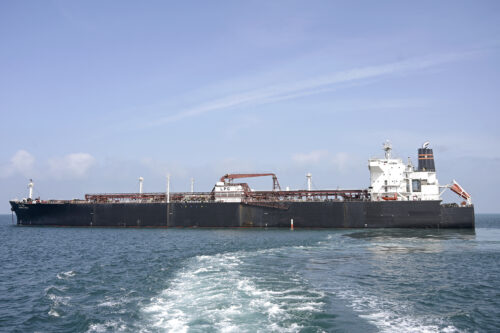
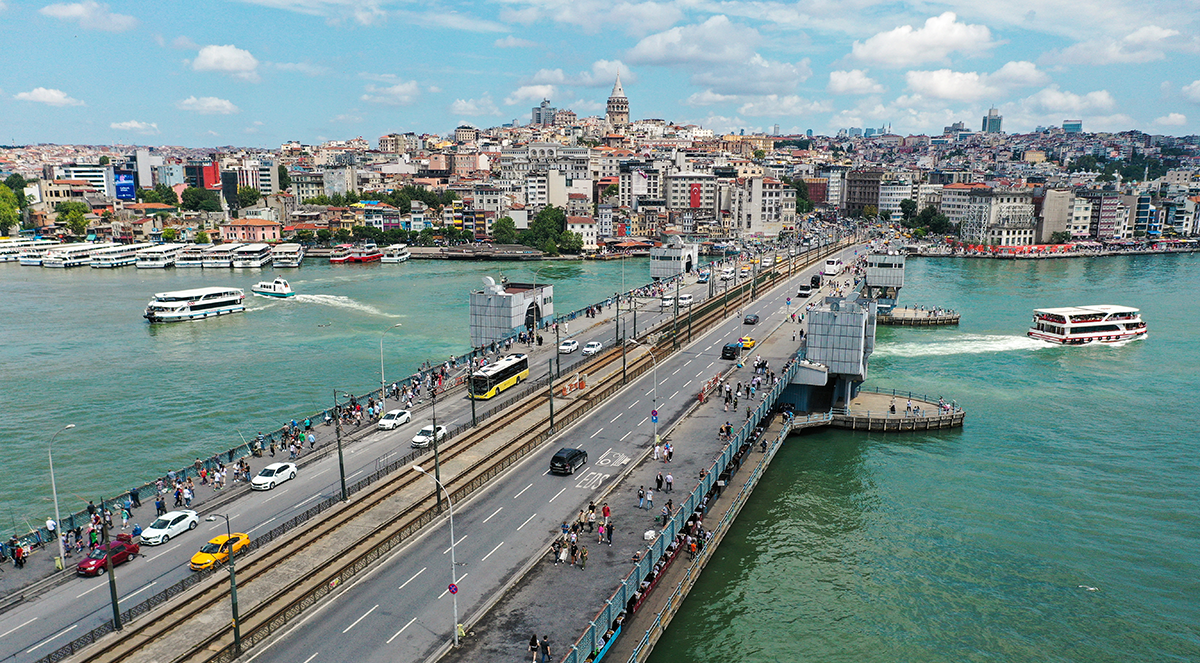
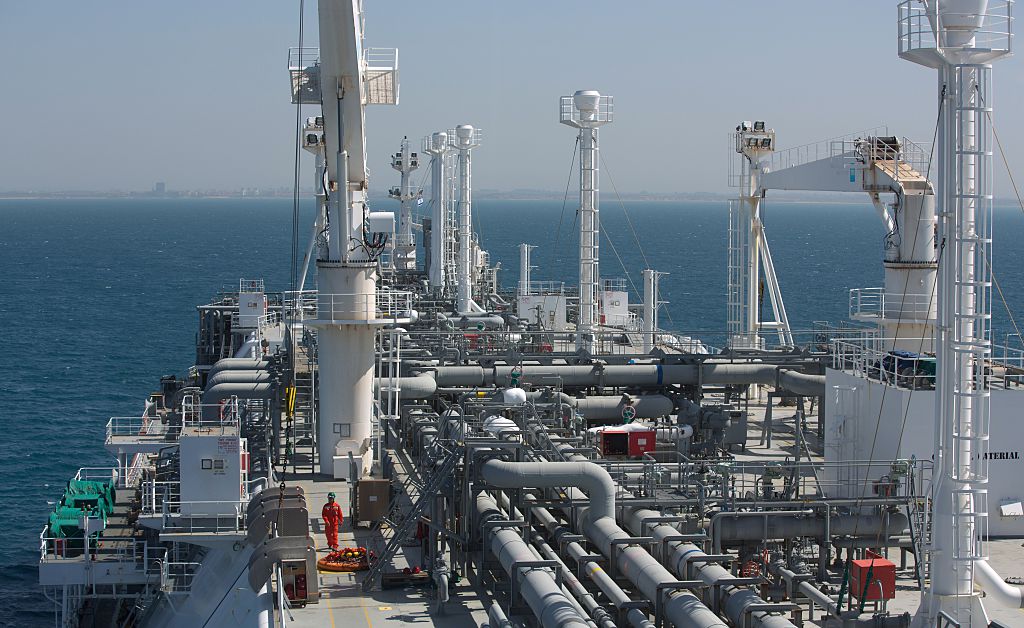
In less than two decades, a string of offshore discoveries has turned the Eastern Mediterranean into a significant gas-producing region, making Israel an exporter, twice lifting Egypt into the ranks of liquefied natural gas (LNG) exporters, and giving Cyprus finds it has yet to bring to market. This backgrounder explores the potential and challenges of exploiting and managing LNG resources in the region.
Deadlock in Gaza and the West Bank at a Breaking Point
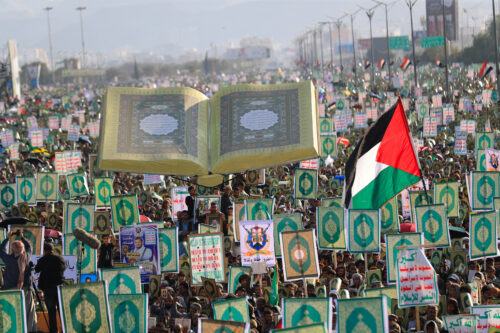
A year after world leaders gathered in Sharm el-Sheikh to mark the end of the war in Gaza, Israel controls about 70% of the Strip, Hamas retains its arms, and reconstruction has yet to begin. Meanwhile, in the West Bank, record settler violence and settlement expansion are colliding with a Palestinian Authority on the brink of fiscal collapse. Hosts Alistair Taylor and Matthew Czekaj are joined by MEI Associate Fellow Tahani Mustafa to discuss why the Gaza peace plan is deadlocked, an increasingly emboldened Israel in the West Bank, Mahmoud Abbas’s postponement of Palestinian elections, the Palestinian Authority’s deepening economic crisis, and what role the US could play.
MINURSO’s Future: What the Security Council’s Choice May Reveal
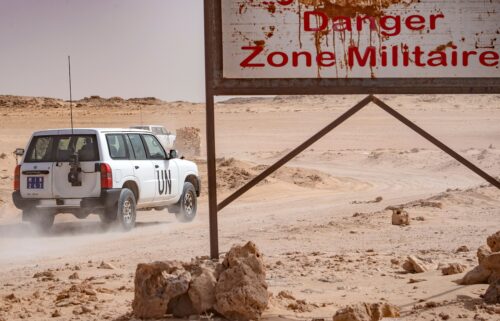
As the United Nations Security Council (UNSC) approaches the October 31 renewal deadline of the UN Monitoring Mission in Western Sahara (MINURSO), the mission’s longer-term future remains uncertain. Another largely unchanged renewal remains a likely immediate outcome. But beyond that holding pattern, three possible scenarios are also on the table.
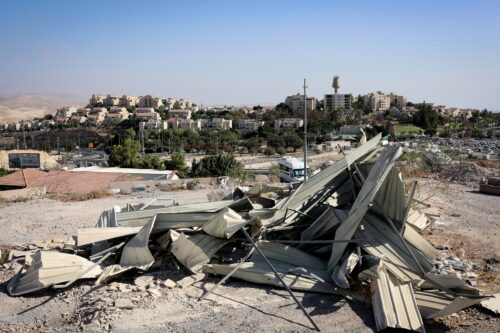
Since 1967, Israeli settlements in the West Bank have been a contested feature of the Israeli-Palestinian conflict. The ultimate disposition of the settlements and ongoing activity related to their growth have repeatedly defied agreement in negotiations over a resolution to the conflict.
The Houthis are a political-military faction and Zaydi religious movement founded in northwestern Yemen in the 1980s. A key member of Iran’s Axis of Resistance with links to other militant organizations in the Arabian Peninsula and the Horn of Africa, the group has continued to pose a threat to Western interests on a global scale.
The India-Middle East-Europe Economic Corridor (IMEC) is a proposed multinational infrastructure initiative aimed at upgrading connectivity between the three regions through integrated trade, energy, and digital networks. Announced at the G20 summit in New Delhi in September 2023, IMEC is envisioned partially as a counterweight to China’s international infrastructure project, the Belt and Road Initiative.
After a decade of post-Arab Spring isolation, Turkey’s leaders have recognized that their ambition to position the country as an agenda-setter on the world stage requires active engagement in all directions. President Recep Tayyip Erdoğan’s consolidation of executive authority has centralized foreign policy decision-making and tied it to his domestic political priorities, transforming the country’s revisionist approach to one shaped primarily by personal and pragmatic interests.
MEI Senior Fellow Brian Katulis engages friends, colleagues, and policy experts in casual conversations on the most important happenings in the Middle East.
During two days of meetings in May 2022, members of the Middle East Dialogue, convened by MEI, met in Istanbul, Turkey to discuss pressing issues relating to: i) the effects of the war in Ukraine on the MENA region; ii) current and future projections regarding Gulf relations with Iran, amid the stalemate over a revival of the 2015 JCPOA; iii) the future pathways and security framework for the MENA region; and iv) the Baghdad Declaration of Good Neighborhood Principles for the Middle East. This meeting brought together policymakers, academics, and experts from across the MENA region. This report provides an analytical understanding of the issues discussed and recommendations shared during the meeting.
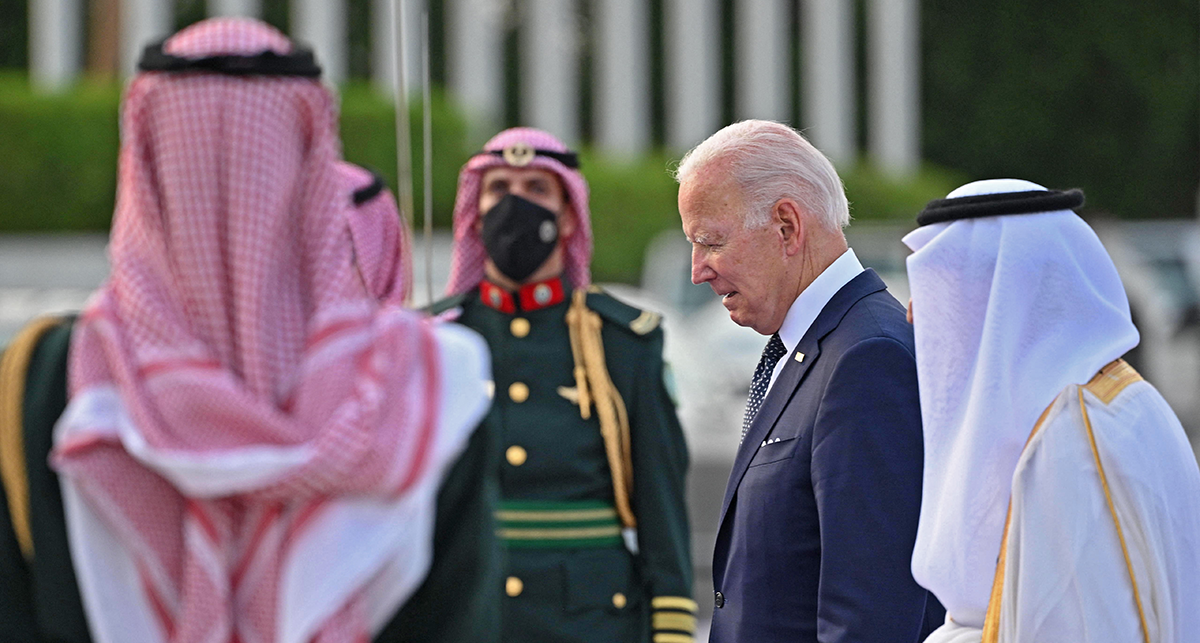
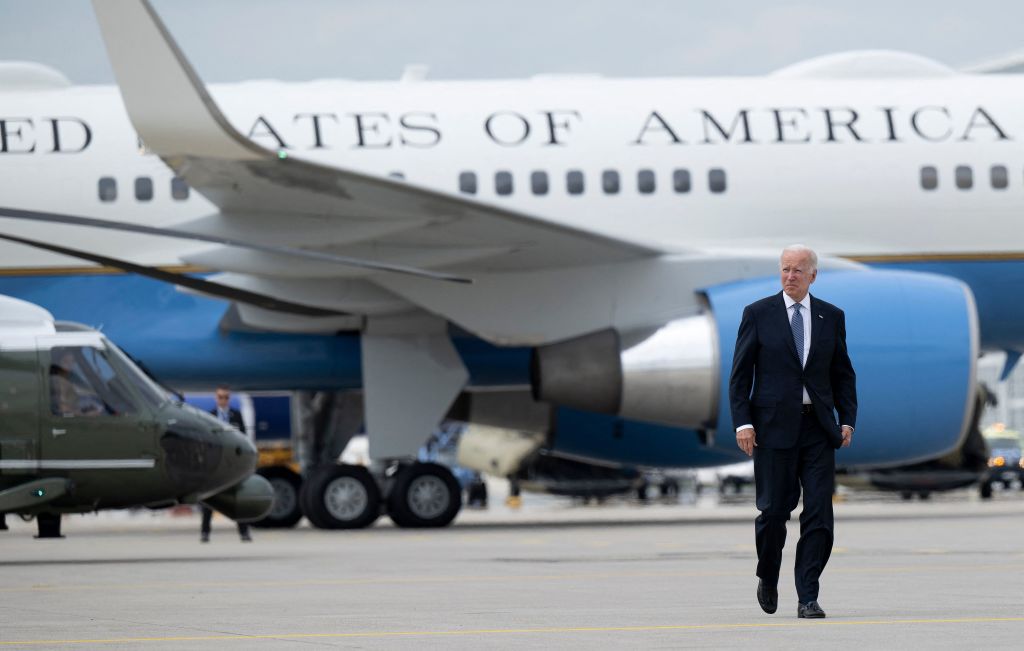
As Biden and Mideast leaders meet in Jeddah, human security should be urgently on the agenda
As President Joe Biden and several Gulf and Middle East leaders meet in Jeddah, they will be discussing global energy markets, regional security, countering Iran, and building on the Abraham Accords. But in the wake of the COVID-19 pandemic, and as the Russian war on Ukraine reverberates, half of the countries in the region, and tens of millions of people, are facing desperately worsening socio-economic conditions. If the summit seeks to work toward a more stable Middle East, the U.S. and Gulf leaders should agree on a sustained effort to use part of the region’s windfall from high energy prices to support vulnerable states and societies that are at risk of serious unraveling and instability.
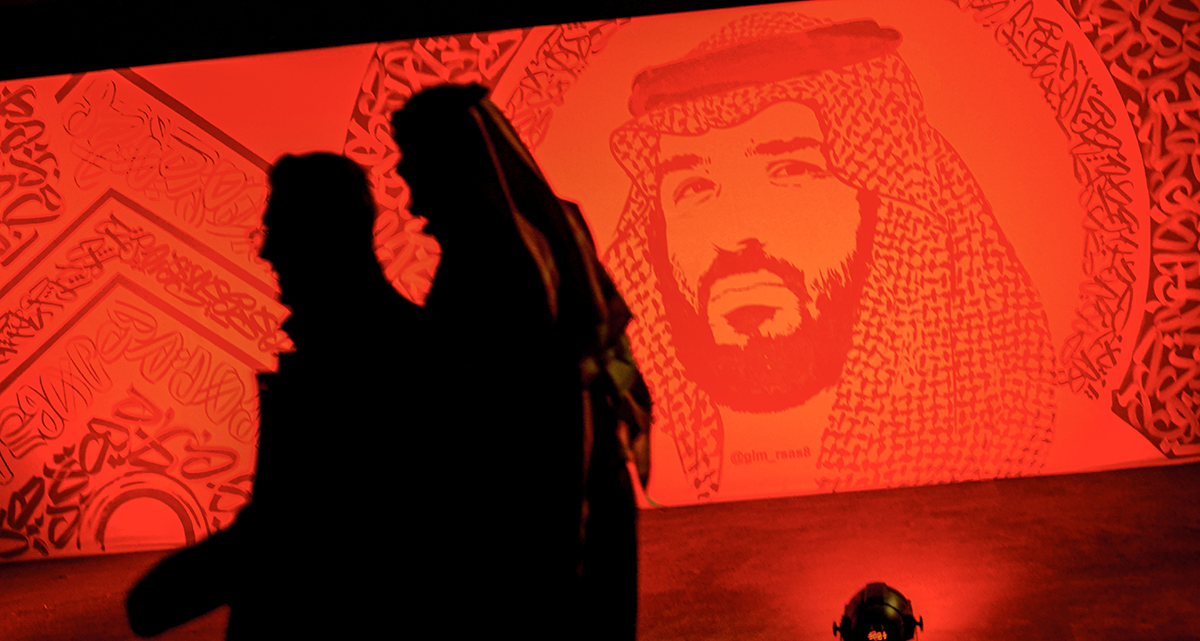
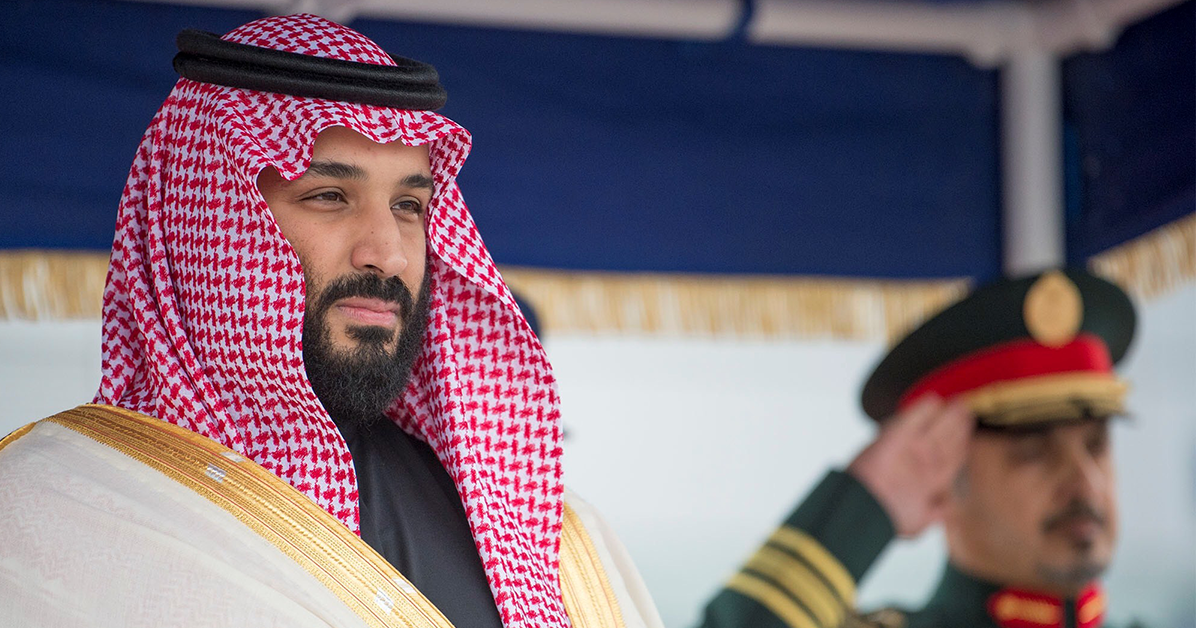
Crown Prince Mohammed bin Salman has surrounded himself with those who would indulge him and pose little threat. His circle comprises younger, less experienced but presumably loyal princes in key ministerial positions as well as a few select, savvy, experienced older half-brothers and uncles loyal to his father. There are also several notable royal holdovers from smaller family branches, the odd competent technocrat, and a cadre of minions from across the military and security agencies.
Urban pollution across the Middle East and Black Sea regions: Causes and mitigation measures
The latest IPCC reports clearly indicate that cities — responsible for up to 72% of global emissions — need to be redesigned to stand a chance against the climate crisis. The urban communities of the Middle East and Black Sea regions face some of the most difficult climate change effects. To properly address their challenges, a comprehensive analysis of drivers and strategies to follow is needed.
Despite U.S. President Joe Biden’s meandering efforts to explain his about-face on Saudi Arabia—visiting the country this week after having dubbed it a “pariah” on the campaign trail—there remains much apprehension about his trip on both ends of the political spectrum. Progressives and human rights advocates worry the president will sacrifice U.S. values for short-term Faustian bargains in an attempt to secure cheap oil and expand Arab-Israeli normalization. Republicans and realists, who favor an interest-driven approach to foreign policy, aren’t sure there is enough to be gained by Washington on these fronts to justify a presidential visit.
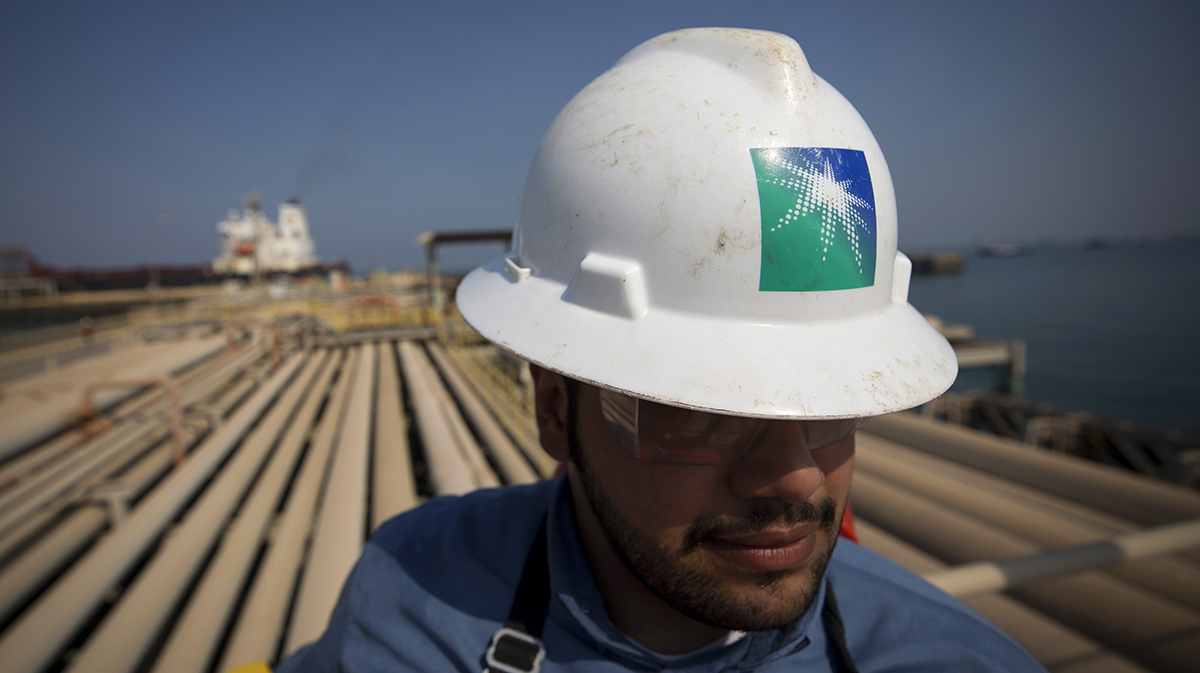
Industry analysts widely agree that OPEC+ production levels are currently well below the members’ authorized quotas and that any production increases will mainly be met by Saudi Arabia and the UAE. The challenges facing the group are daunting, but if met, seven major OPEC countries could feasibly raise crude oil production while utilizing existing infrastructure, significantly narrowing the global demand-supply gap.
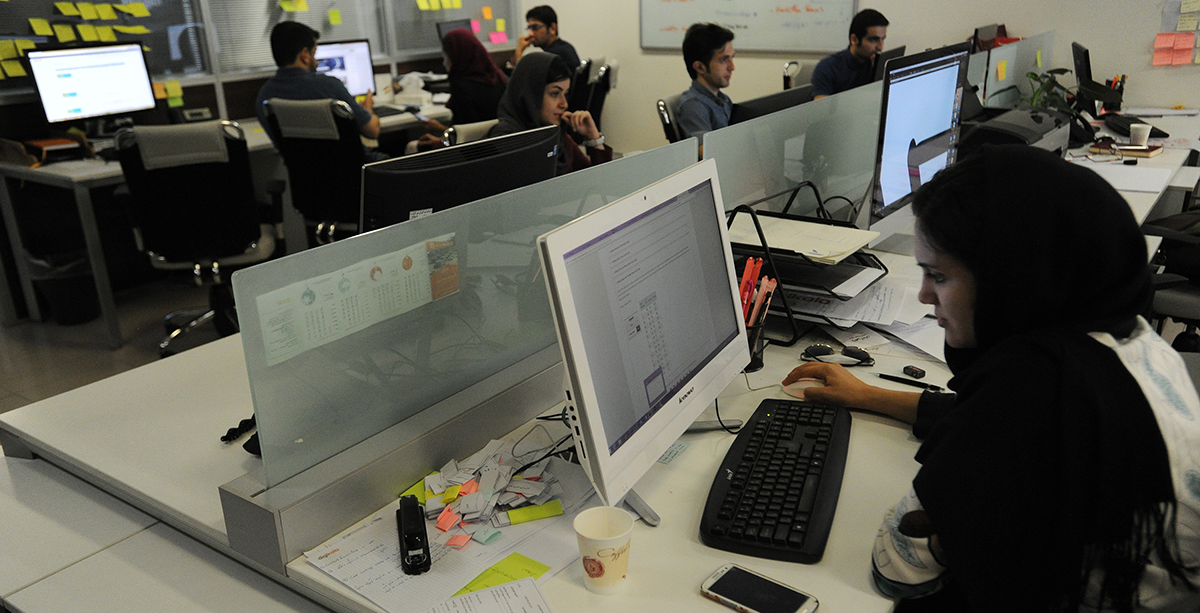
Escalating emigration and the “drought” in Iran's IT industry
For many years, Iran’s educated elites have been leaving the country in growing numbers. They are emigrating, mostly to Western countries, for various reasons, but chief among them are poor economic conditions and a lack of political and social freedoms at home. Iran’s information technology sector is among the sectors hit hardest due to the burgeoning outflow of its experts in recent years.
For the past year, negotiations over the revival of the 2015 Iran nuclear deal, known as the Joint Comprehensive Plan of Action (JCPOA), have not been conclusive. It appears that Iran’s current JCPOA calculations are shaped by three key factors: the future transition of power, lessons learned from the Ukraine war, and changes in the emerging international order.
Opinion: War in Europe, famine in Africa . . . Why we must defeat Russian imperialism now
Russia’s invasion of Ukraine is about more than Ukraine. It’s about frontline states in Europe’s east that fear they’re next; it’s about Europe whole and free.
The view from Tehran on Biden’s trip to the Middle East
The Iranian authorities anticipate that President Joe Biden’s visit to the Middle East is aimed at one top priority: to reaffirm the U.S. commitment to its partners in the region. To achieve this goal, the expectation in Tehran is that Biden will make some concessions to America’s regional partners, but the Iranians are very hopeful that these will be limited and not capsize the already tenuous U.S.-Iran nuclear talks.
Mid-term election success will tempt the American president to go for quick wins, but he must enter into talks with an eye on the global demand for energy
New opportunities in gas production to define future of Middle East energy giants
While there will continue to be a market for oil and associated petrochemical products for some time to come, the short- and medium-term opportunities in gas production will be transformational for some MENA states.
When gaming out the country’s likely political trajectory, most fellow Saudi watchers I know agree that the likelihood of the kingdom imploding is slight, but were that to come to pass, the consequences for the U.S. and the rest of the world would be enormous. Yet Saudi Arabia has managed to negotiate several turbulent events in its recent history with a rather remarkable lack of destabilization. And it’s most likely to continue along that trend, even in the face of what could be more storms to come.
الأسباب التي تجعل الإدارة الذاتية الخيار المرحلي الأفضل للمجتمع المحلي
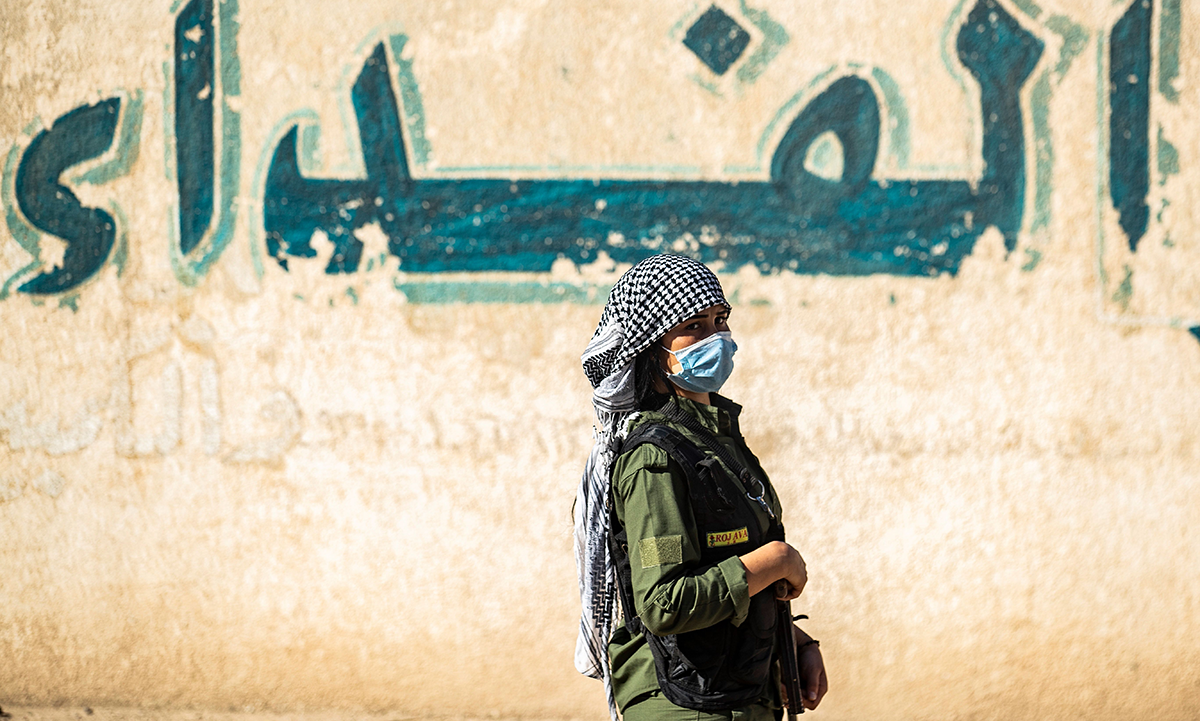
هذا يضعنا أمام تسأل مهم، لماذا باتت ردود الفعل للمجتمعات المحلية على الإدارة الذاتية وجناحها العسكري ردود محدودة أو منعدمة في كثير من الأحيان؟، رغم أن هذه المجتمعات خاضت معارك طاحنة ضد النظام و تنظيم “داعش” لذات هذه الأسباب.
The oldest peer-reviewed publication dedicated to the study of the modern Middle East, MEI’s flagship journal covers politics, society, and culture in the region.