Skip to Content

Research & Commentary

Read in-depth research, analysis, and commentary from MEI’s fellows and experts on the Middle East. 

Outlook for Sustainable Agriculture in North Africa: Report Card Assessment
  • Report
  • Outlook for Sustainable Agriculture in North Africa: Report Card Assessment

    This report assesses the future sustainability of agriculture across North Africa using a multidimensional approach that considers the dynamics of water, climate, land, and economics. To enable this assessment of sustainable agriculture across the region, the author evaluates water resources reliability, water use efficiency, agricultural land sustainability, and the food sector economy for Egypt, Sudan, Libya, Tunisia, Algeria, Morocco, and Mauritania, and provides recommendations for action.

    June 22, 2026

    Lebanese Should Stay The Course
  • Commentary
  • Lebanese Should Stay The Course

    Unconditional surrender of an adversary is possible only if the victor conducts unconditional war, which the American public clearly was not prepared for in the conflict with Iran. Ending this conflict was always going to entail some compromises. The U.S.-Iran MOU is being oversold by virtually everyone. The tangible parts of it are a ceasefire, sanctions relief for Iran and the reopening of Hormuz. Everything else in the agreement is conditioned to good faith negotiations on Iran’s nuclear program.

    Additional Research & Commentary

    Backgrounders

    The Houthis
  • Backgrounder
  • The Houthis

    The Houthis are a political-military faction and Zaydi religious movement founded in northwestern Yemen in the 1980s. A key member of Iran’s Axis of Resistance with links to other militant organizations in the Arabian Peninsula and the Horn of Africa, the group has continued to pose a threat to Western interests on a global scale.

    May 15, 2026

    The Abraham Accords
    Photo by Alex Wong/Getty Images
  • Backgrounder
  • The Abraham Accords

    This backgrounder provides an overview of how the Abraham Accords came about, the US interests involved, their economic and strategic consequences, and the prospects for further enlargement going forward.

    November 17, 2025

    Turkish Foreign Policy
  • Backgrounder
  • Turkish Foreign Policy

    After a decade of post-Arab Spring isolation, Turkey’s leaders have recognized that their ambition to position the country as an agenda-setter on the world stage requires active engagement in all directions. President Recep Tayyip Erdoğan’s consolidation of executive authority has centralized foreign policy decision-making and tied it to his domestic political priorities, transforming the country’s revisionist approach to one shaped primarily by personal and pragmatic interests.

    April 23, 2026

    Western Sahara: Why the conflict still matters
  • Video
  • Western Sahara: Why the conflict still matters

    As the Western Sahara conflict reaches its fifth decade, the territorial dispute remains unresolved and largely unknown. MEI’s Intissar Fakir unpacks the Western Sahara’s complex history and the rival claims by Morocco and the Sahrawi Arab Democratic Republic. She examines recent developments, such as President Trump’s recognition of Moroccan sovereignty over the territory and the collapse of a 30-year cease-fire, as well as the core questions that remain unanswered after half a century.

    August 7, 2025

    Podcasts

    Middle East Focus

    MEI’s flagship weekly podcast on US foreign policy and contemporary political and social issues in the Middle East.

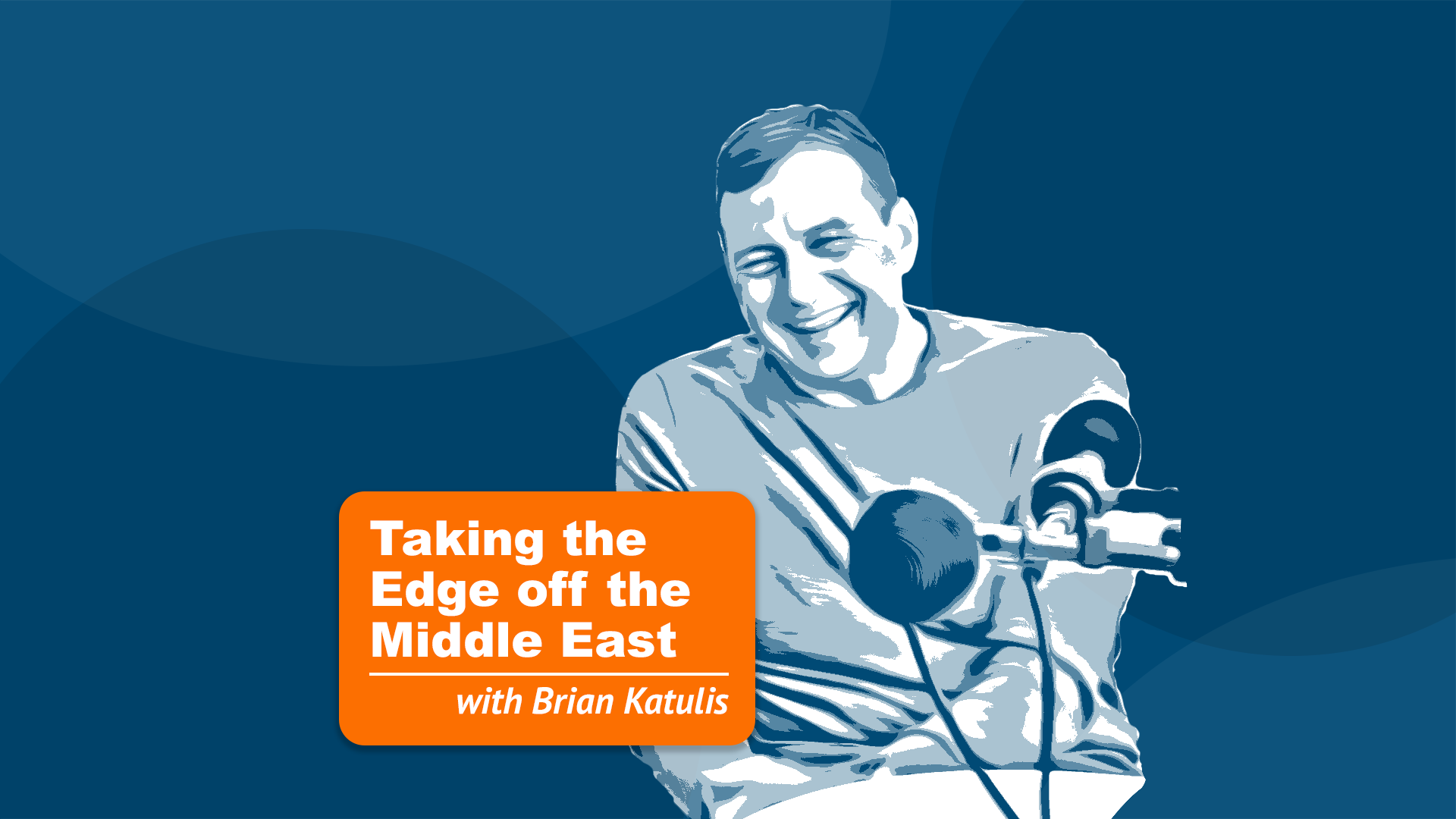
    Taking the Edge Off the Middle East

    MEI Senior Fellow Brian Katulis engages friends, colleagues, and policy experts in casual conversations on the most important happenings in the Middle East. 

    Rethinking Democracy

    MEI Senior Fellow Gonul Tol hosts leading scholars and thought leaders on global democracy trends and the state of the liberal international order. 

    Filter by
    8738 Results
    Saudi Arabia’s Political Drama and Oil Price Wars
    Middle East Institute
  • Podcast
  • Saudi Arabia’s Political Drama and Oil Price Wars

    Yasmine Farouk and Jean-Francois Seznec join guest host Gerald Feierstein to discuss the past week’s political and economic drama in Saudi Arabia following the detainment of several members of the Saudi royal family and the nation’s launch of an oil price war with Russia, which triggered a massive drop in global oil prices.

    March 15, 2020

    Missing the long game: Washington’s high-risk energy diplomacy in Iraq
    An employee walks at the Hammar Mushrif new Degassing Station Facilities site inside the Zubair oil and gas field, north of the southern Iraqi province of Basra on May 9, 2018. (Photo by HAIDAR MOHAMMED ALI / AFP) (Photo credit should read HAIDAR MOHAMMED ALI/AFP via Getty Images)
  • Analysis
  • Missing the long game: Washington’s high-risk energy diplomacy in Iraq

    Washington’s foreign relations in the Middle East are often characterized by ebb and flow, tracking the region’s dynamic politics. But when it comes to Iraq, this ebb and flow is especially turbulent, and the country’s energy sector has been thrown under the spotlight as Washington presses Baghdad to take swift action to ensure its “energy independence” from Iran.

    March 13, 2020

    Uncertainty and chaos as Afghanistan’s political crisis deepens
    NATO Secretary General Jens Stoltenberg (C) arrives along with Afghanistan's President Ashraf Ghani (R) and Afghan presidential election opposition candidate Abdullah Abdullah ahead of a press conference at the presidential palace in Kabul on February 29, 2020.
  • Analysis
  • Uncertainty and chaos as Afghanistan’s political crisis deepens

    On March 9, Afghanistan’s sitting president, Ashraf Ghani, took the oath of office for a second term. However, on the same day the country’s chief executive, Abdullah Abdullah, also declared himself president at a rival swearing-in ceremony. The controversy has plunged the country into further political uncertainty and potential chaos, dashing hopes of an immediate return to peace following the historic U.S.-Taliban deal on Feb. 29.

    March 13, 2020

    Is Erdogan misreading Putin on Libya?
    Russian President Vladimir Putin and Turkish President Recep Tayyip Erdogan greet each other during their talks at the Kremlin on March 5, 2020 in Moscow, Russia. Erdogan is having a one day visit to Russia to discuss the war conflcit in Syria.
  • Analysis
  • Is Erdogan misreading Putin on Libya?

    After Turkish President Recep Tayyip Erdogan hammered out a deal with his Russian counterpart Vladimir Putin on March 5 to bring an end to the fighting in Idlib in northwestern Syria, he said he was hopeful that the two countries could extend their cooperation to Libya.

    Shifting US strategy in Iraq
    A partial view of the Iraqi capital Baghdad is reflected in the visor of a US Army helicopter crew member as he looks out of a Chinook helicopter flying from the US Embassy to Baghdad International airport, following the helicopter of US secretary of State Mike Pompeo, on January 9, 2019.
  • Analysis
  • Shifting US strategy in Iraq

    The United States has missed a valuable opportunity to use its influence in Iraq to encourage the government to implement the reforms Iraqi protesters have been demanding over the past six months and push back on Iran.

    March 12, 2020

    The difficult ordeal of forming a new Iraqi government
    Iraqis stand outside parliament building, or Council of Representatives, in Baghdad's Green Zone on February 27, 2020. (Photo by SABAH ARAR / AFP) (Photo by SABAH ARAR/AFP via Getty Images)
  • Analysis
  • The difficult ordeal of forming a new Iraqi government

    On March 1, Iraqi PM designate Mohammed Tawfiq Allawi announced that he had failed to form a new government to replace the current caretaker one headed by PM Adel Abdul-Mahdi. In the post-Saddam era, government formation in Iraq has always been a complicated process, but this is the first time since 2003 that a PM designate failed to form a government and the episode has revealed fundamental deficiencies in the Iraqi political process.

    March 12, 2020

    Manufacturing Division: The Assad Regime and Minorities in South-west Syria
    A picture shows the new church of Sayyidet al-Beshara in Shaqra town in the southern Syrian province of Daraa on December 22, 2019. - Less than 10 kilometres (six miles) away lies the mainly Christian town of Shaqra, emptied of most of its Christian residents after a spate of attacks by rebels and jihadists during the conflict. Such attacks have stopped since the area came back under regime control, but very few Christian families remain. (Photo by MAHER AL MOUNES / AFP) (Photo by MAHER AL MOUNES/AFP via Ge
  • Analysis
  • Manufacturing Division: The Assad Regime and Minorities in South-west Syria

    Minority communities in south-west Syria have shrunk to a fraction of their pre-2011 size, and the regime’s repressive policies perpetuate a cycle of violence and chaos that prevents their safe return. The regime’s strategy of transforming minority communities into sources of militia fighters has not only led to the deaths of thousands of young Alawite and Shi’a men, but also created sectarian tensions between formerly interconnected communities in south-west Syria. So long as the regime’s policy in the south-west is characterized by violence, the safe and dignified return of displaced Syrians will not be possible. This paper studies current and former minority communities in south-west Syria, the security and economic challenges these groups face, and the manner by which the regime exploits and weaponizes these vulnerable Syrians.

    March 11, 2020

    The growing strength of Russian-Omani ties
    Omani Foreign Minister Yusuf bin Alawi bin Abdullah (L) meets Russian Foreign Minister Sergey Lavrov (R) in Moscow, Russia on 18 February, 2019.
  • Analysis
  • The growing strength of Russian-Omani ties

    On Feb. 12, the director of Russia’s Foreign Intelligence Service, Sergei Naryshkin, made an official visit to Oman. During his trip to Muscat, Naryshkin engaged with senior Omani officials on strategies to de-escalate tensions in the Persian Gulf, counterterrorism cooperation, and approaches to conflict resolution in Syria and Yemen.

    March 10, 2020

    What’s next for coalition forces in Iraq?
    U.S. Army Paratroopers assigned to the 2nd Battalion, 504th Parachute Infantry Regiment, 1st Brigade Combat Team, 82nd Airborne Division, deploy from Pope Army Airfield, North Carolina on January 1, 2020.
  • Analysis
  • What’s next for coalition forces in Iraq?

    The U.S. killing of Qassem Soleimani, the Islamic Revolutionary Guard Corps’ (IRGC) Quds Force commander, along with the deputy chair of the Iraqi Popular Mobilization Forces (PMF), Abu Mahdi al-Muhandis, altered the political balance in Iraq. But the killings took place against a wider backdrop of political unrest and protests that forced the resignation of Prime Minister Adel Abdul-Mahdi at the end of 2019. With Iraq potentially headed for early elections,the country is set for significant changes as political actors vie for a seat at the table. U.S. and coalition forces in the region will inevitably be affected, and the coming months will determine the future of both Iranian proxies and the coalition presence in Iraq.

    March 10, 2020

    The link between Lebanon’s Hezbollah and Iraqi militias
  • Analysis
  • The link between Lebanon’s Hezbollah and Iraqi militias

    Iraq has been relatively calm in recent weeks. This could change following Mohammad Allawi’s withdrawal as prime minister-designate, but Iran’s proxies in Iraq are giving dialogue a chance before pushing ahead with what they say is revenge for the slaying of Qasem Soleimani, head of the Iranian Revolutionary Guard’s Al-Quds Force.

    March 9, 2020

    Qatar’s soft power sports diplomacy
    This picture taken with a fish-eye lens on December 17, 2019 shows a view inside Qatar's new al-Bayt Stadium in the capital Doha, which will host matches of the FIFA football World Cup 2022. (Photo by GIUSEPPE CACACE / AFP) (Photo by GIUSEPPE CACACE/AFP via Getty Images)
  • Analysis
  • Qatar’s soft power sports diplomacy

    Sports diplomacy is the deliberate, strategic use of sporting events by states to create a favorable international image — the “continuation of policy by other means,” whereby sports, nationalism, commerce, and diplomacy are inextricably linked.

    March 9, 2020

    Read the Middle East Journal

    The oldest peer-reviewed publication dedicated to the study of the modern Middle East, MEI’s flagship journal covers politics, society, and culture in the region.