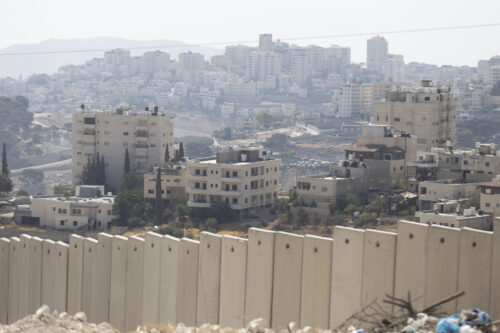
The Israeli government’s plan to build 3,401 housing units in the 12-square-kilometer E-1 corridor, between Jerusalem’s municipal boundary and the Israeli settlement of Ma’ale Adumim, would cut the West Bank in two. Israeli officials are under no illusion about the implications. Announcing the plan’s approval in August 2025, Finance Minister Bezalel Smotrich called it a “significant step that practically erases the two-state delusion.”
The Americans Are Gone. Will Iraq’s Militias Disarm?
On September 30, the US completed its military withdrawal from Iraq, ending a 12-year-long mission to combat ISIS that began in 2014. The date was also meant to be the deadline for disarming the largely Iranian-backed militias known as the Popular Mobilization Forces (PMF), but Prime Minister Ali al-Zaidi has now pushed that cutoff back to June 30, 2027. MEI Distinguished Diplomatic Fellow Amb. (ret.) Robert S. Ford joins hosts Alistair Taylor and Matthew Czekaj to discuss what the US military withdrawal means for Iraqi security and the nature of the bilateral relationship going forward. They also speak about what it will take for Baghdad to bring the PMF militias to heel, and how Iraq may navigate the post-Iran war era.
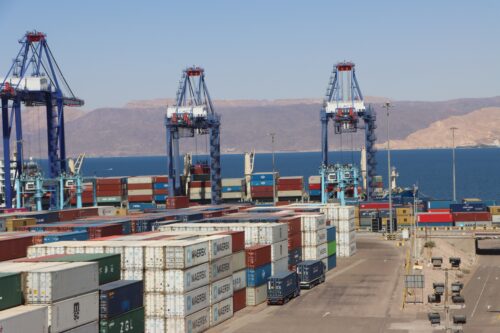
Jordan’s Economy Weathers Iran War’s Shocks and Finds New Opportunities
In the summer of 2003, King Abdullah II told Bloomberg Jordan sits “between Iraq and a hard place,” a play on words designed to describe the kingdom’s challenging environment to an American audience amid the US-led Iraq war to the east and the lingering Palestinian-Israeli conflict to the west. Jordan is grappling with a much “harder place” today.
Since 1967, Israeli settlements in the West Bank have been a contested feature of the Israeli-Palestinian conflict. The ultimate disposition of the settlements and ongoing activity related to their growth have repeatedly defied agreement in negotiations over a resolution to the conflict.
The Houthis are a political-military faction and Zaydi religious movement founded in northwestern Yemen in the 1980s. A key member of Iran’s Axis of Resistance with links to other militant organizations in the Arabian Peninsula and the Horn of Africa, the group has continued to pose a threat to Western interests on a global scale.
The India-Middle East-Europe Economic Corridor (IMEC) is a proposed multinational infrastructure initiative aimed at upgrading connectivity between the three regions through integrated trade, energy, and digital networks. Announced at the G20 summit in New Delhi in September 2023, IMEC is envisioned partially as a counterweight to China’s international infrastructure project, the Belt and Road Initiative.
After a decade of post-Arab Spring isolation, Turkey’s leaders have recognized that their ambition to position the country as an agenda-setter on the world stage requires active engagement in all directions. President Recep Tayyip Erdoğan’s consolidation of executive authority has centralized foreign policy decision-making and tied it to his domestic political priorities, transforming the country’s revisionist approach to one shaped primarily by personal and pragmatic interests.
MEI Senior Fellow Brian Katulis engages friends, colleagues, and policy experts in casual conversations on the most important happenings in the Middle East.
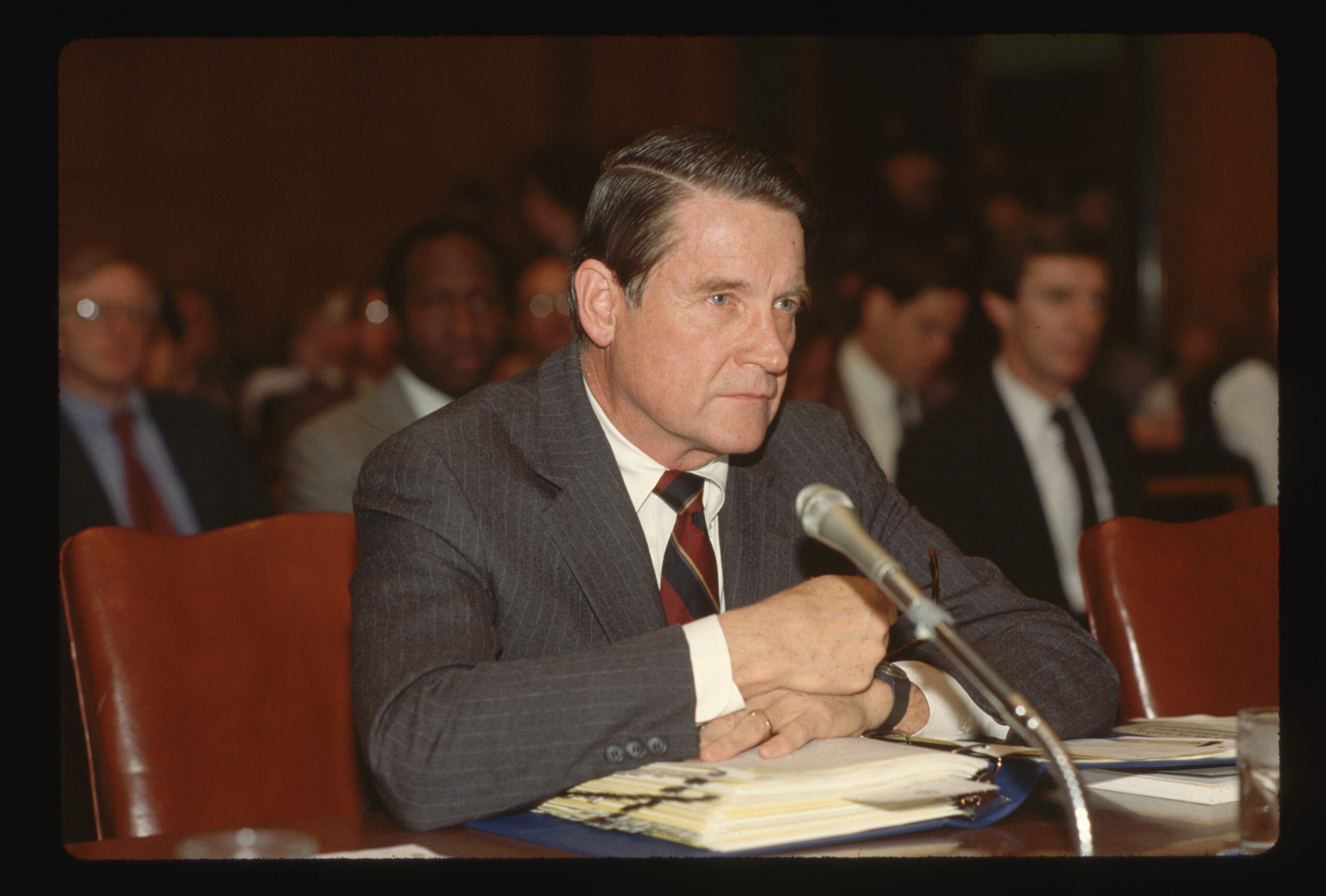
The Middle East Institute (MEI) is deeply saddened by the passing of William H. Webster, a distinguished former member of our Board of Governors and longtime Governor Emeritus.
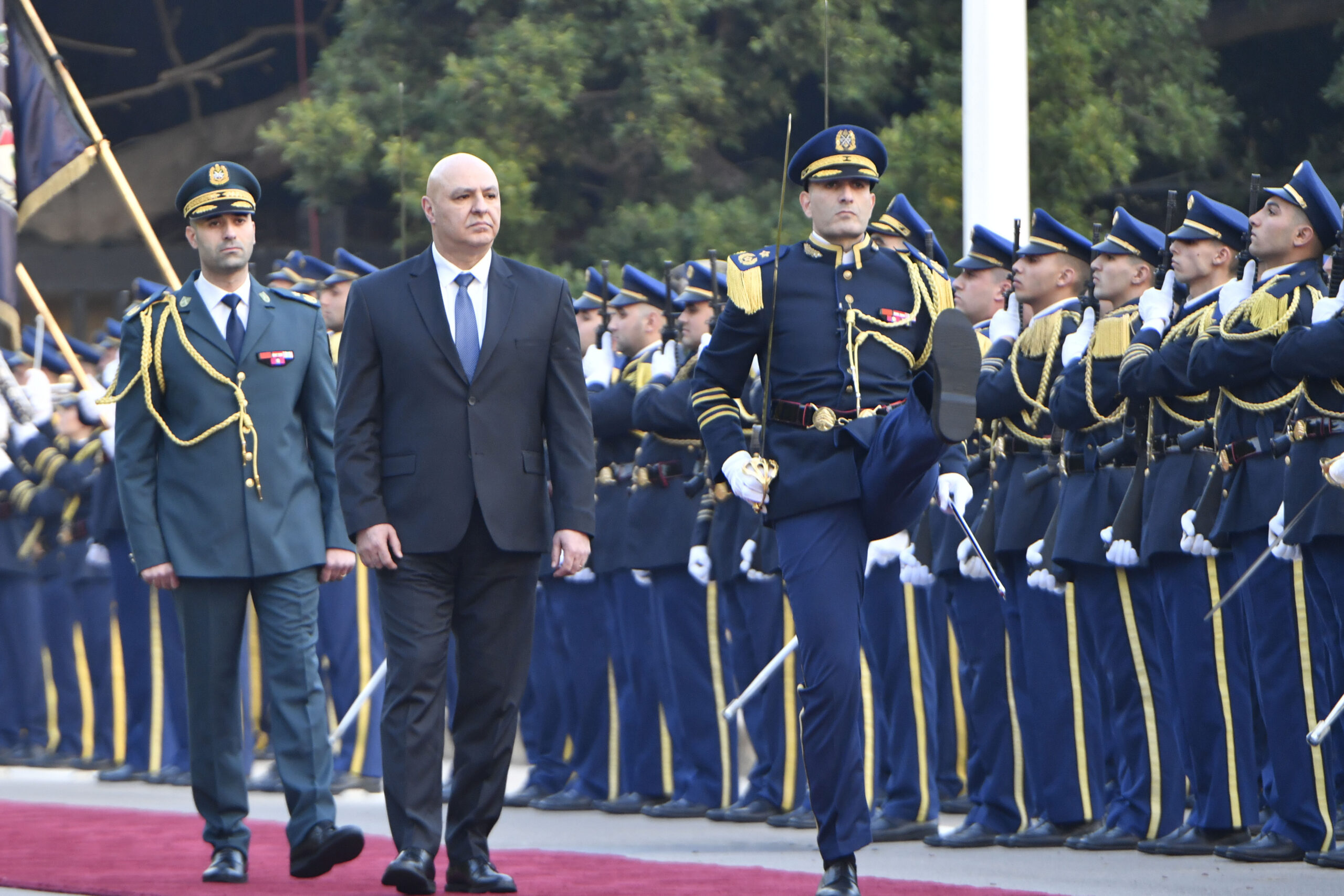
It has been a remarkable week for Lebanon. President Aoun, Speaker Berri, and Prime Minister Salam have acted in unison, never something to be taken for granted in Lebanon. Moreover, they have done so on a topic that has been wrongly taboo since the Taef Accord: restoring the Lebanese state’s monopoly of arms and confronting Hezbollah’s challenge to state sovereignty. It is an unprecedented step and required courage and determination. These three leaders and their teams deserve enormous credit. It was difficult but the right decision.
Lebanon and the UNIFIL Mandate: Disarming Hizballah and Reclaiming Sovereignty
With its new government at the half-year mark and the UNIFIL international peacekeeping force’s mandate due for reauthorization at month’s end, Lebanon stands at a pivotal moment. In this episode of Middle East Focus, hosts Alistair Taylor and Matthew Czekaj are joined by MEI Senior Fellow Fadi Nicholas Nassar to evaluate whether the Lebanese state can reclaim its sovereignty, starting with the disarmament of Hizballah and the enforcement of a cease-fire.
Post-Oct. 7 divergent paths: Israel’s military maximalism and Saudi Arabia’s strategic de-escalation
The Hamas attack on Oct. 7, 2023, shattered Israel’s long-standing security paradigm, replacing limited deterrence with an ambitious campaign aimed at dismantling Hamas, confronting Hizballah and other Iranian proxies, and directly targeting Iran’s nuclear program with the support of the United States. In stark contrast, Saudi Arabia has prioritized regional stability and de-escalation, restoring relations with Iran, and focusing on its Vision 2030 economic transformation.
As the Western Sahara conflict reaches its fifth decade, the territorial dispute remains unresolved and largely unknown. MEI’s Intissar Fakir unpacks the Western Sahara’s complex history and the rival claims by Morocco and the Sahrawi Arab Democratic Republic. She examines recent developments, such as President Trump’s recognition of Moroccan sovereignty over the territory and the collapse of a 30-year cease-fire, as well as the core questions that remain unanswered after half a century.
The monarchical Arab Gulf states emerged on the other side of last June’s Israeli and US attacks on Iran largely unscathed, with the important exception of a limited, retaliatory Iranian missile strike on the American airbase in Qatar. However, in a larger sense, this short war, part of the broader regional conflict that began with the Hamas attack on Israel in October 2023, reinforced the precariousness of the Gulf monarchies’ security situation.
The current Israeli-Palestinian nightmare is a result of multiple failures of leadership
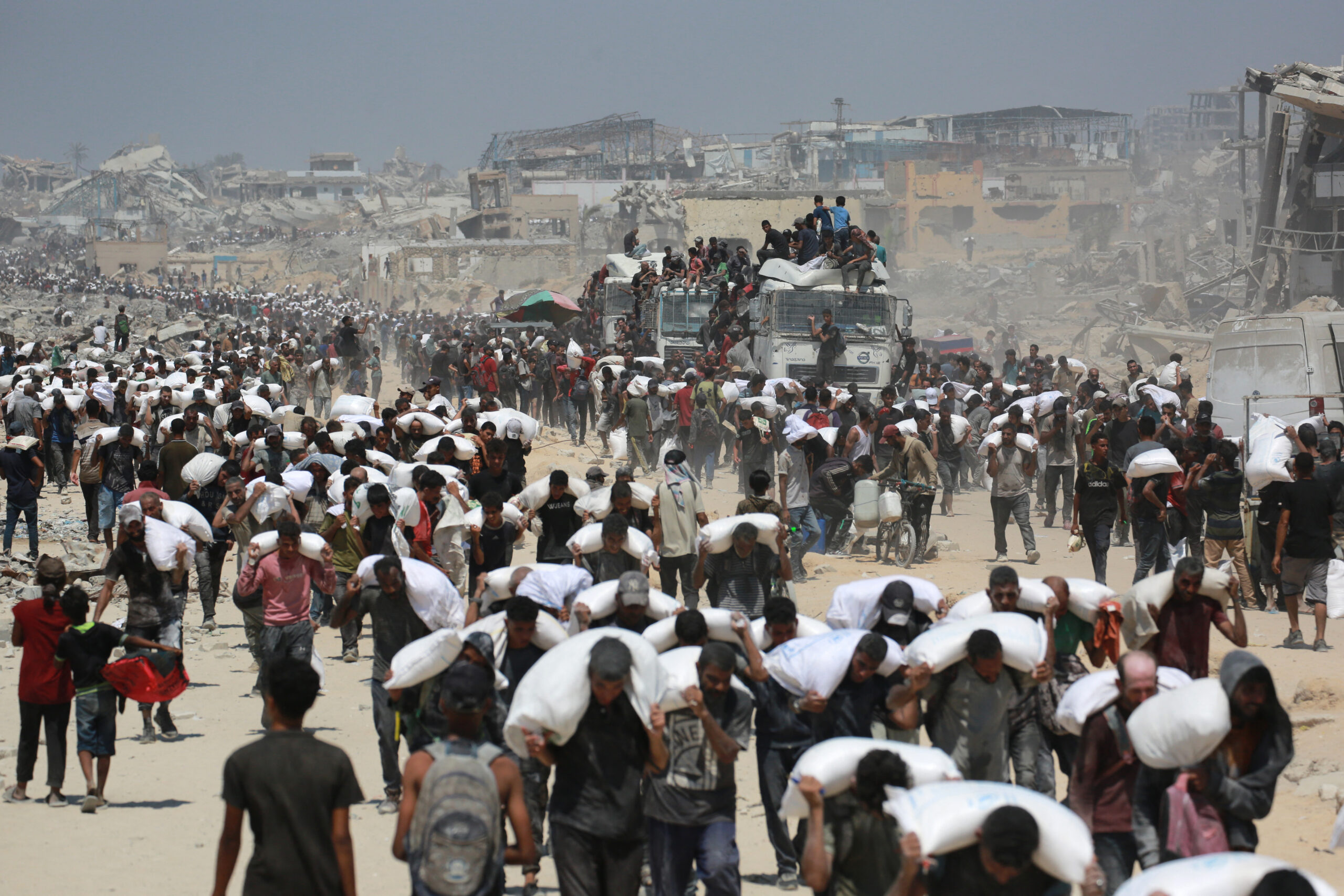
The unresolved crises unfolding on the Israeli-Palestinian front — a growing humanitarian disaster inside of Gaza, the horrific images of emaciated Israelis held hostage by terrorists in the coastal strip, and ongoing tensions in Jerusalem and the West Bank fueled by religious extremists of all stripes — represent one of the biggest strategic challenges to stability facing the Middle East. With Israel now openly contemplating a full occupation of Gaza, this set of issues serves as an obstacle to broader regional peace and normalization efforts.
Whatever you think about events since October 2023, a fundamental shift in the balance of power has occurred in the Middle East.
The dilemma for Washington and its regional partners is what to do now to bring lasting security for all those who in the past were compelled to live in the shadow of threats and violence by Iran and its Arab proxies. That next phase could be even harder.
Digital frontlines: What the 12-day war revealed about the evolution of Iran’s cyber strategy
During June’s Israel-Iran war, a quieter but significant battle played out in cyberspace, highlighting how Tehran has refined its use of digital tools to shape the battlespace, control domestic narratives, and project influence abroad. While largely ineffective in operational terms, Iran’s cyber response marked a new phase in its strategic evolution.
President Masoud Pezeshkian’s first year in office has been defined by Iran’s familiar political structural constraints, external crises, and a moderate-reformist base forever frustrated with his cautious pragmatism and unfulfilled promises. His July 2024 election was undeniably a setback for hardliners. Yet one year later, the assessment is sobering: While Pezeshkian has in some ways perhaps helped in slowing the hardline march, he has not made any fundamental difference in how the Islamic Republic is run. Every decision requires second-guessing Supreme Leader Ali Khamenei’s next move, and even as a president boxed in by the system with limited powers, he is constantly under the sword of Damocles.
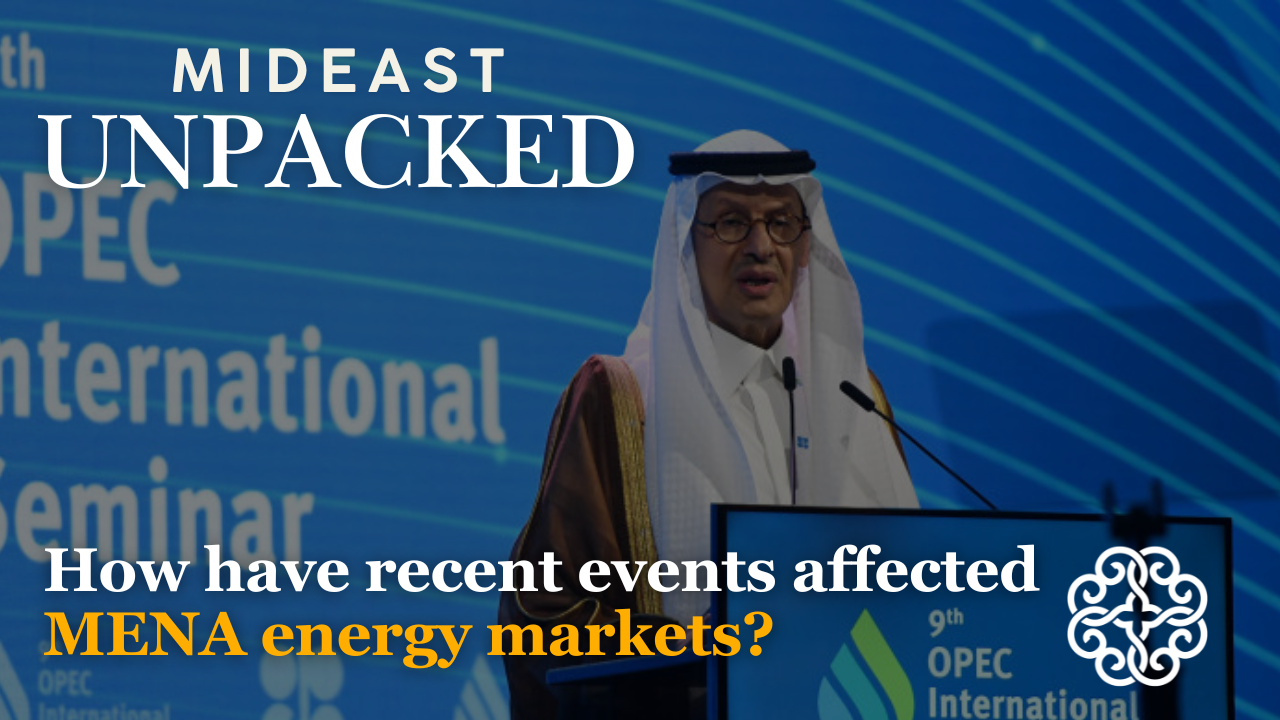
How have recent events affected MENA energy markets?
“The first half of 2025 has been a whirlwind for global energy markets,” says MEI Senior Fellow Colby Connelly. The 12-day war between Israel and Iran this past June briefly sent oil prices into the $80 per barrel range, while growing uncertainty around trade policy under President Trump has greatly complicated Middle Eastern actors’ investment decisions. Connelly breaks down these developments and outlines what to watch in the months ahead.
US Policy in the Middle East: Second Quarter 2025 Report Card
Six months into his second term, President Donald Trump remains in search of a major, concrete foreign policy win. Trump 2.0’s foreign policy is still struggling to produce a major positive outcome from its frenetic activity trying to end kinetic wars while prosecuting an unprecedented economic war with much of the rest of the world. The whirlwind of uncertainty since Trump returned to office in January has yet to improve America’s overall strategic position in the world. The following report assesses the US government’s actions over the past three months from May to mid-July 2025.
Egypt and Gaza: Conflict, Crisis, and the Path to a Ceasefire
With the dire humanitarian crisis in Gaza in the global spotlight, Egypt faces mounting pressure both at home and abroad. In this episode of Middle East Focus, hosts Alistair Taylor and Matthew Czekaj speak with MEI Senior Fellow Mirette Mabrouk about how Cairo is handling the crisis in the neighboring coastal strip. What are the Egyptian government’s main concerns as conditions there continue to deteriorate? How is Egypt responding to domestic outrage and changing international dynamics?
Daniel Silverberg and Elisa Ewers—two veterans of Capitol Hill and the executive branch—join Brian for a candid conversation about the shifting politics of US Middle East policy inside the Democratic Party. Drawing on decades of experience shaping national security strategy, they unpack why so many debates remain trapped in a post-Iraq War mindset, how October 7th transformed bipartisan dynamics, and what’s at stake when values, strategy, and political reality collide. From Iran and Gaza to the role of Arab partners and the rise of populism, the trio explores how America’s approach to the region must evolve—and how the next generation can lead that charge with clarity, humility, and purpose.
As the dog days of August approach, we are pleased to share a curated summer reading list featuring some of VP for Policy Ken Pollack’s favorite books on the region. Covering a variety of timely and engaging topics, the list offers recommendations for anyone interested in deepening their understanding of the Middle East.
The oldest peer-reviewed publication dedicated to the study of the modern Middle East, MEI’s flagship journal covers politics, society, and culture in the region.