Bonus Episode: Previewing Israel’s First Post-October 7 Election
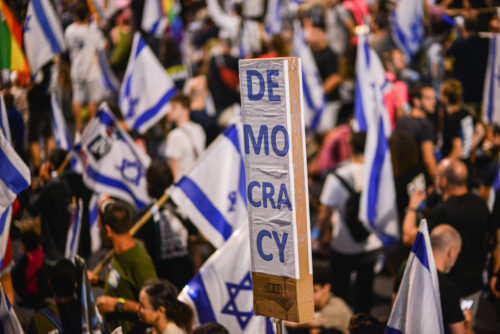
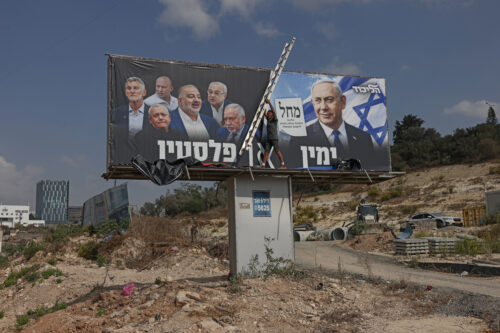
Israel is preparing to hold what may be its most consequential election in decades. On October 27, Prime Minister Benjamin Netanyahu will face his first electoral test since October 7, 2023. In this bonus episode of Middle East Focus, we present the audio from a recent MEI webinar, hosted in Israel on the eve of the vote. Senior Fellow Natan Sachs is joined by Dr. Shira Efron, Distinguished Chair for Israel Policy and senior fellow at the RAND Corporation, and Neri Zilber, veteran journalist and Financial Times correspondent. They explore what’s at stake in this historic election and how different outcomes could reshape Israel’s domestic politics and the wider region.
Israel Was Built on Hope. This Election May Be Our Last Chance to Save It
Israel’s national anthem, Hatikva, means “the hope.” Israel is not just another country, but the culmination of a 2,000-year-old dream of national redemption. The rebirth of the Jewish people’s ancestral homeland, just three years after the Holocaust, was a miraculous triumph of hope over all odds.
Today, that hope has been shattered and the elections on October 27 have become the most consequential in Israel’s history.
One striking thing about US President Donald Trump’s endorsement of Israeli Prime Minister Benjamin Netanyahu this past week is how isolated he was in making this call. The Israeli Prime Minister has become a widely detested figure worldwide following Israel’s war in Gaza—where Israel committed war crimes. This disdain was clearly on display in New York in September when dozens of diplomats streamed out of the hall during Netanyahu’s speech.
Since 1967, Israeli settlements in the West Bank have been a contested feature of the Israeli-Palestinian conflict. The ultimate disposition of the settlements and ongoing activity related to their growth have repeatedly defied agreement in negotiations over a resolution to the conflict.
The Houthis are a political-military faction and Zaydi religious movement founded in northwestern Yemen in the 1980s. A key member of Iran’s Axis of Resistance with links to other militant organizations in the Arabian Peninsula and the Horn of Africa, the group has continued to pose a threat to Western interests on a global scale.
The India-Middle East-Europe Economic Corridor (IMEC) is a proposed multinational infrastructure initiative aimed at upgrading connectivity between the three regions through integrated trade, energy, and digital networks. Announced at the G20 summit in New Delhi in September 2023, IMEC is envisioned partially as a counterweight to China’s international infrastructure project, the Belt and Road Initiative.
After a decade of post-Arab Spring isolation, Turkey’s leaders have recognized that their ambition to position the country as an agenda-setter on the world stage requires active engagement in all directions. President Recep Tayyip Erdoğan’s consolidation of executive authority has centralized foreign policy decision-making and tied it to his domestic political priorities, transforming the country’s revisionist approach to one shaped primarily by personal and pragmatic interests.
MEI Senior Fellow Brian Katulis engages friends, colleagues, and policy experts in casual conversations on the most important happenings in the Middle East.
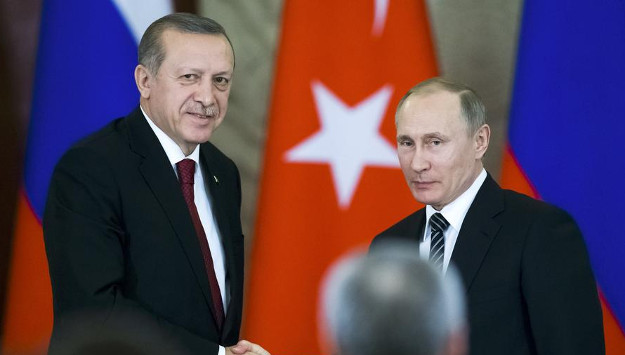
In this week’s Monday Briefing, MEI experts Gonul Tol, Randa Slim, Alex Vatanka, Marvin G. Weinbaum, and Mabrouka M’Barek provide analysis on recent and upcoming events including Turkish President Erdogan’s upcoming meeting with Russian President Putin, the upcoming speech by Hezbollah Secretary General Nasrallah, the suprising popularity of Rouhani’s VP in the Iranian Presidential Race, the Taliban’s new Spring offensive, and protests in Tunisia over a government proposal to give amnesty to the country’s corrupt financial elite.
Quds Force and Iraqi Allies Allegedly Setting up New Offices in Mosul
The Islamic Revolution Guards Corps (I.R.G.C.) has been setting up new offices in Mosul, the capital of Iraq’s Nineveh Province, according to a report in
I.R.G.C. Chief Calls for Preparing Next Generation to Defend Revolution and Export It Abroad
The chief commander of the Islamic Revolution Guards Corps (I.R.G.C.) has called for preparing Iran’s next generation to defend the country’s clerical establishment and export its revolution abroad. “The next phase of the Islamic Revolution is creating an Islamic government, Islamizing the society, and expanding the Islamic Revolution across the world,” Major General Mohammad Ali Jafari told more than a thousand teachers and school principals at a gathering organized by the Basij Organization on Sunday.
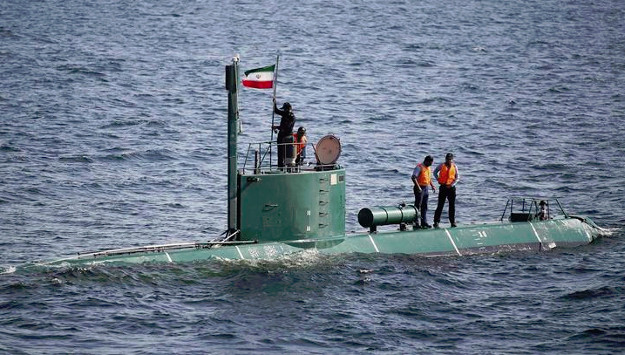
Iranian Navy Says Crossing Atlantic Ocean on Agenda
The chief commander of Iran’s Navy has said that crossing the Atlantic Ocean is on the agenda of the Islamic Republic of Iran Navy, the Iranian media reported.
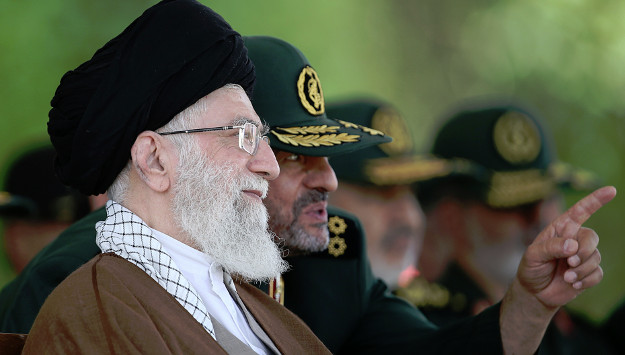
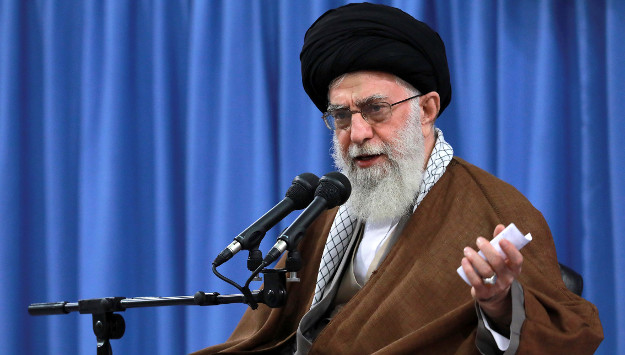
Khamenei: Engagement with West Hasn't Removed “Shadow of War”
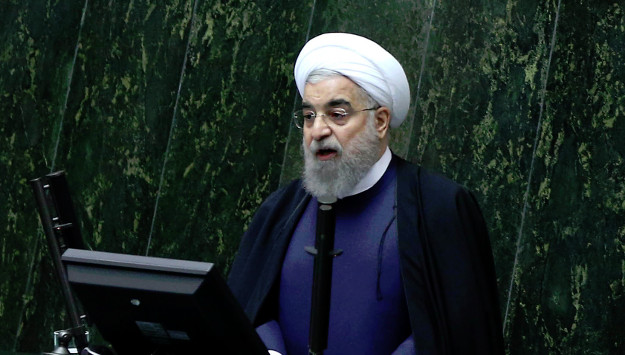
Iran’s Supreme Leader Ali Khamenei rejected President Hassan Rouhani’s claim that his administration’s engagement with the West has removed the “shadow of war” over Iran.
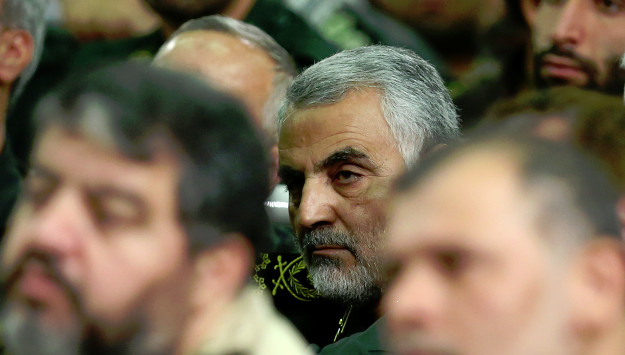
Soleimani Hails Iranian Health Ministry’s Aid to Wounded Combatants in Syria
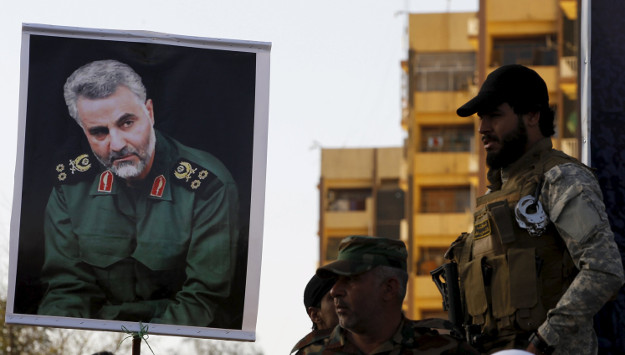
Iran’s Quds Force Commander Major General Qassem Soleimani has thanked the country’s Ministry of Health for providing assistance to his forces and Iranian-controlled militiamen fighting in Syria under his command.
Former I.R.G.C. Chief Says Iran Paid a Price by Hastily Negotiating Nuclear Deal with U.S.
Former Islamic Revolution Guards Corps (I.R.G.C.) Commander Mohsen Rezaei said the Rouhani administration “paid a price” and made “tactical and strategic mistakes” by “hastily” negotiating the 2015 nuclear agreement with the United States and five other world powers.
Rouhani Calls on Islamabad to Prosecute Border Guards’ Killers to Save Ties with Tehran
Iran’s President Hassan Rouhani has sent a letter to Pakistani Prime Minister Nawaz Sharif, calling on Islamabad to prosecute perpetrators of an attack that killed 10 Iranian troops along the Iranian-Pakistani border on Wednesday. A militant group called Jaish al-Adl claimed responsibility for the attack. According to Iran’s Tasnim News Agency, Rouhani blamed the Pakistani government’s “inaction” and “lack of necessary measures” for repeated attacks originating from Pakistan against Iranian border guards.
Iran’s Foreign Ministry Slams Israel for Syria Attack
Iran’s Foreign Ministry slammed Israel for allegedly launching an air strike against Syria, the Islamic Republic News Agency reported. “Repeated acts of aggression by the Israeli regime against Syria violate this country’s sovereignty and territorial integrity and is in breach of international norms,” Foreign Ministry Spokesman Bahram Ghassemi said. “There is no doubt such attacks are aimed at weakening the legitimate government of Syria… and is against international peace and security.” He also called on the United Nations to make sure such attacks are not repeated.
New Iranian Ambassador Arrives in Damascus after Six-Month Hiatus
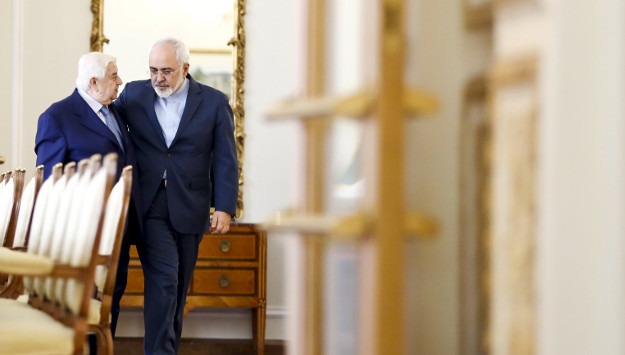
Iran’s new ambassador to Syria, Javad Torkabadi, presented his credentials to Syrian Foreign Minister Walid Muallem on Wednesday, the Iranian media reports. He arrived in Damascus on Tuesday and was welcomed by Iranian and Syrian officials, including Syrian Social Affairs Minister Rima al-Qadiri.
Testimony: Syria After the Missile Strikes: Policy Options
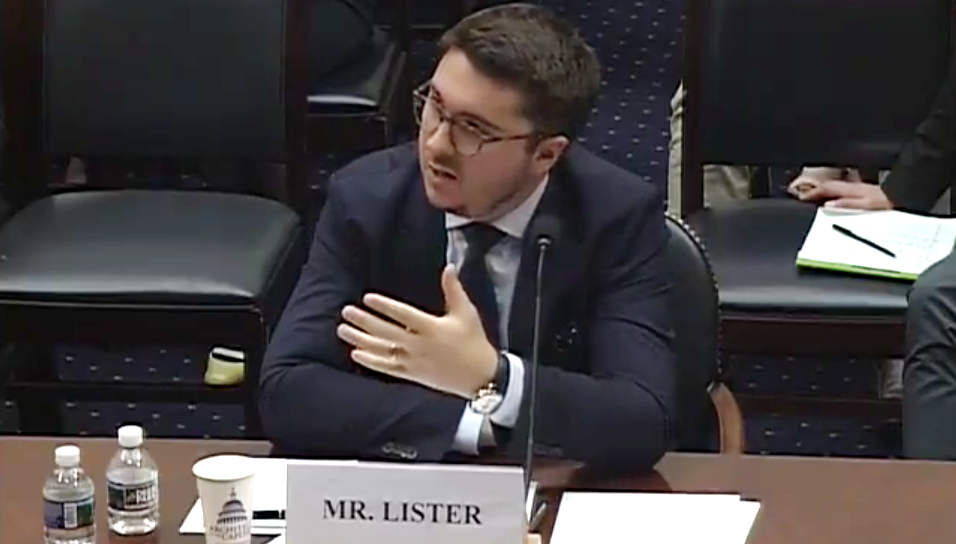
The following testimony was presented to the United States House Committee on Foreign Affairs on April 27, 2017.
Mr. Chairman, Mr. Ranking Member, Members of the Committee:
First, thank you for providing me with this opportunity to speak to you today, and to address the situation in Syria and what policy options the United States might consider going forward.
Iran Reportedly Offers to Deploy Ground Forces to Syria to Counter Potential U.S.-led Intervention
The latest air strikes on an airport near Damascus purportedly by Israel and increased U.S. military activities on Jordan’s northern border have triggered a concern in Tehran about the possibility of a broader U.S.-led military campaign in Syria.
Iran’s FM Zarif Defends Hostile I.R.G.C. Encounter with U.S. Navy in Persian Gulf
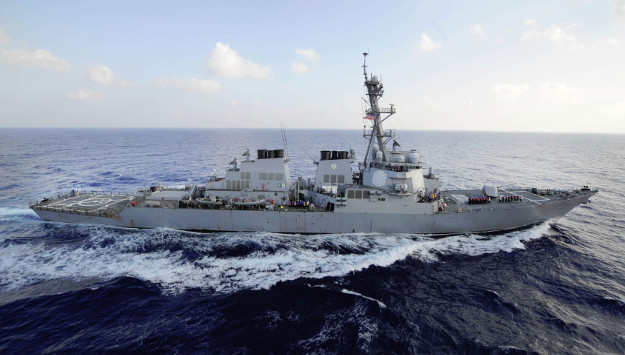
American officials said on Wednesday that a U.S. Navy guided-missile destroyer fired a warning flare to deter an Islamic Revolution Guards Corps (I.R.G.C.) vessel approaching it in the Persian Gulf.
Iran, Russia and Syria Vow to Continue Joint Military Efforts
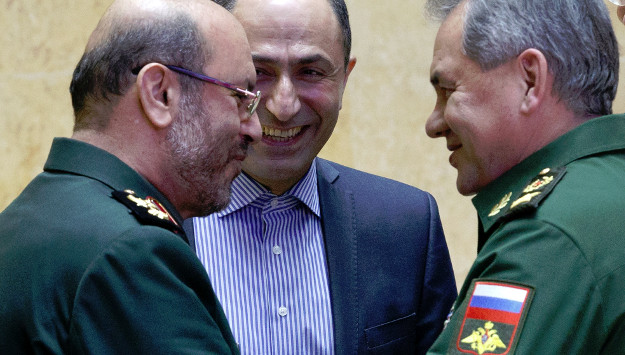
Iranian Defense Minister Brigadier General Hossein Dehqan and his Russian and Syrian counterparts, Sergey Shoygu and Fahd Jassem al-Freij, stressed that they will co
Iran’s Defense Minister Calls for New World Order to Counter U.S.-led “Global Fascism”
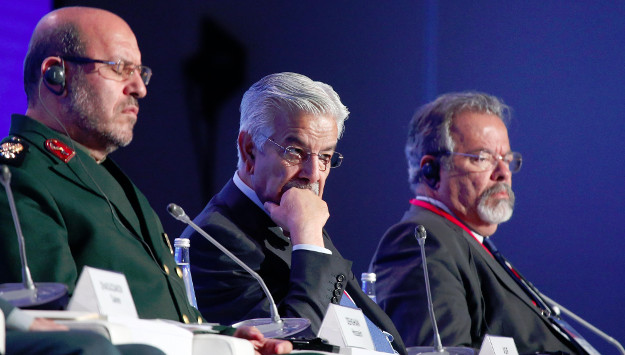
The Iranian defense minister has called for establishing a new multi-polar world order to tackle international security threats and counter U.S.-led “hegemonic” ambitions in East Asia, the Middle East and Eastern Europe.
The oldest peer-reviewed publication dedicated to the study of the modern Middle East, MEI’s flagship journal covers politics, society, and culture in the region.