Bonus Episode: Previewing Israel’s First Post-October 7 Election
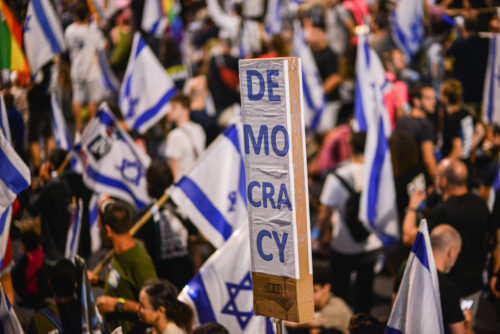
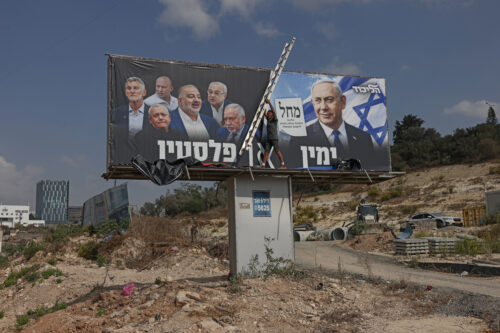
Israel is preparing to hold what may be its most consequential election in decades. On October 27, Prime Minister Benjamin Netanyahu will face his first electoral test since October 7, 2023. In this bonus episode of Middle East Focus, we present the audio from a recent MEI webinar, hosted in Israel on the eve of the vote. Senior Fellow Natan Sachs is joined by Dr. Shira Efron, Distinguished Chair for Israel Policy and senior fellow at the RAND Corporation, and Neri Zilber, veteran journalist and Financial Times correspondent. They explore what’s at stake in this historic election and how different outcomes could reshape Israel’s domestic politics and the wider region.
Israel Was Built on Hope. This Election May Be Our Last Chance to Save It
Israel’s national anthem, Hatikva, means “the hope.” Israel is not just another country, but the culmination of a 2,000-year-old dream of national redemption. The rebirth of the Jewish people’s ancestral homeland, just three years after the Holocaust, was a miraculous triumph of hope over all odds.
Today, that hope has been shattered and the elections on October 27 have become the most consequential in Israel’s history.
One striking thing about US President Donald Trump’s endorsement of Israeli Prime Minister Benjamin Netanyahu this past week is how isolated he was in making this call. The Israeli Prime Minister has become a widely detested figure worldwide following Israel’s war in Gaza—where Israel committed war crimes. This disdain was clearly on display in New York in September when dozens of diplomats streamed out of the hall during Netanyahu’s speech.
Since 1967, Israeli settlements in the West Bank have been a contested feature of the Israeli-Palestinian conflict. The ultimate disposition of the settlements and ongoing activity related to their growth have repeatedly defied agreement in negotiations over a resolution to the conflict.
The Houthis are a political-military faction and Zaydi religious movement founded in northwestern Yemen in the 1980s. A key member of Iran’s Axis of Resistance with links to other militant organizations in the Arabian Peninsula and the Horn of Africa, the group has continued to pose a threat to Western interests on a global scale.
The India-Middle East-Europe Economic Corridor (IMEC) is a proposed multinational infrastructure initiative aimed at upgrading connectivity between the three regions through integrated trade, energy, and digital networks. Announced at the G20 summit in New Delhi in September 2023, IMEC is envisioned partially as a counterweight to China’s international infrastructure project, the Belt and Road Initiative.
After a decade of post-Arab Spring isolation, Turkey’s leaders have recognized that their ambition to position the country as an agenda-setter on the world stage requires active engagement in all directions. President Recep Tayyip Erdoğan’s consolidation of executive authority has centralized foreign policy decision-making and tied it to his domestic political priorities, transforming the country’s revisionist approach to one shaped primarily by personal and pragmatic interests.
MEI Senior Fellow Brian Katulis engages friends, colleagues, and policy experts in casual conversations on the most important happenings in the Middle East.
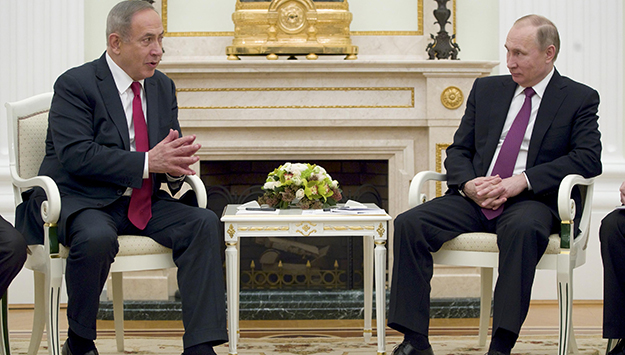
The Israeli prime minister’s visit to Moscow last week offered Israel and Russia an opportunity to ‘synchronize watches’ as a new phase in the Syrian war unfolds.
The visit was short and business-like. Prime Minister Benjamin Netanyahu left Tel Aviv in the morning and was back in Jerusalem that same evening. But his meeting with President Vladimir Putin, their fourth since the Russian intervention in September 2015, was long enough to reaffirm the principles that have enabled both Russia and Israel to protect their core interests in Syria.
An Indian Diplomatic Initiative to Promote West Asian Security
This essay explores the rationale, modalities and prospects for a constructive diplomatic by China and India — two rising powers, both with significant equities in the region and no historical baggage — to help break this cycle.
U.N. Investigator: Iran’s Human Rights Situation Hasn’t Improved under Rouhani
Iranian President Hassan Rouhani has not fulfilled his pledge to improve the country’s human rights situation and guarantee Iranians’ civil liberties, says Asma Jahangir, the U.N. special rapporteur for Iran. In an exclusive interview with the BBC Persian on Monday, the U.N.
Iranian Lawmaker: Washington’s “Safe Zone” Plan Won’t Change Balance of Power in Syria
A senior Iranian lawmaker says the Trump administration and its allies will not be able to establish safe zones in Syria, and that the deployment of American troops to Syria will also not change the trajectory of war in the Arab country, the Iranian Parliament’s official website reports.
I.R.G.C.-Linked Media Delegation Visits Beirut to Discuss Regional Issues with Hezbollah Leaders
A senior delegation of Iran’s Tasnim News Agency has held meetings with a number of high-ranking officials of the Lebanese Hezbollah in Beirut, the Iranian media reports.
Diplomatic Feud Between Turkey and E.U. Grows | Monday Briefing
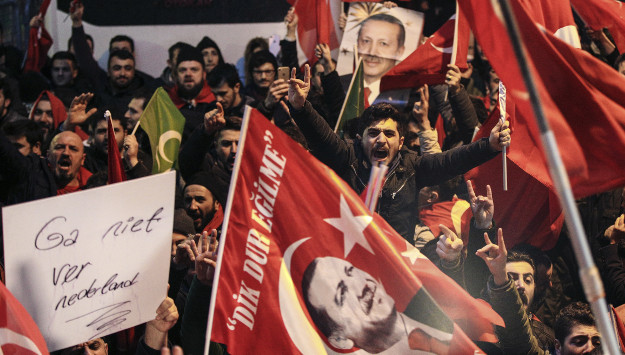
In this week’s Monday Briefing, MEI experts W. Robert Pearson, Gerald Feierstein, Yousef Munayyer, and Alex Vatanka provide analysis on recent and upcoming events including the simmering diplomatic feud between Turkey and the Netherlands, the Chinese offer to act as a mediator between Iran and Saudi Arabia, the congressional debate whether to supply aid to the Palestinian Authority, and the growing French business footprint in Iran.
Iran Arrests Opposition Leader’s Son in New Wave of Crackdown
Authorities in Iran have handed a six-month jail term to a son of Mehdi Karroubi, a former Iranian opposition leader and presidential candidate who has been held under house arrest in Iran since February 2011, Iranian reformist website Kaleme reported today. A Revolutionary Court has found Hossein Karroubi guilty of “propagating against the regime” after he published his father’s open letter to President Hassan Rouhani, in which he had blasted the “despotic regime” for illegally putting him under house arrest and called for a public trial.
Khamenei’s Symbolic Clemency as Authorities Intensify Suppression of Activists
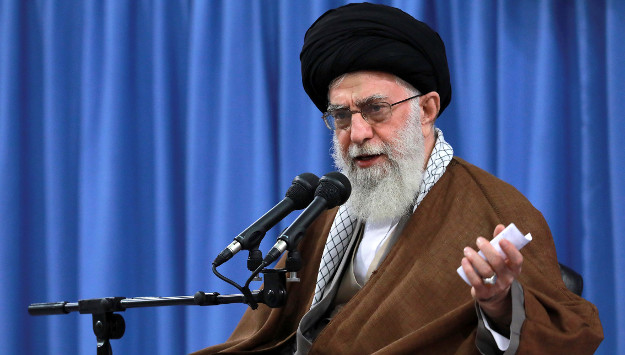
Iran’s Supreme Leader Ali Khamenei has approved a set of terms and conditions for pardoning or commuting prison sentences of a number of Iranian convicts, Khamenei’s official website reported today. Judiciary Chief Sadegh Larijani had asked the Supreme Leader to review and authorize the conditions under which the Judiciary could grant clemency to certain convicts on the occasions of the birthday of Prophet Muhammad’s daughter and the upcoming Iranian New Year – which begins on March 21.
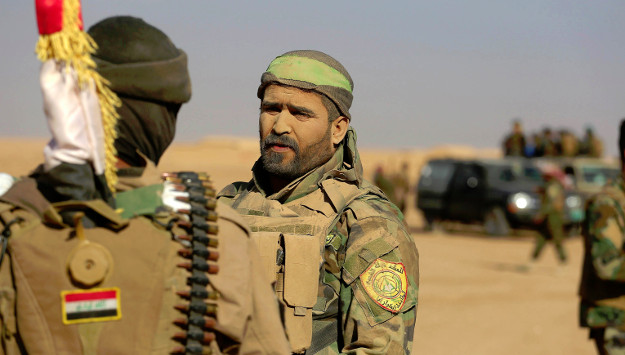
Iran-Backed Militia Groups Continue to Play Key role in West Mosul Operations
Ali al-Hussaini, a spokesman of the Iraqi Hashd al-Shaabi (Popular Mobilization Forces), has claimed that PMF forces have made significant territorial gains in western Mosul and the operation to liberate the strategic city of Tal Afar will begin soon.
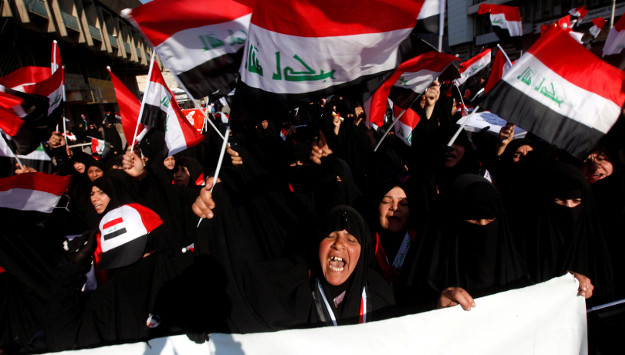
While Iraqi forces are fighting to retake the western half of Mosul from Islamic State fighters, internal divisions regarding the future of Iraq’s political process are escalating ahead of provincial elections scheduled for September, especially within the country’s largest Shiite political bloc, the Shiite National Alliance.
The oldest peer-reviewed publication dedicated to the study of the modern Middle East, MEI’s flagship journal covers politics, society, and culture in the region.