Bonus Episode: Previewing Israel’s First Post-October 7 Election
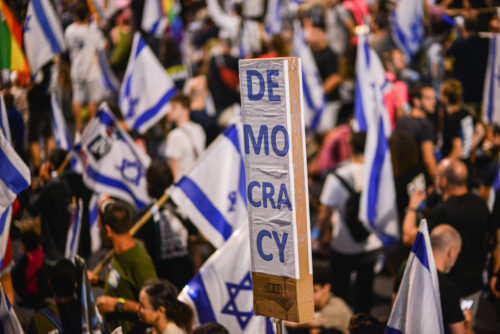
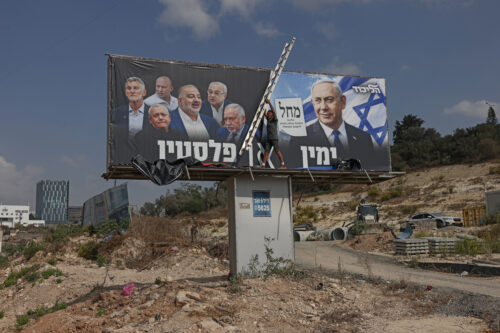
Israel is preparing to hold what may be its most consequential election in decades. On October 27, Prime Minister Benjamin Netanyahu will face his first electoral test since October 7, 2023. In this bonus episode of Middle East Focus, we present the audio from a recent MEI webinar, hosted in Israel on the eve of the vote. Senior Fellow Natan Sachs is joined by Dr. Shira Efron, Distinguished Chair for Israel Policy and senior fellow at the RAND Corporation, and Neri Zilber, veteran journalist and Financial Times correspondent. They explore what’s at stake in this historic election and how different outcomes could reshape Israel’s domestic politics and the wider region.
Israel Was Built on Hope. This Election May Be Our Last Chance to Save It
Israel’s national anthem, Hatikva, means “the hope.” Israel is not just another country, but the culmination of a 2,000-year-old dream of national redemption. The rebirth of the Jewish people’s ancestral homeland, just three years after the Holocaust, was a miraculous triumph of hope over all odds.
Today, that hope has been shattered and the elections on October 27 have become the most consequential in Israel’s history.
One striking thing about US President Donald Trump’s endorsement of Israeli Prime Minister Benjamin Netanyahu this past week is how isolated he was in making this call. The Israeli Prime Minister has become a widely detested figure worldwide following Israel’s war in Gaza—where Israel committed war crimes. This disdain was clearly on display in New York in September when dozens of diplomats streamed out of the hall during Netanyahu’s speech.
Since 1967, Israeli settlements in the West Bank have been a contested feature of the Israeli-Palestinian conflict. The ultimate disposition of the settlements and ongoing activity related to their growth have repeatedly defied agreement in negotiations over a resolution to the conflict.
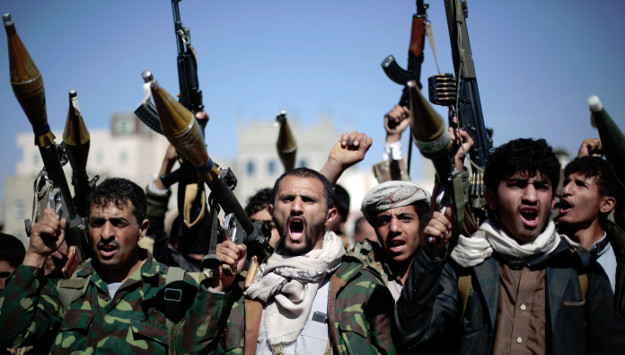
The Houthis are a political-military faction and Zaydi religious movement founded in northwestern Yemen in the 1980s. A key member of Iran’s Axis of Resistance with links to other militant organizations in the Arabian Peninsula and the Horn of Africa, the group has continued to pose a threat to Western interests on a global scale.
The India-Middle East-Europe Economic Corridor (IMEC) is a proposed multinational infrastructure initiative aimed at upgrading connectivity between the three regions through integrated trade, energy, and digital networks. Announced at the G20 summit in New Delhi in September 2023, IMEC is envisioned partially as a counterweight to China’s international infrastructure project, the Belt and Road Initiative.
After a decade of post-Arab Spring isolation, Turkey’s leaders have recognized that their ambition to position the country as an agenda-setter on the world stage requires active engagement in all directions. President Recep Tayyip Erdoğan’s consolidation of executive authority has centralized foreign policy decision-making and tied it to his domestic political priorities, transforming the country’s revisionist approach to one shaped primarily by personal and pragmatic interests.
MEI Senior Fellow Brian Katulis engages friends, colleagues, and policy experts in casual conversations on the most important happenings in the Middle East.
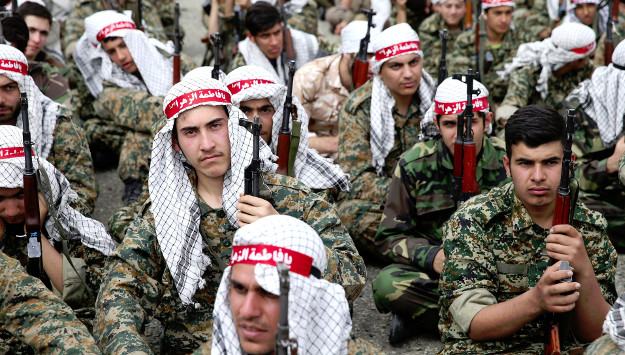
IRGC Helps "Latin Americans" Establish Basij Force
In the latest indication of Iran’s efforts to expand its ideological and political influence in parts of Latin America, the Islamic Revolution Guards Corps (IRGC) has revealed that it provides training to Latin Americans in how to create and utilize the Iranian model of paramilitary Basij Force.
New Findings Point to Iran Sending Weapons to Yemen
It is not a secret that Iran plays a role in the Yemeni conflict. But a new report provides yet another piece of evidence released to the public about the Iranian government’s arms aid to the Houthi rebels that fight against the Yemeni government backed by Saudi Arabia and its allies. The Australian government has released photographs that show light anti-armor weapons seized near the Yemeni coast were manufactured in Iran.
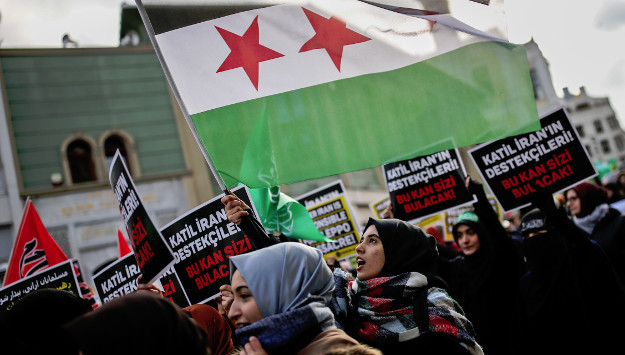
Kayhan, a leading newspaper that represents the most hardline of voices inside the Iranian regime, has been raising doubts about Turkish intentions in the Syrian conflict. The reservations the paper expressed come shortly after the late December 2016 Turkish-Russian-Iranian ceasefire deal aimed to kick-start the political process to find a solution to the six-year Syrian war.
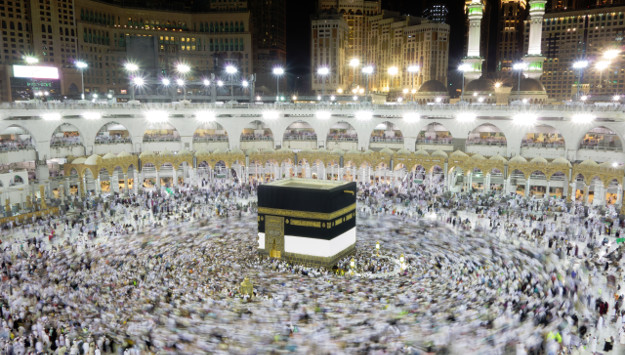
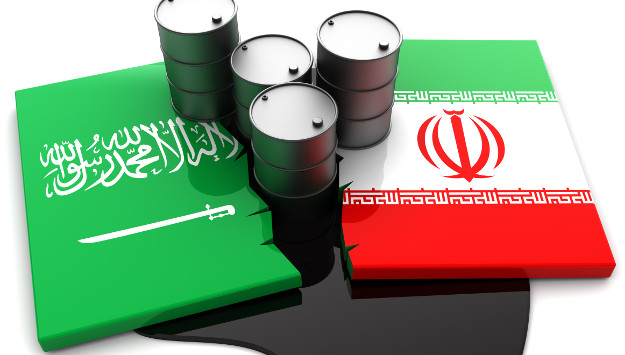
The representative of Iran’s Supreme Leader on Hajj [pilgrimage] affairs has announced that Tehran will shortly dispatch a delegation to Saudi Arabia. This latest development has come about following Iran’s decision not send any pilgrims to Saudi Arabia in 2016. Riyadh had earlier sent an invitation to Iran for talks to be held to resolve differences that exist in this context.
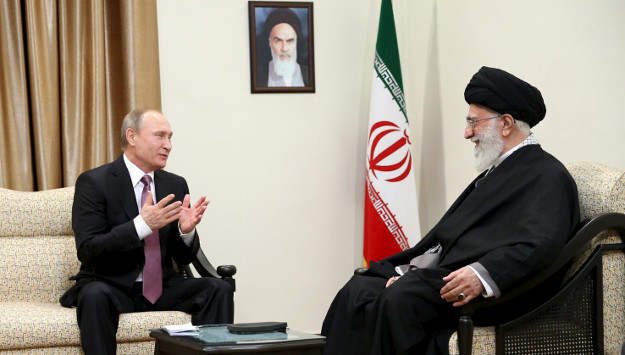
In a meeting with a high-level delegation visiting Tehran on January 11, Iran’s President Hassan Rouhani called terrorism a common enemy of Afghanistan and Iran and pledged his country’s all-out support to Afghanistan’s stability.
Burden or Boon? Turkey’s Tactical Treatment of the Syrian Refugee Crisis
Turkey’s ruling Justice and Development Party (AKP) approaches the question of refugees much differently than its European counterparts. The latter’s pushing back against burden-sharing measures has led to what can be described as burden-shifting. In contrast, the AKP’s view of Syrian refugees in Turkey is that they are more of a boon than a burden. This essay explores the thinking and the tactics behind Turkey’s approach to dealing with the Syrian refugees challenge.
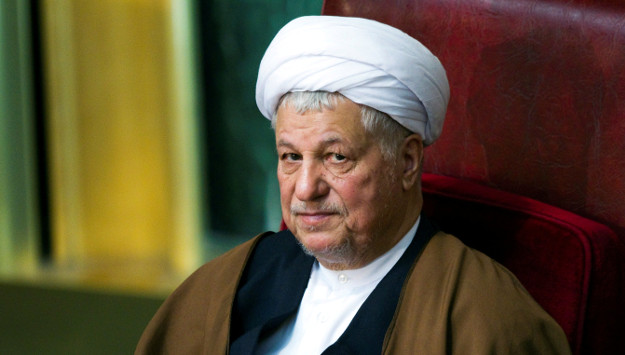
The death of Ayatollah Ali Akbar Hashemi Rafsanjani on January 8 marks a major turning point for Iran. For nearly 40 years, his undisguised hunger for power combined with his knack for deal making had made him the most proven kingmaker of the Islamic Republic.
Saudi Interest in the Red Sea Islands of Tiran and Sanafir Grows as Its Security Interests Expand
Notwithstanding Egypt’s political and judicial contretemps, the Egyptian parliament is expected to vote soon in favor of the return of Tiran and Sanafir islands to Saudi Arabia. The decision, after months of controversy in Egypt, will fulfill the April 2016 agreement reached between Egyptian president Abdel Fattah al Sisi and Saudi King Salman bin Abdul Aziz Al Saud that formally acknowledged Saudi sovereignty over the two small islands and provided for their return to Riyadh’s control.
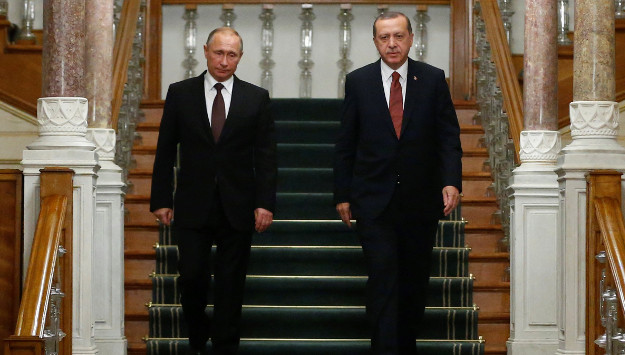
The current Syrian ceasefire effort of Russia and Turkey is a Russian attempt to impose a final political defeat on the rebels and a Turkish attempt to focus on eliminating the Kurds in Syria militarily and politically. Turkey is also intensely lobbying the new U.S. administration for help. The ceasefire deal rests on the barbarism of Russia and the Assad regime and the feckless response of the West. This is the peace Rome imposed on the prostrate Carthage. The unanimous UNSC vote endorsing the Russian/Turkish proposal enshrines one side’s brutality and the other’s moral vacuum.
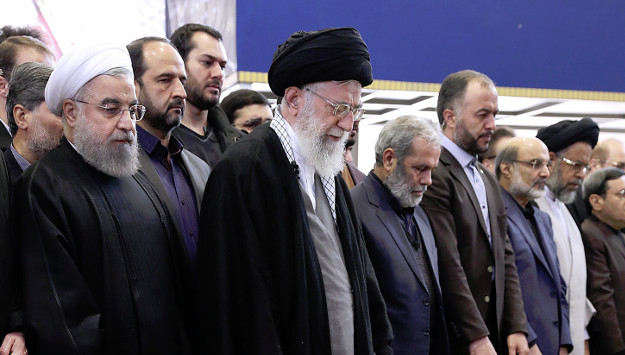
During the January 10 mass rallies of the funeral of former president Ali Akbar Hashemi Rafsanjani, crowds in Tehran repeatedly chanted “Death to Russia” and “Russian Embassy is the den of spies.” Those chanting are supporters of the popular political opposition, which continue to be repressed by the security services.
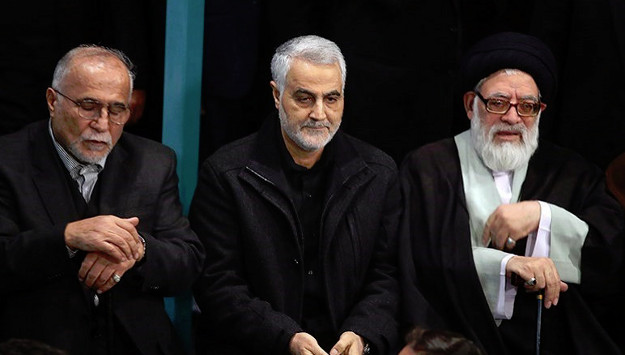
Iran’s Quds Force Commander Qassem Suleimani attended the funeral of Ayatollah Akbar Hashemi Rafsanjani and praised the former Iranian president’s anti-American and anti-Israeli sentiments and positions.
The generals of the Islamic Revolution Guards Corps (IRGC) have been busy mourning the death of Ayatollah Ali Akbar Hashemi Rafsanjani. That is at least the public show they have put on. Since his death, several top IRGC commanders have hailed Rafsanjani as a pillar of the Islamic Republic and a hero in the so-called struggle against Western powers. Such public show of grief, however, is hardly convincing. In recent weeks prior to his death, IRGC-run media and personalities had unleashed a barrage of new attacks against Rafsanjani.
Iran Continues Efforts to Subvert Saudi Arabia from within
In fresh evidence that the government of Iran continues its efforts to undermine Saudi stability and security from within, a Saudi court has convicted a Saudi businessman of plotting with the government of Iran to instigate sectarian strife and threaten Saudi social stability, according to a report in al-Sharq al-Awsat.
Iran’s Oil Ministry has announced that two new energy contracts have been signed with Iraq. In particular, Tehran is looking to export natural gas to Iraq. Energy is only part of the equation.
The oldest peer-reviewed publication dedicated to the study of the modern Middle East, MEI’s flagship journal covers politics, society, and culture in the region.