Skip to Content

Research & Commentary

Read in-depth research, analysis, and commentary from MEI’s fellows and experts on the Middle East. 

Trump’s South Caucasus Peacemaking Is His Most Successful, but It Remains Unfinished
  • Commentary
  • Trump’s South Caucasus Peacemaking Is His Most Successful, but It Remains Unfinished

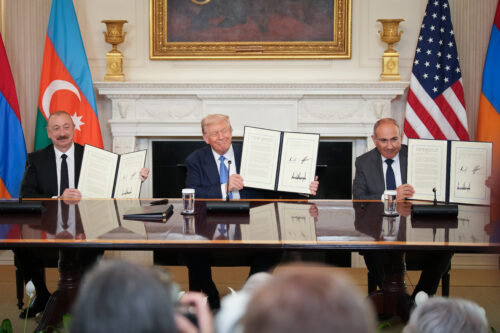
    Of all the fronts in President Trump’s peacemaking agenda, the South Caucasus has delivered the most concrete results. The August 2025 Washington Declaration, signed between Armenia and Azerbaijan and witnessed by Trump, marked an important step toward peace in the region. The two sides initialed a peace agreement and advanced plans to unblock regional connectivity, including through the establishment of the Trump Route for International Peace and Prosperity (TRIPP), which would connect Azerbaijan to its Nakhijevan exclave through southern Armenia. Implementation of TRIPP has since made notable progress, but construction has yet to start. A breakthrough on those two tracks would, in turn, unlock Armenia–Türkiye normalization, transforming a long-fractured region into an area of trade and interdependence.
    The Iran War Was Always About Regime Change
  • Commentary
  • The Iran War Was Always About Regime Change

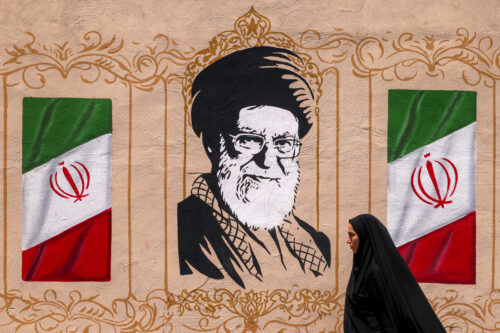
    Wars don’t just end. They get interpreted, reinterpreted, and turned into strategic doctrine. That is what happened after the Iran-Iraq War of the 1980s, a conflict that saw the United States back Tehran’s Iraqi adversaries. The war taught Tehran three lessons it never unlearned: that Washington wants the Islamic Republic gone, that Iran stands essentially alone in the world, and that it cannot survive a direct, overt fight with the U.S. and Israel.

    Iran’s New War Cabinet Is Really an Old One
  • Analysis
  • Iran’s New War Cabinet Is Really an Old One

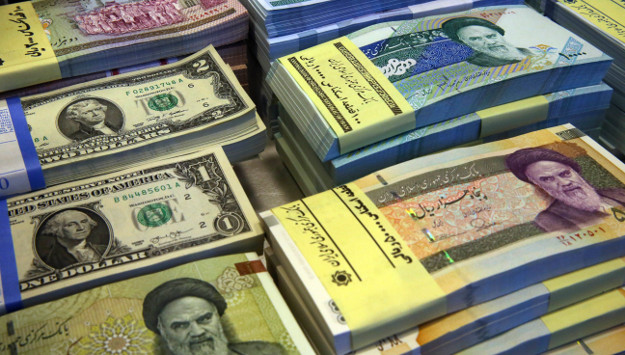
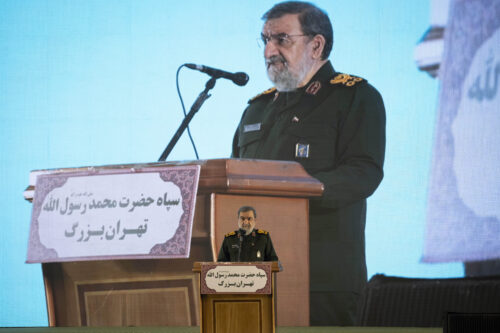
    Within 48 hours this week, Iran filled six of the most important posts in its battered military and security establishment. Read together with the biographies and mandates behind them, the appointments show how Tehran is drawing lessons from successive wars and preparing for a prolonged period of insecurity, without proving it has abandoned negotiation.

    Additional Research & Commentary

    Backgrounders

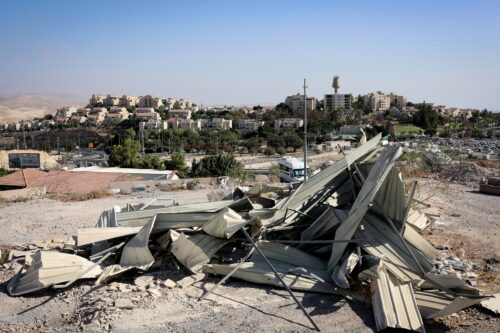
    Israeli Settlements in the West Bank
  • Backgrounder
  • Israeli Settlements in the West Bank

    Since 1967, Israeli settlements in the West Bank have been a contested feature of the Israeli-Palestinian conflict. The ultimate disposition of the settlements and ongoing activity related to their growth have repeatedly defied agreement in negotiations over a resolution to the conflict.

    June 9, 2026

    The Houthis
  • Backgrounder
  • The Houthis

    The Houthis are a political-military faction and Zaydi religious movement founded in northwestern Yemen in the 1980s. A key member of Iran’s Axis of Resistance with links to other militant organizations in the Arabian Peninsula and the Horn of Africa, the group has continued to pose a threat to Western interests on a global scale.

    May 15, 2026

    The India-Middle East-Europe Economic Corridor
  • Backgrounder
  • The India-Middle East-Europe Economic Corridor

    The India-Middle East-Europe Economic Corridor (IMEC) is a proposed multinational infrastructure initiative aimed at upgrading connectivity between the three regions through integrated trade, energy, and digital networks. Announced at the G20 summit in New Delhi in September 2023, IMEC is envisioned partially as a counterweight to China’s international infrastructure project, the Belt and Road Initiative.

    June 3, 2026

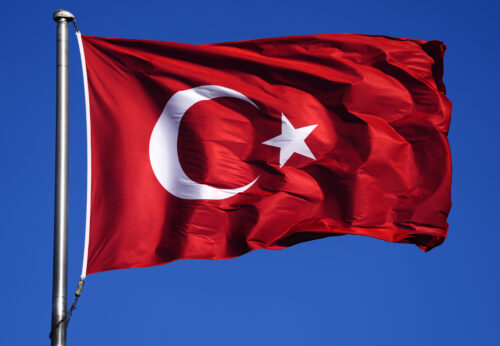
    Turkish Foreign Policy
  • Backgrounder
  • Turkish Foreign Policy

    After a decade of post-Arab Spring isolation, Turkey’s leaders have recognized that their ambition to position the country as an agenda-setter on the world stage requires active engagement in all directions. President Recep Tayyip Erdoğan’s consolidation of executive authority has centralized foreign policy decision-making and tied it to his domestic political priorities, transforming the country’s revisionist approach to one shaped primarily by personal and pragmatic interests.

    April 23, 2026

    Podcasts

    Middle East Focus

    MEI’s flagship weekly podcast on US foreign policy and contemporary political and social issues in the Middle East.

    Taking the Edge Off the Middle East

    MEI Senior Fellow Brian Katulis engages friends, colleagues, and policy experts in casual conversations on the most important happenings in the Middle East. 

    Rethinking Democracy

    MEI Senior Fellow Gonul Tol hosts leading scholars and thought leaders on global democracy trends and the state of the liberal international order. 

    Filter by
    8783 Results
    Review of Arab Cinema at Berlinale
  • Analysis
  • Review of Arab Cinema at Berlinale

    For any major film festival, politics is an imperative ingredient, inseparable from the glamor and publicity organizers always strive to attract. Of all the big film fairs, the Berlin International Film Festival (aka the Berlinale) has forever been known to be the most political, either in its eye-raising selection or in its granted awards.

    February 29, 2016

    Turkey Running Out of Options on Syria
    Middle East Institute
  • Analysis
  • Turkey Running Out of Options on Syria

    Turkey is confronting a nightmare as its two archenemies, President Bashar al-Assad’s regime and the Kurdish Democratic Union Party (PYD), gain ground in Syria with the help of U.S. and Russian air cover. Turkey has long called for a no-fly zone in northern Syria to protect areas held by the opposition and a halt to the PYD advances west of the Euphrates. Frustrated with U.S. cooperation with the PYD, Ankara has insisted that the PYD is a terrorist organization and poses a grave danger to Turkey’s national security.

    What a Trump Presidency Means for the Gulf
    Middle East Institute
  • Analysis
  • What a Trump Presidency Means for the Gulf

    As objectionable as it may seem to many, it’s becoming increasingly likely that Donald Trump will be the Republican Party’s presidential nominee. It is also no longer a remote possibility for Trump to become the 45th president of the United States come next January. What would a Trump presidency mean for the oil-rich Gulf Arab states?

    February 25, 2016

    The GCC’s New Affair with China
  • Analysis
  • The GCC’s New Affair with China

    Introduction

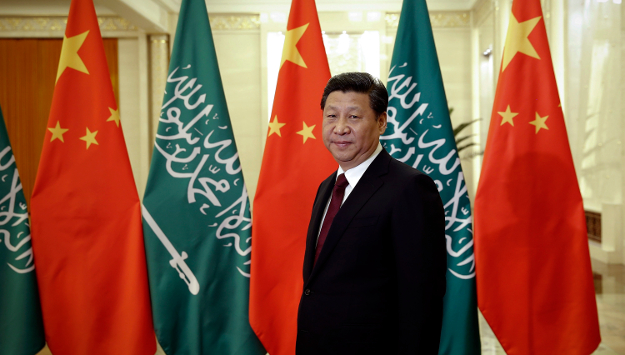
    Chinese President Xi Jinping’s visit last month to Saudi Arabia, Egypt, and Iran represented the first, full frontal launch of China’s One Belt, One Road (OBOR) strategy in the Middle East. The visit has wide implications for Gulf Cooperation Council (GCC)-China relations as the geopolitical chessboard undergoes a major realignment.

    February 24, 2016

    Explaining the Military's Ruling Ambition in Egypt and Thailand
    Middle East Institute
  • Analysis
  • Explaining the Military's Ruling Ambition in Egypt and Thailand

    The military took advantage of political crisis to remove civilian governments in Egypt in 2013 and Thailand in 2014. This essay discusses three important features of the Egyptian and Thai political systems that have fostered the military’s ruling ambition in both cases.

    February 23, 2016

    Weekly Briefing: Syria Ceasefire, Iran Elections, and Saudi Arabia's Suspension of Aid to Lebanon
  • Analysis
  • Weekly Briefing: Syria Ceasefire, Iran Elections, and Saudi Arabia's Suspension of Aid to Lebanon

    In the first installment of a new series of weekly briefings on the most important regional issues, MEI experts Randa Slim, Alex Vatanka, and Paul Salem analyze recent events including the ceasefire agreement in Syria, upcoming elections in Iran, and Saudi Arabia’s suspension of military aid to Lebanon.

    Will New Cease-fire Deal in Syria Succeed?

    Randa Slim
    Director, Initiative for Track II Dialogues

    February 23, 2016

    What MEI’s Experts Say on Situation in Northern Syria
  • Analysis
  • What MEI’s Experts Say on Situation in Northern Syria

    MEI experts Charles Lister, Paul Salem, Randa Slim, and Gonul Tol weigh in on the intensifying battles in northern Syria, with dire predictions for the humanitarian situation as well as for the internal stability of neighbors. Lister argues the loss of the Azaz corridor would be a “catastrophic morale blow” to the Syrian opposition, while Tol believes current Turkish attacks on YPG positions is not a prelude to an invasion.

    February 19, 2016

    Turkey Squeezed by Russian-backed Offensives in Syria
  • Analysis
  • Turkey Squeezed by Russian-backed Offensives in Syria

    The cessation of hostilities was to begin in Syria on February 19. As was the case with the late 2011 and mid-2012 ceasefire efforts, this one is likely to fail. Instead of halting fire, the Syrian government is currently trying to isolate and assert dominion over the rebel-held portion of Aleppo, and, just as importantly, to block armed opposition supply lines extending down from Turkey. The Syrian government and its Russian and Iranian allies want to impose surrender terms on the armed opposition, not negotiate a compromise political deal.

    Empowered Syrian Women Breaking Taboos
  • Analysis
  • Empowered Syrian Women Breaking Taboos

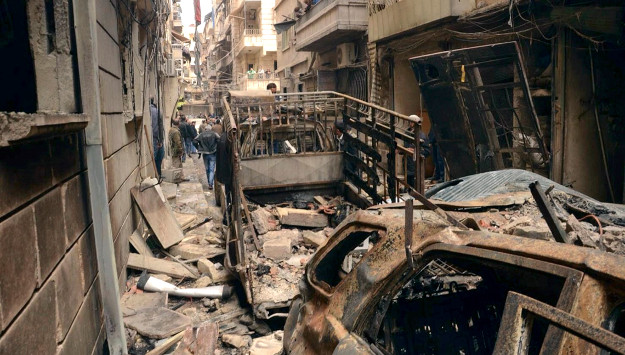
    Five years of war have unexpectedly reset gender roles in Syria. With so many men killed or missing, women are finding themselves the main supporters of their families and communities, and are often breaking with tradition and cultural taboos.

    “Activists that engaged with the revolution have experienced big differences in gender relations, especially among the most conservative women,” said a 30-year-old underground activist and filmmaker in government-held central Damascus. She goes by the name Rafia, and she spoke to this author by Skype.

    February 17, 2016

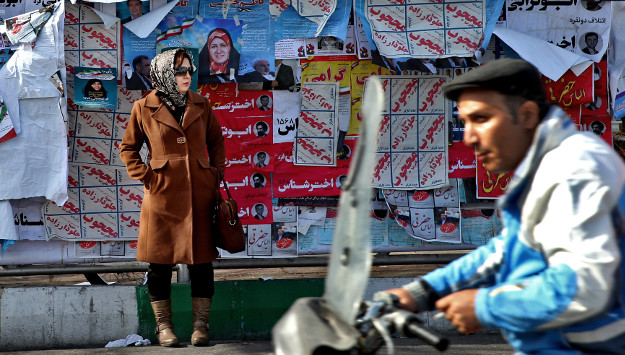
    Fighting in Tehran Over the Spoils of Post-Sanctions Era
  • Analysis
  • Fighting in Tehran Over the Spoils of Post-Sanctions Era

    Read the full article on Foreign Policy.

    Two weeks ahead of critical elections, President Hassan Rouhani can boast of achieving two of his key election pledges from 2013: He secured a groundbreaking diplomatic nuclear deal with world powers and has removed crippling sanctions on the country. Rouhani should, therefore, feel confident ahead of the Feb. 26 vote and see himself as well on course to winning re-election in 2017.

    U.S. Should Allow International Input in Israel-Palestine
  • Analysis
  • U.S. Should Allow International Input in Israel-Palestine

    For the first time in almost half a century, the United States has acknowledged that it is “out of ideas” about how to address Israel’s occupation and fulfill a declared American interest in establishing a Palestinian state at peace with Israel.

    February 16, 2016

    Situating the GCC in China's Transforming Roles in Asia
    Middle East Institute
  • Analysis
  • Situating the GCC in China's Transforming Roles in Asia

    China is a major economic partner of the GCC countries. This essay discusses the size and scope of this economic relationship, and considers how these ties might evolve as China’s ambitious One Belt One Road (OBOR) and Maritime Silk Road (MRS) initiatives take shape.

    February 16, 2016

    Read the Middle East Journal

    The oldest peer-reviewed publication dedicated to the study of the modern Middle East, MEI’s flagship journal covers politics, society, and culture in the region.